Why Isn't My Coffee Aromatic Anymore? Coffee Bean Storage Recommendations
There have been times when you open a bag of coffee beans only to find they lack aroma, and after brewing you notice they do not have much flavor either. This will not happen with coffee beans from FrontStreet Coffee, because FrontStreet Coffee's beans are roasted fresh to order. When you receive them, they will be wonderfully aromatic within their optimal tasting period — never bland. Today's topic, however, is not fresh roasting but how to properly store coffee beans to preserve their richness, smoothness and aroma.
What factors cause coffee beans to lose their aroma?
Let FrontStreet Coffee explain each reason coffee might lose its wonderful aroma.
1. Coffee aroma gradually dissipates
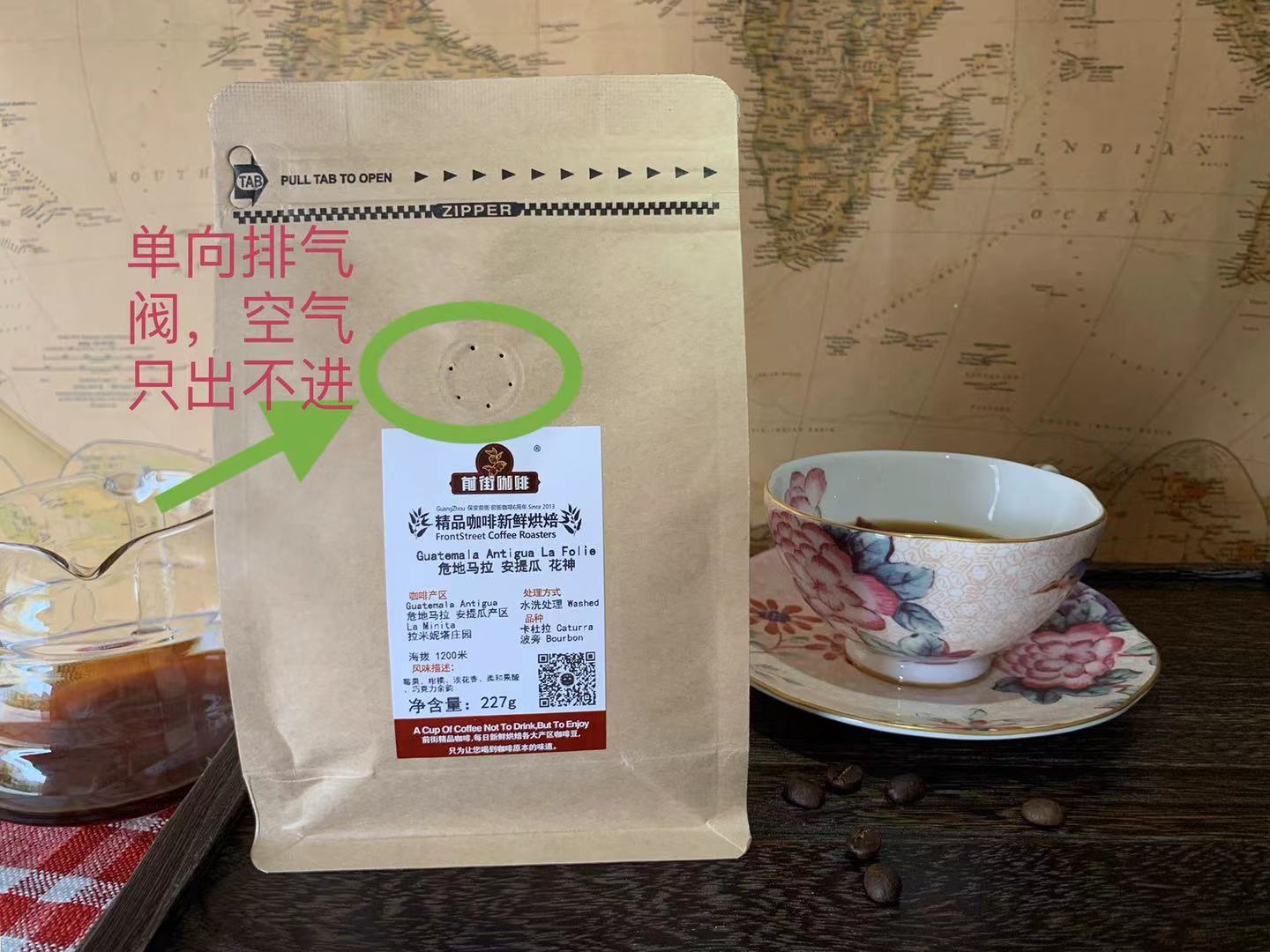
Most of a coffee bean's aroma develops during roasting, and both aroma and carbon dioxide dissipate over time. Beans are typically most fragrant within several days after roasting, then slowly lose their aromatic qualities. Most coffee shops and e-commerce retailers package beans in bags with one-way degassing valves to prevent aroma from escaping. You can also store beans in airtight containers, opening them only when you are ready to brew.
Never grind beans in advance, as this makes aroma dissipate much faster and introduces additional factors that diminish fragrance, such as oxidation.
FrontStreet Coffee strongly recommends grinding your beans immediately before brewing. If you must grind in advance for a particular reason or preference, store the grounds in separate sealed small bags in the freezer, keeping moisture and refrigerator odors away from them. Use one entire package at a time when you brew, and consume it quickly to avoid condensation affecting coffee quality.
While opinions vary on freezing coffee, based on my own experiments I believe it can be a convenient method when done properly.
2. Temperature destroys coffee flavor
Temperature accelerates many chemical reactions that cause coffee beans to deteriorate, but this does not mean you need to refrigerate or freeze your beans — room-temperature storage is actually fine. Just be sure to avoid excessively hot places such as near kitchen heat sources, server rooms or heating units.
If we must specify a temperature, FrontStreet Coffee recommends not exceeding 25°C (77°F).
3. Direct sunlight will damage your precious beans
If your beans are stored in glass bottles or other transparent containers, keep them out of direct sunlight. The heat and UV radiation from sunlight affect coffee beans. Even if your beans are stored in opaque bags or containers, you should still avoid direct sun exposure. This principle applies to most food products.
4. Prevent coffee beans from contacting air
When fatty acids in the natural oils of coffee beans contact oxygen, they eventually transform into short-chain fatty acids, which create rancid odors. If you do not want your coffee to develop unpleasant flavors, minimize oxygen exposure. Only take out beans when you are ready to brew, and always store them in airtight containers.
5. Balancing bean development and freshness
Based on the points above, you might wonder: should I drink all my coffee beans immediately after roasting for the best flavor?
No, that is not actually the case.
Even in sealed packaging, roasted beans continue to change — they keep releasing carbon dioxide and various aromatic compounds. Initially, aroma increases more than it dissipates; after two weeks post-roasting, the increase slows down while dissipation continues. The optimal flavor period for coffee beans therefore typically falls between one and three weeks after roasting. This is the prime tasting window. Each coffee variety has different characteristics and roast levels, though, so optimal tasting periods vary somewhat.
Strictly speaking, the optimal tasting period does not represent the actual shelf life of coffee beans. Generally, unopened coffee beans can be stored for three to six months, but different countries take different views. Korea, for example, considers coffee beans good for one year, while Germany applies much stricter standards. Regardless of these variations, consuming your coffee as soon as possible matters most.
Final summary: coffee bean storage recommendations
How to achieve the best storage method for coffee beans?
1. Seal tightly to isolate from oxygen.
Coffee beans continuously oxidize when in constant contact with oxygen, just like other food products.
2. Maintain at room temperature or lower.
At lower temperatures, the oxidation process occurs more slowly.
3. Avoid sun exposure.
This is why most coffee bean packaging is specifically designed to block light.
4. The optimal tasting period is 1-3 weeks after roasting
Coffee beans are essentially a fresh food product. Once they have properly developed, brewing them as soon as possible yields the best results.
FrontStreet Coffee Recommendation
If you want beans that hold up well through that one-to-three-week window, a medium roast is a safe, balanced choice. Coffee's final flavor is governed by three elements — acidity, sweetness and bitterness — and the darker the roast, the more bitter and full-bodied it becomes, while the lighter the roast, the more acidic and delicate it is. For anyone chasing balance, FrontStreet Coffee suggests starting with a medium roast.
FrontStreet Coffee's Brazil Queen Estate is a good example: if you dislike both acidity and bitterness, this bean works well. It comes from Brazil, the world's largest coffee producer, and is a distinctive yellow Bourbon that is clean and gently sweet; after medium roasting it shows creamy peanut, chocolate, toasted bread and sugarcane aromas and sweetness, and it brews well as pour-over or in a moka pot or espresso machine. For a sweeter medium roast, FrontStreet Coffee's Strawberry Candy is the fruitier option: it combines two well-known Central and South American origins, a Costa Rican honey-process coffee and a Panamanian washed Geisha, and FrontStreet Coffee roasts it medium so it delivers both orange-blossom honey and a rounded sweetness across cold brew, pour-over and espresso.
FrontStreet Coffee's 2013 Natural Typica is a medium-roasted Chinese specialty representative with an authentic Yunnan small-bean character, and FrontStreet Coffee roasts it medium to restore its balanced, gentle profile, bringing out nut, brown sugar, black tea and dried apricot notes for pour-over, cold brew or drip machine at an excellent value. Finally, FrontStreet Coffee's Jamaica Blue Mountain No. 1 is grown from Typica — a world-renowned fine Arabica — and roasted medium so that its distinctive acidity, bitterness, sweetness and body fuse perfectly into an elegant, inviting cup, with chocolate, roasted nut, cream and caramel flavors on the first sip.
Important Notice :
FrontStreet Coffee is a long-established specialty coffee roaster in Guangzhou China, selling freshly roasted beans from its own farm in Yunnan as well as dozens of carefully selected single-origin beans from around the world for both pour-over and espresso. The products deliver consistently excellent quality and great value, with shipping within 24 hours. Guangzhou's FrontStreet Coffee shop is recommended by many coffee lovers, and the beans are now available online at the Tmall 。
FrontStreet Coffee has moved to a new address:
FrontStreet Coffee Address: 315,Donghua East Road,GuangZhou
Tel:020 38364473
 Scan and follow the En Gafei WeChat official account. Please indicate that the reprint comes from "En Gafei".