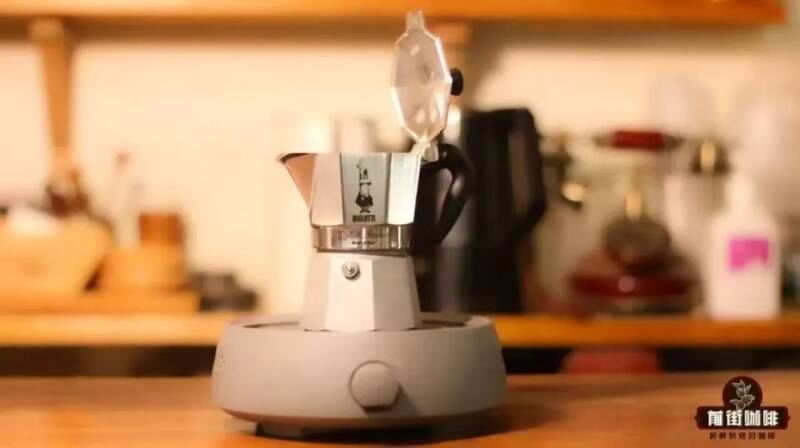
How to make bubble ice American so that it will not spill over? Share 5 tips for making bubbly coffee! How to make cold extract sparkling coffee? Do I have to add espresso to bubbly coffee?
With its distinctive taste, sparkling coffee has earned a firm place in the hearts of many coffee drinkers, and it has become a staple on most coffee shop menus. Lemon Sparkling Americano, apple cold brew Americano, tonic Americano — these are all star products currently popular in cafes.
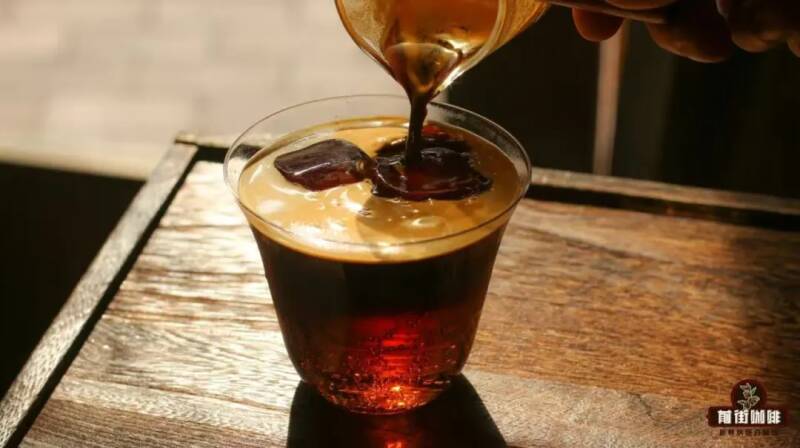
Because it is so simple to make — you just pour extracted coffee over sparkling water — many people try to recreate the drinks they enjoy in coffee shops at home. But many run into a frustrating problem: after the coffee hits the sparkling water, the water starts fizzing violently, bubbles up, and overflows the cup, leaving coffee everywhere.
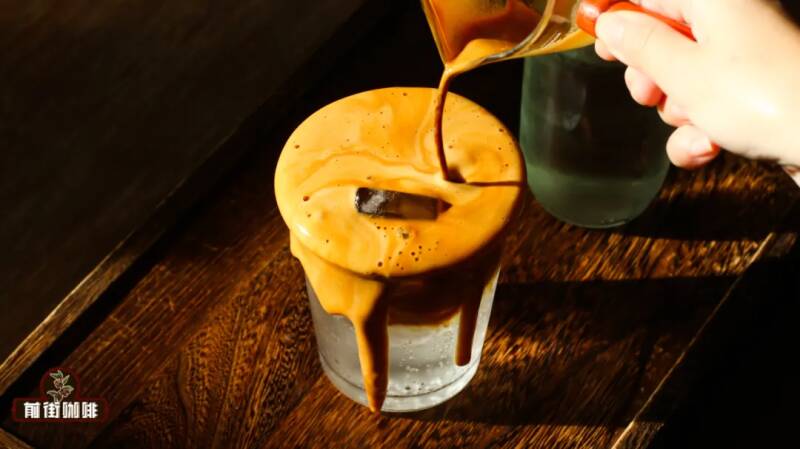
Meanwhile, the sparkling Americanos made in coffee shops almost never do this. The coffee floats calmly on the sparkling water, and even stirring with a straw produces hardly any foam. This leaves many people puzzled: what causes all those bubbles? In fact, it is perfectly normal for coffee to produce a lot of foam when poured into sparkling water. As everyone knows, sparkling water contains a large amount of carbon dioxide dissolved under high pressure. Adding coffee "stimulates" the sparkling water and lowers the solubility of the CO2, so the gas begins to escape the liquid. The escaping carbon dioxide then comes into contact with the proteins and oils of the espresso, which encapsulate it well — the two fuse into bubbles and eventually form the mass of foam we see.
Although foaming is normal, there are some tricks to reduce or even eliminate it. Simply put: reduce how much the coffee stimulates the sparkling water.
1. Reduce the impact of the pour. Have you ever noticed what happens when you open a bottle of sparkling water? If you don't shake it or pour it aggressively, only a few bubbles form. But pour it quickly from bottle to glass, and the violent impact creates a lot of fizz. One reason a mass of foam forms when we pour espresso into sparkling water is that the height and force of the pour "hit" the water hard, so carbon dioxide escapes faster, generates a large number of bubbles, and combines with the coffee oils to form foam.
To reduce that stimulation, lower the height and soften the force of your pour, or buffer it with something else — ice cubes, lemon slices, a spoon — so the coffee agitates the sparkling water less and far less foam is produced.
But note: this method only reduces the stimulation at the moment the coffee is added, because the coffee and the sparkling water are not yet fully integrated. When you stir, don't use too much force either, or the coffee can still whip up a large amount of foam, overflow the cup, and leave a mess.
2. Skim off the crema and fine particles. You can also filter the "impurities" out of the coffee with filter paper — the oils and fine grounds. These substances stimulate the carbon dioxide and accelerate its escape, which is one of the other factors mentioned earlier. Since coffee oils greatly aid foam formation, filtering reduces the stimulation, cuts down the foam, and at the same time reduces the coffee's bitterness.
3. Reduce the temperature difference. Excessively hot coffee is another culprit. Because we usually use freshly extracted espresso for sparkling coffee, the coffee is relatively hot, creating a large temperature gap with the chilled sparkling water. The bigger the temperature difference, the stronger the stimulation and the faster the carbon dioxide escapes. So to reduce it, you can extract the espresso over an ice cube (sparkling coffee is iced anyway) to cool the espresso before building the drink. This narrows the temperature gap and calms the reaction.
Worth mentioning: the reason many coffee shops' sparkling coffee never overflows no matter how you stir it is that they use cold brew. The temperatures of cold brew and sparkling water are close, so it barely stimulates the water — and there isn't much oil to form foam either.
4. Dilute the sparkling water. Another way to reduce foam is to add some still water, tea, or juice to the sparkling water first. This creates an effective buffer layer, and the espresso won't produce a mass of foam when poured in.
Take the classic sparkling iced Americano, for example. The beans FrontStreet Coffee uses on our menu are the FrontStreet Italian Espresso, with relatively fresh floral and fruity notes of strawberry, white flowers, and berries. Using espresso extracted from it as the base, we build the drink with 80g of ice cubes and 200ml of sparkling water (espresso extraction parameters: 20g dose, 30 seconds, 40ml yield). To cut down foam using the dilution method, FrontStreet Coffee adds about 10ml of still water to the sparkling water first. Just 10ml is enough to greatly reduce foam formation — it's very practical. If you're making sparkling coffee with juice or tea, you don't need to worry about this at all.
Those are some of the "anti-overflow" tricks for making a sparkling iced Americano. If sparkling coffee interests you, browse our previous articles — there's bound to be one that suits your taste.
- END -
FrontStreet Coffee Recommendation: Espresso Bases Built for Sparkling Coffee
A great sparkling Americano starts with a stable, expressive espresso. For a traditional-style base, FrontStreet Coffee recommends our Classic Blend or Commercial Blend — both built on a classic Italian recipe with a small proportion of Robusta, so extraction yields aromas of butter, nuts, spice, dark chocolate, and toast, with a thick, golden crema that holds up beautifully over ice. If you prefer nutty sweetness, FrontStreet Coffee's Premium Blend and Black Cocoa Blend use a high proportion of Brazil beans for a smooth, mellow cup with comfortable bitterness and creamy peanut notes. For something fruitier — ideal over sparkling water — try the Natural Huakui SOE from Guji Hambela, Ethiopia, grown at up to 2300 meters and naturally processed: medium roasted, it brings cream, cacao, berries, and light florals that shine in an iced Americano.
Important Notice :
FrontStreet Coffee is a long-established specialty coffee roaster in Guangzhou China, selling freshly roasted beans from its own farm in Yunnan as well as dozens of carefully selected single-origin beans from around the world for both pour-over and espresso. The products deliver consistently excellent quality and great value, with shipping within 24 hours. Guangzhou's FrontStreet Coffee shop is recommended by many coffee lovers, and the beans are now available online at the Tmall 。
FrontStreet Coffee has moved to a new address:
FrontStreet Coffee Address: 315,Donghua East Road,GuangZhou
Tel:020 38364473
 Scan and follow the En Gafei WeChat official account. Please indicate that the reprint comes from "En Gafei".