Differences Between Cold Drip and Cold Brew Coffee: Cold Drip vs Americano, and Iced Coffee Varieties Introduction

As temperatures climb, iced coffee keeps gaining popularity. The common styles include ice pour over, iced Americano, cold brew, and iced drip coffee. But what actually separates these four — and how do they differ in flavor? Today FrontStreet Coffee breaks down each style and shows how our baristas prepare them.

Ice Pour Over Coffee
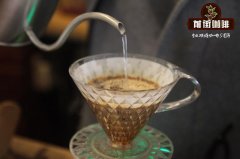
Pour over coffee rose to prominence with the third wave of specialty coffee and is now a fixture of independent coffee shops, FrontStreet Coffee included. Its defining feature is filtration through a dripper, with the water-pouring process unfolding in real time — part brewing method, part theater.
For ice pour over, FrontStreet Coffee's baristas dose 15 grams of coffee. Unlike hot brewing, the ratio is 1:10: 150 grams of hot water are poured in total, yielding roughly 120 grams of coffee liquid. The reason for the concentrated ratio is the 100 grams of ice added afterward — the moment ice touches freshly extracted coffee it starts melting, so the tighter ratio guards against over-dilution.

FrontStreet's baristas pour in two stages. The first stage is a 30-gram bloom, which releases carbon dioxide — freshly roasted beans hold a lot of it, and excess CO2 pushes water away from the grounds during extraction. That's why every pour over starts with a small pour to let the gas escape.
In the second stage, water is poured straight through to the full 150 grams in gentle circles, extracting as much flavor as possible. Brew water is 90 degrees Celsius, the grind size is slightly finer than for hot brewing — roughly an 85% pass-through rate on a 0.85mm standard sieve — and total extraction time is about 1 minute 30 seconds.

The finished coffee is poured over the 100 grams of ice, and the barista shakes to mix it thoroughly — combining the front, middle, and back segments of the brew while the ice chills and dilutes it to serving strength.
Iced Americano Coffee
The logic behind an iced Americano is much the same as ice pour over — extract a concentrated coffee, then dilute with ice. The difference is the base: an iced Americano uses espresso pulled from a machine. Espresso began as a quick caffeine delivery system for Italians — fast to make, and at 1 to 2 ounces, finishable in two or three sips. An Americano is that same espresso diluted with plenty of water, making the drink far more approachable.

FrontStreet's baristas use an espresso machine for iced Americanos. The recipe is simple — three ingredients: espresso, water, and ice. Extraction parameters are adjusted daily to the beans' condition: currently 20 grams of grounds yielding 40 grams of espresso in about 26 seconds.

Then 300 grams of an ice-water mixture is added, at a ratio of ice water to espresso of 7.5 to 1.
Cold Brew Coffee
Cold brew and iced drip belong to an entirely different family from iced Americano and ice pour over: both are extracted entirely with ice water, or in a low-temperature environment, over extended periods. Those gentle conditions reduce the evaporation of flavors and aromas.
Although FrontStreet Coffee doesn't currently sell cold brew in its stores, our baristas love making it at home. The recipe: 50 grams of coffee mixed with 500 grams of ice water — a 1:10 ratio — at a relatively coarse grind, about 75% pass-through on a 0.85mm standard sieve.

You'll need a roomy container: for 500 grams of cold brew, use a bottle or vessel of at least 600 milliliters. Combine the grounds and water, stir thoroughly, and rest it in the refrigerator. The recommended low-temperature extraction time is 24 hours. Long, cold immersion is what defines cold brew — it produces a relatively full-bodied iced coffee while the low temperature extracts gently and keeps aromas from escaping.

Iced Drip Coffee
Iced drip coffee resembles cold brew — low temperature, long extraction — and its layered complexity and full body have made it very popular domestically.
Unlike cold brew, iced drip requires a dedicated tower that produces water droplets. Extraction happens through the slow drip of ice water, which is why the machine is essential. Common towers share the same structure: an upper pot for the ice-water mixture, a valve to control flow rate, a basket for the grounds, and a lower pot to collect the coffee. FrontStreet Coffee uses the Tiamo HG2713 in its stores, which adds an annular coil to the standard setup.

For iced drip, FrontStreet's baristas use 60 grams of coffee to produce roughly 600 milliliters — a 1:10 powder-to-liquid ratio. The grind is slightly finer than for pour over, around 85% pass-through on a 0.85mm standard sieve. The finer grind and lower ratio yield a rich, full-bodied iced drip, since ice will be added for dilution when serving.
The ice-water mixture is 1:1, with the valve set to 7 drops every 10 seconds. The full extraction takes about 6–8 hours, and the finished coffee is bottled and chilled for 12 hours before drinking.

That extraction time is long. FrontStreet's baristas start an iced drip batch in the morning and can only finish it in the afternoon. Two factors stretch the process: the ice water drips slowly, so collecting enough coffee takes hours; and cold water's extraction efficiency is extremely low, so — just like cold brew — it needs extended time to build up flavor.
FrontStreet Coffee Recommendation
Cold extraction amplifies floral and fruit tones while softening woody and roasted notes, so light-to-medium roasts are the natural choice for cold brew and iced drip. FrontStreet Coffee's top pick is the Strawberry Sugar Gesha blend: it marries Panama Gesha — delicate rose and orange — with Costa Rican honey-processed coffee bearing grape, dried blueberry, and strawberry-gummy sweetness. As a cold brew it is sweet-tart and lively, and if you let it ferment and settle briefly, it even takes on a fruit-wine character.
If florals are what you crave in an iced coffee, the sun-dried Huakui (Flower Queen) from Ethiopia absorbs abundant sweetness inside its pulp and skin during natural drying, yielding magnolia, creamy strawberry, dried mango, guava, and black tea in cold brew. For a fuller juice sensation, the Kenya Little Tomato from the Thika region — SL28 and SL34 varieties, K72 double-washed, roasted medium-light — shows off cherry tomato, snow pear, black plum, and dark plum acidity over ice, with low bitterness and a long, lingering finish.
Cold brewing uses more grounds than pour-over, so value matters. A favorite trick: blend FrontStreet Coffee's Colombia Sidra with FrontStreet Coffee's Costa Rica Tarrazu at 1:2 — you keep the Sidra's passion fruit, grape, apricot, and dried-fruit sweetness, gain the Tarrazu's crisp citrus acidity, and stretch your budget at the same time. And for a budget-friendly daily driver, the washed Yirgacheffe Gedeb (Guodingding) cooperative lot works everywhere — pour-over, siphon, French press, or cold brew — turning out a sweet, layered cold cup of berries and honey.
Important Notice :
FrontStreet Coffee is a long-established specialty coffee roaster in Guangzhou China, selling freshly roasted beans from its own farm in Yunnan as well as dozens of carefully selected single-origin beans from around the world for both pour-over and espresso. The products deliver consistently excellent quality and great value, with shipping within 24 hours. Guangzhou's FrontStreet Coffee shop is recommended by many coffee lovers, and the beans are now available online at the Tmall 。
FrontStreet Coffee has moved to a new address:
FrontStreet Coffee Address: 315,Donghua East Road,GuangZhou
Tel:020 38364473
 Scan and follow the En Gafei WeChat official account. Please indicate that the reprint comes from "En Gafei".