Starbucks Reserve Ethiopia Kaffa Mountain Coffee Bean Origin Story_Kaffa Mountain Estate Information
For professional coffee knowledge exchange and more coffee bean information, please follow Coffee Workshop (WeChat public account: cafe_style).
Exploring Ethiopia's Kayon Mountain Estate Coffee
Recently, Starbucks launched several new Reserve beans, with Ethiopia's Kayon Mountain Estate among them. Today, FrontStreet Coffee would like to introduce you to this estate - where exactly is it, and how does the coffee taste?
Ethiopia Shakiso Kayon Mountain Estate Natural Process
About Kayon Mountain Estate
Kayon Mountain Farm is located in Shakiso, in the Guji region. The local ethnic group is known as the "Guji Oromo," and coffee cultivation has always been an integral part of the area's highland culture. This coffee is quite different from the familiar Yirgacheffe or Sidamo; geographically, culturally, and in flavor, this southern coffee has its own unique character while retaining the common traits of African coffee - citrus notes and floral aromas, with an overall vibrant profile.
Kayon Mountain Farm is a family-run business that can sell its coffee "directly." Most other small-scale farmers obtain coffee trees from the Ethiopian government and must therefore sell and trade their beans through the strictly regulated Ethiopian Commodity Exchange (ECX) (cooperative members are an exception, but we won't go into that here). Kayon Mountain Farm has dedicated washing and natural processing facilities, where post-harvest green bean processing, quality control, and export preparation are all completed on the farm. The coffee grown there, like most Ethiopian farms, consists of local indigenous varieties specific to the region - coffee that originated in the wild forests of western Ethiopia, spread gradually to eastern Harar, and finally reached southern micro-regions like Guji. This special batch uses natural processing: the cherries are sun-dried as whole fruits for about a month after harvest.
Cupping Results
It possesses rich wild berry aromas, particularly prominent in the dry fragrance at light to medium roast, accompanied by vanilla sweetness and a hint of floral notes. Roasted to Full City, the flavor of Dutch bittersweet cocoa powder becomes very prominent, with an aroma strongly reminiscent of blueberry muffins: sweet muffin dough, maple syrup, and abundant blueberries. Once hot water hits the grounds, the florals grow increasingly apparent, the wet aroma carrying heated caramel (caramel cream) flavors that contrast strikingly with sugar-cooked berries and candied citrus. Roasted City to Full City, it is excellent as pour-over, releasing the fruit aromas of ripe raspberries, blackberries, and seedless grapes with a subtle maple sweetness. As the cup cools, the flavors grow richer and more varied, recalling hibiscus tea, tamarind candy, sugarcane juice, and red cherries. A slightly darker Full City roast brings out cocoa and roasted notes along with a hint of ruby red grapefruit. The coffee has substantial body, and the darker the roast, the more chocolate flavor emerges without diminishing the fruit - making it well suited to blends (it works both as espresso and drip).
Coffee Details
Rating: 92
Recommended Roast Level: City to Full City
Green Bean Processing: Natural process
Coffee Variety: Ethiopian heirloom
Grade & Appearance: Grade 1, .4 d/300gr, 15-17 Screen
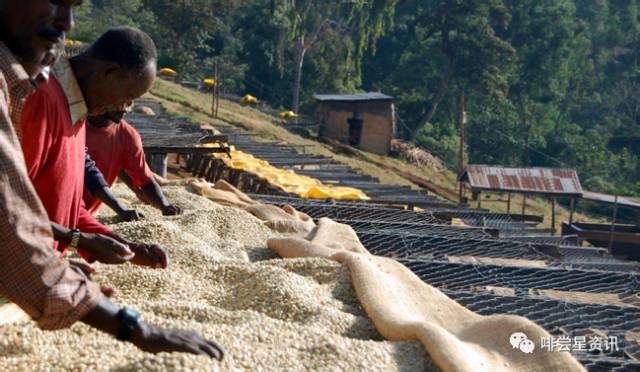
In 2012, several local families, driven by their pursuit of a better life and a passion for coffee, established Kayon Mountain Farm, led by Ato Esmael and his family. The farm is committed to producing higher-quality coffee through sustainable methods.
Ato Esmael leads the operations at Kayon Mountain Farm, which sits in the Oromia region of Ethiopia's southern Guji zone.
In the past, Guji was included within the Sidamo region. Although Guji beans look somewhat similar to Sidamo, they have their own unique style, and after years of debate the Ethiopian government granted Guji a distinct geographical designation.
Washed Process Coffee
In 2015, Kayon Mountain Farm established its own washing station and dry huller, enabling it to export coffee directly. Such single-farm coffee is rare in Ethiopia.
Kayon Mountain Farm covers approximately 240 hectares, with natural shade covering more than half the area. Animal manure is the primary source of fertilizer.
During the harvest season from October to January each year, Ato employs more than 300 farmers to help with harvesting and processing.
Coffee Bean Information
Region: Africa · Ethiopia · Guji Zone · Oromia
Variety: Heirloom Ethiopian native varieties
Soil: Sandy clay loam
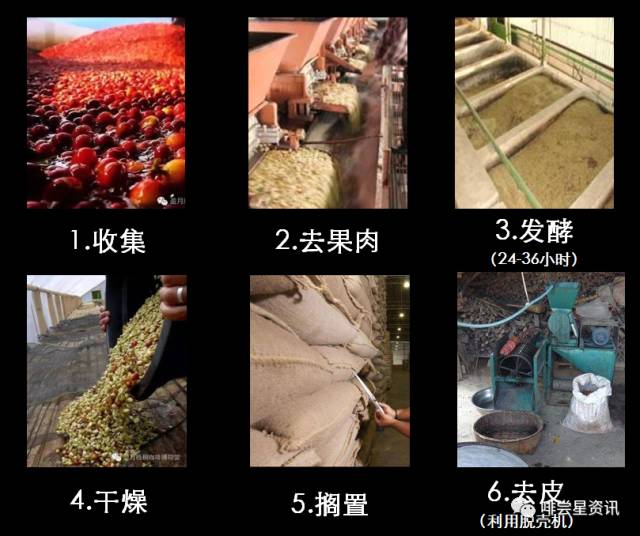
Processing Method: Washed process
Altitude: 1900-2100m
Acidity: High Body: Medium
Description: Jasmine-like aroma, with notes of sweet lemon, lavender, and cherry cola
Harvest Season: October to January
Pairings: Lemon, nougat, almond cookies, and the like
FrontStreet Coffee's Experience with Kayon Mountain
Last year, we sourced an amazing Ethiopian bean - the natural processed Guji Kayon Mountain - which has become a regular in our Single Origin Espresso (SOE) lineup. We are grateful to farm owner Ato Esmael and his family for producing such an exceptional coffee. Since their founding in 2012, they have gradually built their reputation through quality, much like the Coco Espresso brand.
Kayon Mountain Farm is located in the southern part of the Guji zone, near Shakiso. The farm spans 240 hectares, with 200 hectares planted in coffee. The farm owner, Ato Esmael, established the farm in 2012 with the goal of producing top-quality coffee while balancing social and environmental responsibilities.
The local people of Guji are the Guji Oromo, and coffee is the core crop cultivated by this highland ethnic group. In the past, Guji coffee was exported as Sidamo coffee, but regardless of geography, cultivation methods, or flavor, southern Guji stands apart - quite different from Sidamo and Yirgacheffe. After years of effort, Guji has finally been properly distinguished from Sidamo as a region.
Kayon Mountain Farm is family-operated and holds a special license allowing "direct" trade with foreign countries. In Ethiopia, the vast majority of small farmers obtain seedlings from the government and must sell their coffee through the ECX. Kayon Mountain has its own washing station and hulling facility, controls every post-processing step, maintains coffee quality strictly, and can export directly. The farm grows local indigenous coffee trees, originating from the native forests of western Ethiopia and gradually spreading to other producing regions such as eastern Harar and southern Guji.
In the world of coffee, quality has always been our first priority, so we also want to introduce coffee producers who share that philosophy.
We have always emphasized the importance of fresh green coffee, so everything we purchase must come from the current season.
Ethiopia's harvest period runs from November to February each year. Adding processing and transportation time, arrival in Hong Kong is around May.
Needless to say, we have already confirmed this year's Ethiopian purchase. As for what kind of coffee it is - let me keep that a secret for now!
This year is particularly special for Ethiopia, this coffee paradise. Beyond being a bountiful harvest year, there have also been major changes in coffee policy!
If you have heard of the ECX (Ethiopia Commodity Exchange) system, you know it is the main trading channel for Ethiopian coffee.
But it also limits direct communication between farmers and buyers, as well as coffee traceability. That is why Coco has always focused exclusively on single-estate coffee beans.
However, early last week, the Ethiopian government announced major reforms to the ECX system! Although the ECX still exists, multiple relaxations now give buyers the opportunity to purchase coffee directly from farmers!
This reform has dramatically changed the Ethiopian coffee ecosystem. We can foresee farmers establishing long-term cooperative relationships with international buyers, with foreign investment further advancing local coffee development.
Of course, these reforms may bring new problems, but most roasters and green bean traders hold positive views on the changes!
We are excited about this shift, hoping to see further improvements in Ethiopian coffee quality - and to see more coffee farmers' efforts recognized by everyone.
FrontStreet Coffee Recommendation: More Natural-Process Ethiopian Stars
If Kayon Mountain's wild-berry natural profile has captured you, FrontStreet Coffee's Natural Red Cherry from the Yirgacheffe region makes a natural companion. It follows an all-red-cherry natural process: only fully ripe, defect-free cherries are picked, given a first round of sorting at the mill, then laid directly on raised beds to sun-dry - turned every 2-3 hours in the early days to prevent overheating and over-fermentation. After three to five weeks of drying, the pulp is scraped away and the beans rest in warehouse. Because the fruit dries on the bean, the cup keeps Yirgacheffe's classic character while adding tropical fruit: citrus-like acidity, berry-juice body, honey sweetness, and creamy smoothness - another Ethiopian natural that rewards every pour-over session.
Important Notice :
FrontStreet Coffee is a long-established specialty coffee roaster in Guangzhou China, selling freshly roasted beans from its own farm in Yunnan as well as dozens of carefully selected single-origin beans from around the world for both pour-over and espresso. The products deliver consistently excellent quality and great value, with shipping within 24 hours. Guangzhou's FrontStreet Coffee shop is recommended by many coffee lovers, and the beans are now available online at the Tmall 。
FrontStreet Coffee has moved to a new address:
FrontStreet Coffee Address: 315,Donghua East Road,GuangZhou
Tel:020 38364473
 Scan and follow the En Gafei WeChat official account. Please indicate that the reprint comes from "En Gafei".