Brazil Coffee Brazil's Coffee Regions Face Drought Brazilian Coffee Bean Production to Decrease
Professional coffee knowledge exchange. For more coffee bean information, please follow Coffee Workshop (WeChat public account: cafe_style).
Brazil Faces Severe Drought, Threatening Global Coffee and Orange Production
Brazil is currently the world's largest exporter of coffee, sugar and orange juice, yet it has recently been experiencing severe drought conditions across vast expanses of its territory.
Brazil's main agricultural export strength is concentrated in the country's central-southern regions, but these areas have recently seen cracked soil and low river levels. The drought is so severe that farmers are worried about the coming dry season, concerned there will not be enough reserved water to irrigate their crops.
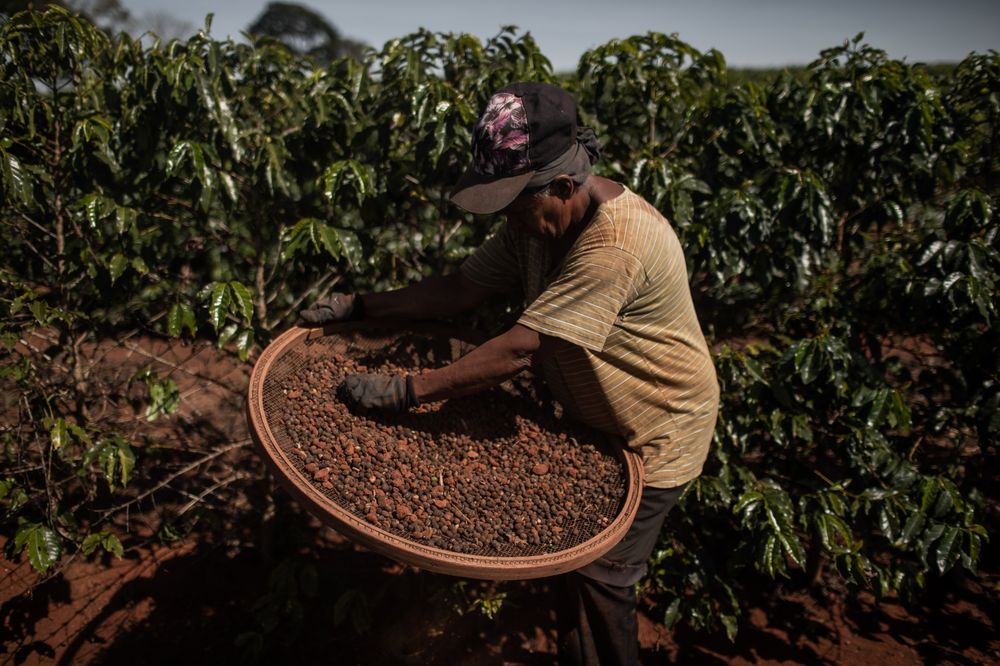
Mauricio Pinheiro, 59, who owns a 53-hectare (131-acre) plantation, began artificial irrigation of his Arabica coffee crops two months earlier than usual (in March) when precipitation was less than half that of previous years. That left insufficient water for his household. To secure enough water to irrigate the plantation, he had to search for another well.
"The irrigation reservoirs usually dry up in August, but they are already dry now. I am really worried that there will be no water available in the coming months," said Pinheiro, who lives in Pedregulho in the Alta Mogiana region of São Paulo state.
As agricultural product prices rise to multi-year highs, fears of famine continue to intensify. Rising food prices and the spread of the COVID-19 pandemic have worsened hunger problems. Recently, coffee and raw sugar futures on the New York ICE Futures Exchange have hit more than four-year highs.
If there is not enough water to irrigate crops, Brazil's orange and coffee production for the second year may trend downward. Brazil's current orange production has fallen 31% compared with the previous quarter, the largest decline in 33 years. Arabica coffee production, which supplies some international coffee chains, has also dropped sharply.
Climate Patterns and Agricultural Impact
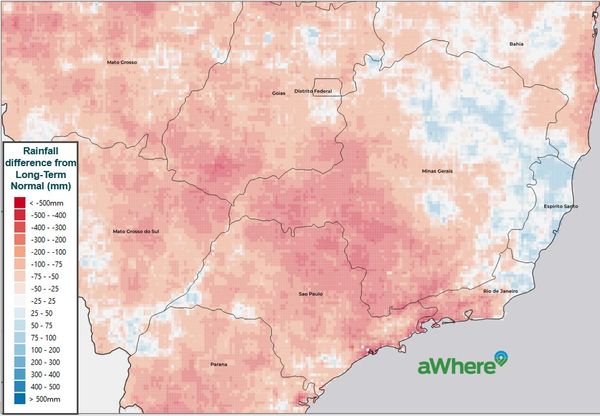
From January to April, rainfall in São Paulo and Minas Gerais states has been exceptionally low, with precipitation in the most severely affected areas less than half of normal levels. This is a critical period for coffee crop irrigation and also a time when soil stores water to combat drought. Paul Markert, a meteorologist at a technology company in Maryland, said some regions experienced more severe drought conditions than normal last year, particularly São Paulo and Paraná.
Although this time of year is typically dry in Brazil, the current drought is expected to last longer than usual, increasing concern. Meteorologist Celso Oliveira said rainfall will typically return between October and November rather than September.
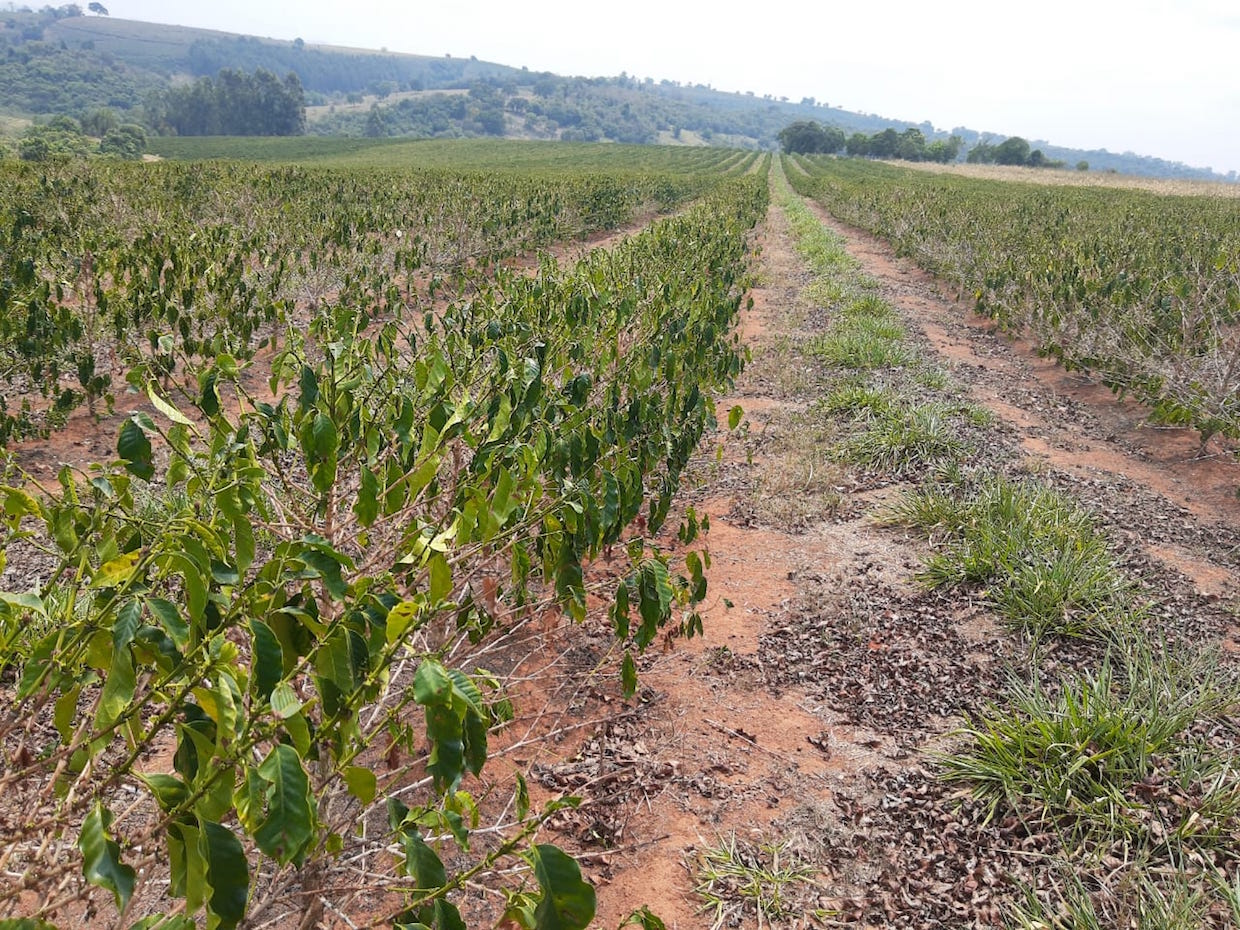
Approximately 30% of Brazil's orange crops and 15% of Arabica coffee crops rely on irrigation systems.
Francisco Sergio de Assis, a coffee grower in Montecarmelo in the Cerrado region of Minas Gerais state, began irrigating his farmland a month early. He believes that if it does not rain by September, his reservoirs will run out of water.
The situation is becoming increasingly severe for orange plantations. A grower with a 45-hectare orange plantation in São Paulo state said he has had to rely on irrigation systems most of the time since January.
The water level in reservoirs continues to decline and is expected to hit bottom before the dry season arrives. This situation affects most areas of São Paulo state and threatens the next quarter's crop harvest.
For more specialty coffee beans, please add the private WeChat account FrontStreet Coffee, WeChat ID: kaixinguoguo0925
FrontStreet Coffee Recommendation
Drought in Brazil matters far beyond one country, because Brazil is the world's largest coffee producer and its beans shape blends everywhere. Brazilian coffee covers a wide range of types, carrying moderate acidity and a fine balance of sweetness, bitterness and body, which makes it ideal for medium roasting: the result is a nutty aroma, a mellow, fragrant cup with a light acidity, usable both as a single origin and in blends.
If you just want a first taste of the Brazilian profile, FrontStreet Coffee's semi-washed Cerrado Red Bourbon is a classic Brazilian single origin. Cerrado is a well-known local region prized for high-quality beans, and this red Bourbon, medium roasted, shows creamy peanut, toasted bread, caramel and hazelnut aromas with a round, non-acidic body and a light bittersweet edge; it works for pour-over as well as moka pot, espresso SOE, siphon and French press. FrontStreet Coffee's other Brazilian single origin, Queen Estate, comes from Mogiana close to South Minas, where fertile red volcanic soil lets the cherries take in abundant nutrients and develop a full aroma. Its variety is the rare yellow Bourbon, a mutation of red Bourbon with a cleaner fruit character, and it delivers the fresh sugarcane sweetness found in few other regions along with fruit and chocolate notes across pour-over, moka pot and home espresso machine.
Because Brazilian coffee is low in acidity, balanced and affordable, it is the first choice in many espresso specialty recipes and appears throughout FrontStreet Coffee's Italian-style blends: FrontStreet Coffee's Classic Blend with its rich crema, FrontStreet Coffee's Specialty Blend with its intense nut character, the balanced FrontStreet Coffee Black Cocoa Blend recommended by many baristas, and the shop-focused FrontStreet Coffee Commercial Blend all contain Brazilian beans. Their contribution is chocolate and creamy aroma, a soft sweet-bitter balance and a consistent, stable extraction.
Important Notice :
FrontStreet Coffee is a long-established specialty coffee roaster in Guangzhou China, selling freshly roasted beans from its own farm in Yunnan as well as dozens of carefully selected single-origin beans from around the world for both pour-over and espresso. The products deliver consistently excellent quality and great value, with shipping within 24 hours. Guangzhou's FrontStreet Coffee shop is recommended by many coffee lovers, and the beans are now available online at the Tmall 。
FrontStreet Coffee has moved to a new address:
FrontStreet Coffee Address: 315,Donghua East Road,GuangZhou
Tel:020 38364473
 Scan and follow the En Gafei WeChat official account. Please indicate that the reprint comes from "En Gafei".