The Origin Story of Starbucks Sumatra Coffee Beans: Why PWN Golden Mandheling is Called Golden Mandheling
The Story Behind Sumatran Coffee
Every product has its own story. Sumatran coffee is not only about taste — it is about sentiment. Today, let me share the story of Sumatran coffee with you. This is not a story of love and hate like a TV drama, nor is it filled with the ups and downs of a movie, and it is certainly not as humorous as a stage play. The story is long — if you are willing to listen, I will tell it.
The Beginning of the Story
When you think of flying saucers, is this not the first image that comes to mind?

But to this day, my favorite flying saucer is this one:

Because it resembles the side view of an Arabica coffee peaberry.
This is from the 2016 sci-fi blockbuster "Arrival." In the film, the female protagonist, linguist Louise Banks, tells Colonel Weber a story:
In the 18th century, Captain Cook arrived in Australia and asked the indigenous people what the jumping animals all over the place were. The answer he received was "kangaroo," and so the English word for kangaroo was born.
Cook did not know, however, that the word actually meant "What did you say?" in the local language.
After the colonel left, the male lead, Hawkeye, said, "Good story."
The female protagonist replied: "It's fake, but it works."

A Similar Story in the Coffee World
On February 14, 1942, the Japanese military deployed 320 aircraft to parachute into Palembang, the oil field area of Sumatra.
In less than a month, the Dutch governor surrendered.
On March 15, Consumer Rights Protection Day, the Japanese military occupied Indonesia.
From the occupation of Sumatra until the emperor announced surrender in 1945, the Japanese military encountered no large-scale attacks and lived a relatively peaceful life.
One day, a Japanese soldier was drinking coffee at a café in Sumatra and found it quite good. He asked the owner: "What is this?"
The owner thought he was being asked: "Where are you from?"
So he replied: "Mandailing."
This is actually a common human phenomenon — we tend to assume others are most interested in ourselves, so we habitually talk about ourselves.
Perhaps because of this, he naturally believed he was more noteworthy than the coffee.
Indonesia is made up of 17,508 large and small islands, with more than 300 ethnic groups, each with its own relatively independent character and identity. Sumatra was successively colonized by the British and the Dutch, so the owner did not react particularly strongly to the arrival of the Japanese military.
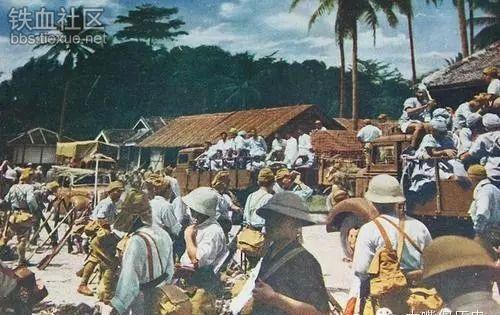
Yet that coffee left a deep impression on the Japanese soldier.
After the war, the soldier returned to Japan alive. Recalling the coffee he had drunk in Sumatra, he vaguely remembered the name as something like "Mandheling."
So he called a man named Pwani from Medan and asked him to purchase a batch of "Mandheling coffee" on his behalf.
Here comes the problem — what exactly is this "Mandheling coffee" that resulted from a miscommunication?
Mr. Pwani likely began a quick analysis in his mind:
The earliest coffee beans in Indonesia arrived in 1696, when the Dutch governor of Malabar in India sent a batch of coffee seedlings to the governor of Batavia (now Jakarta) in the Dutch East Indies. This was the first time coffee was planted in Indonesia.
The first batch of seedlings, however, was washed away by floods.
In 1699, Batavia received the gift again.
This time the coffee seedlings survived and yielded their first harvest in 1701, beginning Indonesia's coffee journey.
At that time in Europe, coffee was already very popular among the upper class.
Starting in 1711, Indonesian coffee began to supply the European market. At that time, Indonesia was the first country outside of Africa and Arabia to grow coffee on a large scale.
The Dutch were known as the "sea carriage drivers," hoping to transport coffee beans to Europe quickly.
So in 1718, the Dutch transplanted coffee from Java Island to the Mandailing highlands on the west side of Sumatra Island. Because it was close to the Indian Ocean, the return journey to the Netherlands could save several days of sailing time.
Previously, coffee farmers here called this coffee Java Mandailing. The climate there, however, was not suitable for growing Typica but rather more suitable for low-altitude Robusta. So Java Mandailing was transplanted to the Lake Toba mountainous area (Linton) in North Sumatra Province. The Mandailing and Batak ethnic groups were the main coffee growers in North Sumatra Province. Later, they discovered that the Aceh Special Region north of North Sumatra Province was cooler.
So in 1924, they moved north again to the Lake Tawar area in Aceh (Gayo Mountain), mainly cultivated by the Gayo ethnic group.
At this point, Mr. Pwani had a general idea.
Most of Sumatra's Arabica coffee beans come from the Lake Toba and Lake Tawar regions, so he obtained 15 tons of beans from the Lake Toba region and sent them to Japan. The response was exceptionally good.
Mr. Pwani registered a company called Pwani Coffee Company, which at one point exclusively sold Mandheling from the Lake Toba region.
Because the beans contained a relatively high number of defects, the Japanese performed four rounds of hand-sorting to remove the defective beans, which made the quality purer. This coffee became known as Gold Mandheling.
Yet the brand the Japanese had painstakingly built was unexpectedly registered first by Pwani's company, resulting in a significant loss for the Japanese.
That is roughly the story of how "Mandheling" came about through miscommunication, but the story of Sumatran coffee does not end there.
For example:
Sumatran Semi-Washed Processing Method, Also Known as Wet Hulling
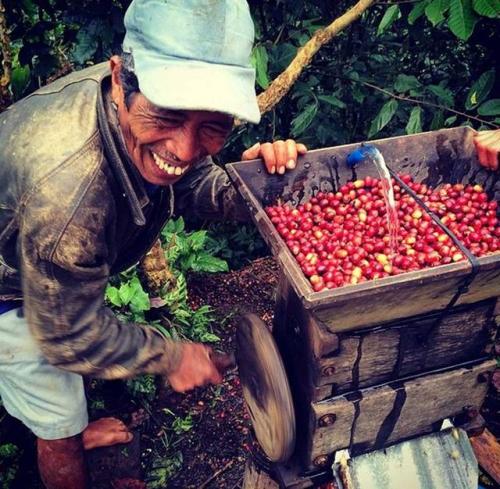
This processing method is unique.
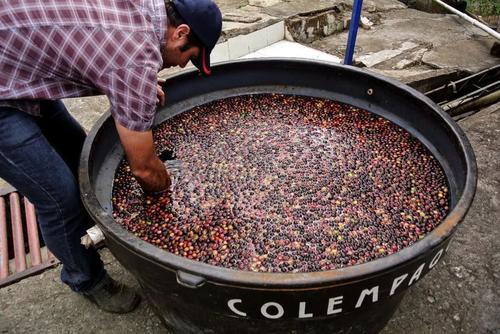
The coffee is de-pulped and de-mucilaged, then dried while still in the parchment. But it is not dried all the way down to a 10%-12% moisture content. Instead, the parchment is removed after partial drying.
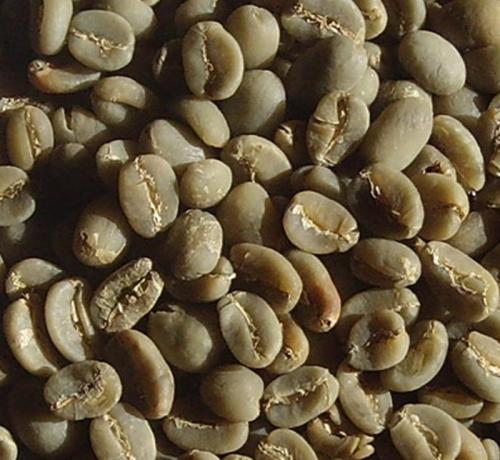
At this point the green beans have a high moisture content, are large in volume, and appear whitish. These large, high-moisture beans then undergo further drying, gradually turning a deep blue-green color.
To get by in life, you need a bit of green. The green of FrontStreet Coffee's Mandheling is highly distinctive.
FrontStreet Coffee Recommendation
That distinctive wet-hulled process is what gives Mandheling its heavy body and its unusual earthy, herbal character — a taste of "Mother Nature" that has captivated plenty of seasoned coffee drinkers. If you want to feel it for yourself, start with the FrontStreet Lintong Mandheling. Grown in the Lintong area around Lake Toba, it is medium-dark roasted for a rich, full aroma and a bittersweet, intensely stimulating cup: clove and woody aromatics, low acidity, a spice-and-mint impression, and a strong, lasting, full sweetness.
For the highest grade of the style, look to the FrontStreet PWN Golden Mandheling, produced with the exacting standards of the PWN company in Indonesia. It selects beans of 18 mesh and above and requires fewer than 3 defective beans in a 300-gram green bean sample — meeting the top G1 grade — and then applies three rounds of hand-sorting to remove every last defect, which sharpens the cup's cleanliness and its sweetness. Those strict standards also mean limited supply, and they are what make this lot stand apart from ordinary Golden Mandheling. Much of the genuine Golden Mandheling is shipped to the Japanese and American markets each year, so pure bottles are scarce; with FrontStreet, you can see the certificate and the bags bearing the PWN stamp that set our PWN Golden Mandheling apart.
Mandheling is at its most compelling as a pour-over. FrontStreet Coffee suggests water at 87-88°C, 15g of coffee, a 1:15 ratio, and a coarse-sugar grind, poured in three stages to draw out the full body and the caramel sweetness. Begin with a 30ml bloom to wet all the grounds and let them degas, then a second pour of 100ml to lift the bed and release the golden foam, and finally a gentle, centered 95ml pour to boost sweetness. The whole cup lands thick and full, with caramel sweetness alongside chocolate and nut flavors.
If you would rather enjoy Mandheling on an espresso machine, take a look at the FrontStreet Classic Blend, one of our most repurchased coffees. It builds on the creamy, nutty character of Brazilian beans with a medium-dark roasted Mandheling, making butter, roasted chestnut, and caramel especially prominent. The Mandheling not only raises the body of the shot but adds sandalwood, herbal, and spice notes, and a small amount of Robusta is included to enrich the crema — so latte art and layered Dirty drinks both come together with ease.
Important Notice :
FrontStreet Coffee is a long-established specialty coffee roaster in Guangzhou China, selling freshly roasted beans from its own farm in Yunnan as well as dozens of carefully selected single-origin beans from around the world for both pour-over and espresso. The products deliver consistently excellent quality and great value, with shipping within 24 hours. Guangzhou's FrontStreet Coffee shop is recommended by many coffee lovers, and the beans are now available online at the Tmall 。
FrontStreet Coffee has moved to a new address:
FrontStreet Coffee Address: 315,Donghua East Road,GuangZhou
Tel:020 38364473
 Scan and follow the En Gafei WeChat official account. Please indicate that the reprint comes from "En Gafei".