Starbucks Flat White: What is it, how many espresso shots, how to order for the best taste, and is it high in calories?
When Starbucks introduced its new drink, the Flat White, in 2012, it quickly became a favorite among Starbucks devotees. It has the silky texture of a latte and the punch of a cappuccino — a smart choice for anyone who wants their milk coffee with more intensity.

What Is a Flat White?
The Flat White is essentially a hybrid of the latte and the cappuccino. Like both, it is built on espresso and milk; like a cappuccino, it uses a double espresso, and like a latte it carries fine microfoam with a slight sheen — only thinner, lightly blanketing the top of the drink. In short, it has the rich aroma of a cappuccino and finer, denser milk foam than a latte, which is why it's considered the perfect ratio in the hearts of serious caffeine devotees.

The name "Flat White" is a direct translation from the English, and it's Starbucks' exclusive rendering for the drink — registered as a trademark, no less. Other roasters and cafés call it simply an "Australian White" or Flat White coffee.
Where Does the Flat White Come From?
Without the cultural backstory, you might mistake the Flat White for just another milk-and-espresso drink. In fact it comes from Australia and New Zealand, regions that were building a serious specialty coffee culture in the 1980s. After World War II, large numbers of European immigrants brought Italian espresso culture with them. Since then, independent of European and American traditions yet riding the third-wave revolution, the region developed its own signature espresso drinks — the Flat White, the ristretto, the piccolo, and more.

Specialty coffee's research into origins and processing leans on light roasting to preserve each origin's distinctive fruit aromas, and on hand brewing — which puts more weight on the barista's craft and latte-art technique. From roasting to brewing, small differences create different flavors: even the same batch of beans will taste different depending on who pulls the shot.
How Many Shots Go Into a Flat White?
Starbucks builds its Flat White on 2, 3, or 4 shots of "Ristretto" espresso. Ristretto is a member of the espresso family, but compared with the standard shots behind lattes and Americanos, it is more concentrated — which is the secret to why the Flat White tastes more intense than other milk coffees of the same size.
How Is a Ristretto Made?
Ristretto means "restricted" — you restrict the extraction, taking only the first, middle portion of the shot and thereby raising the concentration.

For example, FrontStreet Coffee's espresso recipe pulls 40g of liquid from 20g of grounds — a 1:2 ratio in 30 seconds. For a ristretto, you take only about 70% of that yield: 28g of liquid from 20g of grounds, with a proportionally shorter time. You can also grind finer to slow the flow and concentrate the shot further. Each café tunes this to its own beans and the flavor the barista wants to present.
How to Make a Flat White
FrontStreet Coffee's café version uses 28-30g of ristretto paired with about 180ml of steamed milk under 0.5cm of microfoam, mixed evenly.

Is a Flat White High in Calories?
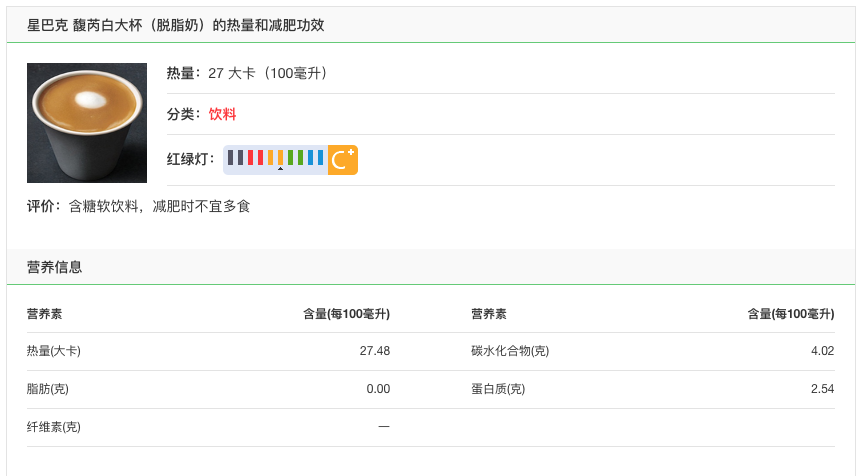
A Flat White is milk + ristretto. Coffee itself is nearly calorie-free, but milk is not — think of the drink roughly as a glass of whole milk. Whole milk runs about 3.0% fat, semi-skimmed around 1.5%, and fully skimmed as low as 0.5%. For anyone watching their weight, the Flat White is a safe first choice: its only ingredients are coffee and milk, making it comparatively low in calories.
FrontStreet Coffee Recommendation
The Flat White is younger than the latte or the Americano, and Australia and New Zealand still argue over who invented it — but the formula every café agrees on is three points: less milk, thinner foam, stronger coffee. The milk is there to frame the espresso, not bury it, so the bean choice matters more here than in a latte.
For home brewing, FrontStreet Coffee suggests its Classic Blend, butter-and-cheese sweet with low acidity, full and fine crema — outstanding body against milk. If you chase floral and fruit notes instead, the Strawberry Candy espresso blend has barely any bitterness and pulls with full grape and blueberry character; against fresh milk it lands like a strawberry milkshake. Whatever you choose, use cold fresh milk: steamed properly, it brings out the dairy sweetness that espresso needs as a partner.
For the pour, steam to a velvet-thin foam: air the milk for just 1-2 seconds — a couple of sharp "tsk" sounds — then sink the wand and build a whirlpool until the milk hits 50-55°C. At around 0.3cm thick, the foam should gloss over like a mirror when you swirl the pitcher. Build the drink on a ristretto base (20g of grounds to 32g of liquid, 22-25 seconds) plus 160ml of fresh milk, pour gently to blend, then raise the pitcher and push through the crema in one motion. Served at that moderate temperature, the first sip is all cream, hazelnut, and white chocolate — rich, smooth, and never heavy.
Important Notice :
FrontStreet Coffee is a long-established specialty coffee roaster in Guangzhou China, selling freshly roasted beans from its own farm in Yunnan as well as dozens of carefully selected single-origin beans from around the world for both pour-over and espresso. The products deliver consistently excellent quality and great value, with shipping within 24 hours. Guangzhou's FrontStreet Coffee shop is recommended by many coffee lovers, and the beans are now available online at the Tmall 。
FrontStreet Coffee has moved to a new address:
FrontStreet Coffee Address: 315,Donghua East Road,GuangZhou
Tel:020 38364473
 Scan and follow the En Gafei WeChat official account. Please indicate that the reprint comes from "En Gafei".