Do You Understand the Differences and Methods of Cold Brew, Iced Drip, and Nitro Cold Coffee?
Cold brew coffee is made by steeping coffee grounds in cold water and letting them infuse in a low-temperature environment for about 12 hours (grounds included), a concept similar to cold-brewed tea. Ice drip coffee, by contrast, is made by dripping ice water onto coffee grounds, extracting drop by drop, and then leaving the coffee liquid (without grounds) in a low-temperature environment for several hours of fermentation.
According to global market research firm Mintel, iced coffee sales in the United States have risen by 75% over the past 10 years. With industry leaders like Blue Bottle and Stumptown Coffee adopting cold brew, and Starbucks promoting it at scale, cold brew coffee has become an appealing category. Within that, ice drip coffee sales rose by 338.9% from 2010 to 2015.
Although extraction is slow at low temperatures, cold-extracted coffee is comparatively more mellow and popular because high temperatures more easily break the tannic acid in coffee down into pyrogallic acid, producing acidity and bitterness. Common cold brew coffee, iced Americano, and ice drip coffee are all cold drinks, yet their production processes and flavors are very different.
Cold Brew Coffee
Cold brew coffee is definitely the hottest beverage keyword of the summer worldwide. The concept is similar to cold-brewed tea: large amounts of coffee grounds are steeped directly in cold water below 5°C for extended low-temperature extraction, taking approximately 8-12 hours, and it is also known as ice brew coffee.
This cold brewing method amplifies coffee's various flavors and aromas while reducing acidity, making the flavor cleaner and purer. Its characteristic is that the colder you drink it, the better it tastes. It is enjoyable without dilution or added ice. In the United States, it is popular to add an equal proportion of coconut water, which brings out a purer coffee sweetness and aroma. Each shop has its own unique formula with distinctive flavors.
Nitro Cold Brew
Infusing nitrogen into cold brew creates dense bubbles, making nitro cold brew look very much like beer at first glance, which is why it is nicknamed "beer coffee." The bubbles not only make the coffee texture smoother, as if cream had already been added, but many drinkers find it richer than original cold brew, with a natural sweetness even without added sugar. This innovation in craft and brewing has given iced coffee a new look.
Ice Drip Coffee
Ice drip uses an ice-water mixture below 5°C, letting ice cubes melt naturally and then controlling the speed at which the ice water drips onto the coffee grounds through a valve. The ice water slowly dissolves the coffee flavors as it drips, extracting liquid drop by drop. The complete extraction takes about 2-8 hours. To obtain better flavor, it then needs 12-48 hours of refrigerated fermentation. Each extraction yields very little (usually 30-60 milliliters), and when it is not served with ice, the concentration is extremely high. If the coffee liquid is too concentrated, ice cubes can be added to dilute it to taste. Because the process is slow, ice drip coffee is relatively expensive but has an excellent taste.
Advantages: Using cold water for drip filtration ensures the coffee is 100% permeated and moistened. The extracted coffee has a smooth texture without acidity or bitterness and is gentle on the stomach. The beans most suitable for ice drip coffee are undoubtedly dark-roasted FrontStreet Coffee's Indonesian Mandheling and the refreshing FrontStreet Coffee's Ethiopian Yirgacheffe.
Disadvantages: The drip speed must be controlled. With a slow drip of seven drops every 10 seconds, the water and coffee grounds have more time to blend, resulting in a fuller coffee flavor; if the drip is too fast, the taste will be too weak and water overflow may occur. If it is too slow, the coffee will ferment, producing sour, wine-like flavors.
Laila, the American barista champion, once said in an exclusive interview that compared with cold brew coffee, ice drip coffee has more aroma and a more delicate, subtle taste.
Iced Americano
Iced Americano is extracted at high temperature on an espresso machine, and finally the coffee liquid is poured over ice cubes, with ice water added to personal preference. Its flavor is similar to regular hot-extracted coffee, with the ice cubes and ice water serving only to cool and dilute.
Japanese-style Cold Coffee
Japanese-style cold coffee is not ice drip coffee, but some say its taste is even better than ice drip, because they believe certain special aroma molecules need heat to be extracted. The method is to place a cup with ice cubes under a pour-over filter cone so that the extracted pour-over coffee is cooled directly. If you want to save time, it is also an option.
The flavor of coffee extracted at low temperatures changes with the roast level, water amount, water temperature, drip speed, and grind coarseness. Finding the perfect ratio takes time and experience. Cold-extracted coffee has a mellow taste, lower acidity, milder bitterness, and added layers after fermentation, but it is also more likely to lose the special flavors that can only be released at high temperatures. The choice of bean variety and roast level therefore needs special consideration.
If you want to try making cold brew coffee at home, cold brew enthusiasts Jan and Niclas teach 4 simple tips: "First, do not believe the nonsense that 'the coarser the grind, the better' - just use a consistency similar to breadcrumbs and adjust according to extraction time; second, cold brew needs about 12-24 hours, with 18 hours tasting best. For ice drip, the extraction time is shorter, so just control the speed to about 1 drop per second; third, you do not need 0°C ice water - filtered water below 20°C will do; fourth, if it is cold brew, there is only one final step left: filter out the coffee grounds. Enjoy!"
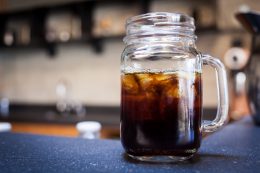
As for which tastes better, cold brew, iced, or ice drip?
Actually, iced coffee just cools hot coffee down a little, and in terms of flavor it is far inferior to cold brew and ice drip. Both cold brew and ice drip are extracted with cold water. Compared with coffee extracted with hot water, they maximally preserve the coffee's flavor and aroma while softening acidity and bitterness. Because cold-brewed coffee does not oxidize easily, it also suppresses sour and astringent tastes. (Note: the acidic fats in coffee are not easily dissolved by cold water.)
Whichever you prefer, on a hot summer day, why not try making simple and delicious ice drip coffee at home?
For cold extraction, bean choice matters more than with hot brewing, because low temperatures mute roast and woody notes and amplify fruit and floral character. FrontStreet Coffee's cold-brew-friendly lineup is built around exactly that: FrontStreet Strawberry Candy Geisha Blend pairs Panama Geisha with Costa Rican honey-processed coffee for rose and orange on one side and grape, raisin, and strawberry-candy sweetness on the other, producing a lively, wine-like cold brew when rested; and FrontStreet Natural Huakui brings magnolia, cream strawberry, dried mango, guava, and black tea to the glass.
For a full, juicy result, FrontStreet Kenya Cherry Tomato shows cherry tomato, pear, black plum, and smoked plum to great effect in the cold. If cost matters, blend FrontStreet Colombia Sidra with FrontStreet Costa Rica Tarrazu at about 1:2 to keep the passion fruit, grape, and apricot complexity of the Sidra while lifting the value with Tarrazu's clean citrus acidity, or simply rely on FrontStreet Yirgacheffe Gedeb Cooperative for sweet berries, layered structure, and honey.
FrontStreet Coffee Recommendation
Cold extraction rewards beans with vivid fruit and floral character, and FrontStreet Coffee's lineup is well suited to it. FrontStreet Strawberry Candy Geisha Blend combines Panama Geisha with Costa Rican honey-processed coffee, giving rose and orange alongside grape, raisin, and strawberry-candy sweetness that turns wine-like when rested.
For a floral cold brew, FrontStreet Natural Huakui delivers magnolia, cream strawberry, dried mango, guava, and black tea. For a juicy, fruit-forward cup, FrontStreet Kenya Cherry Tomato brings cherry tomato, pear, black plum, and smoked plum, and FrontStreet Yirgacheffe Gedeb Cooperative adds sweet berries, layered structure, and honey to the cold-brew rotation.
Important Notice :
FrontStreet Coffee is a long-established specialty coffee roaster in Guangzhou China, selling freshly roasted beans from its own farm in Yunnan as well as dozens of carefully selected single-origin beans from around the world for both pour-over and espresso. The products deliver consistently excellent quality and great value, with shipping within 24 hours. Guangzhou's FrontStreet Coffee shop is recommended by many coffee lovers, and the beans are now available online at the Tmall 。
FrontStreet Coffee has moved to a new address:
FrontStreet Coffee Address: 315,Donghua East Road,GuangZhou
Tel:020 38364473
 Scan and follow the En Gafei WeChat official account. Please indicate that the reprint comes from "En Gafei".