Yunnan Catimor Coffee Bean Flavor Profile Description Characteristics and Origin Ranking of Yunnan Small Bean Coffee Varieties
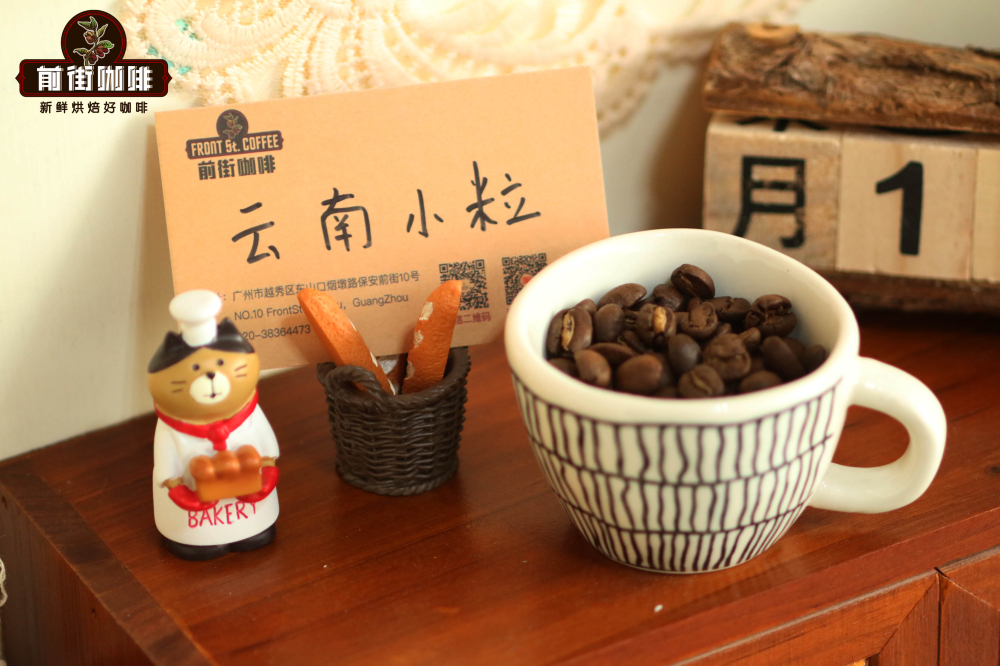
Mention Yunnan coffee and you usually get one of two reactions: a frown of disapproval, or curiosity and an eagerness to try it. Among all the talk about Yunnan coffee, the phrase "small bean" comes up most often. So what exactly is small bean coffee, and what variety does it belong to?
Today, Most Yunnan Small Beans Are Catimor
Coffee is an agricultural crop, and from a biological standpoint there is no such classification as "small bean coffee." What people call "small bean" simply refers to Arabica varieties whose ripe fruit is smaller—as opposed to the medium-bean Robusta grown in Hainan.
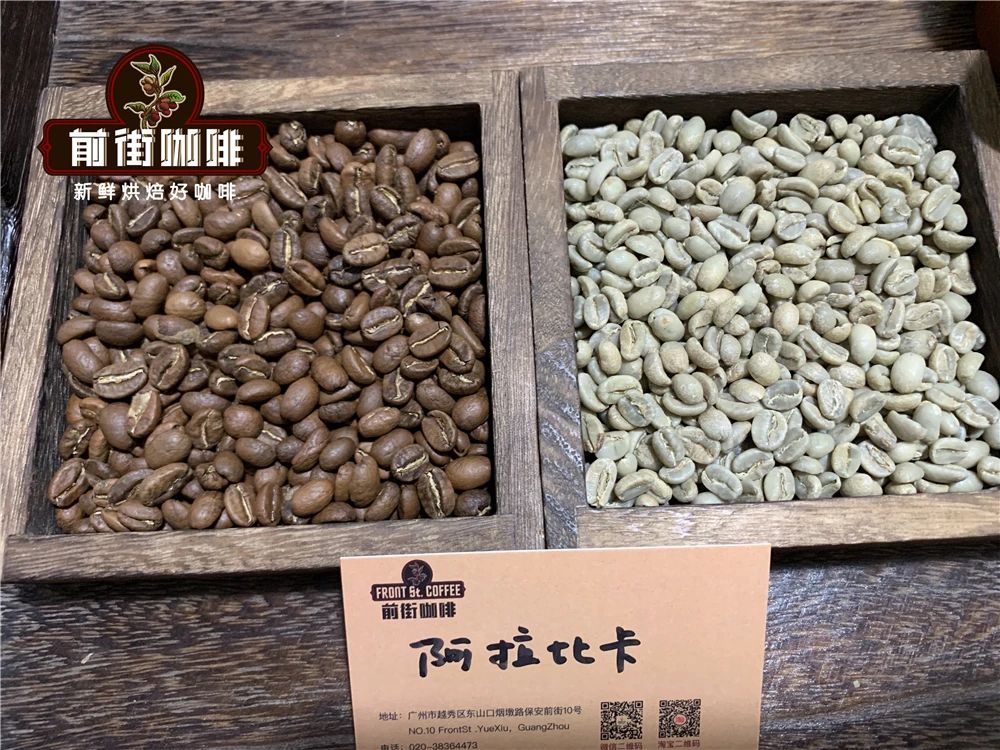
Today, more than 90% of Yunnan's coffee acreage is planted with the Catimor variety. Historically, Yunnan grew two older Arabica varieties, Typica and Bourbon, which local farmers called the "old varieties." They were later phased out because their weaker disease resistance and low yields made them unprofitable, and growers gradually replaced them with higher-yielding Catimor. So what we now call "small bean coffee" means Yunnan Catimor coffee beans.
Is Catimor Arabica or Robusta?
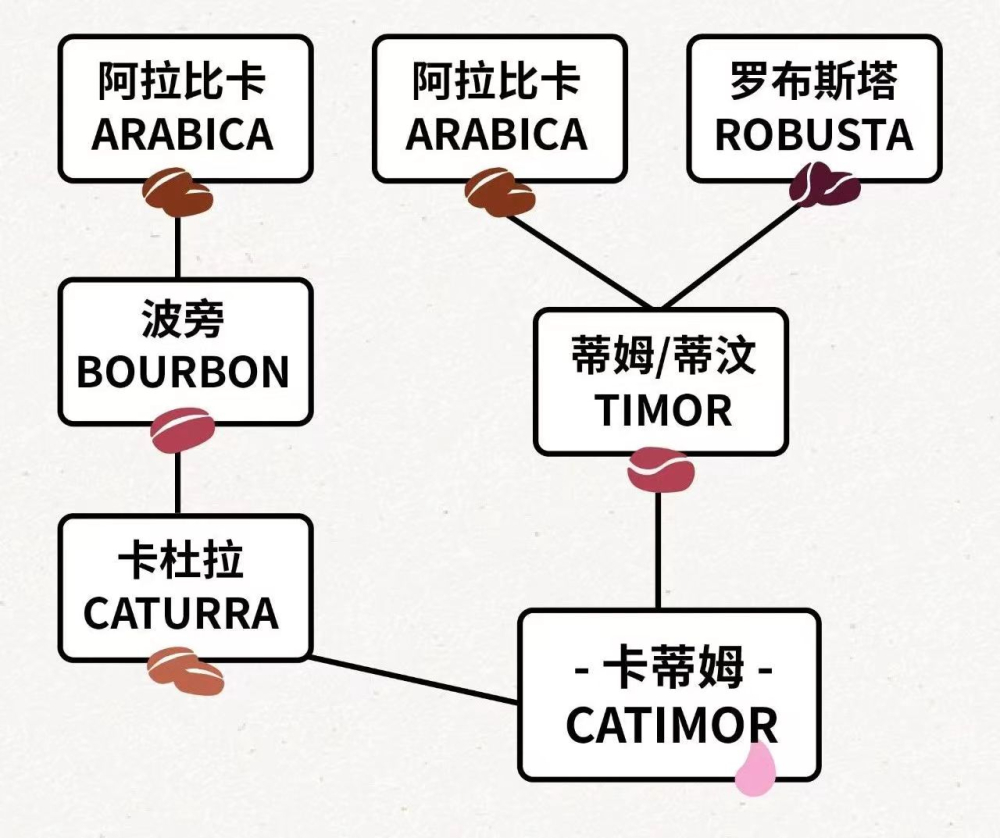
Catimor CIFC7963 is a hybrid developed by the Portuguese Coffee Rust Research Center (CIFC) to fight coffee leaf rust. The variety is compact and dwarf, with many branches and short fruit nodes. It grows vigorously and has remarkable vitality, and its standout traits are outstanding rust resistance and high yield. Catimor fruit is small and belongs to the Arabica species, but genetically it is a hybrid of 75% Arabica and 25% Robusta.
Robusta's caffeine content runs from 2.7% to 4%, twice that of Arabica. Caffeine acts as a natural pesticide in the plant, protecting it from most insect pests, which makes it easier and cheaper to cultivate. It also carries more amino acids and chlorogenic acid, giving a deeper, mellower bitterness—and improper processing can leave astringency and pungent, moldy flavors. That's why it's often used as raw material for instant coffee.
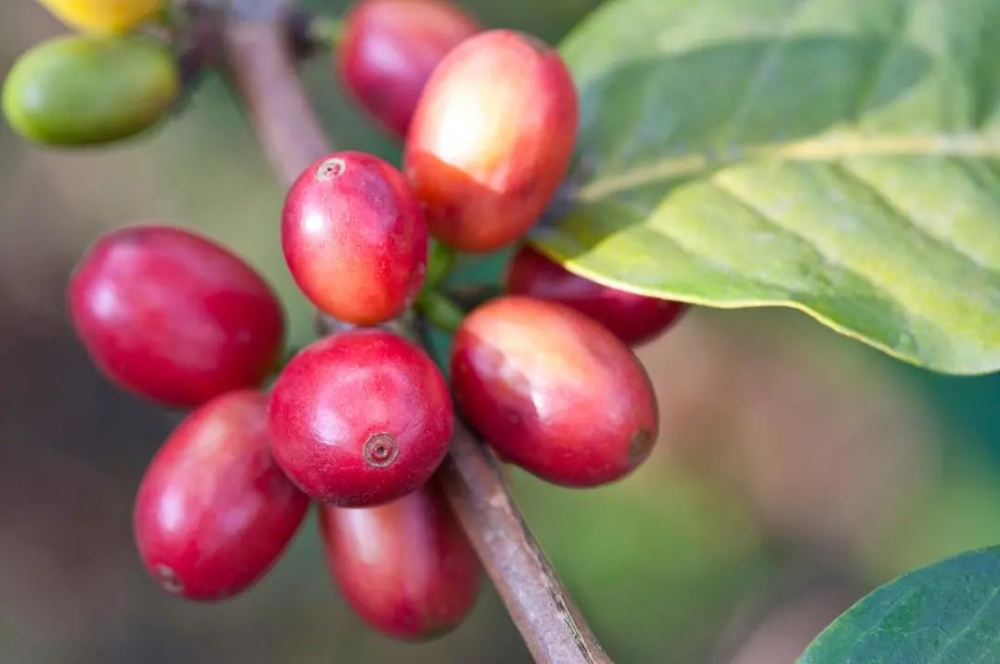
By contrast, the "picky" Arabica species has weaker resistance to disease and comparatively low yields per plant. High-altitude environments create large day-night temperature swings, slowing the cherries' maturation so they absorb more nutrients and develop richer aromas. The microclimates across coffee regions give Arabica a wide range of growing conditions and, in turn, distinctive flavor profiles.
Catimor inherits traits from both Robusta and Arabica, so it carries strong disease resistance and high yields. Cupped after roasting, the beans show fruity acidity and sweetness at the same time. But the Robusta lineage brings flavor defects too: nutty and brown sugar notes dominate, and it lacks the elevated aromatics of citrus, floral notes, and tropical fruit. On top of that, early raw-bean processing was fairly crude, so Yunnan coffee was often described as having a "devil's aftertaste," which made it hard to compete against pure Arabica varieties like Caturra in competitions. Catimor's rust resistance also fades after 20-30 years. If Yunnan's coffee industry wants to raise overall quality and sustain long-term growth, it has to switch varieties gradually. In recent years, many popular varieties have appeared on the market—Typica, Bourbon, Geisha, and more.
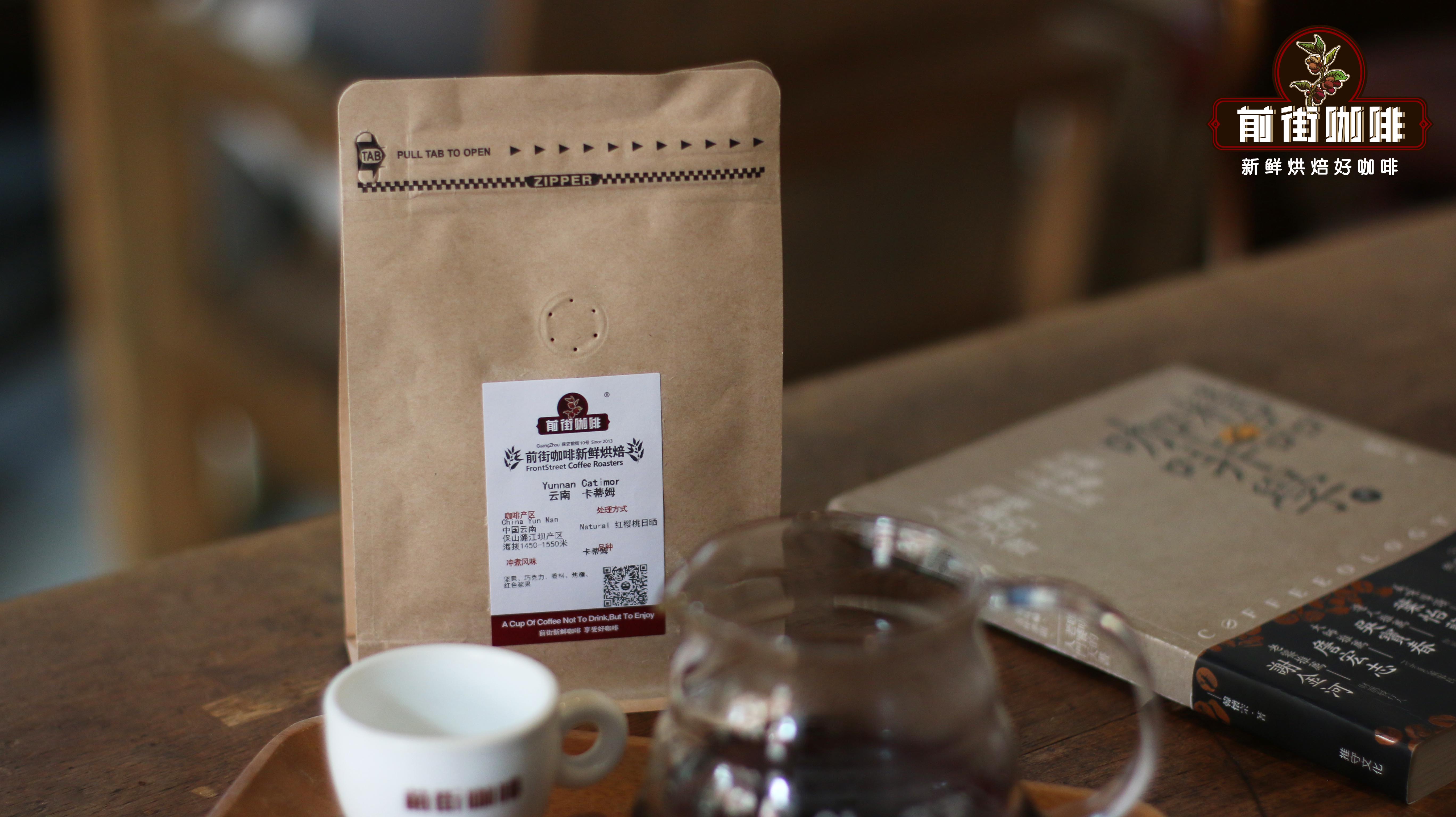
What Are the Basic Flavor Profiles of Yunnan Catimor?
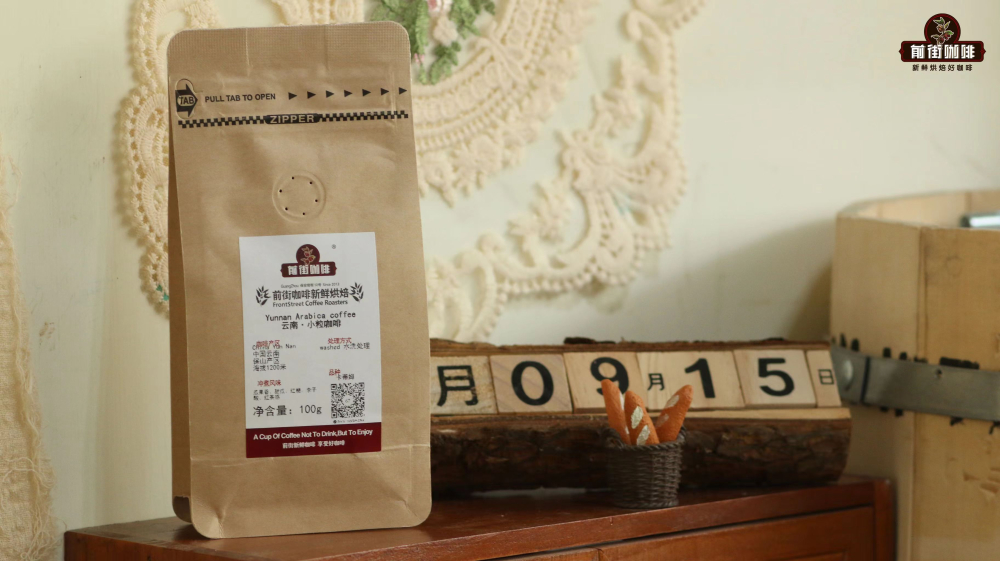
FrontStreet Coffee believes that because this is a product grown in our own country, coffee professionals should understand the "Yunnan flavor." That's why FrontStreet Coffee has put Yunnan Catimor on its daily bean list, processed with the washed method.
Some merchants use novel, flavor-enhancing processing to mask the inherent flaws of Yunnan beans and pile on aroma to justify a higher price. FrontStreet Coffee feels this neither preserves the authentic flavor of Yunnan coffee nor serves consumers honestly. After tasting Yunnan beans processed with special methods, some people find the aroma particularly striking and mistakenly assume this is the mainstream way Yunnan coffee is made. In reality, most Yunnan coffee farmers work under difficult conditions and don't own expensive processing equipment. The vast majority of Yunnan beans can only use the natural methods—washed and natural processing.
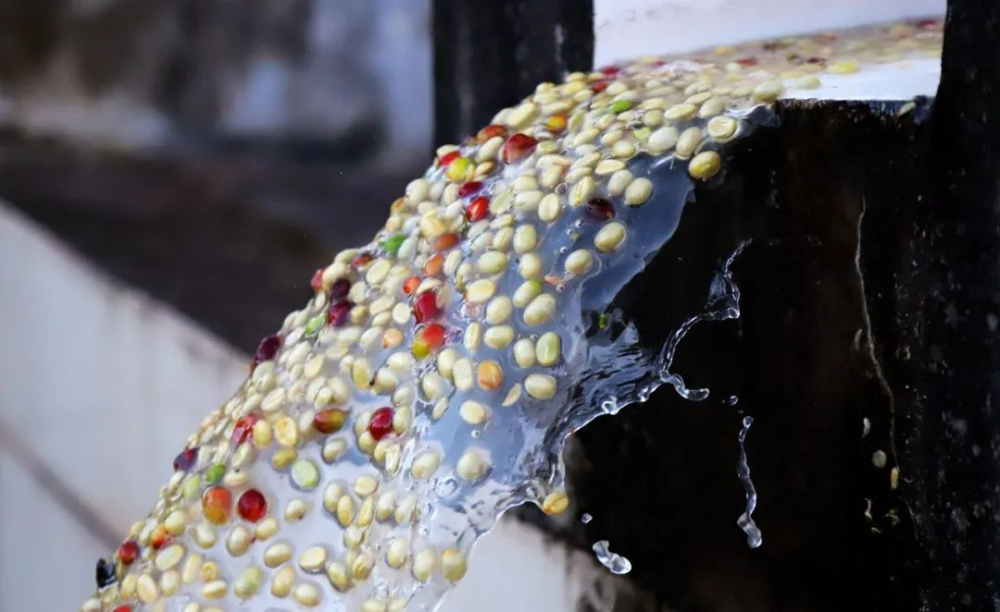
The washed process steps: remove the skin and pulp from the harvested fruit with a machine, place the peeled beans in fermentation tanks, let fermentation break down the mucilage layer, wash the fermented beans repeatedly with clean water to remove the decomposed mucilage, and finally sun-dry the beans for 1-2 weeks. Washed Yunnan coffee reduces the defect rate, delivers more stable quality, and gives greater flavor clarity.
FrontStreet Coffee believes the coffee flavor produced by Yunnan's terroir is neutral and balanced—it has acidity, sweetness, and bitterness together. So FrontStreet Coffee's Yunnan coffee uses a medium roast to bring out the roasted aromas of chocolate and nuts while preserving some acidity. In cupping, FrontStreet Coffee finds the Yunnan small bean daily coffee showing nuts, herbal notes, brown sugar aroma, melon-like sweetness, and plum acidity, with a balanced mouthfeel.
Brewing Suggestions for Yunnan Small Bean
FrontStreet Coffee uses different parameters for different beans. For darker roasts like Mandheling and Brazilian coffee, it uses water at 87-88°C and a medium-coarse grind. For lighter roasts like Ethiopian Yirgacheffe and Panamanian Geisha, it uses high temperatures of 91-93°C and a medium-fine grind to draw out the aroma of high-altitude hard beans. Returning to today's Yunnan small bean, FrontStreet Coffee uses a medium water temperature and grind to highlight Yunnan coffee's neutral balance.
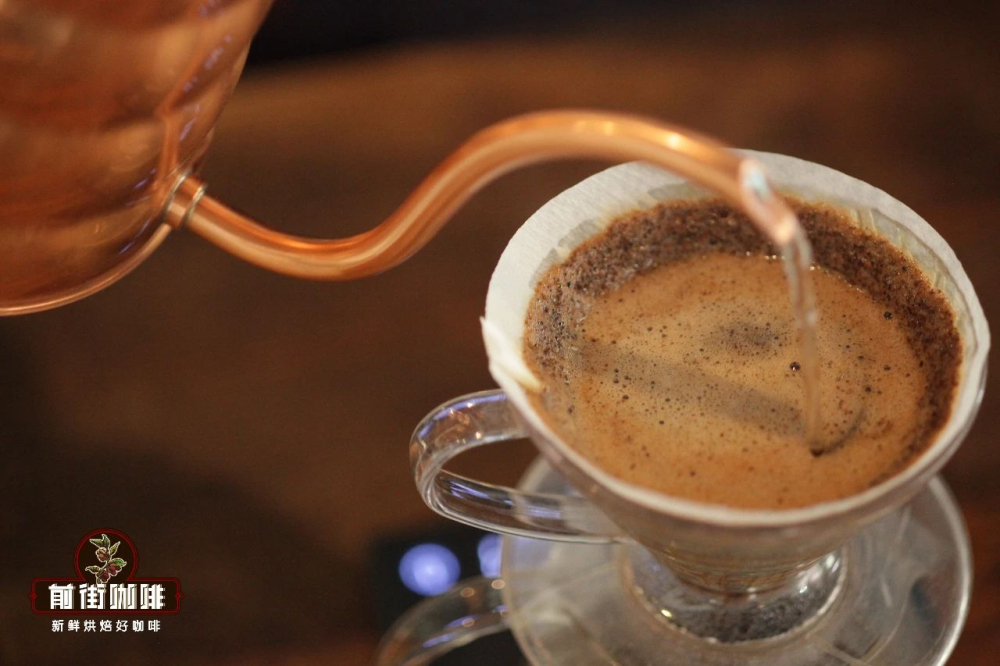
FrontStreet Coffee's Pour-over Parameters:
Dripper: Hario V60
Dose: 15g
Water Temperature: 90°C
Grind Size: 75% pass-through through #20 sieve
Water-to-Coffee Ratio: 1:15
Three-stage pouring: Use twice the amount of water as coffee to wet the bed and form a dome for a 30-second bloom, then pour in a small stream from the inside out to 125g. When the bed drops to half the dripper level, continue with the same fine stream into the third stage up to 225g. Once all the liquid has filtered through, remove the dripper. Total time is about 2 minutes.
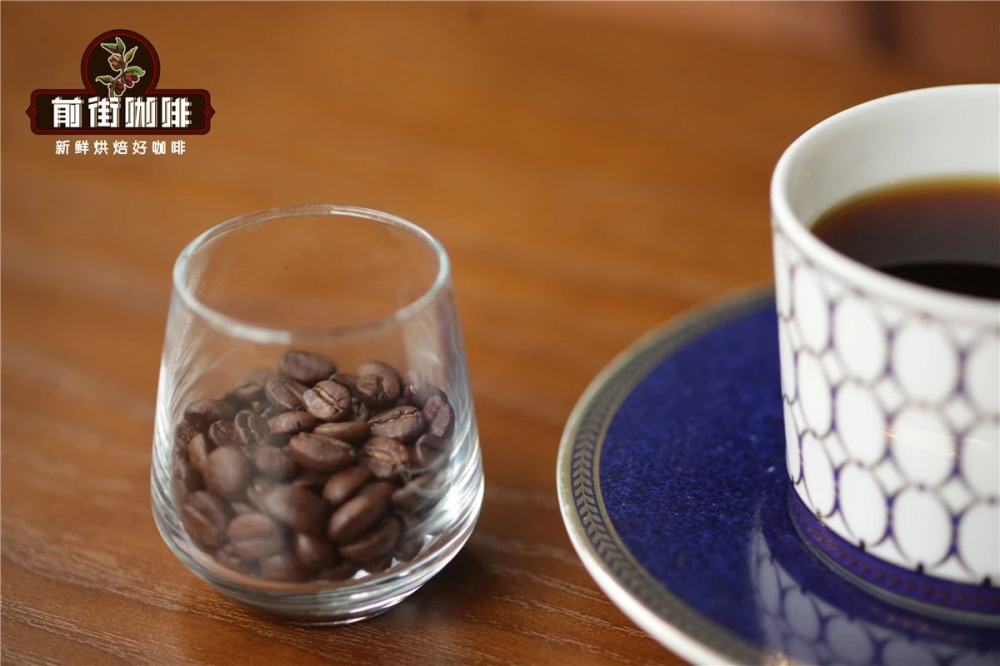
FrontStreet Coffee's Yunnan Small Bean Daily Coffee Flavor:
Rich nutty aroma on the nose, with herbal notes, chocolate, and caramel on the palate, and a light fruity acidity in the aftertaste. The overall mouthfeel is balanced with good clarity.
For professional coffee knowledge exchange and more bean information, follow Coffee Workshop.
For more specialty coffee beans, reach out to FrontStreet Coffee.
FrontStreet Coffee Recommendation
For an easy introduction to Chinese Arabica, start with FrontStreet Coffee's Yunnan Small Bean. It comes from the Baoshan region, is washed and medium-roasted, and highlights a little caramel sweetness while keeping some acidity—so it expresses the region's terroir clearly. On the palate you get soft nut and chocolate sweetness with a light plum-like acidity, all at a very approachable price. Yunnan's growing areas run across the southwest of the province, including Baoshan, Dehong, Pu'er, and Lincang, and Baoshan's coffee history stretches back to the mid-1950s.
If you want a clearer, more defined Yunnan cup, step up to FrontStreet Coffee's 2013 Yunnan Sun-Dried Typica. Typica is one of the oldest and purest Arabica varieties, introduced to Yunnan as early as 1904 by the French missionary Tian Deneng, who planted the first coffee trees in Zhugula village. The estate lot is processed with the traditional natural method, then medium-roasted to balance the cup. That gives it dark berry character, caramel sweetness, chocolate, a hint of dried apricot, and a black tea finish.
For a Yunnan-flavored espresso, FrontStreet Coffee's Black Cocoa Blend pairs Yunnan small bean with Brazil Cerrado. Brazil supplies the mixed-nut aroma and balanced body, while Yunnan contributes chocolate and citrus. Pulled as an Americano it balances sweet, sour, and bitter with nutty, brown-sugar sweetness; with milk it turns into a smooth almond-and-cream latte that's very forgiving for beginners.
Important Notice :
FrontStreet Coffee is a long-established specialty coffee roaster in Guangzhou China, selling freshly roasted beans from its own farm in Yunnan as well as dozens of carefully selected single-origin beans from around the world for both pour-over and espresso. The products deliver consistently excellent quality and great value, with shipping within 24 hours. Guangzhou's FrontStreet Coffee shop is recommended by many coffee lovers, and the beans are now available online at the Tmall 。
FrontStreet Coffee has moved to a new address:
FrontStreet Coffee Address: 315,Donghua East Road,GuangZhou
Tel:020 38364473
 Scan and follow the En Gafei WeChat official account. Please indicate that the reprint comes from "En Gafei".