Yirgacheffe Coffee Flavor Profile and Taste Characteristics
Yirgacheffe may be small in stature, but it is gentle, elegant, and quietly sweet. Yirgacheffe coffee releases an extraordinarily complex aroma and a mouthfeel that's hard to put into words: rich jasmine, lemon or lime acidity, peach, almond sweetness, and tea notes. Beyond the florals, the delicate body glides across the palate like silk. The wet aroma recalls sweet syrup — thick apricot nectar wrapped in rustic honey or chocolate. It never hits hard on entry: medium body, subtle but lively acidity, much like fruit-infused black tea.
That's how coffee lovers describe Yirgacheffe's flavor. FrontStreet Coffee thinks "a hundred flowers blooming with every sip" says it best — a nod to just how layered this coffee is, and how endless the aftertaste. Scientists have even begun studying Yirgacheffe's microclimate and soils to build a cultivation formula for specialty coffee.
So what kind of place creates a coffee this distinctive?
The Origin of Yirgacheffe Coffee
Yirgacheffe is a specialty coffee region of Ethiopia, and its washed coffee is the gateway bean through which much of the world discovers specialty coffee — as well as the most popular pick in FrontStreet Coffee's daily lineup. Yirgacheffe is a small town at 1,700-2,100 meters, practically a synonym for Ethiopian specialty coffee. The area has been wetland since ancient times: in the old tongue, "Yirga" means "to settle down" and "Cheffe" means "wetland." The coffee grown here is so distinctive that Ethiopian farmers everywhere brag about their coffee's "Yirgacheffe character," making it Africa's most celebrated coffee region.
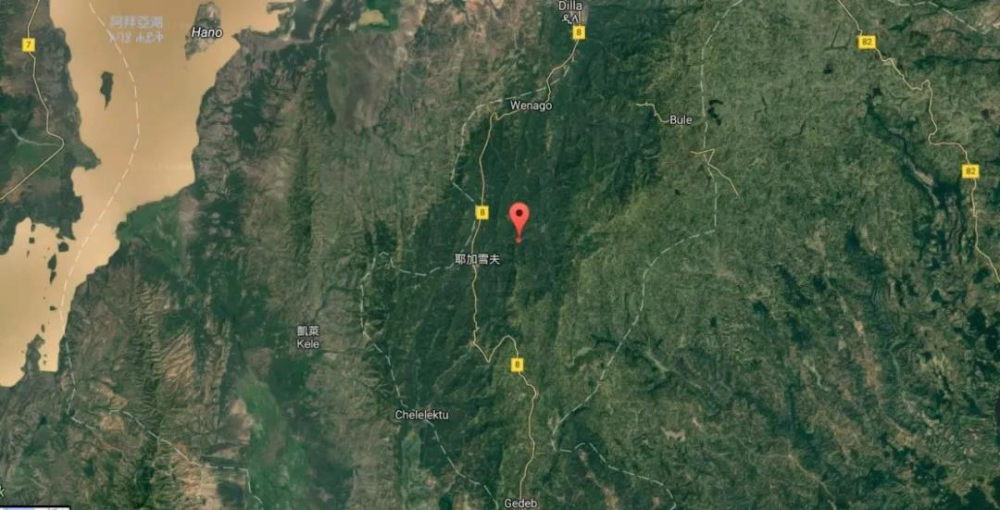
Coffee is an agricultural crop, so environment and climate shape the flavor — though Panama's Geisha is the famous exception, thriving on harsh conditions. The mountain villages of Yirgacheffe are cool and misty, spring-like year-round: summers bring gentle breezes, cool but not hot, rainy but not humid; winters never bring frost. It is close to perfect for Arabica. There are no large plantations here; farmers interplant coffee with other crops, typically under banana trees, creating a landscape all its own. FrontStreet Coffee believes Yirgacheffe's memorable flavor is tightly bound to its altitude and climate.
The History of Yirgacheffe Coffee
Yirgacheffe's coffee trees were first cultivated by European monastery monks (much as Belgian monks grew grain for beer), later managed by farmers and cooperatives. The trees grow scattered through forests, fields, and backyards. At harvest time, the Ethiopian coffee trading corporation comes to town, buys the farmers' collected beans, and auctions and exports them under the "Yirgacheffe" name.
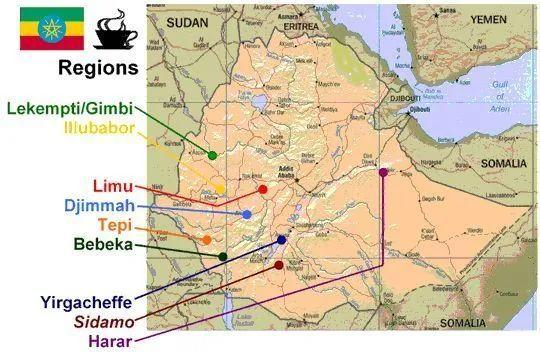
Yirgacheffe was once merely part of the Sidamo region. But the coffee produced here was so distinctive that farmers across Ethiopia raced to label theirs "Yirgacheffe-style," and the name became Africa's most renowned. Eventually Yirgacheffe was formally separated from Sidamo and given its own identity.
Yirgacheffe Coffee Bean Processing Methods
Processing methods track local climate — Mandheling's wet-hulled process is the classic example. Yirgacheffe traditionally used the natural (dry) method, but after washed processing was introduced in 1972, washed quickly became the dominant approach. FrontStreet Coffee finds washed beans lower in defects and cleaner, more transparent in flavor, while naturals trade a little cleanliness for lower acidity, higher sweetness, a clearer texture, more berry character, and greater complexity. In FrontStreet Coffee's lineup: washed Yirgacheffe and Gotiti versus the natural Red Cherry.
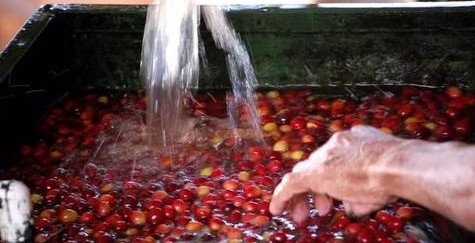
Washed Processing Method
After the cherries are pulped and skinned, the parchment beans with their mucilage go into water tanks for repeated washing until the sticky layer is completely gone. Finally the parchment beans are spread evenly on raised beds to dry. With so little sugar involved in the process, the flavor leans bright and fresh. In Yirgacheffe, jasmine woven through citrus creates that fresh, refined profile that has made these beans some of the most sought-after specialty coffees in the world — and thanks to its masterful washed processing, Yirgacheffe is Ethiopia's flagship washed region.
Natural Processing Method
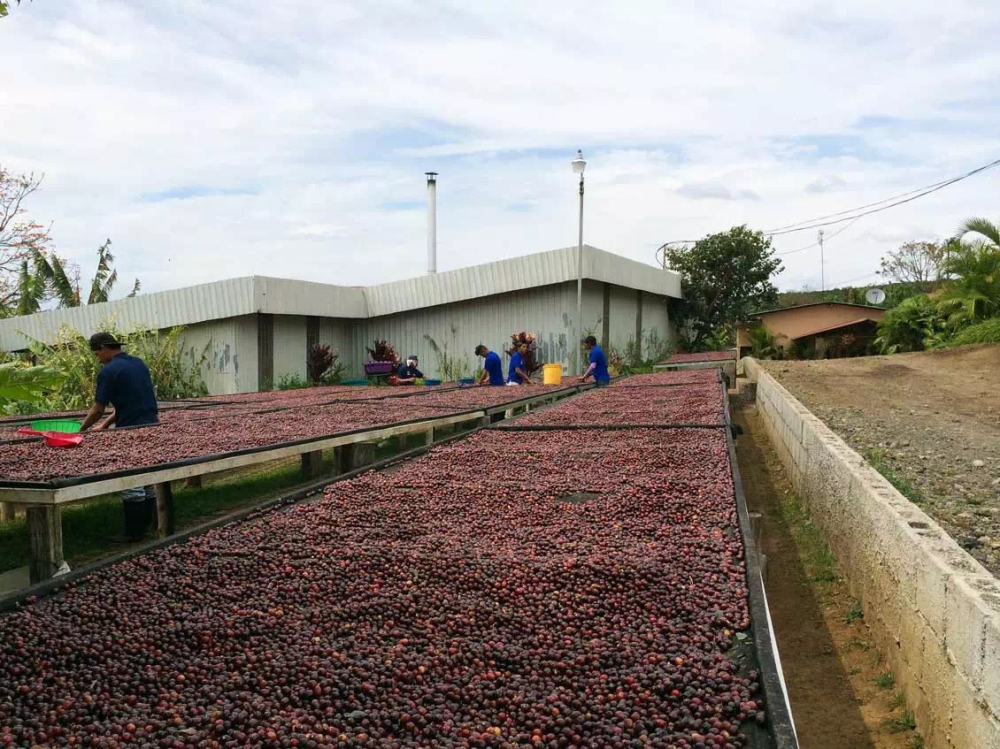
Natural processing is far simpler. One of the oldest and most traditional methods, it dries whole cherries on beds straight after harvest. It thrives where sun is abundant and water scarce, and roughly 70% of Ethiopia's coffee is still processed this way.
FrontStreet Coffee's view: whether washed or natural, each method has its own flavor signature and style — both are legitimate expressions of excellence.
FrontStreet Coffee's Brewing Recommendations:
Freshness is the crucial ingredient in any delicious cup — fresh beans let you taste the coffee at its fullest. Everything FrontStreet Coffee ships is roasted within 5 days, because freshness moves flavor. Our roasting philosophy is "freshly roasted, good coffee": every order arrives at the freshest possible state, and with a degassing window of roughly 4-7 days, the coffee is at peak flavor as soon as it lands.
If you'd rather have FrontStreet Coffee grind the beans for you, that's fine — but one reminder: pre-ground coffee doesn't need degassing. The CO2 pressure that builds inside the packaging during transit actually mellows the coffee, so you can brew a cup the moment it arrives. That said, ground coffee must be brewed promptly — exposed to air it oxidizes fast, the flavor dissipating quickly. So for the full experience, buy whole beans and grind right before brewing.
FrontStreet Coffee's Yirgacheffe Brewing Parameters:
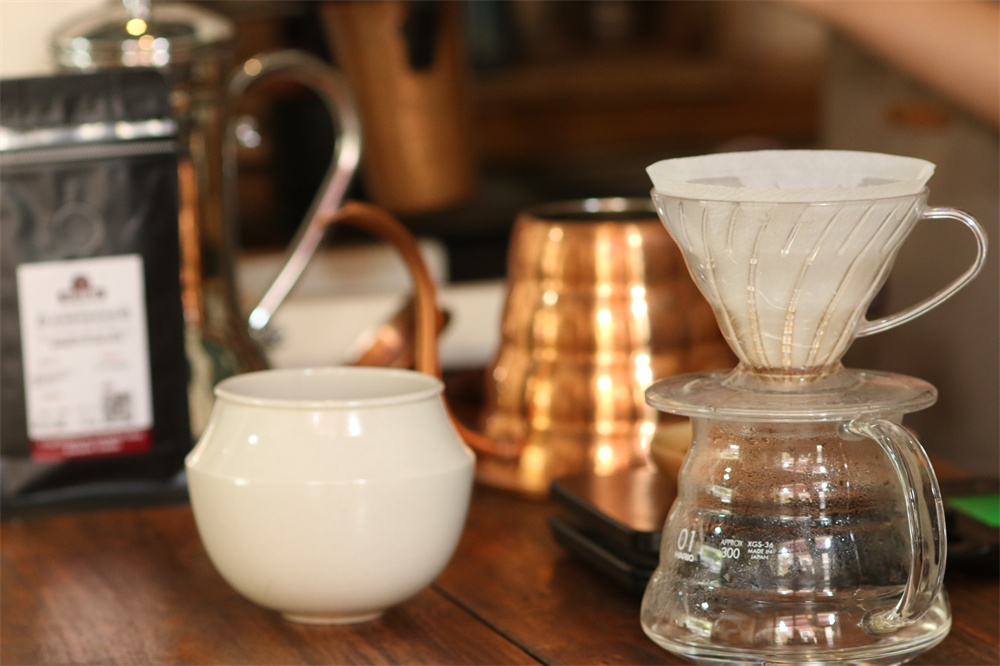
For this light-roasted Yirgacheffe, FrontStreet Coffee uses: a V60 dripper, 90°C water, a 1:15 ratio, 15g of coffee, and a grind size at 80% pass-through on the China #20 standard sieve.
Brew with segmented extraction: bloom with twice the coffee's weight in water — 30g — for 30 seconds, letting the grounds vent their carbon dioxide for a more stable extraction afterward. Then pour in small circles to 125g, continue to 225g, and stop. Remove the dripper once the liquid has fully drawn down. Total time from the first pour: 2'00". Swirl the full server gently to homogenize, then pour and taste.
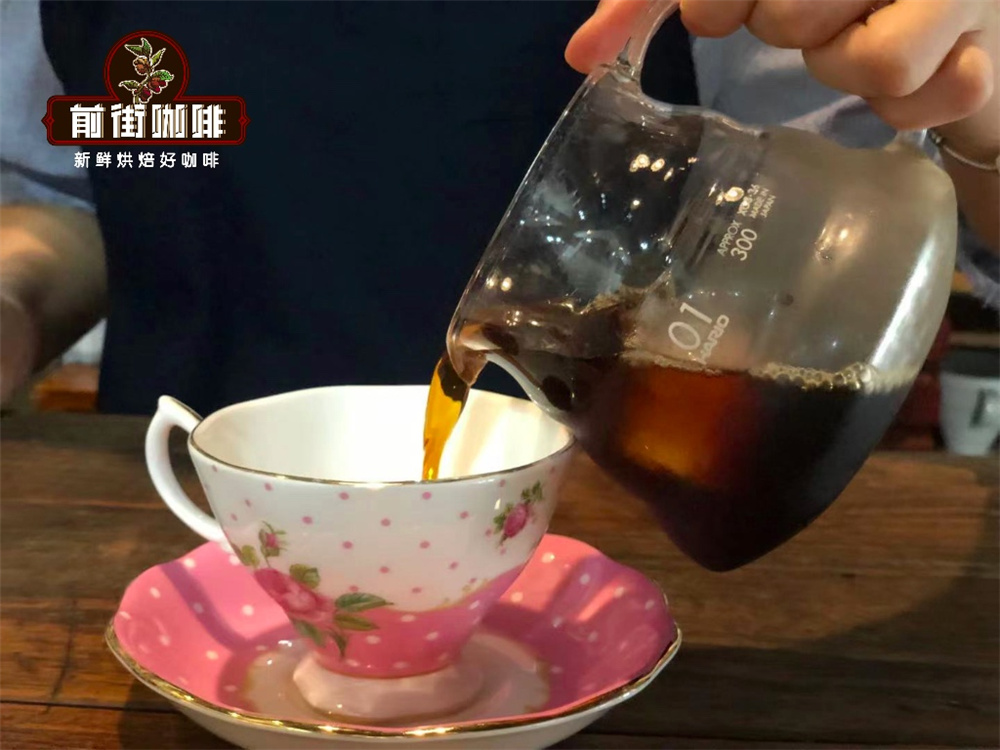
[Washed Gotiti] shows distinct citrus and white floral notes, with cream and caramel emerging as it cools, and a green-tea-like mouthfeel.
[Natural Red Cherry] pours out rich fermented fruit aromas with obvious jasmine on the nose, strawberry-led berry sweet-tartness on entry, and a persistent creamy finish.
FrontStreet Coffee carries quite a few Ethiopian single origins — five or six from Yirgacheffe alone, such as Yirgacheffe Kochere, natural Red Cherry, and washed Yirgacheffe. Of these, the washed Yirgacheffe is our most popular daily bean and the preferred choice for beginners, with excellent value.
FrontStreet Coffee Recommendation
If this article sold you on Yirgacheffe, start with the FrontStreet washed Yirgacheffe daily bean — the classic first specialty coffee for newcomers, known for white jasmine, bright citrus and lemon acidity, and a tea-like elegance, at a price that makes it an easy habit. It's the bean FrontStreet Coffee itself reaches for when introducing people to the region.
Ready to go one level deeper? The FrontStreet Guodingding Cooperative coffee comes from Worka at Yirgacheffe's southeastern edge — a cooperative that split from the YCFCU's Worka union as the market chased traceability, with about 300 member farmers as of its 2012 founding. Washed the traditional way, it has no bitter baseline at all: crisp, luminous citrus and lemon acidity beneath an elegant white-floral fragrance. And for the fruit-forward crowd, the FrontStreet natural Red Cherry — fully red cherries sun-dried for three to five weeks, turned every 2-3 hours early on — brings citrus acidity, berry juiciness, honeyed sweetness, and a cream-smooth finish.
Important Notice :
FrontStreet Coffee is a long-established specialty coffee roaster in Guangzhou China, selling freshly roasted beans from its own farm in Yunnan as well as dozens of carefully selected single-origin beans from around the world for both pour-over and espresso. The products deliver consistently excellent quality and great value, with shipping within 24 hours. Guangzhou's FrontStreet Coffee shop is recommended by many coffee lovers, and the beans are now available online at the Tmall 。
FrontStreet Coffee has moved to a new address:
FrontStreet Coffee Address: 315,Donghua East Road,GuangZhou
Tel:020 38364473
 Scan and follow the En Gafei WeChat official account. Please indicate that the reprint comes from "En Gafei".