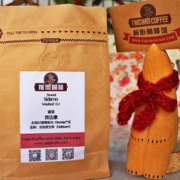
Costa Rica Black Honey Process Caturra Tarrazú La Miel Estate Specialty Coffee Bean Flavor Profile

Flavor Notes: Preserved plum, honey, brown sugar, orange blossom, white chocolate
Palate: Excellent sweetness, gentle fruit acidity, round and full-bodied, persistent aftertaste
Coffee Origin and Processing
This batch features black honey processed coffee from Finca La Miel, located in the renowned Tarrazu region of Costa Rica. Although Costa Rica was relatively late in developing its specialty coffee industry, it has advanced rapidly in recent years. With a honey processing method that yields gentle fruit acidity, a smooth mouthfeel, and premium berry-like sweetness, Costa Rican coffee has become truly impressive. Black honey processing retains about 80% of the mucilage, and the main distinction from yellow and red honey is a progressively sweeter profile. Combined with rich fruit characteristics, this processing method has won the hearts of coffee connoisseurs worldwide.
Product Information
Shelf Life: 90 days
Net Weight: 227g
Packaging: Bulk coffee beans
Roast Level: Medium roast
Sugar Content: Sugar-free
Origin: Costa Rica
Coffee Details
Country: Costa Rica
Grade: SHB (Strictly Hard Bean)
Region: Tarrazu
Roast Level: Medium roast
Processing Method: Black honey processing
Variety: Caturra
Estate: Finca La Miel
Flavor Notes: Preserved plum, honey, brown sugar
Costa Rican Coffee Excellence
While Costa Rica has gained recognition among coffee enthusiasts through its honey-processed beans, this success is inseparable from the country's superior geographical and climatic conditions and its exclusive cultivation of Arabica varieties. Costa Rica's premium coffee beans are classified as "Strictly Hard Beans" (SHB), followed by Hard Beans (HB) and Semi-Hard Beans (SH) in descending quality order, which also serves as the country's grading system.
SHB beans grow at elevations above 1,500 meters, where altitude has always been an indicator of coffee quality: higher elevation means superior quality. The significant altitude variation also creates abundant rainfall, which is highly beneficial for coffee tree growth. The cooler nighttime temperatures at high elevations slow down tree growth, allowing coffee cherries to absorb more nutrients and develop richer flavors.
Premium Growing Regions
Costa Rica's three most famous producing regions are Tarrazu, south of the capital San Jose, along with the Central Valley and Western Valley regions. Within these areas, numerous excellent independent estates are dedicated to cultivating more refined washed and honey-processed coffee beans. Let us look forward to more honey-processed coffee surprises from Costa Rica.
Honey Processing Methods
The honey processing methods we typically encounter are yellow honey, red honey, and black honey.
Yellow Honey: About 40% of mucilage is removed; drying requires the most direct heat absorption, receiving maximum sunlight exposure for approximately 8 days to reach stable moisture content.
Red Honey: About 25% of mucilage is removed; compared with yellow honey, drying takes longer and reduces direct sunlight exposure time, sometimes using shade nets for approximately 12 days.
Black Honey: Almost no mucilage is removed; drying takes the longest time, lasting at least 2 weeks. Coverings are used to avoid intense sunlight and prevent overly rapid drying, allowing for more thorough sugar conversion.
FrontStreet Coffee Recommendation
For another Costa Rican black honey coffee, FrontStreet Coffee recommends the Costa Rica Blackberry. Black honey removes almost none of the mucilage, so drying takes longer, lasting at least 2 weeks; covers are used to keep the sun from drying the beans too quickly, allowing the sugars to convert more fully, and the cherries are turned at intervals so uneven heat does not cause over-fermentation. FrontStreet Coffee gives it a medium-light roast, and it releases a rich floral aroma when ground, with grape, berry, and ripe blackberry flavors in the cup.
For a honey-processed blend, FrontStreet Coffee's Strawberry Candy combines Panama Geisha with Costa Rican coffee. The Geisha supplies the classic orange-blossom and honey character, while the Costa Rican component uses a raisin honey process that retains 100% of the mucilage with no water added. The cherries are floated in a large tank so ripe, full fruit sinks and underdeveloped or overripe fruit rises and is removed, then dried on raised beds for at least three days before the skin is removed and the mucilage-bearing beans are dried further with constant turning. The result keeps the Geisha's floral-tea character while adding grape and raisin aromas, soft fruit acidity, an almond finish, and evident sweetness.
Important Notice :
FrontStreet Coffee is a long-established specialty coffee roaster in Guangzhou China, selling freshly roasted beans from its own farm in Yunnan as well as dozens of carefully selected single-origin beans from around the world for both pour-over and espresso. The products deliver consistently excellent quality and great value, with shipping within 24 hours. Guangzhou's FrontStreet Coffee shop is recommended by many coffee lovers, and the beans are now available online at the Tmall 。
FrontStreet Coffee has moved to a new address:
FrontStreet Coffee Address: 315,Donghua East Road,GuangZhou
Tel:020 38364473
 Scan and follow the En Gafei WeChat official account. Please indicate that the reprint comes from "En Gafei".