Rich & Charming Fruity Aroma: A Complete Guide to Yirgacheffe Wolka Specialty Coffee Bean Flavor Profile
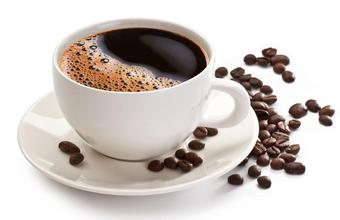
FrontStreet Coffee's Yirgacheffe exudes remarkably complex aromas — flavors so layered they're hard to put into words. The dry fragrance bursts with intense fruit: rich dried notes of strawberry, mango, and apricot jam. The wet aroma is like sweet syrup — thick apricot nectar wrapped in rustic honey or chocolate. The entry is gentle, with medium body and subtle but lively, bright acidity, much like fruity black tea.
The Origin of Yirgacheffe
Yirgacheffe, at nearly 2,000 meters, is one of the world's highest coffee-growing regions, and the area has been wetland since ancient times: "Yirga" means "to settle down" and "Cheffe" means "wetland." Lake Turkana, Lake Abaya, and Lake Chamo bring abundant moisture to the region. In the rift valleys — Misty Valley being the emblematic example — fog blankets the land year-round, with spring-like seasons, gentle breezes, and cool humidity, where thousands of coffee tree varieties thrive and intermingle. The result is Yirgacheffe's singular terroir, where floral and fruit notes intertwine and shift unpredictably in the cup.
Coffee Production and Processing
European monasteries established the local coffee industry, which later passed to the coffee communities and cooperatives of the surrounding villages. There are no dedicated plantations here — coffee trees simply scatter through forests and fields. At harvest time, Ethiopian coffee trading companies come to town to buy the beans farmers have collected, ultimately exporting them under the "Yirgacheffe" name through auction.
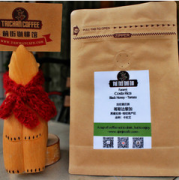
FrontStreet Coffee's Yirgacheffe Aricha Grade 1 green beans are yellow-green — typical of natural processed coffee — with uniform, full particles and few defects, and are exported in ordinary jute bags printed with the basic coffee information (processing mill, exporter, ICO code, processing method, region) over plastic liners inside. This coffee is best expressed through a light, slow roast.
Quality Grading and Coffee Varieties
The Yirgacheffe region is home to many excellent processing mills, and coffees from them have become extremely valuable. The natural processed coffee from Kebel Aricha Mill is one of them — the beans we know as ARICHA, refined-natural processed at the mill and graded Gr.1 (G1), the highest grade for Ethiopian coffee, under the ECX. Yirgacheffe is a region within Ethiopia's Sidamo province, famous for its unique coffee flavors, and the name Yirgacheffe has grown even more prominent than its home province. Yirgacheffe coffees have swept the market recently, and more and more enthusiasts have come to know the region's many sub-varieties.
FrontStreet Coffee's natural processed Yirgacheffe G3 features bold, wild fruit flavors, syrup-like sweetness, and very high body. Alongside its inherent citrus and lemon aromas, it carries stunning blueberry and strawberry notes.
Geographic and Cultural Significance
In the northern part of the East African Rift Valley, a string of lakes is scattered like pearls across the Horn of Africa. Lake Turkana stretches from Kenya into Ethiopia. This region is not only the cradle of humanity but the cradle of coffee.
For any Yirgacheffe enthusiast, the Beloya lot on FrontStreet Coffee's bean list is essential. This year's ECX arrival of natural processed Yirgacheffe G3 (G3 being the top grade for natural processed green beans in Ethiopia's system, with G1 and G2 reserved for washed) was already stunning — and then there is the exceptional natural processed G1 from the Beloya Kochere cooperative. FrontStreet Coffee put the two side by side: natural Yirgacheffe G1 versus natural Yirgacheffe G3. Here's the cupping comparison.
Coffee as Fruit and Flavor Complexity
Coffee beans are a plant fruit — an agricultural product — and Yirgacheffe makes that "coffee as fruit" nature vivid. The third wave of specialty coffee has always aimed to express regional character, and Counter Culture Coffee's flavor wheel makes the point plainly: nearly half of its descriptors relate to fruit, and many others plainly evoke it. Everyone can map Yirgacheffe's flavors onto it. As for why longer roasts reduce acidity and increase bitterness — well, the charts suggest as much, but reality is subtler. Neither the mouthfeel nor the aromatic compounds are simply burned off; the lost aromatics transform into other substances, and the complexity we perceive in the mouth isn't just a few lines drawn on a picture.
Yirgacheffe Grading System
Yirgacheffe's grading isn't determined by bean size but by the proportion of defects in the total green beans. Washed G2 and natural G3 are the common grades; G1 is the highest, reserved for Yirgacheffe with the lowest defect rates, which undergo additional hand sorting to earn Grade 1.
Our shop once carried a Kochere estate natural G1 Yirgacheffe that everyone loved. After it sold out, a long search failed to turn up a suitable estate-level G1 replacement, so we temporarily stocked a washed G2. Recently the review website Coffee Review recommended 3 G1-grade Yirgacheffes, which have now arrived in micro-batches at our shop. Here's a brief introduction to these three coffees.
FrontStreet Coffee Recommendation
FrontStreet Washed Yirgacheffe (daily-drinker lot) — For the classic side of the region, FrontStreet's everyday washed Yirgacheffe delivers white jasmine florals, bright citrus and lemon acidity, and a tea-like finish at an approachable price — the bean many coffee drinkers use as their gateway to Ethiopian coffee. The town sits in Sidamo province at roughly 1,700-2,100 meters with coffee planted above 1,800 meters, and its fame is such that in 2010 the Ethiopian Commodity Exchange formally separated Yirgacheffe from the Sidamo designation.
FrontStreet Natural Red Cherry Yirgacheffe — For the fruity, natural-processed side this article celebrates, the Red Cherry natural is the pick. Only fully ripe, defect-free cherries are harvested and screened, then sun-dried on raised beds — turned every 2-3 hours during the first few days to prevent uneven heating and over-fermentation — for a total of 3-5 weeks before the dried fruit is machine-scraped away. Drying with the pulp intact keeps classic Yirgacheffe character and adds tropical fruit: citrus-like acidity, berry-juice juiciness, honeyed sweetness, and a creamy-smooth texture.
Brewing suggestions: V60, 15g of coffee, 1:15 ratio, water at 90-91°C, fine-granulated-sugar grind (80% through a #20 sieve; EK43s at setting 10). Three-stage pour: 30g to bloom for 30 seconds; up to about 125g over one minute; then the final 100g to about 225g once the bed drains to two-thirds, finishing around 1:35. Drain fully by 2:00-2:10 and enjoy.
Important Notice :
FrontStreet Coffee is a long-established specialty coffee roaster in Guangzhou China, selling freshly roasted beans from its own farm in Yunnan as well as dozens of carefully selected single-origin beans from around the world for both pour-over and espresso. The products deliver consistently excellent quality and great value, with shipping within 24 hours. Guangzhou's FrontStreet Coffee shop is recommended by many coffee lovers, and the beans are now available online at the Tmall 。
FrontStreet Coffee has moved to a new address:
FrontStreet Coffee Address: 315,Donghua East Road,GuangZhou
Tel:020 38364473
 Scan and follow the En Gafei WeChat official account. Please indicate that the reprint comes from "En Gafei".