Geisha Coffee Brewing Methods - Hacienda La Esmeralda Blue Label Batch Geisha Pour-Over Characteristics and Flavor Profile
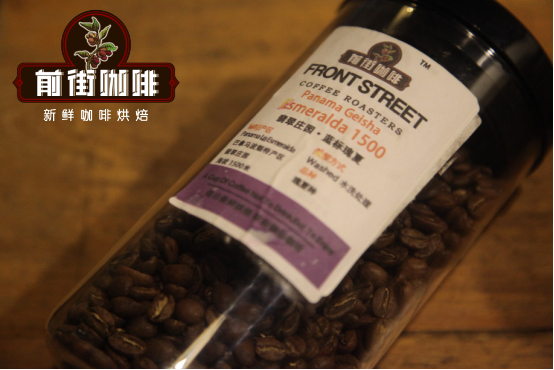
When it comes to the finest Geisha coffee in the world, Panama stands at the top, and countless drinkers dream of tasting its remarkable sweetness. FrontStreet Coffee carries three grades from Hacienda La Esmeralda - Red Label, Green Label and Blue Label - and the Blue Label, a natural, sun-dried offering, is the best seller of the three. Because the Blue Label is assembled from beans grown across several estates, it still carries the signature Geisha profile: citrus-like acidity, delicate jasmine florals, honeyed sweetness, a clean and bright mouthfeel, and a creamy finish of moderate length. It is an outstanding value. So what does it take to brew the Blue Label well? FrontStreet Coffee explains below.
Hacienda La Esmeralda's Panamanian Geisha is world-renowned, and it is fair to say that Geisha would not enjoy its current reputation without the estate's work. Hacienda La Esmeralda sits in Boquete, one of Panama's most important specialty coffee regions. The estate has laid out its Geisha plantings with great care and markets three Geisha lines - Red Label, Green Label and Blue Label - each tied to plots at different altitudes. FrontStreet Coffee stocks all three, but when a customer has never tasted Geisha before, FrontStreet Coffee rarely points them to the Green or Red Label first. The Red and Green Labels do express more (they are grown higher than the Blue Label, and Geisha performs at its best in more extreme conditions), and they also cost more, though that is a separate matter.
FrontStreet Coffee's main point is this: if you have never tried Geisha, or you are not yet familiar with coffee flavors, starting with the very best can make it hard to appreciate what makes Geisha special. Once things reach a certain level, the differences between them grow very small and demand quite sensitive senses to detect. FrontStreet Coffee does not believe everyone needs to reach that level. The pleasure of drinking coffee comes from following your curiosity, starting with the basics, and gradually discovering how one bean differs from the next.
FrontStreet Coffee's Panama Hacienda La Esmeralda Blue Label Geisha
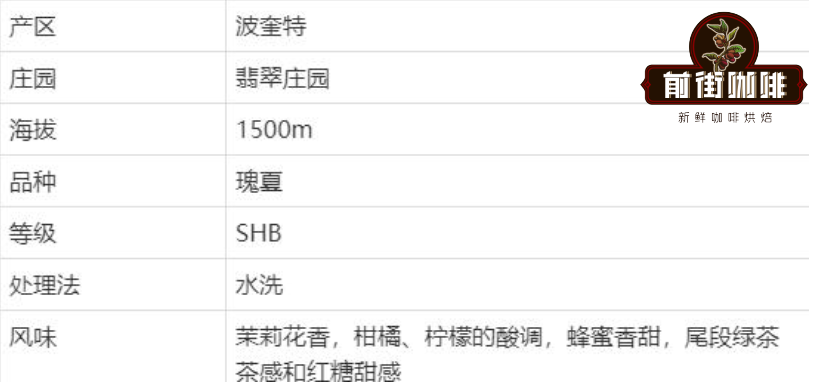
Different Pour-Over Approaches to Brewing Blue Label Geisha
The parameters FrontStreet Coffee normally uses for pour-over Blue Label Geisha are: 15g of coffee grounds, water at 90°C, grind size BG#5R (Chinese standard: 80% pass-through on a #20 sieve), and a coffee-to-water ratio of 1:15, brewed with a three-stage pour. Today FrontStreet Coffee will vary the speed of the circular pouring within that three-stage method and see how it changes the Blue Label Geisha's flavor.

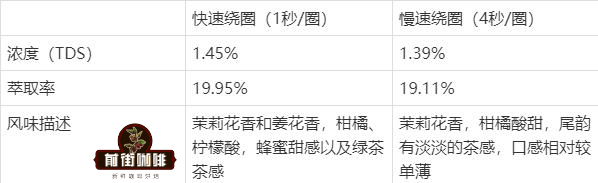
[Fast Circular Pouring: one circle per second]
Begin with 30g of water for a 30-second bloom, then pour to 125g and pause. Once the coffee bed has dropped by half, pour in coin-sized circles to 225g and pause again. When all the liquid has drained into the server, lift off the dripper to finish the brew. Total brewing time is 2 minutes.

[Slow Circular Pouring: one circle every 3 seconds]
Again begin with 30g of water for a 30-second bloom, then pour to 125g and pause. Once the bed has dropped by half, pour in coin-sized circles to 225g and pause again. When all the liquid has drained into the server, lift off the dripper to finish the brew. Total brewing time is 2 minutes.
FrontStreet Coffee kept every other parameter as consistent as possible, varying only the speed of the circular pour.
Brewing Results
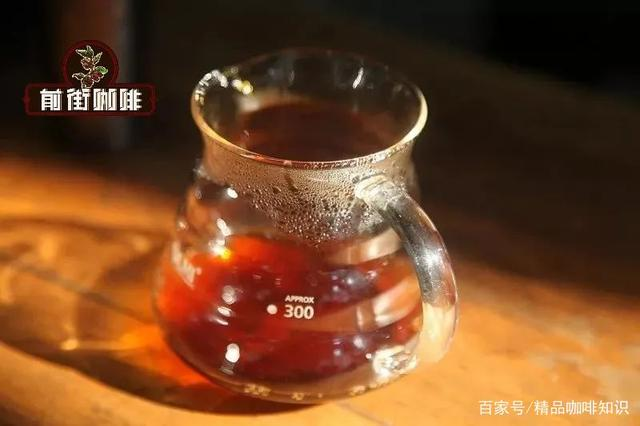
FrontStreet Coffee's Hacienda La Esmeralda Blue Label Geisha Pour-Over
Comparing the two brews, FrontStreet Coffee found that the speed of the circular pour does affect the flavor. Fast circular pouring, FrontStreet Coffee reasons, stirs the grounds more vigorously, raising the extraction yield and giving the coffee more layers and richness.
With slow circular pouring, by contrast, the stream only washes the surface of the bed and some grounds are never lifted, so the extraction yield stays lower and both the taste and the aroma lack depth.
FrontStreet Coffee Recommendation
Geisha is a dense, medium-light roast, and its small, hard beans tend to sink into the filter and stall the flow. For a clean cup, FrontStreet Coffee suggests grinding a little coarser than you would for a washed Ethiopian coffee: a setting that passes about 78% through a Chinese standard #20 sieve, roughly the texture of fine sugar, with water at 91°C.
Brew 15g in a small Hario V60 at a 1:16 ratio with a three-stage pour. Bloom with 30g of water for 30 seconds, then pour in a slow, small stream in circles up to 125g; once the bed has drained about halfway, continue to 225g. Total extraction runs about 2:10 to 2:20.
That recipe suits the classic Panamanian profile - bright citrus acidity, white florals, stone fruit and a clean tea-like finish - and it works well for FrontStreet Coffee's Esmeralda Red Label and Green Label Geisha, as well as for the Ethiopian Genlana Estate Geisha, which shows the same citrus lift with a ginger-flower aroma and a refined finish.
If you would rather drink Geisha as espresso, FrontStreet Coffee's Genlana Estate Geisha SOE, roasted medium, pulls into a cup of apricot, caramel and nuts. A 20g dose, a 1:2 ratio, a 25-second shot and about 40g of liquid make a good starting point; add 200g of hot water for an Americano or 200g of milk for a latte.
Important Notice :
FrontStreet Coffee is a long-established specialty coffee roaster in Guangzhou China, selling freshly roasted beans from its own farm in Yunnan as well as dozens of carefully selected single-origin beans from around the world for both pour-over and espresso. The products deliver consistently excellent quality and great value, with shipping within 24 hours. Guangzhou's FrontStreet Coffee shop is recommended by many coffee lovers, and the beans are now available online at the Tmall 。
FrontStreet Coffee has moved to a new address:
FrontStreet Coffee Address: 315,Donghua East Road,GuangZhou
Tel:020 38364473
 Scan and follow the En Gafei WeChat official account. Please indicate that the reprint comes from "En Gafei".