Kenyan Coffee Beans Pour-Over Techniques and Flavor Profiles - Are Kenyan Coffee Beans Good for Pour-Over?
Kenyan Coffee Beans Pour-Over Techniques and Flavor Profiles - Are Kenyan Coffee Beans Good for Pour-Over?

FrontStreet Coffee · Kenya Asalia Coffee Beans
Region: Kenya, Thika Region, Asali Processing Station
Altitude: 1550-1750m
Processing Method: Washed
Variety: SL28 & SL34
Flavor: Snow Pear, Black Plum, Brown Sugar, Plum, Cherry Tomato
Kenya is located in eastern Africa, with the equator crossing through its central region and the East African Rift Valley running north to south. It borders Somalia to the east, Tanzania to the south, Uganda to the west, and Ethiopia and Sudan to the north, with the Indian Ocean to the southeast. The coffee grown here is distinctly different from its neighbor Ethiopia.
Regional Information
Kenya's climate and geographical conditions provide exceptional advantages for growing high-quality coffee beans. Located in eastern Africa, the equator crosses through its central region while the East African Rift Valley runs north to south. It borders Somalia to the east, Tanzania to the south, Uganda to the west, and Ethiopia and Sudan to the north, with the Indian Ocean to the southeast and a coastline of 536 kilometers. The country is predominantly plateau with an average altitude of 1,500 meters. Mount Kirinyaga (Mount Kenya) in the central region reaches 5,199 meters with snow on its summit, making it the second highest peak in Africa. The entire territory lies in the tropical monsoon zone, but due to its high altitude, it experiences a tropical savanna climate with significant seasonal precipitation variations.

The coastal areas are hot and humid, while the plateau climate is mild, with annual maximum temperatures ranging from 22-26 degrees Celsius and minimum temperatures from 10-14 degrees Celsius. Kenyan coffee beans are a local pillar industry, mostly grown at altitudes of 1,500-2,100 meters, with harvests twice a year. The main characteristic of its coffee beans is distinct fruit aroma, with citrus being the most common. FrontStreet Coffee's Kenyan coffee offers multi-layered flavors and juice-like acidity, with perfect grapefruit and wine notes, moderate body, making it a favorite single-origin coffee bean among many coffee professionals.
The SASINI Estate is located in the KIAMBU region at an altitude of 1,500 to 2,000 meters. This area boasts beautiful scenery and pleasant climate, with abundant sunshine and excellent soil conditions. It features fertile acidic red soil that is loose and deep, ensuring good drainage. The water pH ranges between 5.5-6.5.
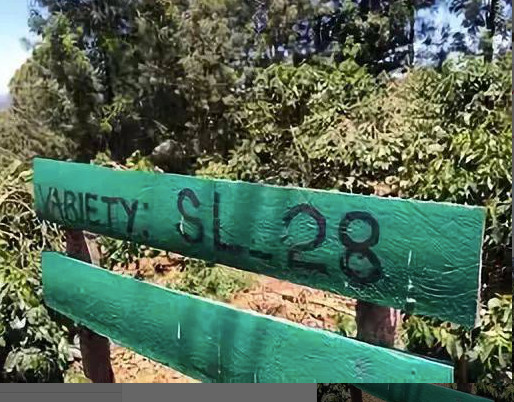
SL-28 is one of the two most respected varieties developed by Kenya's Scott Laboratories in the 1930s. Although Scott Laboratories no longer exists, it is now the National Agricultural Laboratory, part of the Kenya Agricultural and Livestock Research Organization. Both varieties are Bourbon-derived, though from different lineages: SL-28 was developed from drought-resistant varieties originally planted in Tanganyika, which is part of modern Tanzania; it is generally considered the highest quality but has lower yields compared to other commercial Arabica varieties. These SL variants all display bronze-colored young leaves.
Processing Method Introduction
This batch of FrontStreet Coffee's Kenya Asalia coffee beans is processed using the washed method.

The Kenyan washed processing method involves repeated cycles of fermentation and washing. The highest quality coffee cherries are selected on the day of harvest for pulping and fermentation, which lasts for 24 hours. After 24 hours, they are washed with clean river water. Then, they undergo another 24-hour fermentation in clean river water, followed by washing again. This cycle is repeated 3 times for a total of 72 hours, hence the name Kenyan 72-hour fermentation washed processing method, abbreviated as K72. This processing method allows the coffee beans to ferment for an extended period at low temperatures, resulting in brighter, cleaner, yet fuller flavors!
FrontStreet Coffee Roasting Analysis
This rich FrontStreet Coffee Kenyan washed coffee, due to its high altitude, has relatively hard beans. It starts with a high temperature rise, with the yellowing point occurring around 5 minutes, then the heat is reduced to enter the Maillard reaction. When reaching 166 degrees Celsius, the heat is reduced again to extend the Maillard reaction time. When the first crack begins, endothermic activity is strong, so it's recommended to maintain heat at this stage to prevent stalling. The first crack development takes relatively more time, which helps reduce acidity and develop flavors.
Roasting Machine: Yangjia 800N (300g batch size)

Charge at 170 degrees Celsius with 100 heat and air damper at 3; Turnback point at 1'42", when the temperature reaches 140 degrees Celsius, open the air damper to 3.5, heat unchanged; When the temperature reaches 149 degrees Celsius, the bean surface turns yellow, grassy aroma completely disappears, entering the dehydration phase;
At 7'14", dehydration is complete, heat and air damper unchanged. At 7'30", wrinkles and black spots appear on the bean surface, toast aroma turns to coffee aroma, as a prelude to first crack - pay attention to listen for the first crack sound. At 8'20", first crack begins, open air damper to 4, reduce heat to 50. First crack development time is 1'50", when reaching 188 degrees Celsius, reduce heat to 30, level out the temperature rise, and drop at 193.3 degrees Celsius.
FrontStreet Coffee Brewing Suggestions
Filter: V60 or Cake Dripper
Water Temperature: 88-90 degrees Celsius
Coffee-to-Water Ratio: 1:15
Grind Size: Fine grind (Chinese standard #20 sieve, 80% pass-through)

Brewing Method: Segmented extraction. Use 30g of water for a 30-second bloom, then continue pouring with a small circular motion to 124g for segmentation. When the water level drops and is about to expose the coffee bed, continue pouring to 228g and stop. When the water level drops and is about to expose the coffee bed again, remove the filter cup. Extraction time is 1'55" (starting from bloom timing).

When brewing this FrontStreet Coffee Kenyan washed Asalia with a V60 dripper, it smells floral, with cherry tomato, citrus, and nutty acidity on the palate, cream aroma in the middle section, brown sugar sweetness in the aftertaste, with cocoa and oolong tea notes in the finish. The flavor layers are quite rich, with distinct floral notes. When brewed with a cake dripper, it smells of herbal plant aroma and cherry tomato, with an overall distinct juice-like sensation and lively acidity.
FrontStreet Coffee Recommendation
Kenya's SL28 and SL34 varieties and its K72 double-wash fermentation give the Asalia its signature bright, juice-like acidity, and if that is what draws you in, FrontStreet Coffee's Ethiopian range offers a closely related African profile. The Washed Yirgacheffe is the classic entry point, known for white jasmine, bright citrus and lemon acidity, and a clean tea-like body that echoes Kenya's clarity. The Gudingding Cooperative coffee from the Woka area is washed in the traditional manner and shows citrus and lemon notes with an elegant white floral aroma and a bright, delicate character. For a wilder, more layered cup, the Kafa Forest coffee grows wild at 1,400-2,100 meters under shade and after a light-to-medium roast delivers white florals on the nose, bright lemon acidity, sweet orange and bergamot, and a green-tea finish. Each one shares the African brightness that makes Kenyan coffee so compelling for pour-over.
Important Notice :
FrontStreet Coffee is a long-established specialty coffee roaster in Guangzhou China, selling freshly roasted beans from its own farm in Yunnan as well as dozens of carefully selected single-origin beans from around the world for both pour-over and espresso. The products deliver consistently excellent quality and great value, with shipping within 24 hours. Guangzhou's FrontStreet Coffee shop is recommended by many coffee lovers, and the beans are now available online at the Tmall 。
FrontStreet Coffee has moved to a new address:
FrontStreet Coffee Address: 315,Donghua East Road,GuangZhou
Tel:020 38364473
 Scan and follow the En Gafei WeChat official account. Please indicate that the reprint comes from "En Gafei".