Sidamo Coffee Varieties and Flavor Profile: Introduction to Guohua 8.0 Pour-Over Grind Settings and Water Temperature Recommendations
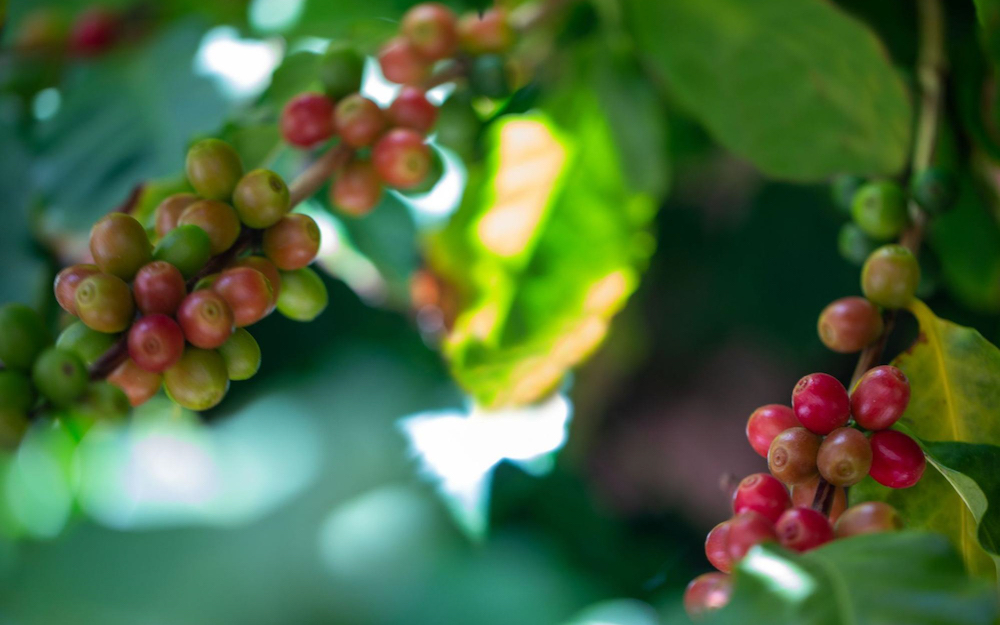
Those familiar with the Yirgacheffe growing region may already know that it was separated from Sidamo to become an independent growing area because of its distinctive fresh flavor. Sidamo and Yirgacheffe coffees can therefore be described as two different styles of floral and fruity coffee. When friends visit FrontStreet Coffee's storefront and want to drink Ethiopian beans but are unsure which to choose, FrontStreet Coffee's baristas ask whether they prefer fresh, bright lemon acidity or rich, juicy sweetness, the characteristic profiles of Yirgacheffe and Sidamo respectively, to help customers quickly identify their preferred style.
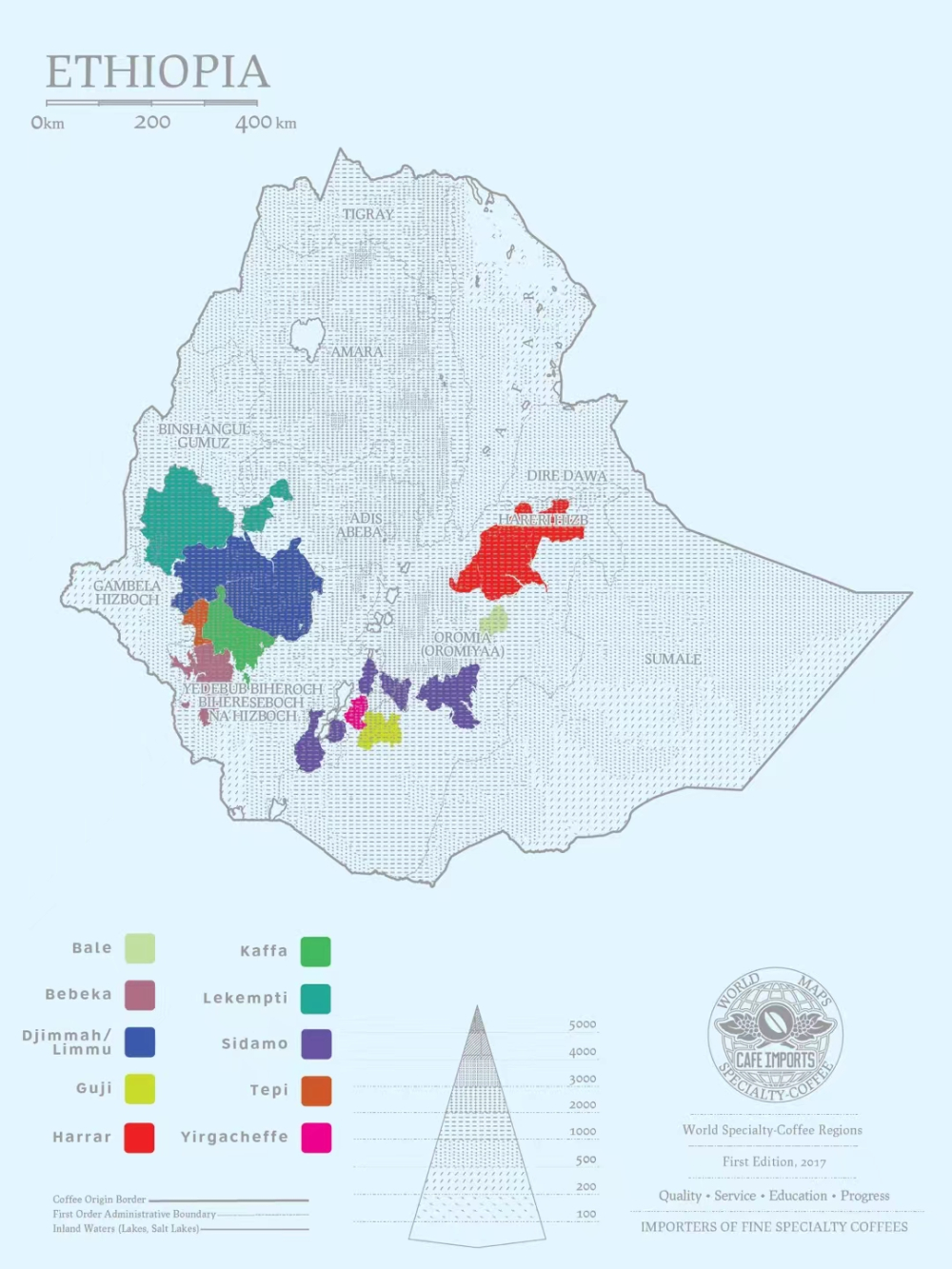
Sidamo Growing Region
Sidamo is located in southern Ethiopia and became an independent region in 2009, with its own distinctive ethnic and traditional cultural character. Coffee trees in Sidamo are distributed on both sides of the East African Rift Valley, where the highlands have fertile soil and annual rainfall reaches up to 2000 millimeters, providing ideal conditions for coffee cultivation.
The higher altitude draws out the maturation time of the coffee beans, pushing the harvest season later than in other Ethiopian regions. This also gives Sidamo coffee cherries richer flavor development. The most famous coffee-growing areas within Sidamo are Guji and West Arsi.

Guji Growing Region
The Guji growing region, formerly part of Sidamo, was established as a new region in 2010 by the Ethiopian Commodity Exchange (ECX) because of the exceptional flavor quality of its coffee beans. Guji sits adjacent to Yirgacheffe and features diverse terrain and landforms, with fertile black soil reaching depths of up to two meters that lets plants establish deeper root systems. Its average elevation exceeds 1800 meters with significant temperature variation between day and night, all favorable conditions for producing high-quality coffee. Coffee cultivation here requires minimal chemical fertilizer, because fallen leaves, plant debris, residual roots, and soil organic matter provide sufficient nutrients for vigorous coffee tree growth.
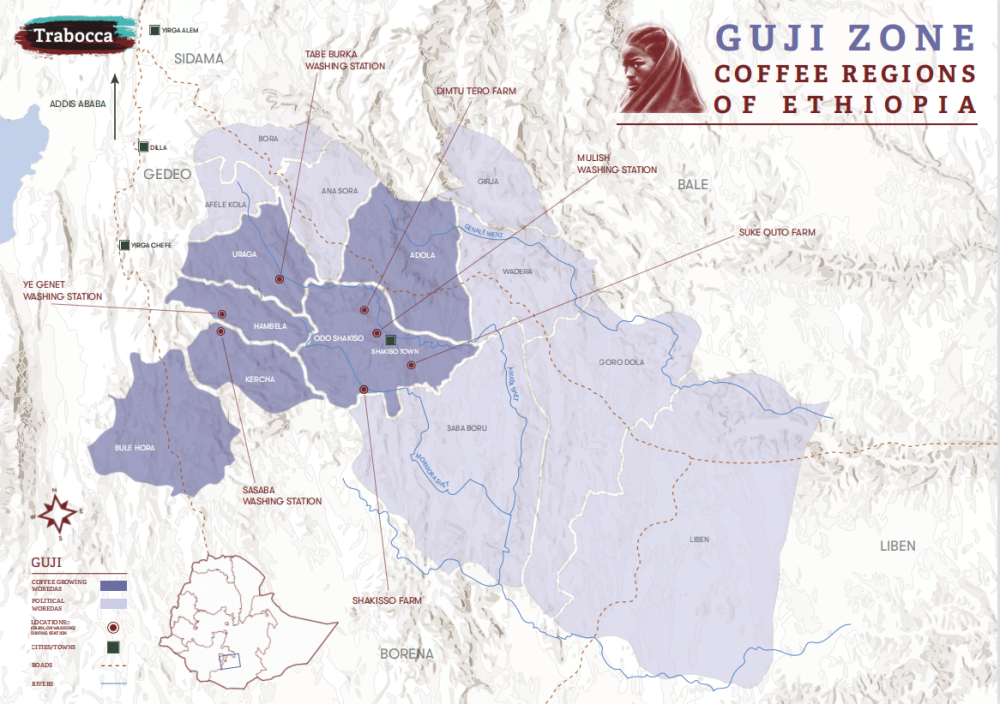
Today we often see Sidamo and Guji mentioned together. This is mainly due to Ethiopia's administrative division system, which has four hierarchical levels from largest to smallest: Region, Zone, Woreda, and Kebele. Most green coffee bean names follow this naming convention. For example, "Horse Champion" (Hambella) is located southeast of Yirgacheffe in the Sidamo region and administratively belongs to: Oromia Region, Guji Zone, Shakisso Woreda, Hambella Kebele.
Hambella "Horse Champion"
Hambella sits at the border between the Sidamo and Guji growing regions, administered under Guji and adjacent to Yirgacheffe's Kochere across mountainous terrain, at an elevation of 3200 meters, making it the highest-altitude sub-region in Ethiopia.

The "Horse Champion" coffee variety first appeared in 2017, when DW Company entered it in that year's TOH (Ethiopia National Taste of Harvest competition), where it won first place and subsequently entered the market. "Horse Champion" is called Hambella in English, named after its producing area. This coffee comes from natural-processed beans at the Buku Abel processing station in Guji, which buys coffee cherries from different areas near the farms for processing and sale.
During each annual coffee harvest season (December-January), the Buku processing station organizes farmers to harvest fully red coffee cherries with sugar content values above 30. The selected cherries are placed on African drying beds for sun-drying. Because of the significant local temperature variation between day and night, farmers provide shade during midday to avoid excessive heat and over-fermentation, while using plastic covers at night to prevent sudden rain showers. The cherries are continuously turned throughout the day and night and kept from piling too thickly, allowing for uniform drying while preventing sun scorching or unpleasant fermentation flavors. After approximately 18 days of natural processing, the moisture content of the green beans drops to 13%, making them ready for mechanical hulling.

FrontStreet Coffee - Ethiopia Horse Champion 8.0
Region: Sidamo, Guji Growing Region
Altitude: 2250-2350m
Variety: Local Landraces
Processing Method: Natural Process
Flavor Notes: Passion Fruit, Berries, Strawberry
Local Landraces
Like most Ethiopian coffee varieties, "Horse Champion" belongs to Ethiopian local landraces, also known as heirloom varieties. Typically the beans show inconsistent sizes and shapes, since they may contain multiple mixed varieties without individual separation. This is because Ethiopia, as a genetic treasure trove of coffee, has so many varieties that definitive classification is extremely difficult. In addition, the local government has chosen not to disclose this variety information for protection purposes, so they are collectively referred to as landraces.
Grinding Recommendations
Friends who brew pour-over often understand how significantly grind size affects coffee. Grind size primarily determines the particle size of the grounds, which affects the surface area in contact with water. Larger particles need more time for water to penetrate to the center and extract substances from the grounds; smaller particles need less time for water to reach the center and extract. Coarser grounds therefore produce a lower coffee concentration, while finer grounds produce a higher one. Finer is not always better, though: too fine a grind can lead to over-extraction and more bitterness.
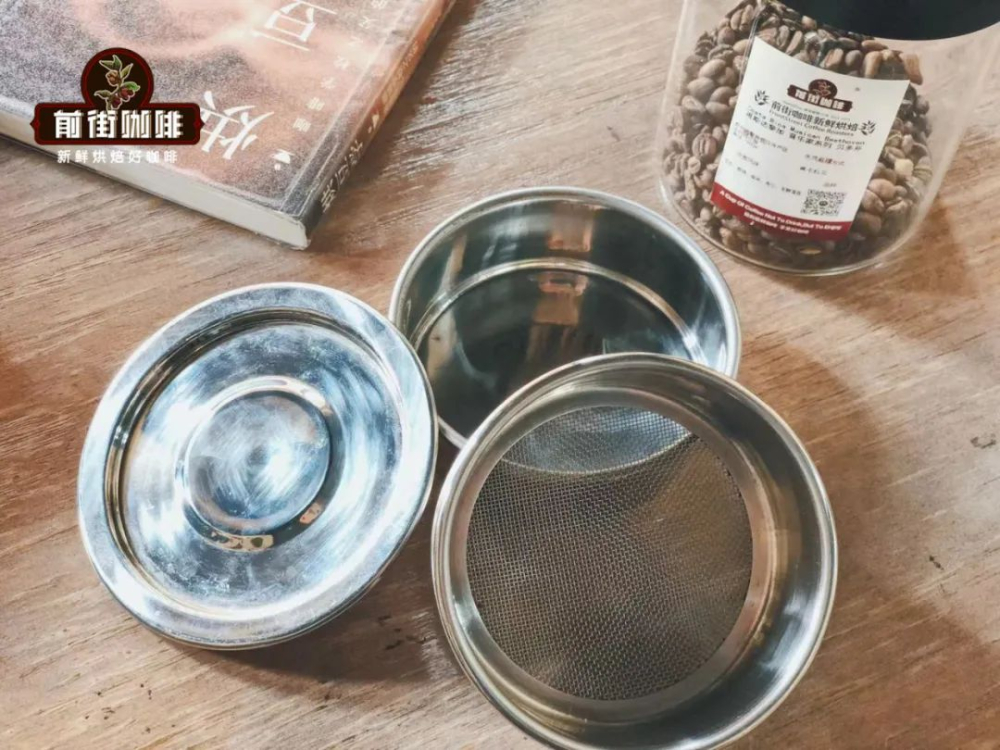
As for how to choose grind size, FrontStreet Coffee recognizes that everyone uses different grinding equipment. It recommends a #20 standard sieve, which lets you determine the appropriate grind setting through sieve filtration and makes future adjustments easier. For medium-light roasted coffees like Sidamo's "Horse Champion," FrontStreet Coffee recommends an 80% pass rate through the standard sieve. The grind setting used on FrontStreet Coffee's EK-43 grinder in its stores is setting 5, equivalent to fine-sugar granule size.
For friends without grinding equipment at home, FrontStreet Coffee can provide a bean-grinding service. Ground coffee's aroma volatilizes faster than whole beans, so those who receive ground coffee should remember to consume it as soon as possible.

Brewing Recommendations
To fully appreciate the rich aroma of "Horse Champion," FrontStreet Coffee recommends brewing with freshly roasted coffee beans to better preserve the aromatic compounds. FrontStreet Coffee's beans are all roasted within 5 days of shipping, plus the time required for logistics, ensuring customers receive their coffee at the optimal tasting period for immediate brewing and enjoyment.
To extract the full aroma from high-altitude coffee beans, FrontStreet Coffee chooses higher brewing temperatures to release more aromatic compounds while avoiding over-extraction. Recommended brewing parameters:

Dripper: V60
Water Temperature: 92-93°C
Grind Size: 80% pass rate through #20 standard sieve
Coffee-to-Water Ratio: 1:15
Coffee Amount: 15 grams
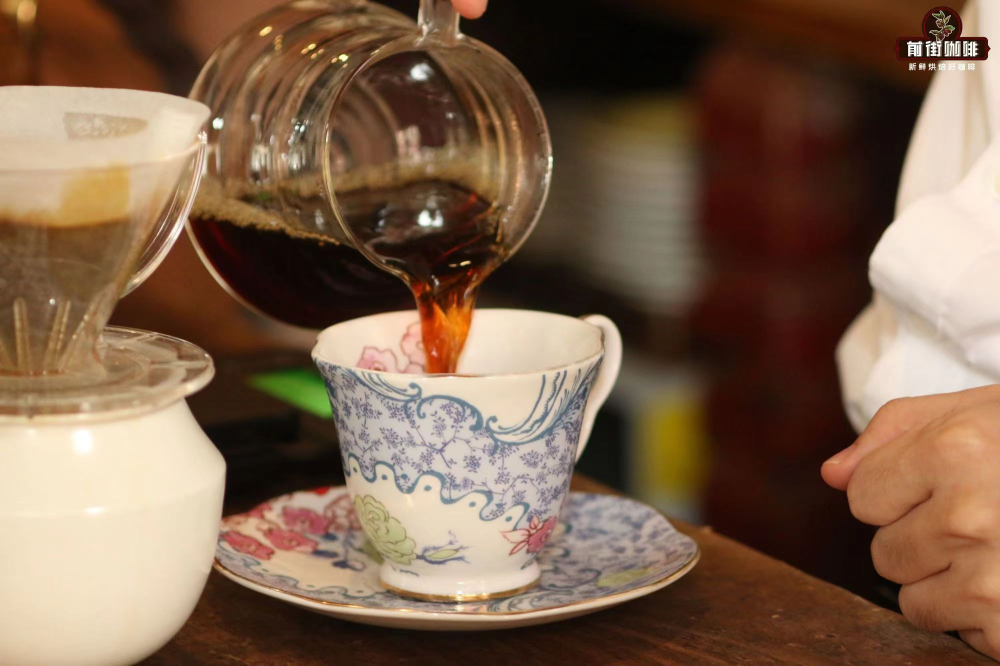
When ground, the natural-processed "Horse Champion 8.0" releases rich tropical fruit aromas and honey-like sweetness. On tasting, it presents rich berry sweetness with complex notes of passion fruit and other fruits, featuring a tea-like mouthfeel and a long, memorable aftertaste that leaves one endlessly reminiscing.
FrontStreet Coffee Recommendation
Sidamo and Yirgacheffe offer two distinct expressions of Ethiopian coffee. For the classic bright, tea-like style, FrontStreet Coffee's Washed Yirgacheffe is known for white jasmine, bright citrus and lemon acidity, and a light, elegant body, making it the easy entry point to the region.
For a fruitier Ethiopian coffee, FrontStreet Coffee's Ethiopia Hambella is a natural process bean from the Guji area, grown at high altitude with the region's prolonged cherry maturation. It smells of tropical fruit and honey, and in the cup it delivers sweet berry notes with passion fruit and a tea-like body and a long finish.
To brew medium-light Ethiopian coffee, FrontStreet Coffee suggests a V60 with 15 g of coffee and a 1:15 ratio at 92-93°C, ground to an 80% pass rate through a #20 standard sieve, equivalent to EK-43 setting 5 and a fine-sugar granule size.
Important Notice :
FrontStreet Coffee is a long-established specialty coffee roaster in Guangzhou China, selling freshly roasted beans from its own farm in Yunnan as well as dozens of carefully selected single-origin beans from around the world for both pour-over and espresso. The products deliver consistently excellent quality and great value, with shipping within 24 hours. Guangzhou's FrontStreet Coffee shop is recommended by many coffee lovers, and the beans are now available online at the Tmall 。
FrontStreet Coffee has moved to a new address:
FrontStreet Coffee Address: 315,Donghua East Road,GuangZhou
Tel:020 38364473
 Scan and follow the En Gafei WeChat official account. Please indicate that the reprint comes from "En Gafei".