Characteristics and Story of Panama Boquete Coffee Beans with a Distinctive Tea-Like Flavor

On FrontStreet Coffee's bean list, Panama occupies the center of the blackboard, with several single-origin coffees on offer. Some can be had for just dozens of yuan, others command hundreds, which catches the attention of many first-time visitors who ask the baristas what makes each bean distinctive. This article answers those questions by traveling to one of the world's most famous coffee origins and telling the story of coffee from that distant hemisphere.
The History of Panama Coffee
Compared with other Central American countries, Panama has a relatively short history of coffee cultivation yet enjoys exceptional fame, known throughout the specialty coffee community. Coffee is now a ubiquitous beverage on Panamanian tables, served everywhere from corner guesthouses to high-end restaurants, and all of it is grown in Panama itself.

Records show that coffee first reached Panama in 1742, when a ship from the French Caribbean island of Martinique arrived at Portobelo via Cartagena, which did not produce coffee, with a barrel of coffee beans among its cargo. Cultivation on Panamanian soil was not recorded until 1780, when settler Pedro Antonio de Ayarza attempted to grow coffee at Portobelo between 1780 and 1790 and quickly found the location unsuitable. It was in the 1820s that coffee began to be cultivated elsewhere in Panama, successfully replacing chocolate as the main beverage and competing with tea, which had already taken root in Europe.
Geographically, Panama sits in Central America, flanked by countries known for high-quality coffee: Costa Rica to the left and Colombia to the right. Its coffee journey can be said to have begun with a silver spoon. Panama lies between two ocean currents, and Caribbean and Pacific air masses converge above 6,500 feet in the Boquete valley, creating unique and variable microclimates. That in turn yields moderate temperatures and humidity, and together with volcanic soil it allows the fruit grown here to develop rich, diverse aromatic character.

As is well known, the Panama Canal was built by the United States and remained under its exclusive control for some time after completion. The canal brought many American elites south in the late 20th century, partly for work and partly to explore business opportunities, and many famous Panamanian coffee estates were established by them. The owner of Hacienda La Esmeralda was formerly a banker, and the owner of Hartmann Estate was previously an engineer. These elites held to standards of precision and refinement in running their estates, whether allocating coffee trees to plots by altitude to create grades or pursuing manual harvesting and refined processing, and all of that contributed to Panama's worldwide reputation for coffee.
Panama Coffee Growing Regions
Coffee cultivation in Panama covers approximately 20,000 hectares, of which nearly 16,000 hectares are planted to Arabica. The country's main coffee areas are concentrated in western Panama near the Costa Rican border, in Chiriqui province, which contains three famous growing regions: Boquete, Volcan, and Renacimiento. The three sit adjacent to one another along the Central American mountain ridge near the magnificent but largely inactive Baru Volcano, whose maximum elevation is 3,475 meters. Diverse climates and fertile volcanic soil have also made Chiriqui a province of enormous agricultural potential, with purebred horse breeding, flower cultivation, and especially coffee, cherry, and banana plantations.

The cool, picturesque Boquete valley is the cradle of Panama's coffee industry. A large number of European immigrants arrived in the late 19th century, mainly Swiss, Yugoslavians, Swedes, and Germans. They saw that coffee cultivation in nearby regions, which belonged to Colombia before 1903, had achieved excellent results, and decided to commit themselves to bean production. Today the Boquete region has approximately 50 to 75 coffee farms and about 15 coffee processing plants.
Boquete covers 514 square kilometers and is home to roughly 15,000 residents, who mainly grow coffee, flowers, citrus, strawberries, and vegetables. Most coffee plantations sit at around 1,600 meters above sea level, and almost all of that land is nutrient-rich volcanic soil, which ensures the trees are well fed. The climate is cool and somewhat dry, with a daily mist, especially in summer, that appears as an imperceptible drizzle and wraps every plantation. These rain-bearing mixed winds are why Boquete cherries ripen slowly, and the resulting coffee has medium to high acidity.

Since Chiriqui province grows so much coffee, coffee culture runs deep among its people. Data from Panama's Ministry of Agricultural Development shows the country has over 8,000 coffee growers, almost all of them owning farms of less than 30 hectares. Panama's harvest runs from September to December, and during that period the plantations fill with the indigenous Gnobe Bugle people, whom locals usually call Guaymies. They come to help pick beans during the harvest season, and because their technique and expertise are comparatively strong, their wages are higher than others'. The Guaymi also keep their traditional culture, making and wearing necklaces and clothing of colorful beads as well as the baskets used for picking, which makes a beautiful scene among the coffee trees.

Before 1989, Panama's coffee prices were controlled by the International Coffee Agreement. For most of the 19th and 20th centuries, Panama also exported small quantities of green coffee to Western European countries. That year the agreement collapsed, and a crisis followed as international green bean prices plummeted, with coffee falling from $1.20 per pound to $0.74 per pound at one point.
In the early 1990s, as commercial bean prices fell, Panama began to look toward the emerging specialty coffee market. In 1996, local Panamanian coffee estate owners jointly established the Specialty Coffee Association of Panama (SCAP): Ricardo Koyner, Price Peterson, Jaime Tedman, Marcos Moreno, Tony Vasquez, Hans Collins, Josue Ruiz, Wilford Lamastus, Francisco Serricin, and Ratibor Hartmann. They also held the first green coffee competition and an online green coffee auction, aiming to promote high-quality Panamanian coffee by organizing small-scale growers nationwide.

Best of Panama (BOP)
Best of Panama is one of the world's earliest established green coffee competitions, and it can also be described as an auction. Estate owners submit high-quality lots produced locally, the finest and highest-scoring are selected, and sellers from around the world then bid according to the evaluated scores, with the highest bidder winning. In recent years, winning bids for BOP champion beans have reached thousands of dollars, making the event a focal point of the industry.
Unlike major producing countries such as Brazil and Vietnam, Panama follows a route of low production and high-end specialty. In the 1990s, facing a downturn in the Panamanian coffee industry and a crisis in global green bean prices, producers struggled to keep operating. SCAP therefore organized local farm owners to hold the first Best of Panama green coffee competition in 1996, selling specialty lots by bidding. That changed Panama's coffee industry profoundly while also influencing the direction of the global specialty coffee market.

Because Geisha scores far higher in competition than other varieties, submitted lots are now divided into Geisha and non-Geisha groups, then further divided into natural and washed groups by processing method. Judges then conduct blind tastings and scoring, and the bean with the highest average score becomes that year's Best of Panama. In 2022, Guayacan Estate's Geisha won first place in the natural Geisha category with an exceptionally high average of 95.96, while the washed category championship went to Aurora Estate's Geisha with an average of 96.15.
Flavor Characteristics of Panama Geisha
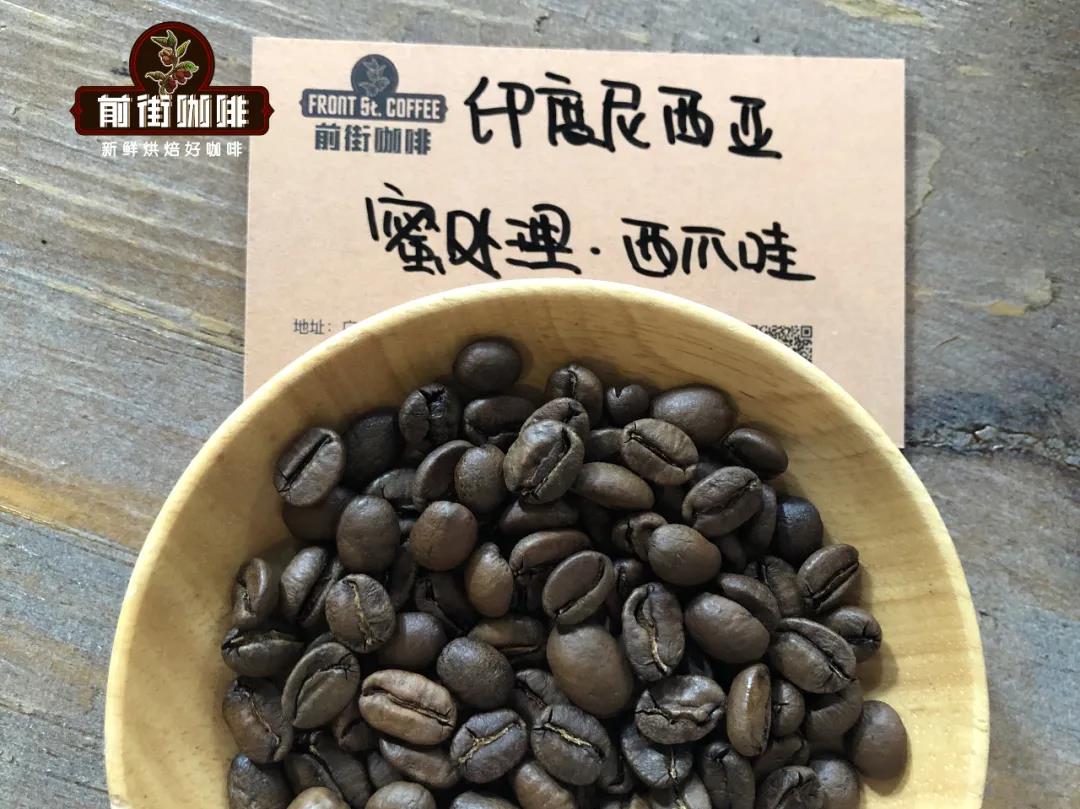
FrontStreet Coffee believes that Panama, as the birthplace of Geisha's fame, still produces Geisha whose mature cultivation techniques and processing methods make it the industry's guarantee of quality. FrontStreet therefore offers a Geisha from the Boquete region, washed processed, so that everyone can taste the classic Geisha flavor.

The washed process begins by placing selected cherries in a depulper to remove the skin and pulp; the beans, still carrying mucilage, then go into water to ferment for about 24 hours; after fermentation the parchment coffee is washed in flowing channels to remove the remaining pulp and mucilage; once washed, the beans are dried in the sun or by machine until moisture content falls to about 12%; and finally the parchment is removed.

As one of the most traditional green bean processing methods, washing not only makes quality more stable but also lets Geisha show higher cleanliness and a fresher flavor. After roasting, FrontStreet Coffee finds Geisha's elegant white floral aromas and uplifting citrus and lemon acidity, with a slight green tea undertone that recalls a gentle Tieguanyin. With flavors this rich, how should Geisha be brewed so that none of it is wasted?
Geisha is renowned worldwide for its rich floral aromas and complex fruit. FrontStreet Coffee's roasters want to preserve more of Geisha's quality acidity, so they choose a medium-light roast with slight adjustments between batches. That roast level does not meaningfully reduce the hardness of beans from high altitudes, so brewing needs a higher extraction rate to show fuller layers, which means a finer grind and hotter water.

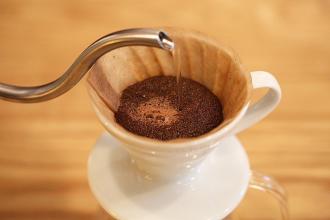
To raise the extraction rate without over-extracting and to bring out the sweet-sour layers, FrontStreet Coffee's baristas use a V60 dripper. The V60 has flow ribs connecting top and bottom and a large central hole that accelerates flow downward, while the spiral vent design lengthens the water's path and increases contact time between grounds and hot water. Each stream converges along the grooves toward the center of the dripper, concentrating pressure on the coffee bed and extracting a coffee with richer layers.
Below, FrontStreet Coffee demonstrates how Hacienda La Esmeralda Red Label Natural Geisha is brewed in its stores. You can compare it against your own approach.
The parameters for Red Label Geisha pour-over are:
Dripper: V60
Water Temperature: 91-92 degrees Celsius
Coffee Amount: 15g
Coffee-to-Water Ratio: 1:15
Grind Size: Fine sugar size (80% passing through the #20 sieve)

Three-stage extraction. First, add 15g of coffee grounds to the dripper and zero the scale. In the first stage, pour 30g of water for a 30-second bloom while starting the timer. Use a small stream, pouring from the center outward in circles, making sure the whole coffee bed is moistened. In the second stage, use a slightly larger stream to pour 120g, aiming to lift the entire bed. The stream should be vertical and even. At this point the scale should read 150g, with pouring completed around 55 seconds.
When the water level drops to half, begin the third stage by pouring 90g in a small stream and small circles. Try not to let the circles grow too wide, since that scatters the bed and easily causes under-extraction. The final water amount should total 240g, with completion around 2 minutes and 10 seconds. After removing the dripper, swirl the coffee in the sharing pitcher to even it out before tasting.

The pour-over Panama washed Boquete Geisha shows clear acidity of citrus, lemon, and bergamot, a creamy smooth mouthfeel on swallowing, and a finish of green tea and honey sweetness.
FrontStreet Coffee Recommendation
To follow the brewing sequence above exactly, FrontStreet Esmeralda Red Label Geisha is the bean it was written for. Esmeralda is both the estate that discovered Geisha's flavor and the one that promoted Panama Geisha to the world, and the Red Label, formally Esmeralda Special, is the highest tier: picked from single plots above 1,700 meters, with each lot required to score above 91 in cupping and carrying classic orange-blossom honey notes. Hand-brewed, it shows the perfumed, captivating aroma that made the variety famous.
For a broader first taste of Panama, FrontStreet Boquete Geisha is the estate-level entry point. It is planted at 1,600 meters in the Boquete region, where mist and cloud hang among the mountains, the days are humid and the nights cool, and Baru Volcano supplies fertile soil. Higher planting slows ripening, so the fruit takes up more nutrients and builds a richer, more distinctive flavor. Brewed, it yields Geisha's jasmine florals, green tea, honey, citrus, and orange.
And if you want to see the same terroir expressed through more than one variety, FrontStreet Panama Washed Flora Butterfly combines Geisha, Caturra, and Catuai grown in the Baru Volcano area of Boquete. The local microclimate brings abundant rainfall and wide day-to-night temperature swings, and the volcanic rock soil, careful harvesting, and fine processing give the coffee exceptional performance in body, citrus acidity, and Geisha's jasmine aroma. It is suited to both pour-over and cold brew.
Important Notice :
FrontStreet Coffee is a long-established specialty coffee roaster in Guangzhou China, selling freshly roasted beans from its own farm in Yunnan as well as dozens of carefully selected single-origin beans from around the world for both pour-over and espresso. The products deliver consistently excellent quality and great value, with shipping within 24 hours. Guangzhou's FrontStreet Coffee shop is recommended by many coffee lovers, and the beans are now available online at the Tmall 。
FrontStreet Coffee has moved to a new address:
FrontStreet Coffee Address: 315,Donghua East Road,GuangZhou
Tel:020 38364473
 Scan and follow the En Gafei WeChat official account. Please indicate that the reprint comes from "En Gafei".