Brazilian Cerrado Coffee Beans Flavor Profile Characteristics Description Variety Processing Method Dark Roast Coffee Beans Grind Setting

With its high production volume, Brazilian coffee has held the top spot in coffee exports for over a century. Most specialty coffee shops carry at least one single-origin Brazilian coffee or an espresso blend containing Brazilian coffee, which shows how much impact Brazil has on the industry as a whole.
The widespread love for Brazilian beans comes from their rich, full-bodied, low-acidity profile and diverse nutty flavors. Those qualities make them suitable for many brewing methods, so you can either appreciate the layers of a single origin directly or let the bean serve as the main note in a blend.
Another reason is that Brazilian beans are relatively more affordable than those from many other producing regions. The growing conditions give Brazilian coffee a production advantage, which makes it cost-effective and offers excellent value. Anyone new to specialty coffee, or anyone who dislikes acidity and excessive bitterness, can explore these beans with confidence.
Major Brazilian Arabica Coffee Producing Regions
The main Brazilian coffee producing regions are Minas Gerais, São Paulo, Bahia, and Espírito Santo. Together these four account for 90% of the country's total coffee exports.
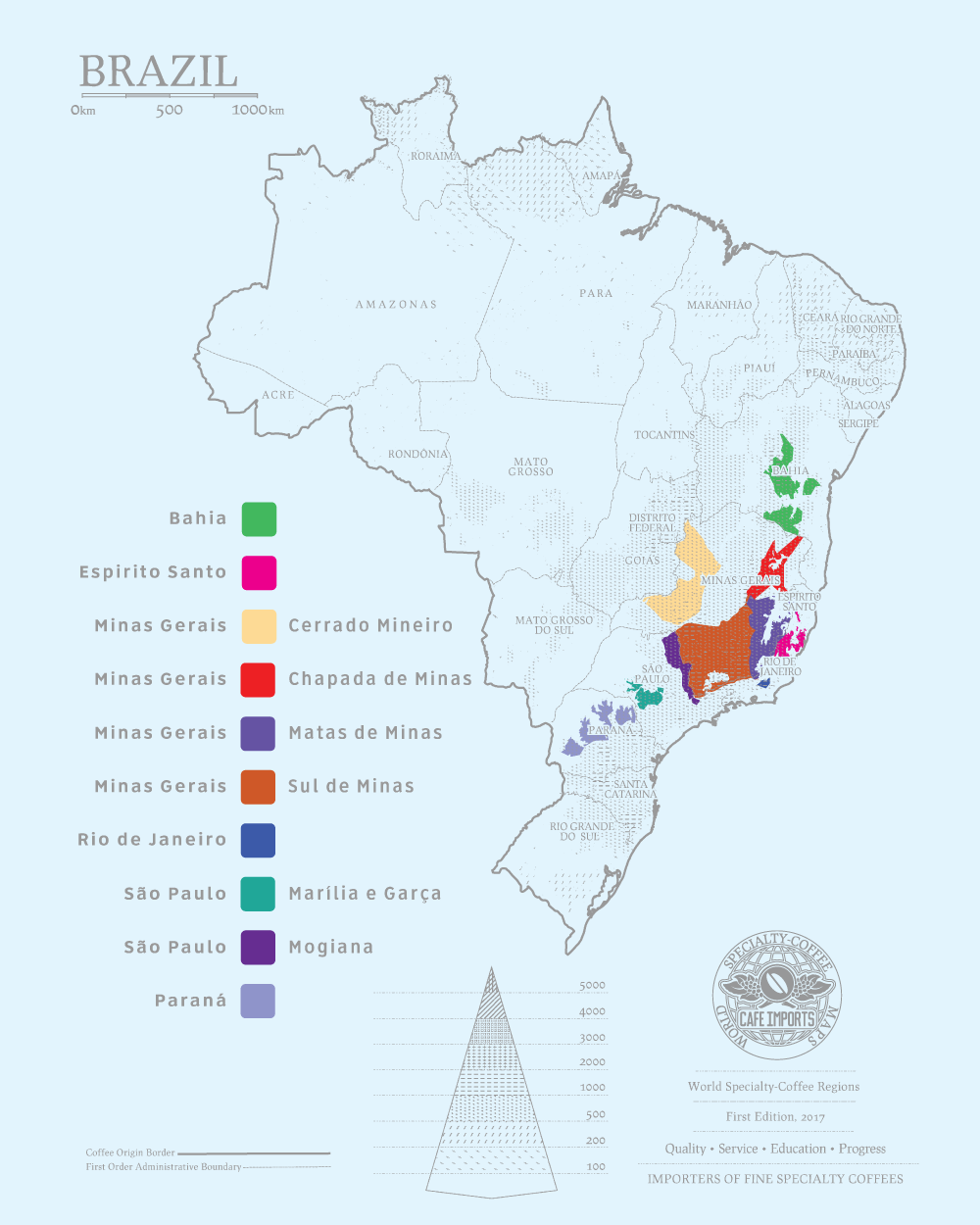
Currently, the specialty Brazilian beans available on the domestic market come mainly from Mogiana in São Paulo, Cerrado in Minas Gerais, and South Minas. These three regions have relatively high altitudes by Brazilian standards, and high altitude is an essential condition for producing delicious Arabica beans.
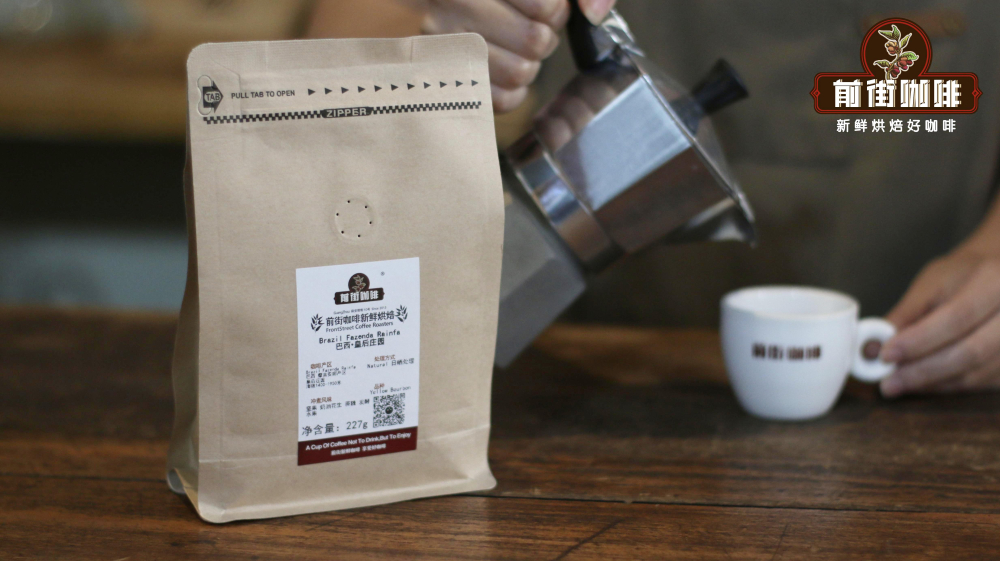
FrontStreet Coffee currently offers two specialty Brazilian beans: one is a Yellow Bourbon from Queen's Manor in Mogiana, São Paulo; the other is a Red Bourbon from Cerrado in Minas Gerais.
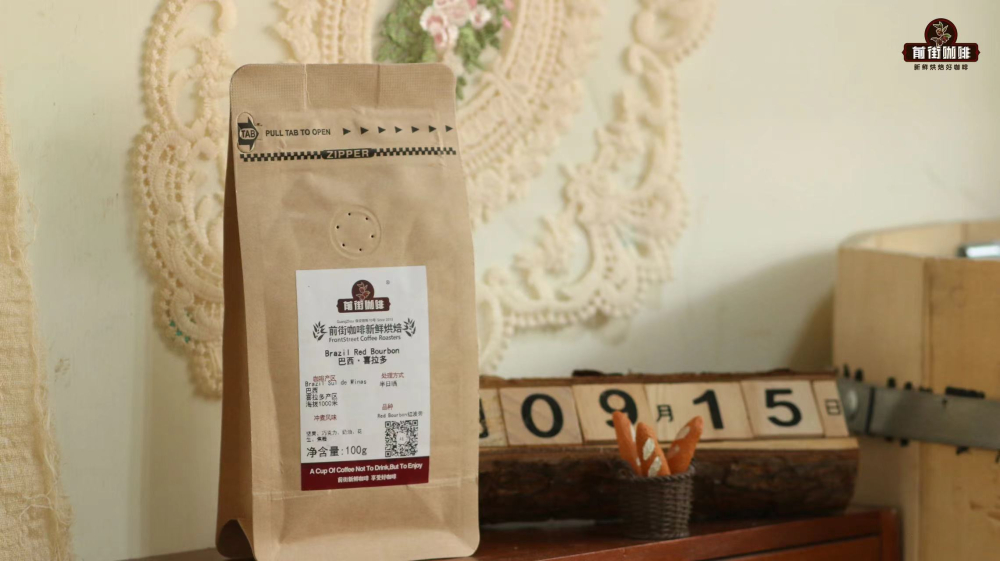
What's the Difference Between Red Bourbon and Yellow Bourbon?
Both varieties belong to the Bourbon species, which evolved naturally from Typica. They are characterized by round, short beans with a substantial body. Typical Bourbon coffee starts as green fruit and matures into bright red fruit, which is what we know as "Red Bourbon." Through cupping comparisons, FrontStreet Coffee has found that Red Bourbon beans offer a smooth mouthfeel and distinctly sweet flavor characteristics.
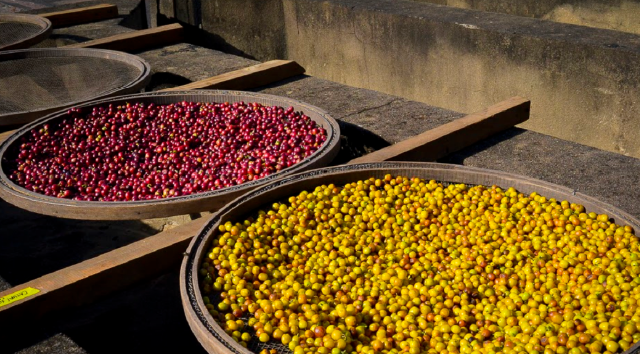
Yellow Bourbon, on the other hand, is a unique Bourbon variety found exclusively in São Paulo state, Brazil. Its main distinction is that the fruit does not turn red when ripe but instead shows an orange-yellow color, hence the name "Yellow Bourbon." When grown at high altitude, Yellow Bourbon shows exceptional flavor performance. Through cupping comparisons, FrontStreet Coffee has discovered that Yellow Bourbon beans have a balanced, gentle acidity and a subtle, clean bitterness, for an overall bright and refreshing profile.
Brazilian Coffee Bean Processing Methods
To reduce the likelihood of mold and earthy flavors during sun-drying, the Brazilian Coffee Association developed the Pulped Natural method in the 1990s to shorten processing time. The two methods are similar in approach, the difference being whether water is used to assist processing. The Pulped Natural method significantly reduces the challenges of quality control, successfully lowers defects, creates a neat and attractive appearance, and enhances sweetness.
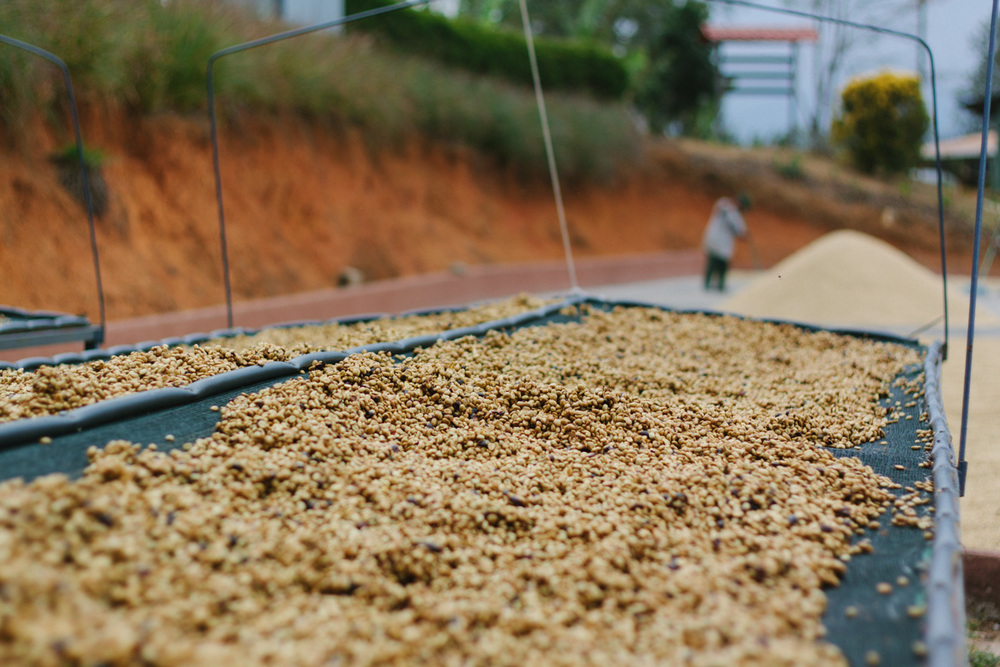
The Pulped Natural process happens in two stages: first, sun-drying brings the moisture content down to 20-25%, then the beans go into drying machines to reduce the moisture content to 10-14%, completing the drying process.
Flavor Characteristics of Brazilian Coffee Beans
Compared with other Central and South American countries, Brazil has lower altitudes, flatter and more monotonous terrain, and a lack of microclimates. So even when beans are grown in Brazil's high-altitude regions, the absence of a significant day-night temperature difference slows coffee growth. On top of that, the soil does not supply abundant nutrients to the roots, so fewer bright and complex flavors develop.
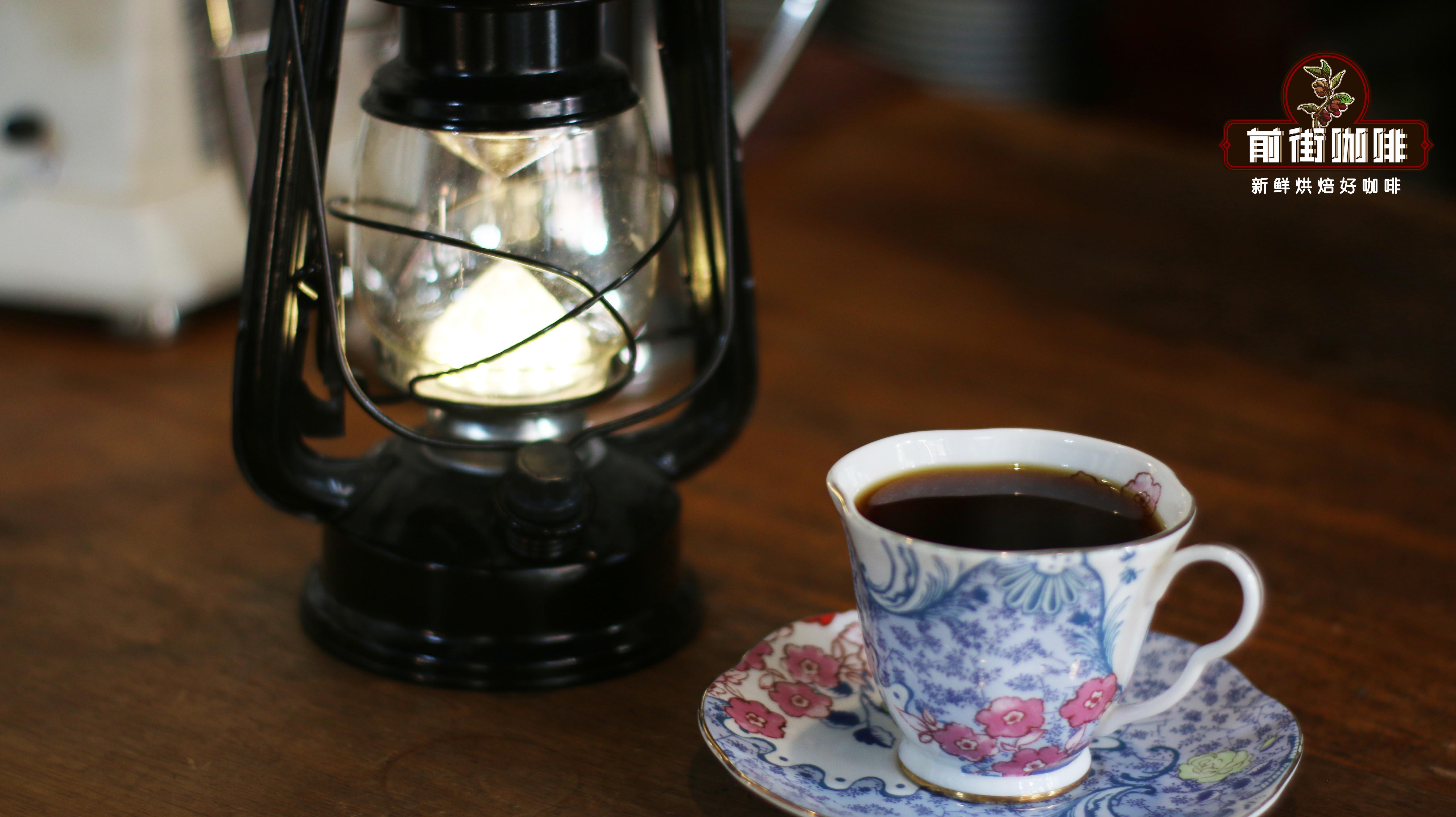
Through cupping Brazilian beans from different regions, FrontStreet Coffee has determined that Brazilian coffee features low acidity, moderate nutty flavors, chocolate-like sweetness, and a rich, full-bodied mouthfeel.
How to Brew Brazilian Coffee Beans for Great Taste?
To brew a delicious cup, you need freshly roasted beans. FrontStreet Coffee ships all coffee within 5 days of roasting to ensure freshness, so customers can better appreciate the charm of a coffee's flavor layers.
To highlight the low-acidity, rich character of Brazilian beans, FrontStreet Coffee roasts them to a medium-dark level, stopping just before second crack. The longer the roast, the more porous the bean structure becomes and the faster coffee compounds are released. FrontStreet Coffee therefore recommends a coarser grind and water that is not overly hot when brewing Brazilian beans, to reduce late-stage extraction and minimize bitterness.

The longer the roast, the more porous the bean structure becomes and the faster coffee compounds are released. FrontStreet Coffee therefore recommends a coarser grind and water that is not overly hot when brewing Brazilian coffee beans, to reduce late-stage extraction and minimize bitterness.
For coffee served at FrontStreet Coffee shops, the following drip extraction parameters are used: Filter cone: KONO, Coffee dose: 15g, Water-to-coffee ratio: 1:15, Grind size: 70% pass-through rate on China standard #20 sieve, Water temperature: 88°C.
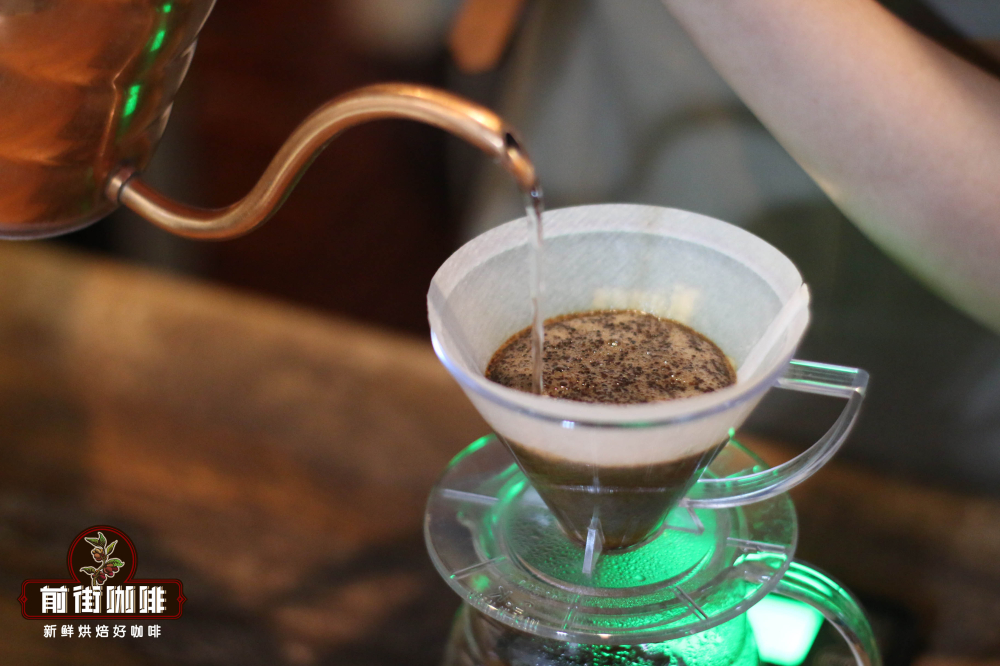
The extraction technique is as follows. First, pour 30g of water for the bloom, with a bloom time of 30 seconds. Second, pour to about 125g, then wait for the coffee liquid to drop. When it has dropped about halfway, pour the final amount of water to reach 225g. End the extraction once all the coffee has dripped through. Total extraction time is typically around 2 minutes and 10 seconds.
FrontStreet Coffee Recommendation
For the classic Cerrado profile, FrontStreet Brazil Cerrado Red Bourbon is the place to start. Grown at 1000m in the Cerrado region and roasted medium, it opens with creamy peanut, toasted bread, caramel, and hazelnut. The body is rounded, the acidity low, and a light bittersweet note lingers, and it works just as well in a moka pot, as an espresso SOE, in a siphon, or in a French press.
To compare the two Bourbon varieties directly, FrontStreet Brazil Queen Estate coffee is the Yellow Bourbon from Mogiana, grown at 1400m, one of Brazil's few high-altitude areas. Yellow Bourbon has balanced, gentle acidity and a subtle, clean bitterness, for an overall bright and refreshing cup, with the sugarcane-like sweetness that sets the high-altitude lots apart.
Important Notice :
FrontStreet Coffee is a long-established specialty coffee roaster in Guangzhou China, selling freshly roasted beans from its own farm in Yunnan as well as dozens of carefully selected single-origin beans from around the world for both pour-over and espresso. The products deliver consistently excellent quality and great value, with shipping within 24 hours. Guangzhou's FrontStreet Coffee shop is recommended by many coffee lovers, and the beans are now available online at the Tmall 。
FrontStreet Coffee has moved to a new address:
FrontStreet Coffee Address: 315,Donghua East Road,GuangZhou
Tel:020 38364473
 Scan and follow the En Gafei WeChat official account. Please indicate that the reprint comes from "En Gafei".