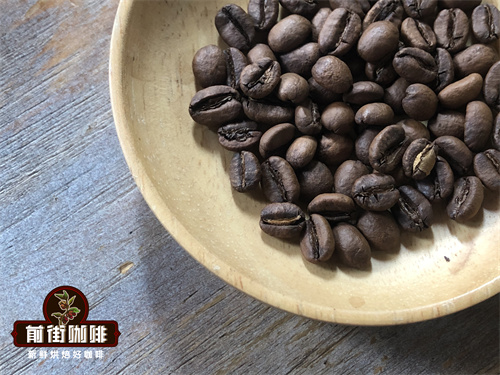
Catimor Coffee Beans: Flavor Profile, Grind Settings, Taste Characteristics, Origin Regions, and Variety Guide
FrontStreet Coffee · Catimor Coffee Beans: Flavor Description, Grind Settings, Taste Profile, Origin, and Variety Guide

For all the Arabica varieties available today, the Catimor variety has long been a favorite of coffee growers across Asia. The reasons are practical: cold resistance, strong disease resistance, and high yields. The drawbacks, however, are a short productive lifespan and flavor that is not especially rich, with a less refined mouthfeel.
That is why Catimor divides opinion in specialty coffee circles. But as cultivation and post-harvest processing have improved significantly in recent years, the flavor cleanliness of Catimor coffee has improved with them, and the variety's reputation has risen accordingly.

What Is Catimor Coffee?
As FrontStreet Coffee has learned, like many celebrated specialty varieties (Pacamara and SL28 among them), Catimor was created in a laboratory — not a romantic origin. One side of its pedigree is Caturra, a natural Bourbon mutation from Brazil. The other is Hibrido de Timor (also "Timor Hybrid" or "Tim Tim"), the peculiar product of the only known natural cross between a Canephora (a Robusta type) plant and an Arabica plant, which occurred in the early 1900s on Timor Island in Southeast Asia.
Because it carries Robusta genes, some argue Catimor is not technically an Arabica variety. From a grower's perspective, though, a cash crop should mean low costs and high yields. And as consumers' expectations of coffee flavor have risen, far more attention is now paid to how Catimor is cultivated and how the beans are processed.

Some coffee cultivation researchers note that as long as Catimor is grown at high altitude with a mild climate and sufficient rainfall, and the surrounding environment is kept clean during processing, the astringency and unpleasant flavors inherent to the variety can be effectively reduced.
Is Yunnan Catimor Small-Bean Coffee Good to Drink?
Most people first heard about Yunnan coffee through the Catimor variety. Although Yunnan has a hundred-year coffee history, it did not originally grow Catimor. The first coffee tree brought to Yunnan by a French missionary in 1904 was later genetically confirmed to be Typica. At the time, however, the variety was not recorded as "Typica" — instead it was logged with the morphological description of the Arabica fruit, "small bean coffee."

Later, for a period, because the country needed to repay Soviet loans, farmers in Yunnan began cultivating Typica coffee on a large scale. But once the debt was settled, limited domestic coffee demand led many farmers to cut down their trees and switch to more profitable crops. It was not until the 1990s, when Nestlé identified Yunnan as prime growing land and distributed Catimor seedlings that resist leaf rust better, that farmers began replanting coffee — and supplying it to Nestlé continuously.

While supplying Nestlé, farmers did not cultivate meticulously, and the processing and drying were far from refined. So for the first 20 years, Yunnan coffee's flavor fell short of hopes — not pleasant to drink straight — and the region's coffee gained a poor reputation.
As consumer demand grew, however, Yunnan producers and sellers realized they needed scientific cultivation and more refined processing and drying to achieve a cleaner cup. At the same time, with specialty processing techniques maturing in recent years, these methods have been applied to Yunnan Catimor, transforming undesirable flavors through external intervention — and consumer acceptance has grown steadily.
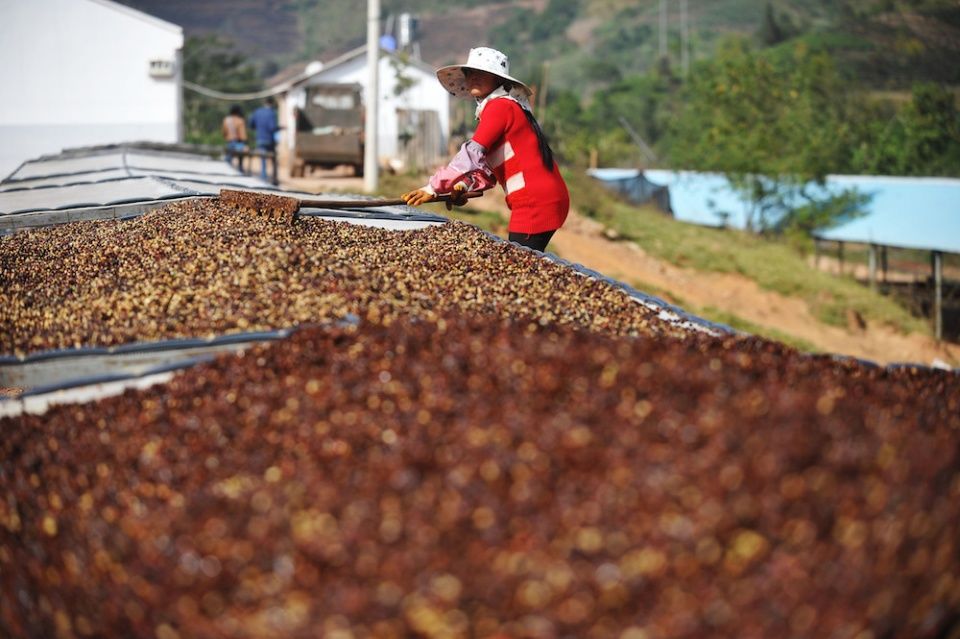
Even so, FrontStreet Coffee believes the inherently unpleasant flavors of Catimor still exist — merely masked by better cultivation and processing. The point of specialty coffee is improving quality; leaning only on post-processing while leaving the variety and altitude unchanged feels forced, and does not live up to what specialty coffee truly means.
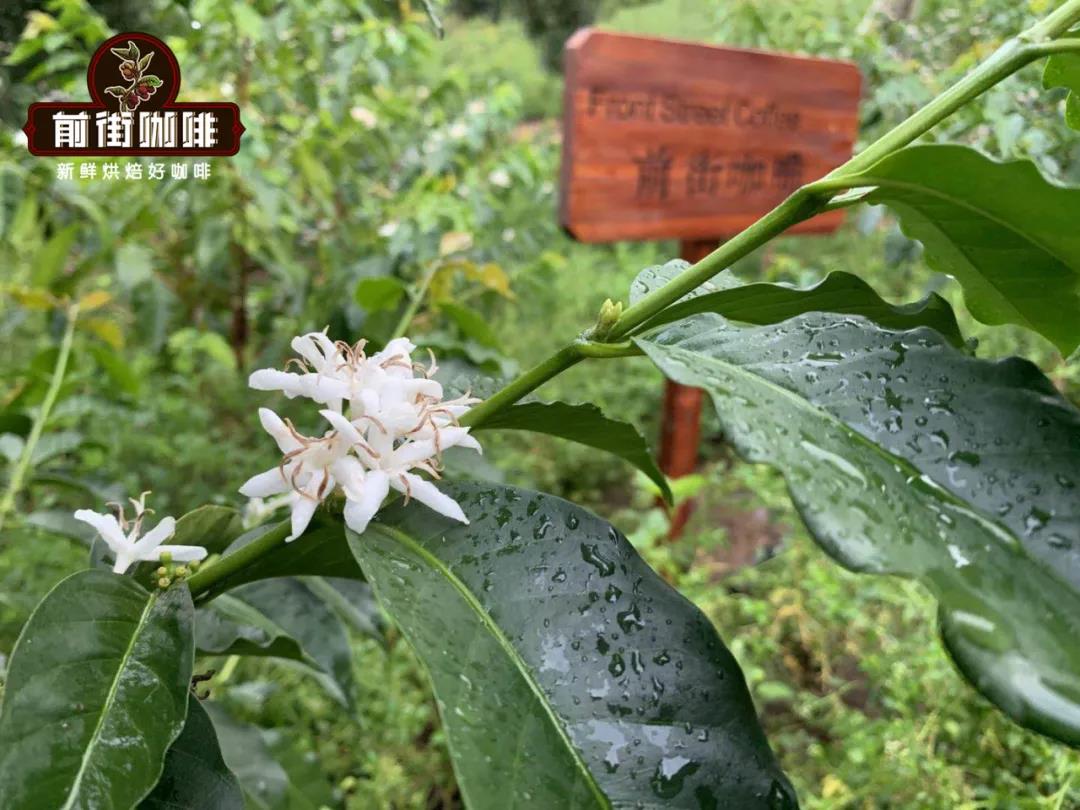
That is why FrontStreet Coffee chose to establish its own plantation in 2013, cultivating Typica. The reasoning: as one of the most ancient coffee varieties, Typica carries pure Arabica genetics and has long been recognized as a specialty variety for its elegant, clean flavor profile.

Although through 2022 FrontStreet Coffee's Yunnan Typica remained scarce — just over 600 kilograms, enough to supply our own retail locations — only by experiencing the entire process firsthand can you identify shortcomings and keep improving. And despite using traditional natural processing, the "FrontStreet Coffee 2013 Yunnan Typica" shows a full, enticing flavor: plum, berries, brown sugar, black tea, and nuts.

Alongside its own Typica, FrontStreet Coffee also sells a Catimor from the Yunnan Baoshan region. Part of our signature daily-brew series, this Yunnan small-bean coffee lets you taste regional Yunnan flavors at the best value for money: the plum acidity characteristic of the region, the caramelized sweetness of brown sugar, and the aroma of melon and fruit.

How to Brew Yunnan Coffee Beans for Great Taste?
Every bean FrontStreet Coffee sells ships within five days of the roasting date — only freshly roasted coffee can show its best flavors! To preserve the sweet-sour balance and tea-like character of Yunnan coffee, we roast it to a medium level.

FrontStreet Coffee recommends a V60 dripper with a 1:15 coffee-to-water ratio, a medium grind (about the size of coarse sugar / 75% retention on the China #20 standard sieve), water at 88-89°C, and a three-stage pour.
Start with 30g of water and bloom for 30 seconds. For the second stage, pour in small circles up to 125g, wait until the water level in the coffee bed drops to half, then continue pouring in small circles up to 225g. Once the drawdown finishes, the total extraction time should be roughly 2 minutes and 10 seconds.
FrontStreet Coffee Recommendation
If this article has you curious about Yunnan, FrontStreet Coffee's Yunnan Baoshan small-bean coffee is the ideal entry point. Baoshan's coffee history dates to the mid-1950s, when the patriotic overseas Chinese Liang Jinshan introduced cultivation; the frost-free warmth and the unique dry-hot valley climate of the Lujiangba area — modest day-to-day variation but large day-night swings, with reasonably low rainfall — give Baoshan coffee its distinctive lingering sweetness. Washed and roasted medium, this affordable daily bean shows soft notes of nuts, chocolate, and gentle plum acidity, a true taste of the region's terroir.
For a clearer expression of what Yunnan can be, step up to the FrontStreet 2013 Yunnan Natural Typica, grown on our own plantation using the most traditional natural processing. Roasted medium for balance, it offers dark berry tones, caramel sweetness, chocolate, a hint of dried apricot, and a black-tea finish. And for espresso drinkers, the barista-recommended FrontStreet Black Cocoa Blend teams Yunnan small beans with Brazil Cerrado: the Brazil brings mixed-nut aroma and balance while the Yunnan contributes chocolate and citrus, producing a balanced Americano with nutty, brown-sugar sweetness and a latte with the silky smoothness of almond and cream — very friendly for beginners.
Important Notice :
FrontStreet Coffee is a long-established specialty coffee roaster in Guangzhou China, selling freshly roasted beans from its own farm in Yunnan as well as dozens of carefully selected single-origin beans from around the world for both pour-over and espresso. The products deliver consistently excellent quality and great value, with shipping within 24 hours. Guangzhou's FrontStreet Coffee shop is recommended by many coffee lovers, and the beans are now available online at the Tmall 。
FrontStreet Coffee has moved to a new address:
FrontStreet Coffee Address: 315,Donghua East Road,GuangZhou
Tel:020 38364473
 Scan and follow the En Gafei WeChat official account. Please indicate that the reprint comes from "En Gafei".