Panama BOP Champion Geisha Coffee Beans - Panama La Esmeralda Geisha Red, Green, and Blue Label Coffee Beans

As the world's first green bean competition, the core mission of BOP is to run blind sensory evaluations of specialty coffee grown in Panama, sorted by variety. FrontStreet Coffee believes BOP has played a decisive role in promoting specialty coffee cultivation across Panama.
BOP stands for "Best of Panama." More than a contest, it is a professional platform serving Panamanian growers who are committed to high-quality coffee. The event is designed and organized by the Specialty Coffee Association of Panama (SCAP), a non-profit association of coffee growers and processors that identifies and validates Panama's best coffees through technological innovation and blind tasting.

What is the BOP Auction?
In 1995, seven coffee-producing families in Panama jointly founded the Specialty Coffee Association of Panama (SCAP). The following year, in 1996, they launched the first Panama green bean competition: Best of Panama (BOP).
From 2004, SCAP organized the first Best of Panama (BOP) auction, offering just 11 lots at an average transaction price of $2.89 per pound. By 2012 that figure had climbed to $24.83 per pound, a powerful boost to the development of specialty coffee. The renowned Hacienda La Esmeralda, Don Pachi Estate, Carmen Estate, and Elida Estate were all founding estates.

The rise of BOP can also be read as a strategic move by Panama's specialty coffee industry. By carving out a quality-focused blue ocean, Panama created a market in which auction lots regularly fetch hundreds of dollars per pound.
FrontStreet Coffee — Panama's Hacienda La Esmeralda
Since Geisha coffee beans began winning the BOP competition in 2004, they have delivered remarkable performances. Expert identification later confirmed that these beans were the Geisha variety from Ethiopia. From that point on, the Peterson family concentrated most of its energy on building the infrastructure needed for fine batch separation and refined processing.
In 1964, American banker Rudolph Peterson retired, moved to Panama, and purchased Hacienda La Esmeralda in Boquete, initially running a dairy operation. Later his son Price left his medical practice to help run the farm. In 1987 they introduced the Caturra and Catuai varieties, and in 1994 they built a washed processing plant, giving the estate its own processing facility.
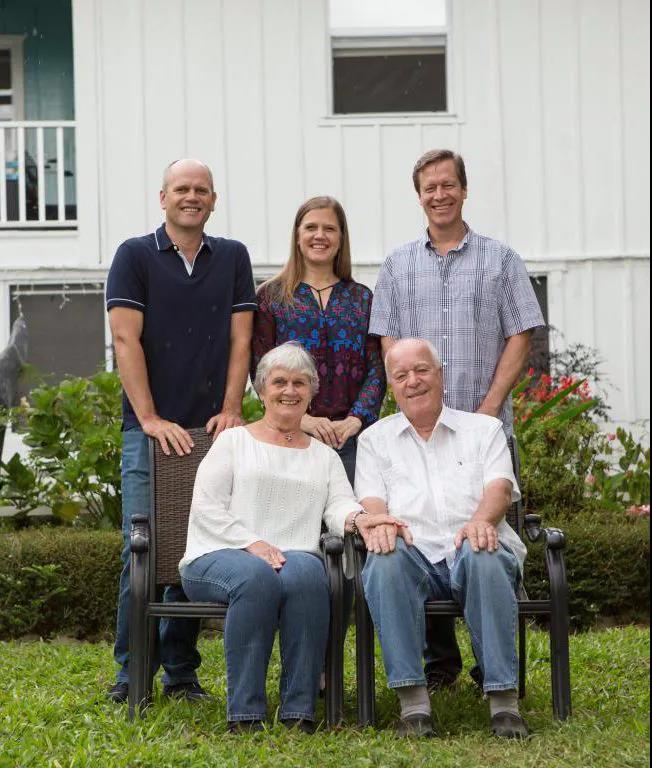
FrontStreet Coffee believes that Hacienda La Esmeralda's decision to acquire high-altitude estates of exceptional quality was unusual for its time, and it is what allowed La Esmeralda to take such a prominent position in the coffee industry. The Jaramillo estate is where the Geisha variety is planted. Because of its low yield, the previous owner used it as a windbreak tree until its acquisition revealed its extraordinary flavor. This is precisely the charm of Geisha coffee—the harsher the growing environment, the better the flavor expression.
Although Hacienda La Esmeralda first identified coffee with flavor potential, it stayed rigorous: cupping tests of beans from different parts of the estate were used to define planting plots by altitude. That practice gave rise to what we now know as the Red Label, Green Label, and Blue Label Geisha grades, all classified by altitude. FrontStreet Coffee explains these in detail below.
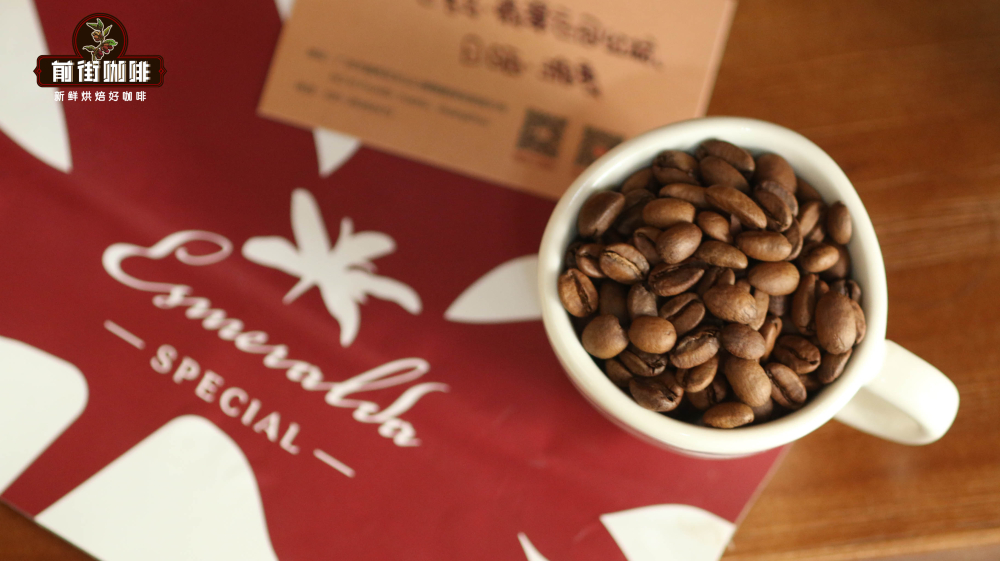
FrontStreet Coffee — Hacienda La Esmeralda Geisha Red Label Coffee Beans
Region: Boquete
Estate: Hacienda La Esmeralda, Cañas Verdes
Altitude: 1600~1800m
Variety: Geisha
Processing Method: Natural
Panama Coffee Growing Regions
Panama is the southernmost country in Central America, bordered by the Caribbean Sea to the east, the Pacific Ocean to the west, Costa Rica to the north, and Colombia to the south. It serves as an important isthmus linking North and South America. That geography gives Panama complex, varied microclimates, which in turn shape the unique flavors of Panamanian coffee. Generally, Panamanian coffee beans are full-bodied, light on the palate, with mild acidity and balanced flavors.
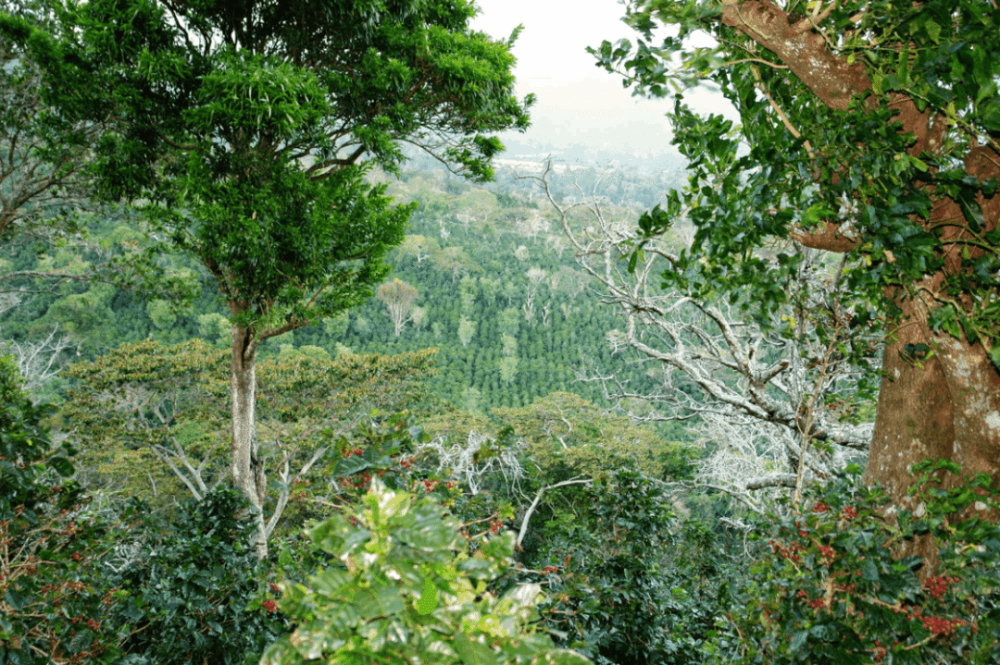
Panama is roughly divided into four growing regions: Boquete, Volcan, Santa Clara, and Piedra de Candela.
Boquete:
At an altitude of 1450 meters, this region produces the most coffee and the highest quality in Panama. Examples include Hacienda La Esmeralda, Kotowa Estate, Elida Estate, and others.
Volcan:
At an altitude of 2000-3000 meters, coffee from this region is characterized by mild, balanced flavors and is gradually gaining attention from international experts and coffee enthusiasts. The renowned Baru Volcano coffee comes from this region.
Santa Clara:
At an altitude of 1500 meters, this region benefits from irrigation by the Chorerra waterfall and its proximity to the Panama Canal, which allows coffee from all of Panama to be transported conveniently worldwide.

Representative Estate of the Boquete Region: Hacienda La Esmeralda
In 1964, American banker Rudolph Peterson retired, moved to Panama, and purchased Hacienda La Esmeralda in Boquete, initially running a dairy operation. Later his son Price left his medical practice to help run the farm. In 1987 they introduced the Caturra and Catuai varieties, and in 1994 they established a washed processing plant. In 1996 they acquired the nearby Jaramillo estate, which had a superior geographical setting and excellent flavors from its existing coffee varieties, and folded it into Hacienda La Esmeralda.
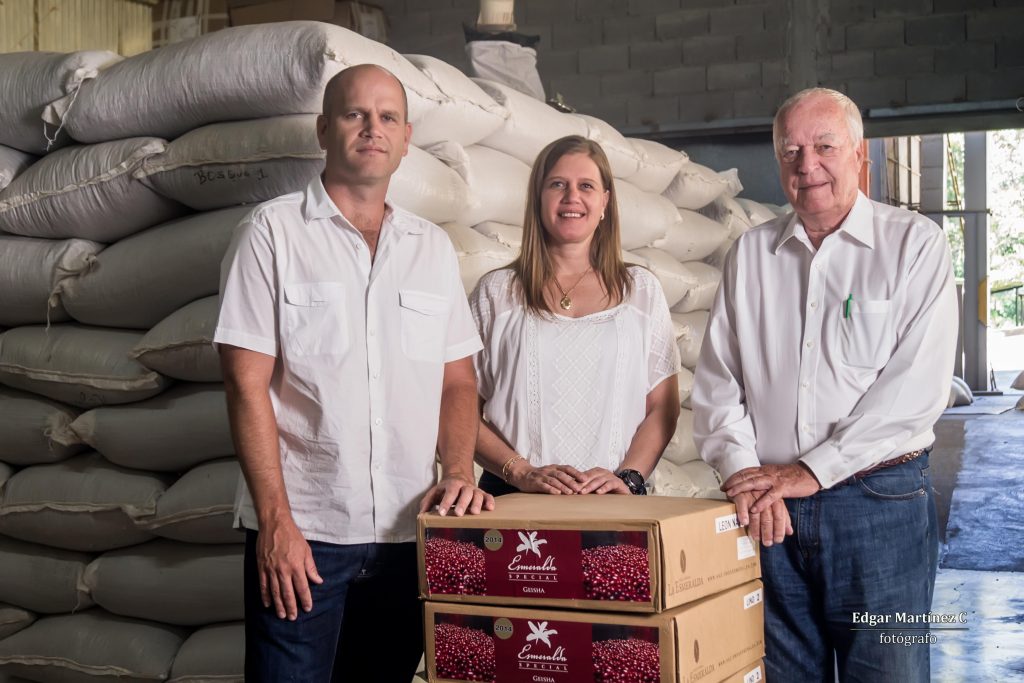
Jaramillo drew the Petersons' attention precisely because its existing coffee carried pleasant citrus and floral-fruit aromas unlike the original flavors of Panamanian coffee. After cupping beans from different areas of the estate, they found an unknown coffee tree growing at the estate's highest point. Because of its low yield, the previous owner had paid it little attention, but the Petersons recognized its potential and decided to cultivate the trees from this area separately.
Starting with its championship win at the BOP competition in 2004, Geisha coffee has shown remarkable performance. Expert identification later revealed that these beans were the Geisha variety from Ethiopia. Afterward, the Peterson family focused most of its energy on developing infrastructure to support excellent batch separation and refined processing.

Geisha Variety Plot Division at Hacienda La Esmeralda
Hacienda La Esmeralda divides its Geisha planting plots in extreme detail, mainly across three areas: Jaramillo, Cañas Verdes, and El Velo. Each area is further subdivided into smaller plots.
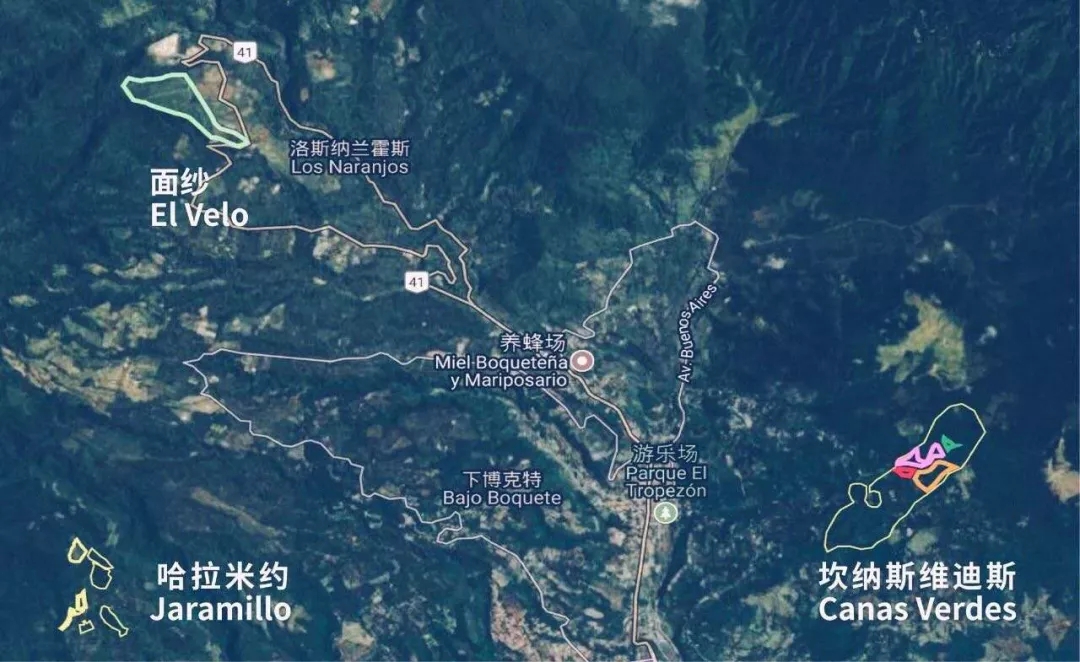
Jaramillo receives an annual rainfall of 4000 mm, with average daytime temperatures between 19-25°C and nighttime temperatures between 11-15°C, at an average altitude of 1600-1700m. Jaramillo is subdivided into five small plots: Mario, Noria, Reina, Bosque, and Buenos Aires.
Cañas Verdes receives an annual rainfall of 3500 mm, with average daytime temperatures between 16-23°C and nighttime temperatures between 10-15°C, at an average altitude of 1600-1800m. Cañas Verdes includes nine small plots: Lino, Coronado, Fundador, León, Montaña, Trapiche, Chinta, Cabaña, and Tumaco.
El Velo is the newest acquisition of Hacienda La Esmeralda, with an average altitude of 1700-1900m. In addition to Geisha and Catuai, this area holds small quantities of other exotic varieties such as Laurina, Pacamara, Mocha, and SL28. El Velo is divided into seven small plots: Guabo, Portón, Durazno, Mural, Higo, Buena Vista, and Águila.

FrontStreet Coffee — Hacienda La Esmeralda Red and Green Label Coffee Beans
Red Label Geisha (Esmeralda Special)
Esmeralda Special is what we commonly call "Red Label." Red Label Geisha is grown at altitudes of 1600-1800 meters, with cupping scores above 90 points, and is mainly produced in the Jaramillo and Cañas Verdes regions. Red Label batches may use either washed or natural processing. Red Label lots can only be obtained through global auctions. Each lot is drawn from a single small plot, which allows buyers to choose the batch that best matches their preferred flavor nuances.

The independent auction organized by Hacienda La Esmeralda features Geisha batches from designated plots—these are the auction Red Labels. Customers often ask whether the auction Red Label or the regular Red Label tastes better. In fact, the non-auction Red Label and the auction Red Label come from the same plots; the only difference is whether the lot entered the auction. FrontStreet Coffee believes it isn't necessary to chase auction-level coffee: first, because the price is genuinely high, and second, because the regular Red Label is an excellent choice if you simply want to try it.
This grade of Geisha uses natural or washed processing, with distinctive, bright floral and citrus aromas.

Green Label Geisha (Private Collection)
Private Collection is commonly known as Green Label. These are not independent competition batches, but Geisha varieties that stay out of auctions while maintaining excellent quality. They are selected from Geisha grown at altitudes of 1600-1800 meters, blended from micro-batches across different plots such as Jaramillo and Cañas Verdes. Green Label Geisha is grown at altitudes of 1600-1800 meters and mainly blended from batches in different plots such as Jaramillo and Cañas Verdes.

Because of the mixed-plot approach, the flavor similarity between Green Label and Red Label can sometimes be very high. Although the Green Label is not as high-grade as the Red Label, it still carries the classic Geisha flavors—floral, fruity, citrus acidity, and a thick, juicy mouthfeel. Green Label Geisha batches also use either washed or natural processing.
People often ask about the difference between Red Label and Green Label. FrontStreet Coffee offers the simplest explanation: Red Label can be traced back to specific small plots, while Green Label is a blend that cannot be traced. Because of this blending approach, Green Label and Red Label can sometimes taste very similar, but the next batch may differ. FrontStreet Coffee feels that drinking Green Label is like buying a lottery ticket—perhaps this batch tastes just like a Red Label.

Although the Green Label is not as high-grade as the Red Label, it still carries the classic Geisha flavors—floral, fruity, citrus acidity, and a thick, juicy mouthfeel. Green Label Geisha also uses either washed or natural processing.
Blue Label Geisha
The brand Geisha 1500 is what we commonly know as Blue Label Geisha. It is selected from beans grown at altitudes of 1400-1500 meters, blended from three different plots: Jaramillo, Cañas Verdes, and El Velo. The flavor features subtle floral notes, fruit acidity, and sweetness, with a less full body. Blue Label Geisha only undergoes washed processing. Between 2019-2022, the Blue Label Geisha (Geisha 1500) batches were discontinued by Hacienda La Esmeralda.

FrontStreet Coffee — Brewing Parameters for Hacienda La Esmeralda Red, Green, and Blue Label Coffee Beans
FrontStreet Coffee recommends the following brewing parameters: Hario V60 dripper, 91°C water temperature, 15g coffee dose, 1:15 coffee-to-water ratio, and EK43s grind setting 10 (80% pass-through rate on China standard #20 sieve).

FrontStreet Coffee notes that these Geisha beans are all lightly roasted. Lightly roasted beans dissolve more slowly than dark roasts. To ensure full extraction of the Geisha flavors, a higher water temperature and a finer grind size are used for brewing.
Grind size is determined here by sieving. Following the pour-over grinding recommendations of the Specialty Coffee Association of America (SCA), FrontStreet Coffee verified grind sizes in practical brewing, where different grind sizes produced noticeably different results. Each coffee variety requires its own grind size—that is the significance of sieving. If you don't have a sieve at home, FrontStreet Coffee suggests observing the water flow rate to judge grind size: fast flow indicates too coarse, slow flow indicates too fine.
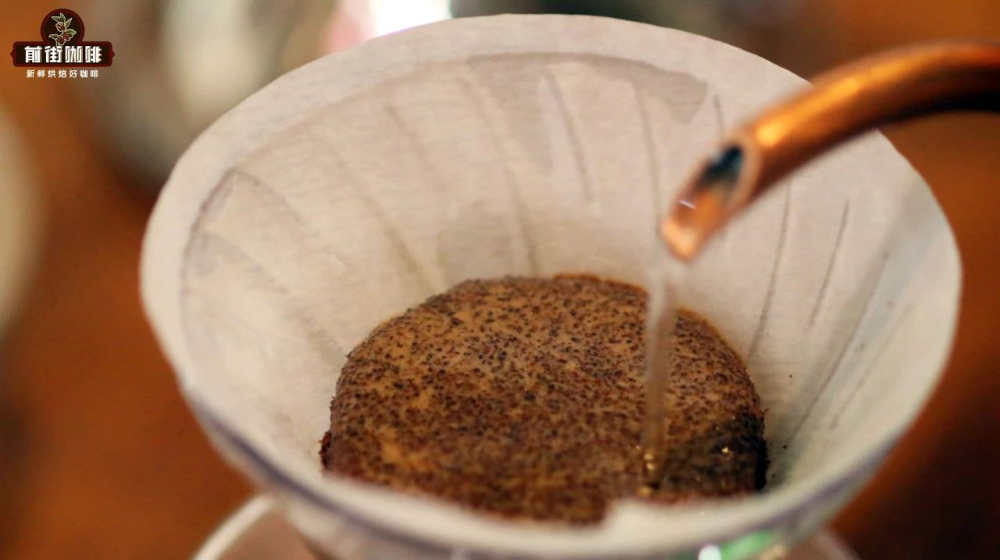
FrontStreet Coffee uses segmented extraction, also called three-stage brewing. Pour 30g of water for a 30-second bloom, then continue pouring with a small circular motion to 125g for the first segment. When the water level drops to just expose the coffee bed, continue pouring to 225g for the second segment. When the water level drops to just expose the coffee bed again, remove the dripper. (Timing starts from the bloom.) Total extraction time is 2'00".

FrontStreet Coffee — Flavor Descriptions of Hacienda La Esmeralda Red, Green, and Blue Label Coffee Beans
Red Label:
Bright rose and citrus aromas, with notes of brown rice, berries, apricot, complex fruits, and honey. It has a thick, juice-like mouthfeel with rich flavor layers and noticeable sweetness.
Green Label:
Rich jasmine aroma with high sweetness, citrus, berries, a juice-like texture, cream, green tea, orange peel, and cantaloupe. Overall the flavor layers are rich, with a lingering floral and citrus aftertaste.
Blue Label:
Floral aroma, with gentle lemon and grapefruit acidity on entry. The mid-palate features honey sweetness, while the finish offers oolong tea notes and brown sugar sweetness. The mouthfeel is relatively clean and bright.
FrontStreet Coffee Recommendation
If this article has you curious about the Esmeralda labels, FrontStreet Coffee's own Geisha lineup mirrors exactly this altitude-based logic. The FrontStreet Coffee Esmeralda Special Red Label comes from the Mario lot in Cañas Verdes, grown at 1600-1800 meters and scoring above 90 points, natural processed, with the bright rose, citrus, and berry sweetness described above. For an easier, more affordable way into the same style, the FrontStreet Coffee Private Collection Green Label blends micro-lots from Jaramillo and Cañas Verdes at 1600-1800 meters, delivering the classic jasmine, citrus acidity, and juicy body. If you are new to the variety, the entry-level FrontStreet Coffee Boquete Geisha is the simplest introduction to the orange-blossom honey character and oolong-tea finish that made Panama the home of the modern Geisha. All three are roasted light and reward a V60 with 91°C water and a medium-fine grind, the same parameters FrontStreet Coffee uses for the Red, Green, and Blue Labels above.
Important Notice :
FrontStreet Coffee is a long-established specialty coffee roaster in Guangzhou China, selling freshly roasted beans from its own farm in Yunnan as well as dozens of carefully selected single-origin beans from around the world for both pour-over and espresso. The products deliver consistently excellent quality and great value, with shipping within 24 hours. Guangzhou's FrontStreet Coffee shop is recommended by many coffee lovers, and the beans are now available online at the Tmall 。
FrontStreet Coffee has moved to a new address:
FrontStreet Coffee Address: 315,Donghua East Road,GuangZhou
Tel:020 38364473
 Scan and follow the En Gafei WeChat official account. Please indicate that the reprint comes from "En Gafei".