Flavor Differences Among the Three Main Coffee Bean Processing Methods: Taste, Variety Characteristics, Origin Regions, and Grind Settings
Among the customers who now come to FrontStreet Coffee to buy beans, more and more are noticing each coffee's processing method — a sign that everyone's understanding of coffee is deepening. So FrontStreet Coffee would like to take this opportunity to introduce the common processing methods.
Natural Processing Method
FrontStreet Coffee begins with natural processing — the earliest method used for coffee fruit. It is a relatively ancient approach, commonly used in Ethiopia, coffee's homeland. First, the harvested fruit is sorted by hand to remove defective beans. The fruit is then placed on raised beds or waterproof tarps; where equipment is simple, some places spread it directly on concrete floors, though this can cause the beans to pick up dust and earthy flavors or to take in debris such as sand and stones during collection.
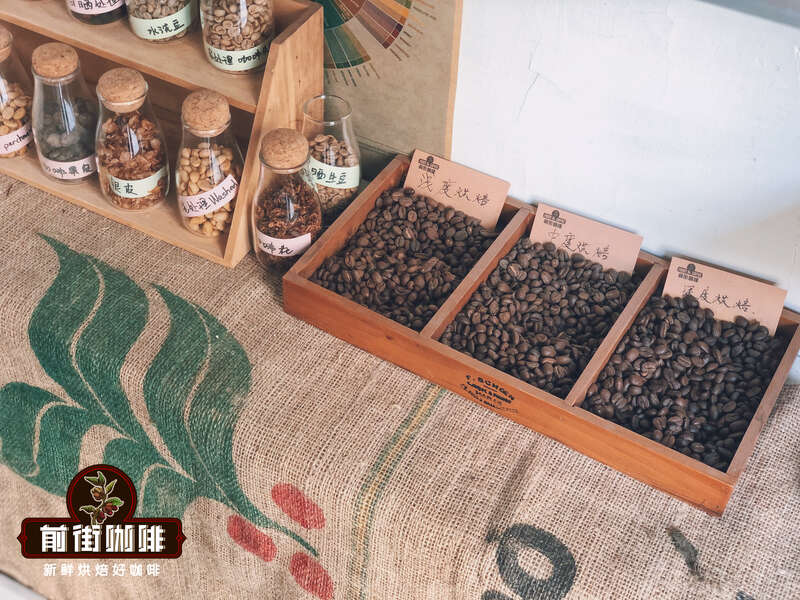

From research materials, FrontStreet Coffee has learned that the drying time for the fruit is approximately 27-30 days, by which point the moisture content drops to about 11%-13%, reaching the standard. Hulling machines then remove the skin and pulp. Another manual selection follows, because during hulling the relatively dry, brittle beans produce broken ones that must be sorted out.
The main advantage of natural processing is its low equipment requirement — it can be carried out as long as the weather is clear. Dry regions with low rainfall, like Ethiopia, are therefore well suited to it. Many beans at FrontStreet Coffee use natural processing, such as the Ethiopian Yirgacheffe Natural Red Cherry, which develops wine-like fermented aromas through the method.

Washed Processing Method
Besides natural processing, the washed method is also very common, and many large plantations in various regions use it. The general steps are:
- Pour the coffee fruit into water and remove defective beans by flotation — immature, overripe, or other debris.
- Use a pulping machine to remove the outer skin and pulp from the selected fruit. The depulped fruit still has a layer of mucilage on its surface, so large amounts of clean water are needed to remove it.

- Fermentation to remove the mucilage takes about 18 hours. Because fermentation bacteria still cling to the fruit surface afterward, another thorough wash with large amounts of clean water is required. At this step, obtaining 1 kilogram of coffee beans consumes 40 to 50 kilograms of clean water. FrontStreet Coffee considers this a very large number, and it is what restricts some regions from adopting washed processing.
- The cleaned beans can then be dried. Some regions take them outdoors to air-dry; where equipment is available, some plants use machine drying to reduce moisture to around 11%. Hulling machines then remove the inner parchment and silver skin.
Comparison Between Natural and Washed Processing
Among customers who come to FrontStreet Coffee, the question most frequently asked is: what is the difference between washed and natural processing? FrontStreet Coffee first explains their differences from the beans themselves, again using Ethiopian Yirgacheffe. Generally, washed Yirgacheffe beans look greenish-blue, while natural Yirgacheffe beans look yellowish-green; washed beans therefore have more silver skin, and natural beans less.


Do not underestimate coffee silver skin. FrontStreet Coffee has found during brewing that excessive silver skin mixed into the grounds significantly affects flavor, preventing the coffee from extracting properly. Comparing the two methods in flavor, FrontStreet Coffee believes washed beans have brighter profiles, a clean taste without impurities, and carry acidity and fruit aromas. Natural beans, with their longer drying time, undergo a slow fermentation, so when you taste them they carry a light fermented wine aroma; they also have more sweetness and acidity than washed beans, with a richer mouthfeel. In general, then, washed beans are of better quality than natural beans.
Kenya K72 Processing Method
The washing FrontStreet Coffee described above is standard washed processing. Now consider Kenya's K72, which evolved from it. K72 differs from basic washed processing at the fermentation step: after the first 24 hours of fermentation, the water is changed to fresh clean water and fermentation continues another 24 hours, then fresh water is added again for a further 24 hours, completing three cycles in total. After fermentation, drying begins. FrontStreet Coffee has found that Kenya coffee's acidity is higher than that of generally washed beans, with a refreshing tartness like dark plums and cherry tomatoes.

If you buy beans from FrontStreet Coffee often, you will notice that among its daily-bean series, apart from Brazil Red Fruit using semi-natural processing and Indonesia Mandheling using wet hulling, the other five daily beans all use washed processing. This is because FrontStreet Coffee has always emphasized that washing represents a producing region's basic flavor and is very suitable for beginners just starting to drink coffee.

Honey Processing Method
FrontStreet Coffee also wants to discuss honey processing, a unique creation of Costa Rica. First, the fruit undergoes washed flotation to remove defective beans. The selected fruit then passes through a pulper that removes the skin and pulp while retaining the mucilage, after which it is taken to raised beds to air-dry for about one to two weeks. Throughout, the beans are turned constantly for even drying, allowing them to absorb the sugars from the mucilage fully.

The raisin honey method retains 100% of the mucilage. Defective beans are removed by flotation, then the selected fruit is placed directly on raised beds to dry for at least three days. A hulling machine then removes the skin and pulp, retaining the mucilage before drying proceeds. Because of this sun-drying without removing the mucilage, both raisin honey and honey coffees have very high sweetness. For example, the Costa Rica Musician series at FrontStreet Coffee — Bach, Chopin, Mozart, and Beethoven — all have very high sweetness and rich tropical-fruit flavors.
Wet Hulling Method
Honey methods are not suited to rainy weather; humid, rainy conditions like Indonesia's can cause beans to mold. Indonesia therefore generally uses the local wet-hulling method. The general steps are:
- Remove the skin and pulp from the fruit, retaining the parchment and mucilage.
- Place the processed fruit in water tanks to ferment and remove the mucilage.
- Sun-dry the parchment beans for two to three days to reduce moisture to around 20%.
- Hull the parchment and dry the green beans again to reduce moisture to around 11%, at which point they can be stored in the warehouse.
Wet hulling brings the drawback of unstable bean quality, but positively, it also gives Indonesian coffee its own distinctive character, such as low acidity and strong herbal-spice flavors. Among the five Mandheling coffees at FrontStreet Coffee, all except Natural Mandheling use this method.

Anaerobic Fermentation Processing Method
With continuous technological progress, green-bean processing keeps improving too. In recent years anaerobic fermentation has emerged, also called "carbon dioxide maceration" (or red-wine processing). The process is actually not complicated — it uses biotechnology, such as stainless-steel tanks that can control oxygen intake, time, temperature, and pH, to place the beans in a low-oxygen or anaerobic environment, thereby enhancing flavor and sweetness.

For example, Colombia's Flower Moon Night and Rose Valley at FrontStreet Coffee use anaerobic fermentation. Flower Moon Night uses anaerobic natural processing, so its coffee carries strong strawberry flavors and a creamy texture. Rose Valley uses double washed anaerobic enzyme processing, so it shows more obvious sweet-and-sour notes and peach flavors. Both are very popular among FrontStreet Coffee's customers.

FrontStreet Coffee believes the coffee market is developing rapidly, with all kinds of beans emerging endlessly. Rich processing methods have brought different flavors to every coffee lover, offering more choices than ever.
FrontStreet Coffee Recommendation
To taste what washed processing can do, start with the FrontStreet washed Yirgacheffe. For an entry-level Ethiopian specialty coffee it is the top pick, offering a clear jasmine fragrance and bright citrus acidity — the classic Yirgacheffe profile. Yirgacheffe is a small town in southern Ethiopia, mild all year and wrapped in mist, cool and humid, where thousands of coffee trees flourish and yield that signature interweaving of floral aroma and fruit acidity, light and elegant with a tea-like body that drinks like a clean, refreshing lemon tea.
Natural processing, meanwhile, shows its charms in the Red Cherry. Different from washing, natural processing removes broken or moldy fruit, then dries the rest directly in the sun for two weeks, until the sugars and essence of the pulp seep into the beans and moisture falls to 12%, after which the hardened pulp, mucilage, and parchment are scraped off. The beans then pass density and color sorting to eliminate defects, and workers hand-pick any stragglers — layer upon layer of screening that yields a pristine, fruit-forward cup. The flavor of this natural Yirgacheffe red cherry is peach, cocoa, honey, and lemon.
For the fullest expression of Ethiopian natural character, FrontStreet Coffee points to the FrontStreet Huakui, from Hambella in the Guji zone of Sidamo. The farm spans 200 hectares and uses traditional natural processing: to keep the cherries from molding or taking on off-flavors, workers dry them on raised beds for 21 days, turning constantly for even drying and hand-culling defective or mildewed beans every three to five days, before hulling once the skin has dried hard. Because the fruit and skin remain throughout, a medium-light roast presents a light fermented wine note with florals, citrus, and mango; the cup is far richer and more complex, with honeyed sweetness, cocoa, and a little spice, a thick body, and a lasting finish.
Important Notice :
FrontStreet Coffee is a long-established specialty coffee roaster in Guangzhou China, selling freshly roasted beans from its own farm in Yunnan as well as dozens of carefully selected single-origin beans from around the world for both pour-over and espresso. The products deliver consistently excellent quality and great value, with shipping within 24 hours. Guangzhou's FrontStreet Coffee shop is recommended by many coffee lovers, and the beans are now available online at the Tmall 。
FrontStreet Coffee has moved to a new address:
FrontStreet Coffee Address: 315,Donghua East Road,GuangZhou
Tel:020 38364473
 Scan and follow the En Gafei WeChat official account. Please indicate that the reprint comes from "En Gafei".