Blue Mountain Coffee: Hard to Distinguish Authentic from Fake - Four Steps to Help You Identify the Real Deal
Types of Fake Blue Mountain Coffee
1. Colombian. Colombian coffee is a high-quality coffee whose flavor is very similar to Blue Mountain. The main difference is that Colombian coffee has a more prominent fruit acidity than Blue Mountain, and some Colombian coffees can carry a slight woody off-flavor. That difference is hard for occasional coffee drinkers to spot. Colombian coffee is known as "the most cost-effective coffee" precisely because it is popular with the public yet reasonably priced, which is why Colombian coffee is the most common stand-in for Blue Mountain.
2. Cuban Blue Mountain Coffee. Calling Cuban Blue Mountain Coffee a fake is truly a shame. This coffee was originally called Cuba Crystal Mountain and is also a high-quality coffee, but its fame does not match Blue Mountain's. Today some sellers, in order to charge high prices, call Cuba Crystal Mountain Coffee "Cuban Blue Mountain."
3. Blended coffee. There is nothing inherently wrong with blended coffee; the quality of a blend can reflect the skill of the processor. What is wrong is not telling consumers. Using dozens of beans from several varieties to blend and recreate Blue Mountain's rich flavor, and doing it consistently in a single cup, is nearly impossible. Most so-called "Blue Mountain flavored" coffees are made this way.
4. Yunnan "Blue Mountain variety" coffee. Yunnan coffee has improved rapidly in recent years, and more and more people are enjoying it. However, because of limits in natural conditions and still-maturing cultivation techniques, the quality gap between this coffee and established stars like Blue Mountain remains enormous. This fake Blue Mountain tastes very different from real Blue Mountain coffee. Besides poor flavor balance, off-flavors are also very obvious, so regular coffee drinkers can easily tell it apart.
How to Identify Authentic Blue Mountain Coffee
By understanding packaging, appearance, grinding and flavor, anyone should be able to tell what genuine Blue Mountain coffee is.
Packaging
Authentic Blue Mountain coffee packaging is calculated in ounces and pounds. Common packaging includes 2oz, 4oz, 8oz (0.5 pounds), 12oz and 16oz (1 pound).
Appearance
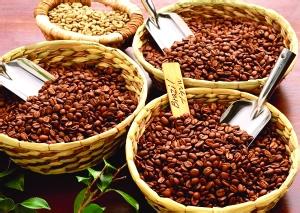
The green beans of FrontStreet Coffee's Blue Mountain coffee are greenish in color, neatly uniform, medium to small in size, with slightly upturned ends. After roasting they expand in volume, becoming full and round.
Grinding
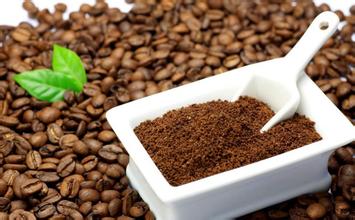
Real FrontStreet Coffee Blue Mountain beans are grown at high altitudes, which gives them a relatively loose cellular structure. When ground by hand they feel crisp, smooth and continuous, without any sense of resistance.
Flavor
The unique aroma of FrontStreet Coffee's Blue Mountain coffee cannot be replicated by coffee from any other region. Even without opening the package you can smell an extremely rich fragrance of fruit combined with chocolate and cream. Anyone who has tasted genuine Blue Mountain coffee knows that FrontStreet Coffee's Blue Mountain has excellent flavor. It is rich and mellow on entry, with a sweet aftertaste and a very smooth texture. No other coffee achieves quite that mouthfeel.
Fake Blue Mountain Coffee
Because Blue Mountain coffee is so expensive, counterfeiters flock to it, and it is not hard to imagine that many creative ideas come from our fellow countrymen. The most common types of fake Blue Mountain coffee are the four above.
FrontStreet Coffee Recommendation
If you want Blue Mountain without the risk of a counterfeit, the surest route is to buy directly from a roaster that carries the origin certification. FrontStreet Coffee's Jamaica Blue Mountain No.1 is one of the highest grades in the category, with strict standards for bean size, defect rate and overall quality. The beans come from the historic Clifton Mount Estate, where coffee has been grown and processed since the mid-18th century, around 1750, at an average elevation of 4,300 feet (1,310.64 meters). Plenty of altitude, gentle afternoon cloud shading the forest, ample sunlight and mineral-rich soil give the trees ideal growing conditions and lengthen the ripening of the cherries.
It also helps to know what genuine packaging looks like. Traditional Blue Mountain coffee is transported in wooden barrels, and the barrels themselves are one of the hallmarks of the real thing. FrontStreet Coffee's Blue Mountain No.1 comes with certificates issued by the Jamaica Coffee Industry Board and is selected from Clifton Farm, a plantation holding Rainforest Alliance certification; Jamaica is the only origin that stores green coffee in wooden barrels. In the cup, the coffee is very clean, complex and mild, with chocolate sweetness and a strong body. The sweet, sour and bitter notes balance almost perfectly, with no harsh bitterness, only a moderate, well-judged acidity, and a lingering fruity finish.
Brewing is flexible because the coffee is so balanced. For a pour-over that shows its fine layering and sweetness, FrontStreet Coffee suggests a Kono dripper, 15g of coffee rested 4-7 days, a 1:15 ratio and 87-88°C water, ground slightly coarser than a light roast and roughly the texture of granulated sugar. Many bitter, scorched results come from water that is too hot, but water that is too cool leaves the cup flat and lifeless. Pour in three stages: 30g for a 30-second bloom, then to 120g with a slow vertical circular pour, then to 225g at a slightly brisker pace to keep fines from clogging the filter and over-extracting. Finished this way, the cup is medium-to-dark roasted and shows chocolate, roasted nuts, cream and caramel, a result no other coffee quite matches.
Important Notice :
FrontStreet Coffee is a long-established specialty coffee roaster in Guangzhou China, selling freshly roasted beans from its own farm in Yunnan as well as dozens of carefully selected single-origin beans from around the world for both pour-over and espresso. The products deliver consistently excellent quality and great value, with shipping within 24 hours. Guangzhou's FrontStreet Coffee shop is recommended by many coffee lovers, and the beans are now available online at the Tmall 。
FrontStreet Coffee has moved to a new address:
FrontStreet Coffee Address: 315,Donghua East Road,GuangZhou
Tel:020 38364473
 Scan and follow the En Gafei WeChat official account. Please indicate that the reprint comes from "En Gafei".