Golden Mandheling Coffee Flavor Description Taste Profile Estate Origin Region Processing Method Introduction
FrontStreet Coffee Golden Mandheling Coffee Flavor Description Taste Estate Origin Region Processing Method Introduction
In the 17th century, the Dutch first introduced Arabica coffee seedlings to Ceylon (today's Sri Lanka) and Indonesia. In 1877, a massive catastrophe struck the Indonesian islands when coffee rust disease destroyed nearly all coffee trees, forcing people to abandon the Arabica varieties they had cultivated for years and to introduce Robusta coffee trees from Africa, which carried stronger disease resistance.
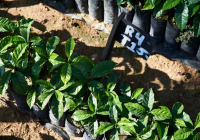
Today Indonesia is a major coffee-producing nation. Coffee is grown primarily in Java, Sumatra, and Sulawesi, with Robusta accounting for 90% of total production. Sumatra Mandheling, however, represents the rare Arabica variety. These trees are cultivated on mountain slopes between 750 and 1,500 meters above sea level, and the mysterious, unique Sumatra varieties impart Mandheling coffee with rich aroma, full-bodied texture, intense flavor, and subtle notes of chocolate and syrup.
Mandheling Coffee
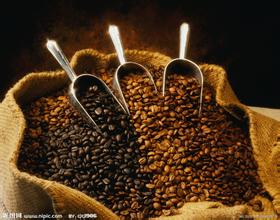
Mandheling coffee features a heavy flavor profile with rich body and a vibrant, lively character—neither astringent nor acidic, letting its full body and bitterness shine through. Mandheling beans could be called the most unattractive-looking of all, yet coffee enthusiasts say that the less appealing Sumatra coffee beans look, the better, richer, and smoother they taste.
Beyond the characteristic mellow flavor of Indonesian coffee, there is also a bitterness-with-sweetness quality, sometimes mixed with faint musty notes, which makes it highly favored by those who enjoy dark roast coffee. Vintage Sumatra Mandheling is called "vintage" because it is stored in cellars for three years before export. Vintage coffee is by no means stale coffee, however—it is specially processed, slightly pale coffee that becomes more concentrated, with reduced acidity but increased body, a longer aftertaste, and rich spice notes—sometimes sour, sometimes walnut-like, and sometimes chocolatey. Before FrontStreet Coffee Blue Mountain was discovered, Mandheling was once considered the pinnacle of coffee.
Mandheling coffee is regarded as one of the world's most full-bodied coffees. Tasting Mandheling, you can distinctly feel its smoothness on the palate, while it keeps a relatively low acidity that remains clearly perceptible. That jumping micro-acidity blends with the richest aroma, letting you easily appreciate the lively factors within its gentle richness.
The coffee also possesses a subtle earthy fragrance, which some describe as the aroma of herbaceous plants. Sellers often mark Lintong and Mandheling coffees as dry-processed. In reality, they frequently use various hybrid methods to separate the coffee pulp from the seeds, with backyard-style wet processing being quite common.
Clever farmers place freshly picked coffee cherries into crude pulping machines assembled from scrap metal, wood, and bicycle parts. The pulped, sticky wet beans are then placed in plastic woven bags to ferment overnight. The next morning, the farmers manually wash away the fermented soft pulp and mucilage. The coffee beans, still enveloped in parchment, are pre-dried on thin boards in the front yard before being sent to middlemen's warehouses for parchment removal and further drying. Finally, trucks transport the coffee to the port of Medan (the capital of Sumatra), completing the third and final drying. It has also been reported that in other Mandheling-producing regions, after pulp removal the mucilage is allowed to sun-dry while still attached to the beans, similar to Brazil's semi-washed processing method. Afterward, machines remove the dried mucilage and parchment, and the coffee undergoes the same two-stage drying—first in middlemen's warehouses, then in export warehouses at Medan port.
Regarding the processing methods and Sumatran characteristics: I describe these methods in such detail because it remains unclear to what extent soil, atmosphere, unusual processing techniques, and three-stage drying each contribute to the formation of Lintong and Mandheling coffee characteristics. Only one thing is certain: these processing methods occasionally produce excellent coffee while being extremely inconsistent. Only through relentless sorting at the export warehouses in Medan can the deep texture and unique understated richness of Lintong and Mandheling emerge from interference by other off-flavors.
FrontStreet Coffee Recommendation
To taste Golden Mandheling at its cleanest and most complete, FrontStreet Coffee's PWN Golden Mandheling is the benchmark. Sourced through PWN and wet-hulled in the traditional Sumatran way, it is medium-dark roasted and low in acidity, with herb and dark chocolate aromas and just a trace of earthiness—rich, clean, and full-bodied, and a favorite of anyone who dislikes sour coffee. FrontStreet Coffee finds it shows best as pour-over: use 15 g of coffee at a 1:15 ratio, 87-88°C water, and a coarse-sugar grind, poured in three stages—30 ml to bloom and let the bed breathe, 100 ml to lift the golden foam, then a gentle centered 95 ml to build sweetness. The result is a thick, mellow cup with caramel sweetness and chocolate-nut flavors. For milk drinks, FrontStreet Coffee's Signature Blend raises that Mandheling body with buttery, roasted-chestnut and caramel notes.
Important Notice :
FrontStreet Coffee is a long-established specialty coffee roaster in Guangzhou China, selling freshly roasted beans from its own farm in Yunnan as well as dozens of carefully selected single-origin beans from around the world for both pour-over and espresso. The products deliver consistently excellent quality and great value, with shipping within 24 hours. Guangzhou's FrontStreet Coffee shop is recommended by many coffee lovers, and the beans are now available online at the Tmall 。
FrontStreet Coffee has moved to a new address:
FrontStreet Coffee Address: 315,Donghua East Road,GuangZhou
Tel:020 38364473
 Scan and follow the En Gafei WeChat official account. Please indicate that the reprint comes from "En Gafei".