Yunnan Geisha Coffee: Flavor Profile, Processing Methods, Variety Characteristics, Cultivation History and Origins

Geisha is arguably the most captivating coffee in the world. In the cup it offers elegant florals, citrus, peach, and layered fruit notes carried on a bright yet creamy body, and the finish lingers with the sweet fragrance of oolong tea — so delicate that drinkers often remark it feels closer to a fragrant fruit tea than to coffee. As FrontStreet Coffee often points out, coffee is an agricultural product first, and its flavor is inseparable from variety, climate, altitude, soil, and farm management. Great coffee is the honest expression of a variety and its terroir; post-harvest processing and roasting should simply preserve and reveal it. Geisha's excellence, then, comes from all of these factors aligning at once.
Rarity and Value
As the saying goes, rare things are precious, and Geisha is a textbook case. Panama produces roughly 10,000 tons of coffee a year in total, yet the celebrated Hacienda La Esmeralda exports only about 150 bags of green coffee annually — around 9,000 kilograms. With Geisha making up just 3% of that output, the yearly supply amounts to a mere 270 kilograms. Add the extensive media coverage and the devotion of coffee lovers worldwide, and it is little wonder that Geisha prices stay sky-high.

Why Geisha Is So Hard to Grow
Compared with other Arabica varieties, Geisha is a difficult crop. Yields are low, the plants are fragile, and the trees are exacting about their growing conditions: they demand high altitude, fertile soil, and cloud cover or shade from taller trees, and they cannot tolerate direct sun. Geisha trees have unusually thin leaves, so photosynthesis is inefficient, and their root systems are weak, taking up water and nutrients slowly. As a result, production is very low, and the high-altitude environment delays fruit maturation even further. A Geisha tree yields only about half as much as a Caturra tree — one more reason for its premium status.
How Geisha Rose to Fame
According to FrontStreet Coffee, Geisha owes its current standing largely to Panama's Hacienda La Esmeralda. Daniel Peterson, the estate's third-generation owner, has said that identifying the "Geisha variety" took years of comparison and testing, with the variety finally confirmed in 2003. Just two weeks before that year's Best of Panama (BOP) competition, while picking competition lots from their internal cupping table, the team noticed that this Geisha showed outstanding jasmine, citrus, peach, blueberry, bergamot, and sugarcane notes — flavors quite unlike what coffee connoisseurs expected at the time. Daniel entered it anyway, and it took first place.

In 2005, Hacienda La Esmeralda entered Geisha in the Specialty Coffee Association of America (SCAA) competition, beating a field of famous contenders and earning world-class specialty coffee honors. It then swept the world championships in 2006 and 2007, capturing the attention of coffee professionals everywhere. Growing regions around the globe rushed to plant Geisha — including Yunnan province in China, which began cultivating this now-famous variety.
Geisha Comes to Yunnan
Yunnan's Geisha history is short. The first research plantings began around 2012, using green seeds of Green Top Geisha from Panama's Elida Estate. Only about 10 seeds were planted at first, so the entire research project was handled with extreme care.
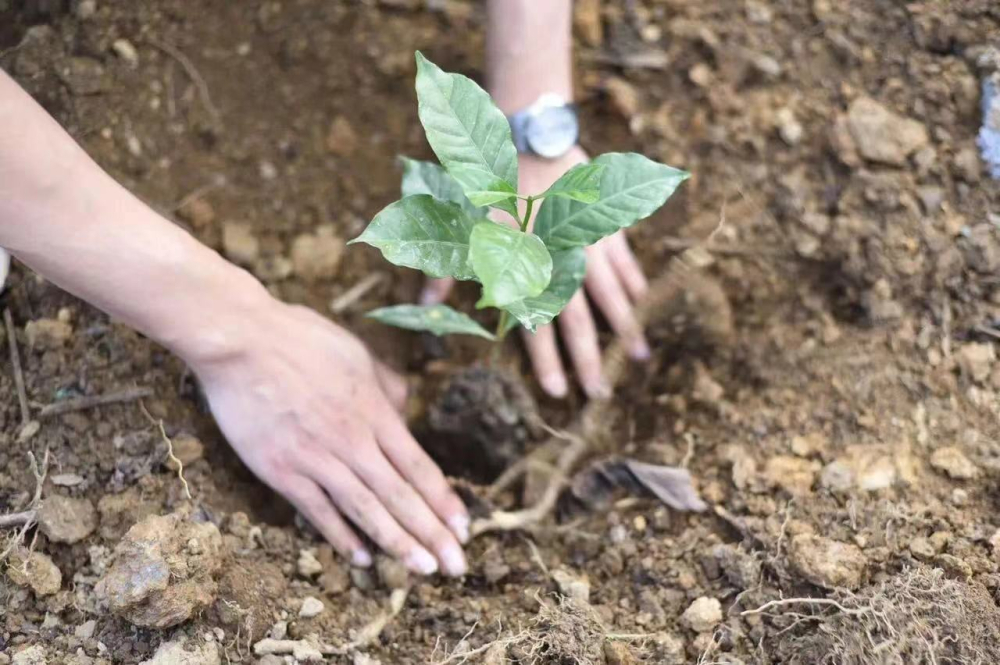
Coffee typically takes 3-4 years from planting to first fruiting. By around 2016, once those trees had fruited successfully and a second batch of plantings was underway, the outside world began to hear about Yunnan Geisha.
Green Top coffee denotes the highest grade of Geisha on the green-bean market. Many Geisha varieties grown in Central and South America trace their lineage back to the T2722 accession originally cataloged at CATIE in Costa Rica.

It is worth noting, though, that growing conditions differ from estate to estate and cross-pollination can occur. Not every estate's Geisha seed came from CATIE either — some lots were obtained through trades between farms.

The Petersons of Hacienda La Esmeralda have noted that early botanical descriptions of the Gesha cultivar mention bronze-tipped new leaves, a mediocre cup, and strong disease resistance. Panama's Geisha, by contrast, has tender green leaf buds, an exceptional cup, and resistance to leaf rust — though not to coffee leaf spot disease (Ojo de Gallo), the bane of Central and South American growers. Whether Panama's Geisha is truly T2722 remains unconfirmed; no definitive research has settled the question.
Later, once Yunnan Geisha made a name for itself, other Yunnan estates also revealed they were growing Geisha — with seed sourced from Panama's Hacienda La Esmeralda.
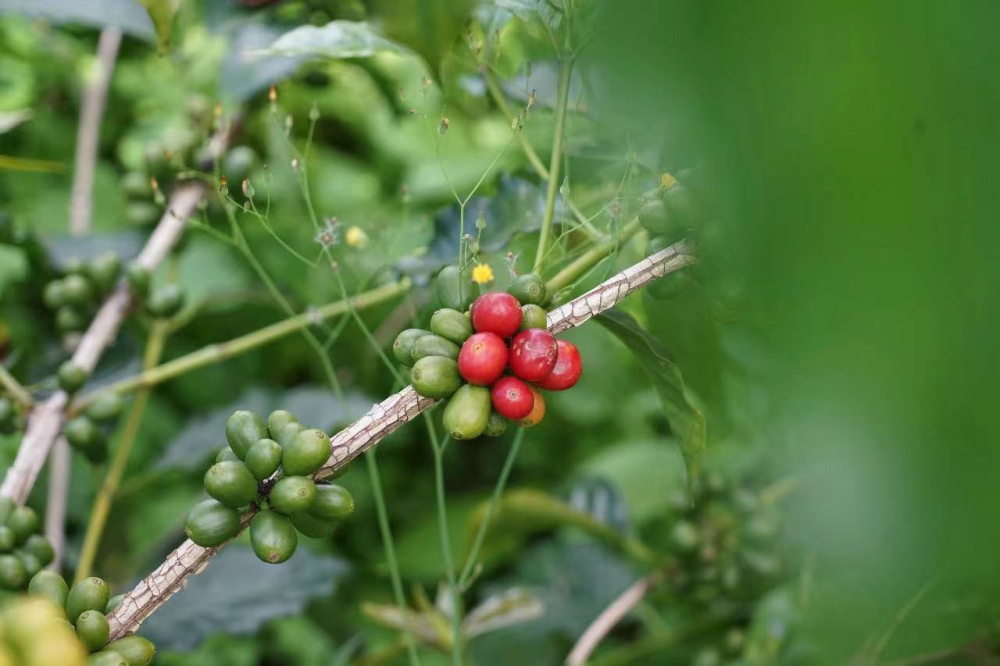
Whichever estate the seed came from, the available information suggests Yunnan Geisha traces back to Panama. In the cup, however, it tastes distinctly different from Panama Geisha.
Terroir and Processing Differences
Part of what makes Panama Geisha exceptional is altitude: the trees grow very high, under complex climatic conditions. To survive there, the variety has continually adapted its genetics — and that adaptation happens to have produced refined, captivating flavors. Geisha is also a delicate variety that needs shade trees to filter the intense sun.

In Yunnan, most coffee is grown in full sun. Sunlight intensity there is weaker than in Central and South America, and the altitude is lower, with a warm climate and small day-night temperature swings. Geisha grown under these conditions develops freely and matures more easily.
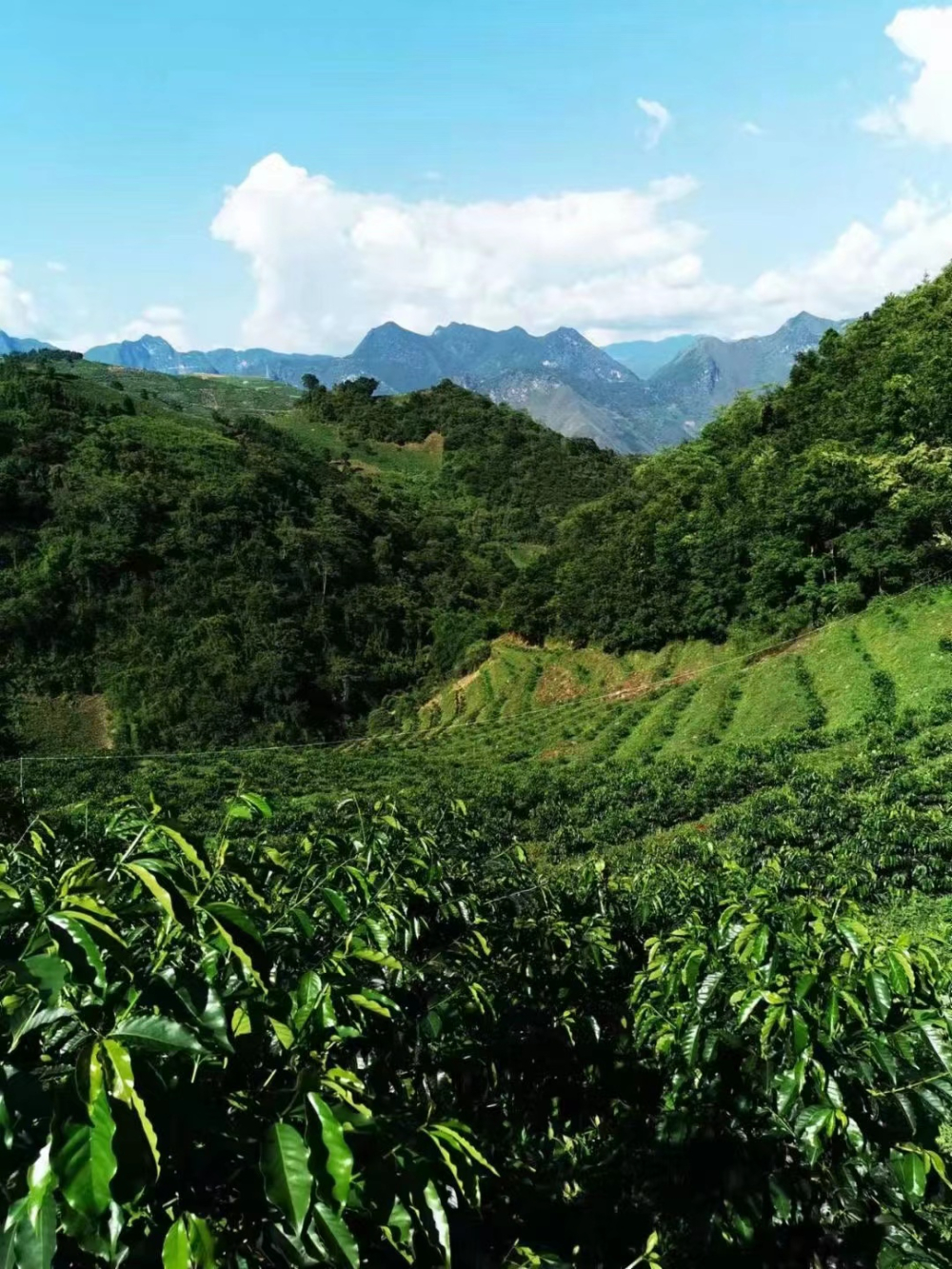
Coffee flavor depends on variety genetics, soil, climate, and altitude. Grown at relatively lower elevations, Yunnan Geisha lacks the refined complexity of Panama's highlands. Instead it typically shows plum-like acidity, the sweet-tart character of berries, and notes of nuts and brown sugar.
Processing Methods
To boost body, many Yunnan farm owners turn to anaerobic fermentation followed by slow drying. Controlled fermentation adds more fermented aromas to the beans and rounds out the body, while natural processing pushes sweetness further to the front.
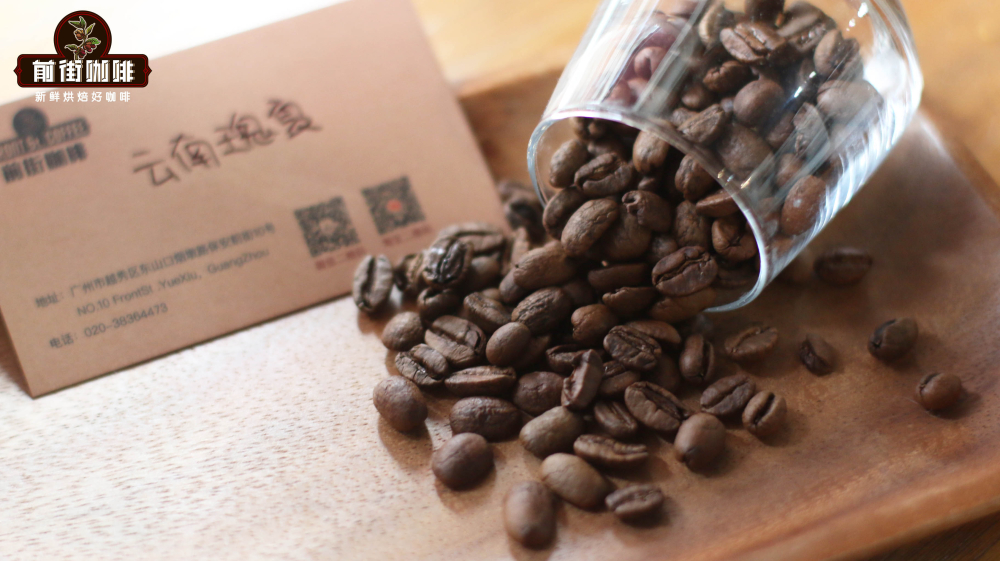
FrontStreet Coffee regularly cups Yunnan-grown Geisha. The typical profile opens with plum-like acidity, moves through the refreshing sweetness of red berries and a faint black-tea note, and finishes with nuts. The florals are subtle, the profile balanced and measured rather than flamboyant.
FrontStreet Coffee Recommendation
Yunnan Geisha is a fascinating curiosity, but if you want to taste the classic Geisha profile this variety is famous for, FrontStreet Coffee suggests going straight to the two home grounds of Geisha: Panama, where it made its name, and Ethiopia, where it was born.
FrontStreet Boquete Geisha (Panama) — For newcomers who want a first taste of the legendary "Geisha flavor," FrontStreet Coffee recommends this entry-level Panama Geisha above all. At a friendly price it delivers the classic orange-blossom sweetness and honeyed finish of top Panamanian Geisha, with an oolong-tea texture, delicate fruit acidity, and clearly defined layers.
FrontStreet Esmeralda Green Label & Red Label Geisha (Panama) — For the highest grade, FrontStreet carries two tiers of Hacienda La Esmeralda Geisha. The Red Label, officially named "Esmeralda Special," grows at 1,600-1,800 meters, must score above 90 points on the cupping table for every lot, and each batch is drawn from a single plot with its own unique lot number (FrontStreet's Red Label comes from the Jaramillo plot), so buyers can choose the lot that matches their flavor preferences. The Green Label, originally called "Private Collection," blends lots from multiple plots to showcase the estate's signature high-altitude Geisha profile; since it carries less plot-level prestige, it is considerably more affordable — which is why FrontStreet considers the Green Label outstanding value.
Brewing tips — Geisha is a dense, medium-light roasted, floral-fruity coffee whose grounds tend to sink and clog the filter. FrontStreet recommends a grind size that lets about 78% of the coffee pass through a #20 sieve (roughly fine-granulated-sugar texture), brewed with water at 91°C. Use 15g of coffee in a small Hario V60 with a 1:16 ratio and a three-pour method: pour to 30g, bloom for 30 seconds; pour in slow circles to 125g, wait for the bed to drain halfway, then pour to 225g. Total brew time should land around 2 minutes 10 seconds to 2 minutes 20 seconds.
Important Notice :
FrontStreet Coffee is a long-established specialty coffee roaster in Guangzhou China, selling freshly roasted beans from its own farm in Yunnan as well as dozens of carefully selected single-origin beans from around the world for both pour-over and espresso. The products deliver consistently excellent quality and great value, with shipping within 24 hours. Guangzhou's FrontStreet Coffee shop is recommended by many coffee lovers, and the beans are now available online at the Tmall 。
FrontStreet Coffee has moved to a new address:
FrontStreet Coffee Address: 315,Donghua East Road,GuangZhou
Tel:020 38364473
 Scan and follow the En Gafei WeChat official account. Please indicate that the reprint comes from "En Gafei".