Top Yunnan China Coffee Brands Recommendations & Yunnan Arabica Bean Pour-Over Brewing Guide Flavor Profile Characteristics

Every mid-December, Yunnan enters its peak harvest season, and the highest plots begin picking as well. The estate where FrontStreet Coffee grows coffee in Yunnan is no exception. Last year FrontStreet Coffee produced a batch of self-grown, self-processed Yunnan natural Typica (named "FrontStreet Coffee 2013"), a limited run of just over 200 kilograms that drew unanimous praise from customers. This November, many customers asked whether our own Yunnan beans had arrived, and FrontStreet Coffee's barista could only smile and say: "They're still on the trees!"
That is because Yunnan has entered its harvest period. Coffee ripens faster at lower altitudes and more slowly higher up. FrontStreet Coffee's estate sits in a semi-primitive forest near Lincang, close to the Myanmar border, at roughly 1,300 metres, so picking there can only begin in mid-December.
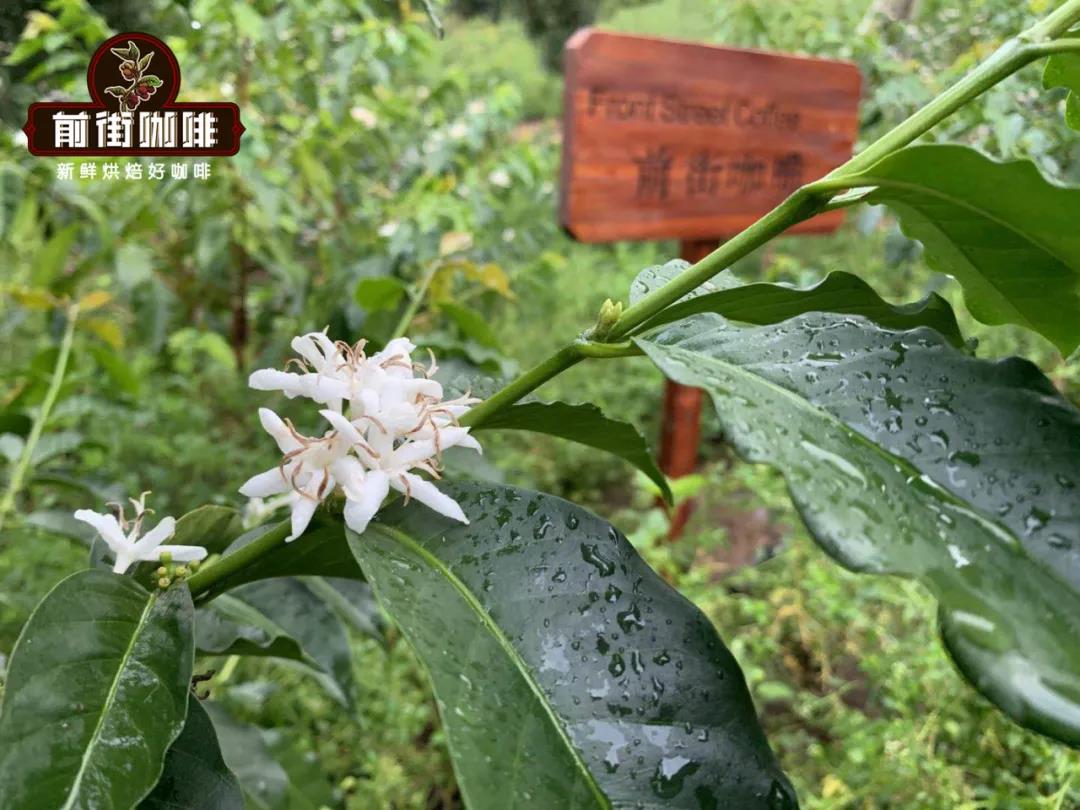
Reflecting on FrontStreet Coffee's Bitter History of Coffee Cultivation in Yunnan
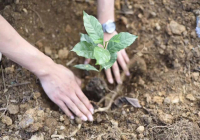
If all you wanted was a ready-made private coffee estate in Yunnan, it would actually be easy enough to buy one. The reason Yunnan's coffee farmers have been reluctant to grow coffee is that the labour cost of picking one kilogram exceeds what that kilogram sells for. Unless a family has spare hands, they would rather leave the fruit on the tree even when it ripens. At that point, buying a small plot from farmers before harvest and experimenting with natural processing, honey processing and the like would produce "Yunnan specialty coffee" in two or three months. FrontStreet Coffee is not sure whether that controversial approach is right, but as the former director of Yunnan Coffee once wrote: "The current situation of over one million acres of Catimor in Yunnan production areas is the main problem we urgently need to transform and improve." Debate is healthy, yet we should not dismiss every effort being made. FrontStreet Coffee deliberately chose the hardest path: selecting high altitudes, planting Arabica varieties, and practising rational cultivation. Then FrontStreet Coffee began raising and nurturing coffee seedlings in Yunnan.
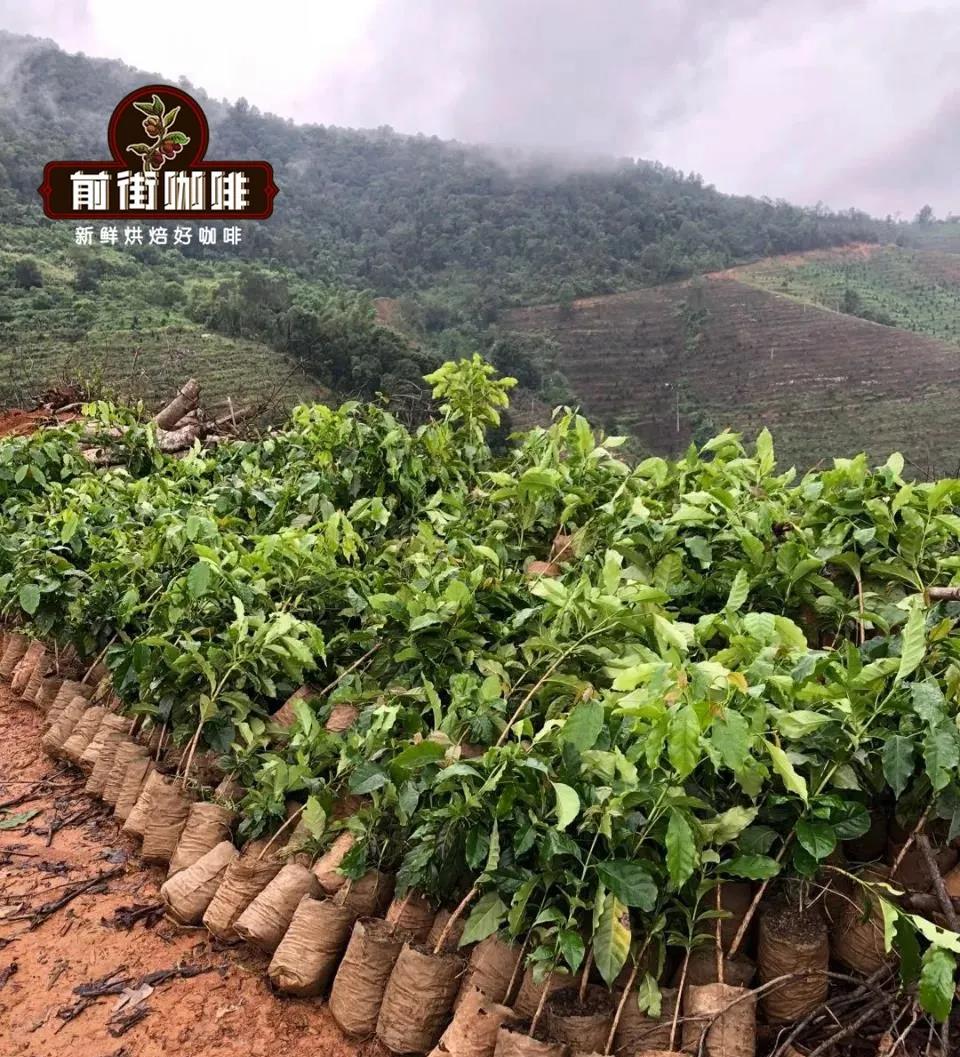
This year marks FrontStreet Coffee's twelfth year, but what few people know is that FrontStreet Coffee's coffee growing actually began half a year before its roasting business. FrontStreet Coffee's predecessor was "Dazhen Coffee", a name chosen because we wanted to grow coffee in a place called Dazhen in Guangdong. By the time we had nursed Catimor seedlings to a height of 20cm, more than half a year had passed, and only then did we finally understand the relationship and the right order between variety, altitude and processing method.
Choose the right variety, plant it at the right altitude, and experiment with the processing methods that can express unique flavours after maturity — this is FrontStreet Coffee's only logical framework for specialty coffee to carry a distinct regional character.
So we abandoned the plan to grow coffee in Guangdong. Because the original roasting location gave the company the name it still carries, we renamed "Dazhen Coffee" as "FrontStreet Coffee." While roasting coffee, FrontStreet Coffee kept pushing forward with its specialty coffee ideas, visiting institutions with deep research in coffee cultivation, the Tropical Agricultural Science Research Institute (home to the Ministry of Agriculture's coffee germplasm repository), and several farmers growing specialty coffee. We clarified why Yunnan does not mainly grow specialty varieties such as Typica and Bourbon, and through a fortunate opportunity we found suitable land.

Arabica beans have altitude requirements and must be grown above 1,000 metres; for better flavour, the planting altitude should be even higher. Yunnan's overall mountain ranges barely clear that line, which is also Yunnan coffee's disadvantage. To make up for the shortfall in altitude, superior agronomic management is essential even with good varieties.
FrontStreet Coffee did not buy a ready-made estate but a mountain area suited to coffee growing. The reasoning is simple: even with good land, coffee grown from unsuitable varieties will not taste good, and at the time Catimor dominated Yunnan. FrontStreet Coffee therefore chose to start coffee cultivation from scratch. The variety we grow is Typica, an Arabica variety with excellent flavour characteristics. Typica's yield is very low, only one-third of Catimor's, which is one reason it commands higher prices. Typica and Bourbon are also highly susceptible to coffee leaf rust, another reason farmers avoid Arabica varieties.
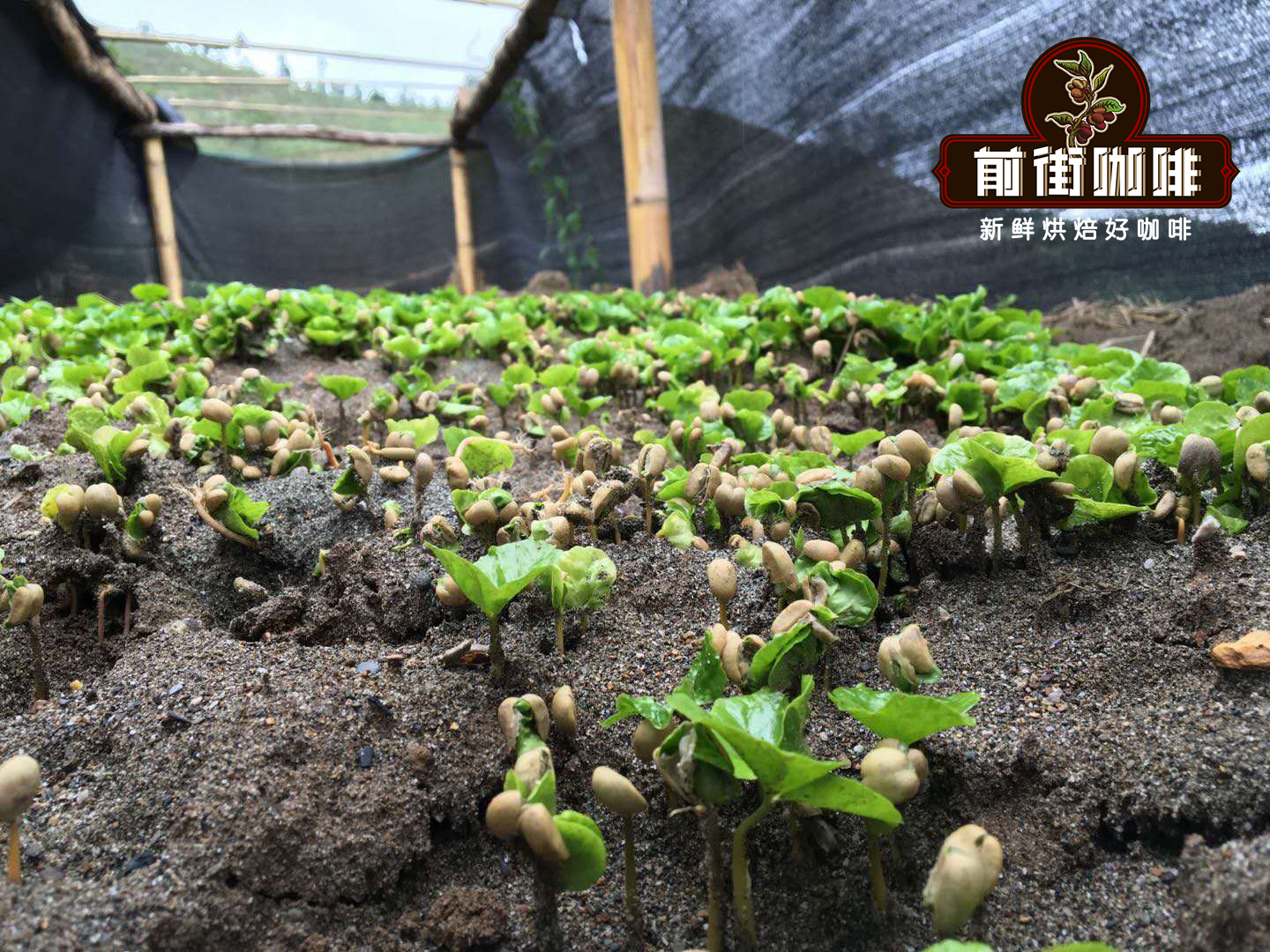
Yunnan has no four seasons, only a dry season and a rainy season, and most coffee-producing regions face the same situation. This is also the fundamental reason some production areas turn to natural processing. June marks the start of the rainy season, and the next three to four months bring continuous rainfall — the most favourable window for coffee growing. Only by planting seedlings during this period, with several months of moisture from the rain, can they develop robust root systems and survive the first six-month dry season.
Starting coffee cultivation from scratch is also a very time-consuming endeavour. Coffee takes three to four years from seedling to first harvest, then more time to experiment with suitable processing methods and finally reproduce them. It takes at least five years to obtain the first batch of coffee. Nobody can guarantee immediate production of high-quality specialty coffee. FrontStreet Coffee firmly believes there are no shortcuts in this world. After multiple rounds of variety selection and post-harvest processing trials, several more years went by. Not until the eighth year did FrontStreet Coffee's Yunnan coffee reach its first commercial production batch.

Yunnan Small Bean Coffee Variety—Catimor
Although FrontStreet Coffee's Yunnan estate grows Typica, most of Yunnan's production is still dominated by Catimor, often called Yunnan small bean coffee. In 1959 the Portuguese moved Brazil's Bourbon mutation Caturra to East Timor to hybridise with Timor, which carries Robusta heritage, successfully breeding Catimor with excellent disease resistance and productivity. As coffee leaf rust swept through producing countries, international organisations helped promote Catimor widely to resist the disease and raise yields.

Planting Altitude for Yunnan Small Bean Coffee
Yunnan small bean coffee is grown mainly in Lincang, Baoshan, Simao, Xishuangbanna and Dehong. Baoshan sits above 1,200 metres, with an average temperature of 21.5°C and highs reaching 40.4°C. It is essentially frost-free year-round and is recognised as the best production area for Yunnan small bean coffee. Coffee grown here is rich without bitterness and fragrant without harshness, with small, uniform beans, a mellow, intense flavour and fruity notes.
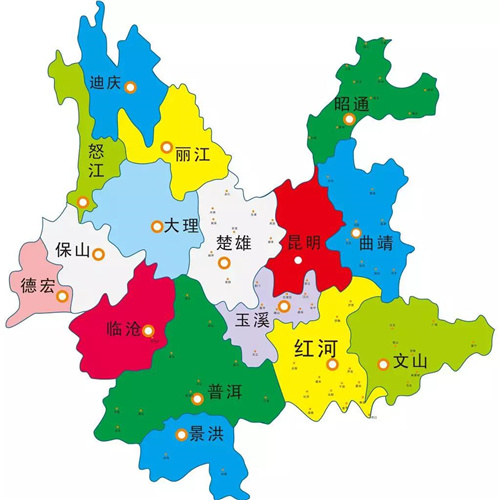
For Arabica, 1,200 metres is the quality watershed. Baoshan is shielded to the north by the Gaoligong Mountains, which block the direct impact of Siberian cold currents in winter, while June to August is the rainy season, often with clear skies for minutes followed by half an hour of rain. Clouds, mist and numerous mountains create protective microclimates for coffee.
FrontStreet Coffee Natural Processing
In the past, farmers in places like Colombia hired day labourers paid by the weight of fruit picked. To earn more, workers needed speed, so instead of picking cherry by cherry they stripped the branch, taking ripe and unripe fruit together and sorting out the unripe and overripe later. Coffee quality suffered badly.
FrontStreet Coffee's operation is not large-scale, so daily maintenance workers handle the harvest and pick each fully red cherry by hand. The cherries are then spread two to three layers deep on drying nets and laid flat to dry until they turn purplish-red. The mesh holes let the fruit breathe, avoiding unwanted over-fermentation flavours. This is what allows FrontStreet Coffee's natural Typica to show a fuller body with citrus and berry notes, a hint of fermented wine aroma, and caramel sweetness.

FrontStreet Coffee Roasting
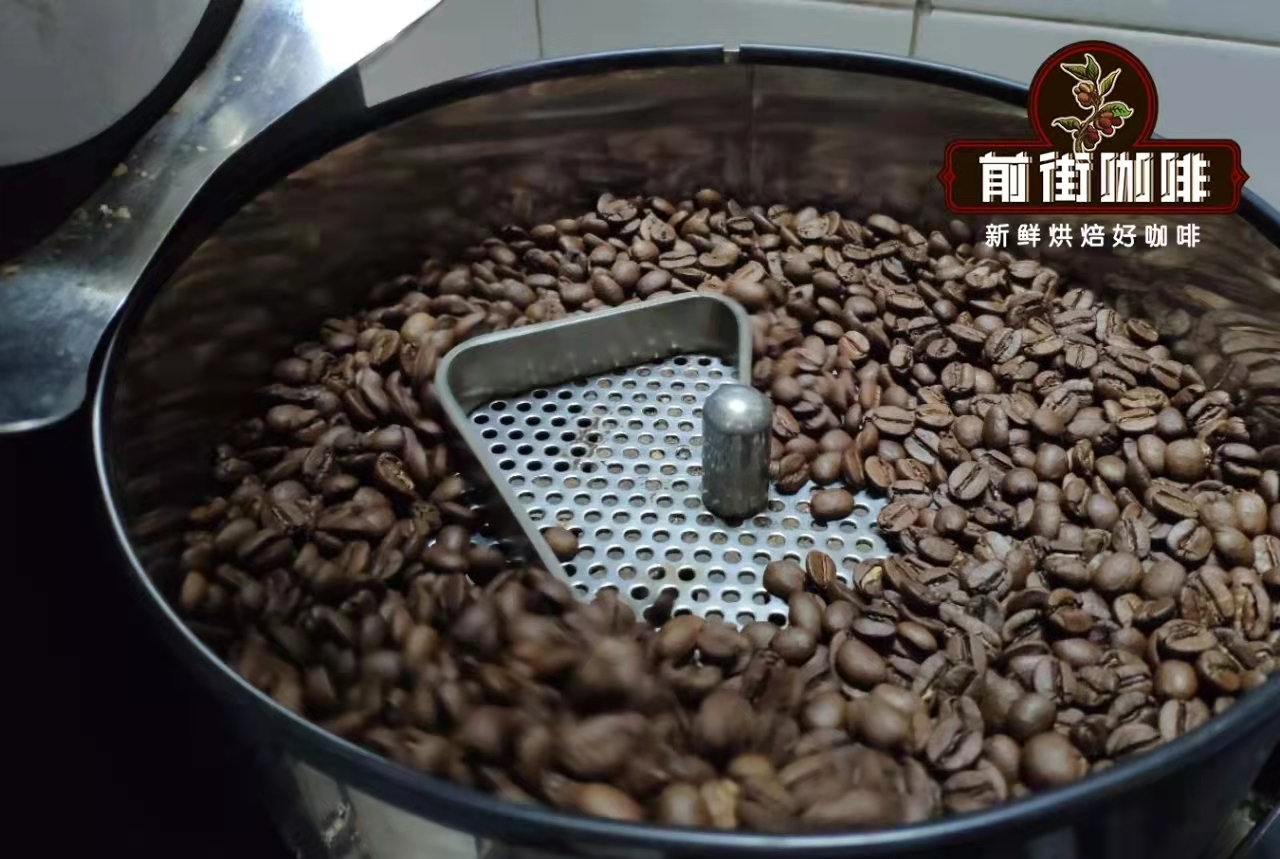
For roasting, FrontStreet Coffee looks to the corresponding regional characteristics and settles on a medium roast to highlight this bean's sweetness.
Flavor Comparison
Parameters: Filter: Hario V60; Dose: 15g; Water temperature: 90°C; Grind size: medium-fine (80% passing through a China standard #20 sieve); Coffee-to-water ratio: 1:15; segmented extraction.
Because the V60's ribs run in curved patterns of varying length from top to bottom, degassing is smoother during brewing and the flow rate is relatively fast. As a result, the extracted flavour layers are more distinct.

Use 30g of water for a 30-second bloom, then continue centre pouring with a small stream to the 125g mark. When the water level drops and is about to expose the coffee bed, keep pouring to 225g and stop. When the level drops again and the bed is about to show, remove the filter cup. Extraction time from the start of the bloom is 2 minutes.
FrontStreet Coffee's self-produced Yunnan "FrontStreet Coffee 2013" flavour: the dry aroma carries subtle caramel and nutty notes. The cup is dominated by chocolate with brown sugar sweetness and a slight fruit acidity, while the aftertaste brings some black tea notes. Overall the flavour layers are rich and well built.

FrontStreet Coffee Recommendation
Yunnan rewards a straightforward approach. FrontStreet Coffee's Yunnan Baoshan Small Bean, washed and medium roasted, shows caramel and nut with a gentle plum acidity and a chocolate finish — the easiest way to get to know the region. For more clarity, FrontStreet Coffee 2013 Yunnan Natural Typica brings dark berry, caramel and chocolate with a hint of apricot and a black tea aftertaste. If you want a full-flavoured espresso, the FrontStreet Black Cocoa Blend combines Yunnan small bean with Brazil Cerrado for nut, brown sugar and citrus; as a latte it turns creamy and almond-sweet. All three brew well as pour-over, moka pot or espresso.
Important Notice :
FrontStreet Coffee is a long-established specialty coffee roaster in Guangzhou China, selling freshly roasted beans from its own farm in Yunnan as well as dozens of carefully selected single-origin beans from around the world for both pour-over and espresso. The products deliver consistently excellent quality and great value, with shipping within 24 hours. Guangzhou's FrontStreet Coffee shop is recommended by many coffee lovers, and the beans are now available online at the Tmall 。
FrontStreet Coffee has moved to a new address:
FrontStreet Coffee Address: 315,Donghua East Road,GuangZhou
Tel:020 38364473
 Scan and follow the En Gafei WeChat official account. Please indicate that the reprint comes from "En Gafei".