Introduction to Papua New Guinea Bird of Paradise Estate Coffee: Flavor Profile, Processing Methods, and Regional Characteristics
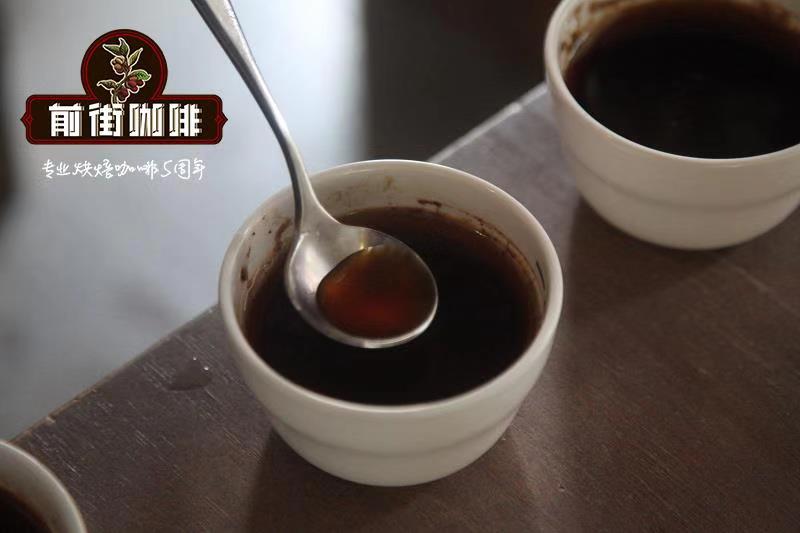
FrontStreet Coffee carries a wide variety of coffee beans, and each year we sample far more than we sell—tasting hundreds of coffees in search of distinctive character is what drives us to keep adding new selections. Today we'd like to introduce this coffee from Papua New Guinea and unpack what makes it special. Its variety was introduced from Jamaica Blue Mountain, giving it genuine Blue Mountain lineage and the nickname "Little Blue Mountain." The country's production is tiny, but the quality is outstanding. While it can't quite match the perfect balance of Jamaica Blue Mountain, it adds spice notes and extra sweetness, which is exactly why FrontStreet Coffee chose to carry it. Read on to learn more!
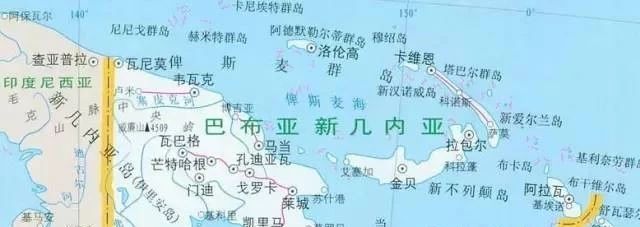
The scale of coffee cultivation in Papua New Guinea is actually quite small, and most farming is done by smallholders themselves. The country's coffee history isn't particularly long, either: cultivation began in the 1890s but drew little attention at first. Not until 1926, when 18 coffee estates were established one after another, was coffee truly treated as an important economic undertaking—and Jamaican Blue Mountain seeds of the Typica variety were introduced at that point.
After 1928, Papua New Guinea's coffee industry began to flourish. Because the country's coffee descends from Blue Mountain stock, it picked up the "Little Blue Mountain" nickname. It has excellent sweetness, spice notes, and pleasant fruit aromas. FrontStreet Coffee happens to have a batch of these "Little Blue Mountain" beans on hand, so let's taste them together.
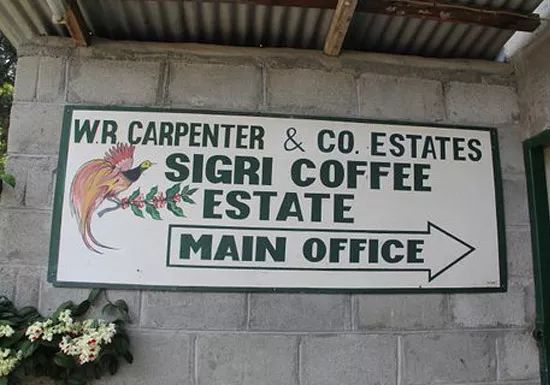
Sigri Estate (Bird of Paradise Estate)
Bird of Paradise Estate sits in the Wahgi Valley of Western Highlands Province, on well-drained volcanic soil. The estate was established in 1950, and Sigri is one of its earliest plantations. Sigri also protects its soil and water sources, refusing to use pesticides or insecticides out of care for the ecosystem and its birds. Current records count more than 160 bird species in the Wahgi Valley, 90 of which live on the Sigri plantation—including Papua New Guinea's national symbol, the Bird of Paradise. It truly is a paradise for birds.
Sigri has maintained high standards of cultivation and processing for decades. During the April-to-September harvest, only fully ripe cherries are hand-picked, guaranteeing a perfect balance of acidity and sweetness in the fruit. Cupping takes place daily to ensure the plantation delivers consistently excellent coffee, and that discipline has made Sigri a classic among the world's specialty-grade coffees.
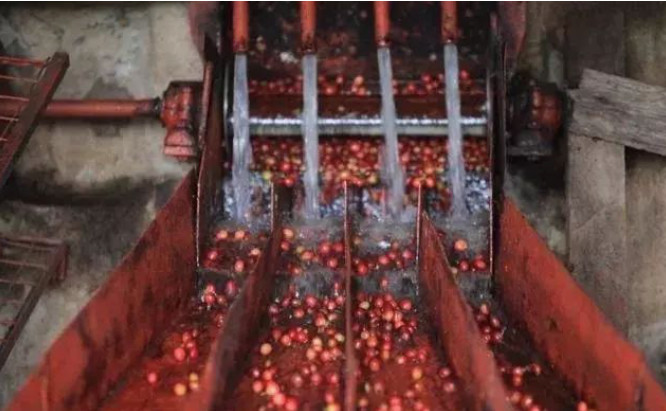
Processing Method
Sigri uses triple-washed fermentation, with each soak lasting about 24 hours before fresh water replaces the old—precision that keeps the coffee's flavor firmly under control. After washing, the green beans are hulled and run through a series of grading steps.
Grading System
1. Bean size, 2. Total defect equivalent per kg, 3. Bean shape, 4. Raw bean color, 5. Raw bean odor, 6. Roasting performance, 7. Cup quality
Meaning and Rules for Green Bean Names
In Papua New Guinea, plantations and large estates account for 25% of national production, while small-to-medium farms (Holdings or Blocks) of 10–20 hectares account for 10%. The country has 76 registered plantations and estates in total.
FrontStreet Coffee Roasting Recommendations
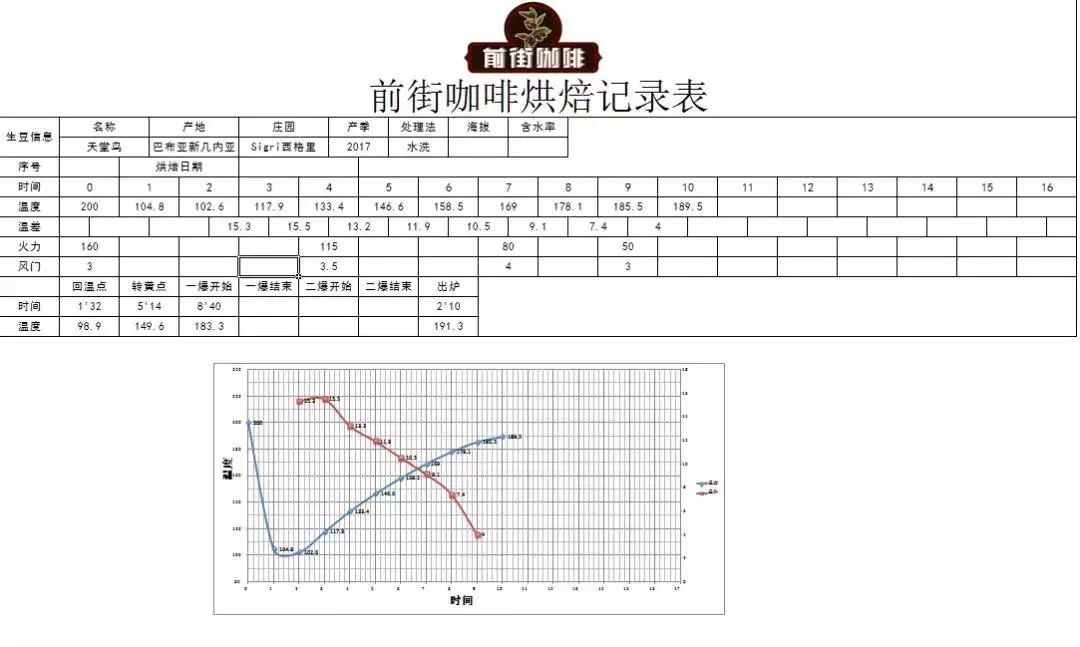
Because Typica is a low-density green bean, it isn't well suited to dark roasting. To showcase its natural bright acidity and fruit aromas, FrontStreet Coffee's roaster chose a medium roast. Charge at 200°C; yellowing point at 5'14" and 149.6°C; first crack at 8'40" and 183.3°C; develop for 2'10" to 191.3°C, then drop.
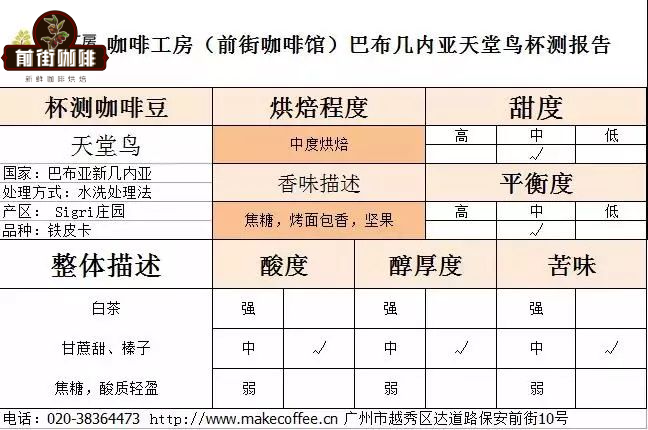
FrontStreet Coffee Cupping Report
Dry Aroma: Hazelnut
Wet Aroma: White tea, sugarcane
Entry: Sugarcane, hazelnut, and white tea with light acidity.
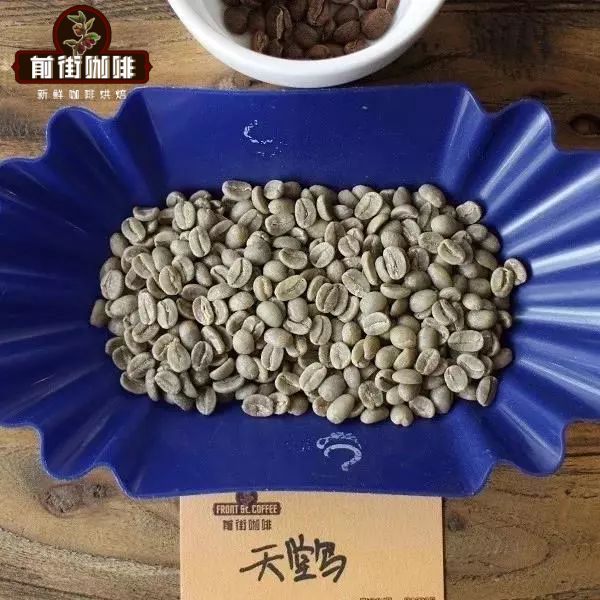
FrontStreet Coffee Papua New Guinea Bird of Paradise
Region: Papua New Guinea, Sigri Estate
Grade: AA
Variety: Typica
Altitude: 1600-1800 meters
Processing: Washed
FrontStreet Coffee Brewing Parameters
Dripper: KONO
Water Temperature: 88°C
Water-to-Coffee Ratio: 1:15
Grind Size: Medium-fine grind
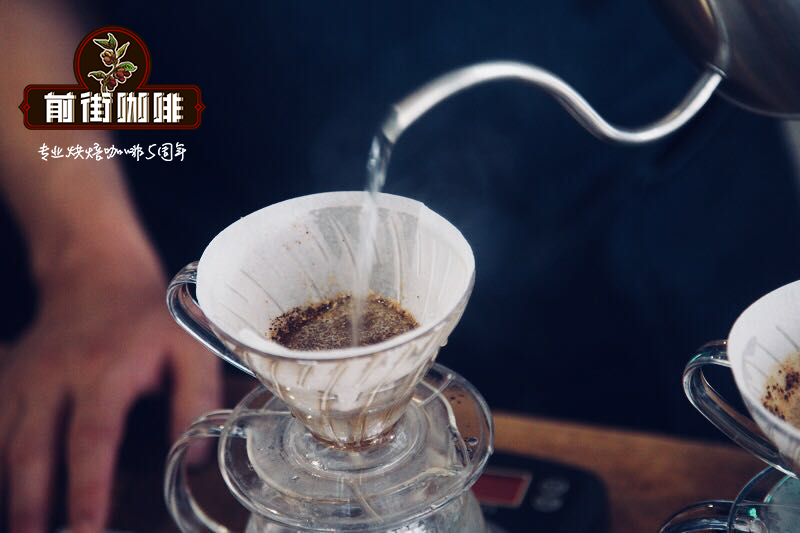
FrontStreet Coffee Brewing Method
FrontStreet Coffee uses a segmented extraction: bloom with 30g of water for 30 seconds, then pour in small circles to 125g and stop. When the water level drops and the coffee bed is about to be exposed, pour again to 225g and stop. (Timing starts from the bloom.) Total extraction time is 2 minutes.

FrontStreet Coffee Flavor Description
Expect the sweetness of toasted bread and nuts, lifted by a light fruit acidity that creates a pleasant sweet-sour contrast and good layering. There are fruit-like aromatics, and the spicy sweetness in the aftertaste is quite special, all carried on a rich, balanced mouthfeel.
FrontStreet Coffee Recommendation
If the "Little Blue Mountain" lineage has whetted your appetite for the real thing, FrontStreet Coffee's Jamaica Blue Mountain No. 1 is the benchmark it imitates. Blue Mountain's greatest appeal is balance—it has no obvious weaknesses, avoiding both the sharp fruit acidity of many African coffees and the heavy bitterness of dark roasts, instead finding superb harmony among acidity, sweetness, bitterness, and aroma. Quality Blue Mountain shows cream, caramel, chocolate, nuts, honey, and a gentle fruit note, with a soft, rounded entry, rich mid-palate sweetness, and a clean, lingering finish.
Authentic Blue Mountain is scarce: Jamaica's Blue Mountain region produces under 2,500 tons a year, and Japan has historically purchased more than seventy percent of it. FrontStreet Coffee's Blue Mountain No. 1 comes from Clifton Estate, where coffee has been grown since around 1750 at an average of 4,300 feet (1,310.64 meters). Provenance is verifiable through the estate's certification documents and the traditional wooden shipping barrels—15, 45, and 70 kilogram barrels, each itself a mark of genuine Blue Mountain.
To brew it well, FrontStreet Coffee roasts Blue Mountain No. 1 medium-dark and rests the beans 4–7 days from the roast date. Use a Kono dripper with 15g of coffee at white-sugar grind texture, 87–88°C water, and a 1:15 ratio in three stages: 30g bloom for 30 seconds, pour to 120g in slow circles, then to 225g slightly faster to avoid over-extraction. The result is clean, complex, and gentle, with chocolate sweetness and strong body—a legend whose appeal has endured for decades, whether as a daily specialty cup or a premium gift.
Important Notice :
FrontStreet Coffee is a long-established specialty coffee roaster in Guangzhou China, selling freshly roasted beans from its own farm in Yunnan as well as dozens of carefully selected single-origin beans from around the world for both pour-over and espresso. The products deliver consistently excellent quality and great value, with shipping within 24 hours. Guangzhou's FrontStreet Coffee shop is recommended by many coffee lovers, and the beans are now available online at the Tmall 。
FrontStreet Coffee has moved to a new address:
FrontStreet Coffee Address: 315,Donghua East Road,GuangZhou
Tel:020 38364473
 Scan and follow the En Gafei WeChat official account. Please indicate that the reprint comes from "En Gafei".