Flavor Profile and Processing Methods of Premium Kilimanjaro Coffee with Woody Aroma
Tanzania is often compared with its close neighbor Kenya. Tanzania's earliest Arabica coffee is said to have been brought over from Kenya by Christian missionaries, and its flavor profile is indeed somewhat similar: grapefruit aroma with light, bright acidity. But with an economy weaker than Kenya's, Tanzania's production conditions are inferior and its quality control less strict — many processing steps compromise the coffee, so it cannot compete with Kenya's renowned high quality. Although similar in flavor tone, Tanzania's overall profile is smoother and gentler, belonging to the balanced category: moderate to low acidity and sweetness, a dark chocolate aftertaste, and medium body. Compared with the distinctive personality of FrontStreet Coffee's Kenya coffee, FrontStreet Coffee's Tanzania coffee shows fewer layers and no single standout trait, leaving a less profound impression. Yet its soft, rounded character has real appeal, making it easy for coffee newcomers to accept.
FrontStreet Coffee's Tanzania Kilimanjaro Coffee Beans
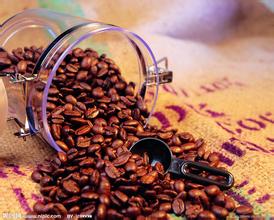
The image above shows FrontStreet Coffee's washed Tanzania Kilimanjaro beans, grown at altitudes above 1800 meters, of the Bourbon variety, and roasted medium. The green beans appear yellow-green, small and round, with relatively uniform size. Brewed as pour-over, FrontStreet Coffee's Tanzania performs somewhat inadequately compared with its Kenya — it easily picks up cucumber and green-bean flavors. The acidity shows up in the front section, followed by moderate acidity and sweetness, then chocolate and woody aromas. For this bean, the siphon method is recommended: the siphon pot enhances sweetness, concentrates flavor, and builds body to compensate for the thinness of the pour-over cup. Overall, the siphon pot performs better than pour-over here.
Kilimanjaro: Ideal Growing Conditions
Mount Kilimanjaro, in northeastern Tanzania at an elevation of 5895 meters, is Africa's highest peak — so high that its summit stays snow-capped year-round. Tanzania's main coffee regions sit at the mountain's foot, where rich volcanic soil provides abundant nutrients for the trees. Coffee is generally planted at high altitudes above 1150 meters, and that elevation is one of the prerequisites for Arabica to develop quality flavors.
Processing and Grading
FrontStreet Coffee's Tanzania coffee is mostly washed. After harvesting, farmers deliver the cherries to the nearest processing plant, where the washed method proceeds in steps: first, screening out debris mixed with the cherries; then removing the pulp and outer skin; sending the beans to fermentation tanks so fermentation strips the mucilage layer clinging to the parchment; and finally drying after a thorough washing.
Tanzania's grading system mirrors Kenya's — both are based on bean size. During screening, green beans are passed through sieves with fixed hole sizes: the larger the sieve number, the larger the beans. The main flat-bean grades by size are AA+, AA, and AB. Additionally, because peaberry (PB) production is abundant in both Kenya and Tanzania, a separate set of sieve standards exists specifically for grading peaberries by size.

FrontStreet Coffee Recommendation
If you enjoy Kilimanjaro's soft, Kenya-like fruit character but want more vivid complexity, try FrontStreet Coffee's Kenya Little Tomato — a washed Kenyan lot from the Thika region, grown at 1550-1750 meters on classic SL28 and SL34 varieties and processed with Kenya's signature 72-hour double washed fermentation. Light-roasted to preserve its lively acidity, it opens with dried cherry tomato and floral aromatics, then pours bright, juice-like flavors of cherry tomato and dark plum across a solid, saturated acidity, with sweet pear and black plum in the mid-palate and a clean finish of yellow sugar and faint green tea. It is pour-over territory — and pairs beautifully with a Hario V60, whose 60-degree cone and single large outlet give the brew a fuller aroma and livelier acidity.
On the other hand, if the siphon pot is your tool of choice for this bean, lean on the classics that method was made for. The medium-dark roasts of an earlier era — FrontStreet Coffee's Jamaica Blue Mountain No. 1 with its cream, caramel, and nut balance, or the PWN Indonesia Golden Mandheling with its deep-roast herbal and dark chocolate notes and faint earthy touch — show exactly the kind of thick, sweet, concentrated body that a siphon brew draws out. The Brazil Queen Estate is another low-acid, well-rounded option with rich nut and cocoa aromas and clear caramel sweetness, comfortable in a siphon, moka pot, or espresso machine alike.
Important Notice :
FrontStreet Coffee is a long-established specialty coffee roaster in Guangzhou China, selling freshly roasted beans from its own farm in Yunnan as well as dozens of carefully selected single-origin beans from around the world for both pour-over and espresso. The products deliver consistently excellent quality and great value, with shipping within 24 hours. Guangzhou's FrontStreet Coffee shop is recommended by many coffee lovers, and the beans are now available online at the Tmall 。
FrontStreet Coffee has moved to a new address:
FrontStreet Coffee Address: 315,Donghua East Road,GuangZhou
Tel:020 38364473
 Scan and follow the En Gafei WeChat official account. Please indicate that the reprint comes from "En Gafei".