Panama Coffee Growing Environment, Regional Flavor Characteristics Introduction: Elida Estate
The History of Elida Estate

The history of Elida Estate dates back to 1918. The farm is a family enterprise of the Lamastus family, and its name, Elida, honors the wife of the then owner, Robert Louis Lamastus.
Elida Estate sits in the Boquete region at an altitude nearly the highest in all of Panama, with almost half its area inside a national protected park — a rare ultra-high-altitude estate in Central America. Elida covers 65 hectares in total, more than half of it within Baru Volcano National Park: 30 hectares are planted with coffee, and the remaining 35 hectares are primary forest. The coffee grows at altitudes of 1,670 to 1,850 meters, making Elida one of the two highest coffee estates in Panama (the other being Carmen Estate in the Volcancito Valley).
Climate and Growing Conditions

The rugged Baru is a young, active volcano exceeding 3,400 meters. Because of the large day-night temperature difference, coffee at Elida needs 5 years of care after planting before the first harvest — far longer than the typical 3 years in other producing regions. Slow growth, however, greatly deepens flavor development. Once harvest begins, the cool temperatures stretch the ripening period by more than a month. When hurricanes, heavy rain, or other irresistible events strike shortly before maturity, the estate refuses to rush the harvest even knowing losses will follow, because the beans have not met its standards — and yields drop sharply. The risk is genuinely far greater than at lower-altitude estates.
Coffee Growing Methods in Boquete
According to FrontStreet Coffee, Boquete's plantations come in three main types: sun-grown, full-shade, and semi-shade. Plantations with more than 50 shade trees per hectare count as full-shade; 25-50 trees is semi-shade; fewer than 25 is sun-grown. So what does shade — or the lack of it — do to coffee in two neighboring plantations under the same growing conditions?

Shade slows the ripening of coffee cherries, allowing more flavor compounds to develop inside. Shade thus raises costs and reduces yield, but under identical conditions the coffee's flavor surpasses that of semi-shade plantations. In Colombia, most plantations have coffee trees growing alongside banana trees — and since Arabica varieties are increasingly dwarfed, the bananas provide shade once they mature.
Panama Estate Geisha Coffee
Panama estate Geisha beans are mostly hand-selected, high-quality Arabica, with every batch traceable — you can trace which estate plot, cooperative, or farmer the beans came from, all in pursuit of regional flavor. Only by traveling to coffee regions and stepping onto the estates can you understand how that subtle coffee foundation, charming flavors, and shifting aromas come to be — whether from microclimate, variety, processing, or the farmer's secret recipe.

Geisha Variety
Geisha refers to a coffee variety, written "Geisha/Gesha" in English — which happens to share its spelling with the Japanese word "Geisha," so some people call the variety by that name too. The variety was discovered in 1931 in the Geisha forest of Ethiopia, then sent to the Coffee Research Institute in Kenya, introduced to Uganda and Tanzania in 1936, to Costa Rica in 1953, and to Panama in 1970.
At first, few paid attention to Geisha — until Panama's Esmeralda Estate, also known as Hacienda La Esmeralda, separated it from other varieties in 2003 and won the BOP competition with it in 2004. Only then did Panama Geisha step into the spotlight. Yet such exquisite, elegant flavor comes only from specific growing environments: the variety demands high altitude, cloud and fog cover or abundant shade trees, and fertile soil. Among all such places, Boquete, Panama is the most representative, and the Geisha produced there is beloved by coffee enthusiasts — the renowned Esmeralda Estate is there too.

Elida Estate's Varieties and Processing
Back to the main topic: Elida Estate mainly cultivates three varieties — Catuai, Typica, and Geisha. The estate's processing plant stands halfway up the mountainside, so coffee can be delivered for processing immediately after picking, preserving cherry quality. Elida's environment also suits other fine temperate crops, especially tree tomatoes and some uncommon high-altitude fruits — and interestingly, the flavors of those fruits often show up in Elida's coffee.
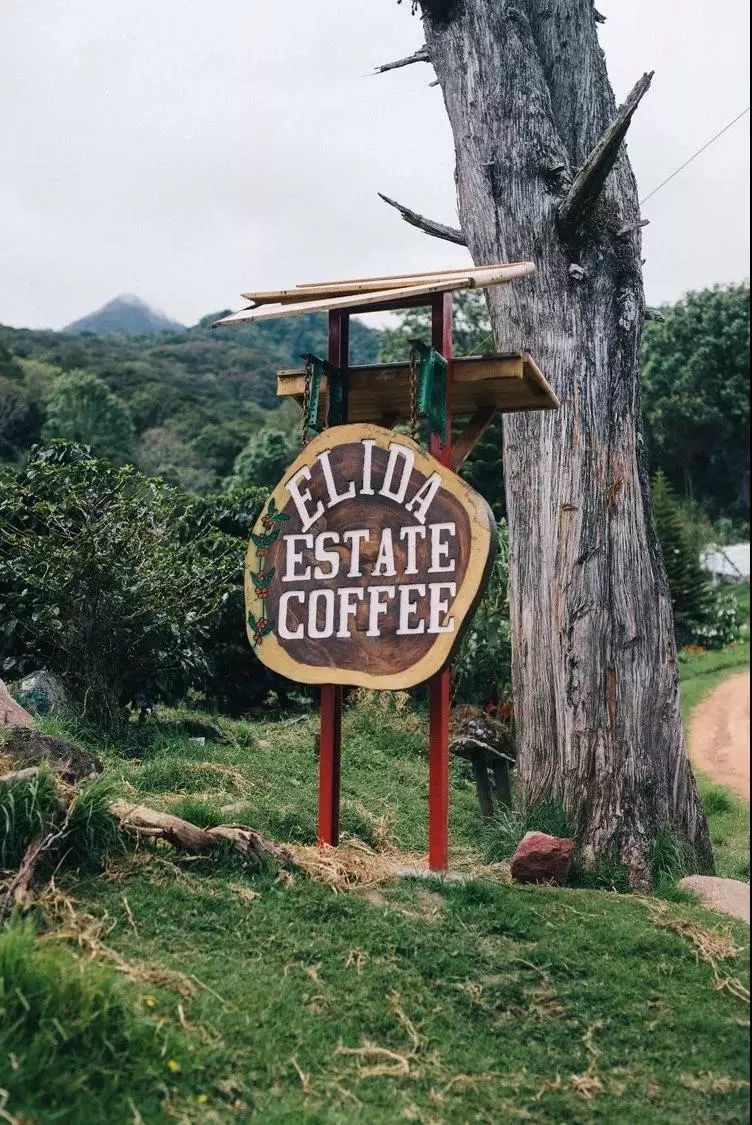
Beyond the unique ultra-high altitude and microclimate, estate owner Mr. Wilford has poured great effort into harvesting and processing. To the highest standard, Elida's coffee may only be hand-picked from the ripest cherries ("Ripe on Pinton"). That high maturity means the pectin's sugar content is naturally high — the foundation of Elida's quality flavor.
And beyond strict planting and processing, Mr. Wilford is more rigorous than his peers in the "purification" of green beans after processing. Panama Elida green beans, for example, undergo more than 5 months of low-temperature resting to remove greenness, letting the flavor develop more balanced and full-bodied. (Low-temperature resting is a green-bean purification concept strongly promoted by coffee master George Howell since 2006. We have found that green beans from subtropical regions do need low-temperature storage, though the required duration varies with processing method and altitude — for Panama Elida, 5 months is optimal.)

FrontStreet Coffee's Elida Estate ASD Processed Geisha

FrontStreet Coffee: Panama · Elida Estate
Country: Panama
Region: Boquete Region
Estate: Elida Estate
Altitude: 1,900 meters
Variety: Geisha
Processing Method: Anaerobic Fermentation Low-Temperature Slow Natural
Processing Method
This batch is processed by anaerobic fermentation low-temperature slow natural: the harvested cherries are sealed in containers for 4-5 days of fermentation, then spread in thick layers on drying beds to dry slowly. The method demands more time and effort from the producer, but slow drying lets the cherries reach optimal water activity, which develops better flavor and lets the green beans keep longer in off-season storage. It depends on the weather, extends each batch's production time, and raises the cost of the green beans accordingly.

FrontStreet Coffee's Pour-Over Parameters and Suggestions
Because different Geisha batches come from different growing environments, FrontStreet Coffee's roasters adjust accordingly, but the main roasting direction highlights Geisha's floral aroma and fruity acidity with a medium-light roast.
Generally, when brewing high-altitude hard beans with prominent acidity, FrontStreet Coffee recommends higher water temperatures of 92-93°C to extract more aromatic compounds.

Dripper: V60
Water Temperature: 91-92°C
Coffee Amount: 15g
Coffee-to-Water Ratio: 1:15
Grind Size: Fine sugar size (80% passing a #20 sieve)

FrontStreet Coffee brews in segments: after grinding into the filter paper, pour 30g from the center for a 30-second bloom, keeping a small, steady stream that spirals from inside out. For the second pour, add 95g; when the coffee has almost finished dripping, make the third pour of 100g and let it drain fully. The total time is approximately 2 minutes, with about 10 seconds of margin.
For more professional coffee knowledge sharing and coffee bean information, please follow the WeChat official account: FrontStreet Coffee
FrontStreet Coffee Recommendation: Boquete Washed Geisha and Beyond
If you are exploring Panama coffee for the first time, FrontStreet Coffee suggests our Panama Boquete Washed Geisha. Boquete lies in Chiriqui province at the heart of the coffee belt, where clouds drape the mountains, days stay humid, nights turn cool, and the fertile volcanic soil of Baru feeds the trees. This estate-level entry Geisha is planted at 1,600 meters, where slower ripening builds a richer, more layered cup: jasmine florals, green tea, honey, citrus, and orange. Want a taste of Geisha at a gentler price? The FrontStreet Panama Washed Mariposa ("Butterfly") carries half Geisha lineage — Geisha, Caturra, and Catuai grown on Baru's volcanic slopes — with excellent body, citrus acidity, and jasmine fragrance, ideal for pour-over or cold brew.
Important Notice :
FrontStreet Coffee is a long-established specialty coffee roaster in Guangzhou China, selling freshly roasted beans from its own farm in Yunnan as well as dozens of carefully selected single-origin beans from around the world for both pour-over and espresso. The products deliver consistently excellent quality and great value, with shipping within 24 hours. Guangzhou's FrontStreet Coffee shop is recommended by many coffee lovers, and the beans are now available online at the Tmall 。
FrontStreet Coffee has moved to a new address:
FrontStreet Coffee Address: 315,Donghua East Road,GuangZhou
Tel:020 38364473
 Scan and follow the En Gafei WeChat official account. Please indicate that the reprint comes from "En Gafei".