Introduction to Yunnan Coffee Bean Varieties: Flavor Profile Differences Between Yunnan Typica and Arabica
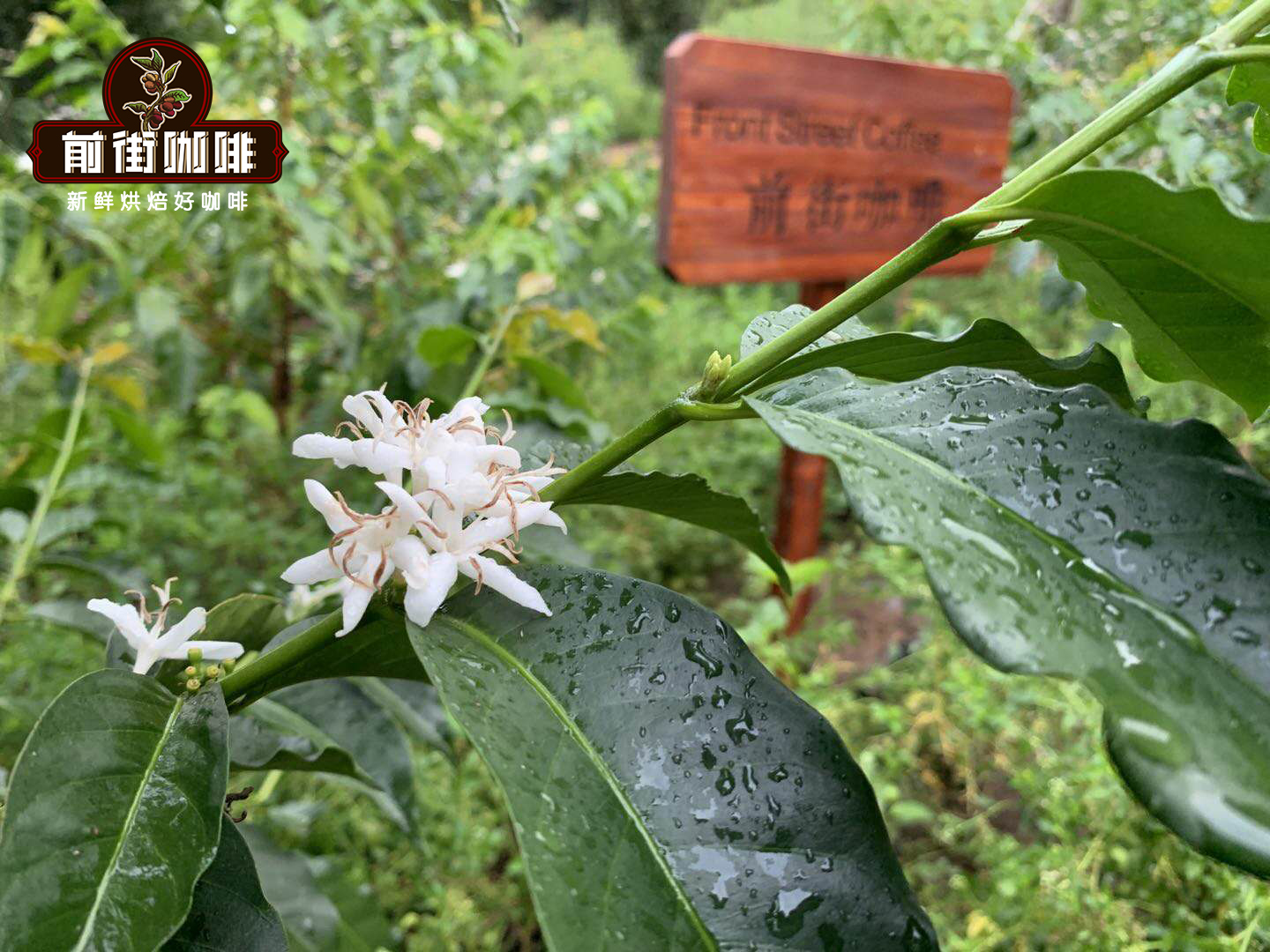
When it comes to Yunnan coffee, the question of varieties is unavoidable. In Yunnan, coffee is primarily dominated by Typica and Catimor. Typica came first, Catimor followed, and now Catimor—with its latecomer advantage—occupies the vast majority of Yunnan's small-bean coffee, which is what people mean by Yunnan small-bean coffee. Today, FrontStreet Coffee will discuss the current state of Yunnan coffee and our own experiences in cultivating it.
As early as half a year before starting our roasting operations, FrontStreet Coffee had already begun a coffee-growing journey of our own. At that time we were planting coffee in a place called Dazhen in Guangdong. When the Catimor we planted had grown to 20 centimeters, FrontStreet Coffee began to understand the importance and the sequence of variety, growing environment, and processing method. We realized that if you start by planting the wrong variety in the wrong place, the resulting cup is unimaginably bad.

So FrontStreet Coffee abandoned the Guangdong plan. While roasting coffee, we kept pushing our ideas for specialty coffee cultivation forward. We visited the Tropical Agricultural Science Research Institute (Reke Institute), which studies coffee cultivation in depth and hosts the Ministry of Agriculture's coffee germplasm repository, as well as a few farmers growing specialty coffee. We clarified why Yunnan does not grow mainstream specialty varieties like Typica and Bourbon, and by a fortunate coincidence we found suitable land.
Choosing the Difficult Path
If all we wanted was a ready-made private estate, it would actually be easy. Yunnan's coffee farmers have been reluctant to grow coffee because the labor cost of picking a kilogram is higher than its selling price; unless a family has surplus labor, they will not pick the cherries even when they ripen. One could simply buy a small plot from farmers before harvest, experiment with natural and honey processing, and have Yunnan specialty coffee in two to three months. We don't know whether that controversial approach is correct. As the former director of Yunca commented in an earlier article: "The situation of over a million acres of Catimor in the Yunnan production area is the main problem we urgently need to transform and improve. So having debates is a good thing, but we can't negate all our current efforts."

In that confusion, FrontStreet Coffee deliberately chose the most difficult path: selecting high-altitude land, cultivating Arabica varieties, and practicing rational planting.
Choosing Typica
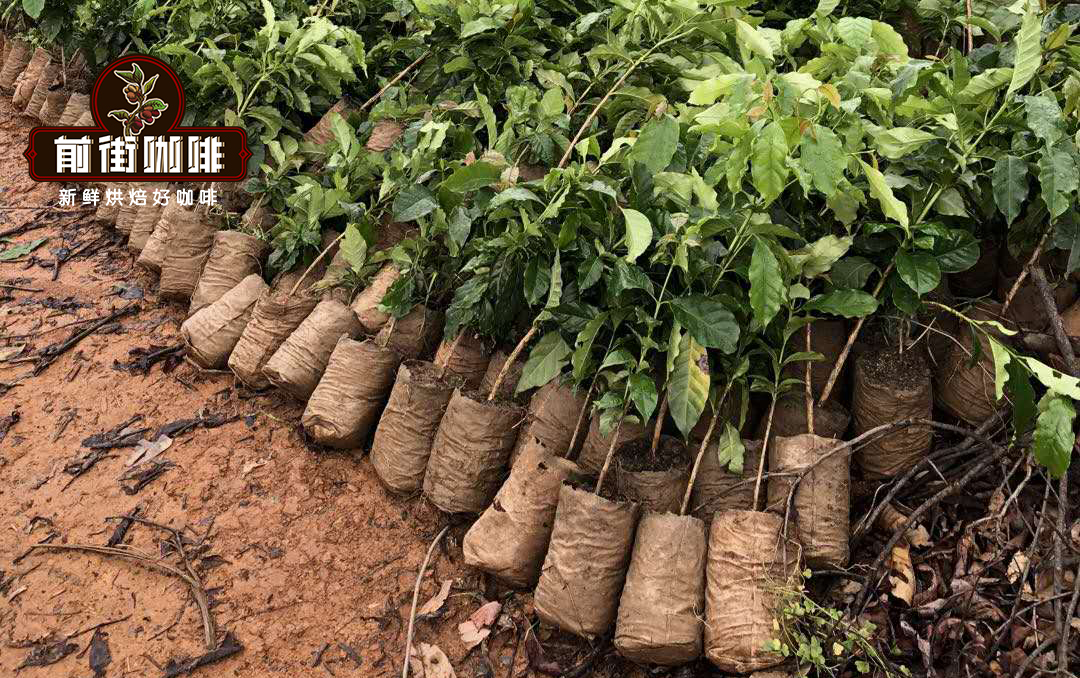
FrontStreet Coffee decisively chose the Typica variety. As the oldest variety, its flavor is beyond question. Yunnan also has a history of planting Typica going back as far as 100 years, which is one reason we believe Typica is viable here. Typica yields very little, averaging only one-third of Catimor's, and is highly susceptible to leaf rust disease, so it demands better agricultural technique and more costly manual care.
Typica Characteristics
Typica has distinct characteristics and is probably one of the most easily recognized varieties. The plants have a conical shape with a main vertical trunk that can reach up to 5 meters in height. That height means Typica has greater distances between branches, and between nodes on the same branch, than other varieties. The side branches form angles of 50 to 80 degrees with the vertical trunk. The trunk and branches are not very robust, and the leaves, fruits, and green beans are typically elongated. The bud tips of young leaves are bronze-colored. Compared with other Arabica varieties, Typica leaves have a smoother surface and fewer wavy edges. Typical Typica fruits turn bright red when ripe.
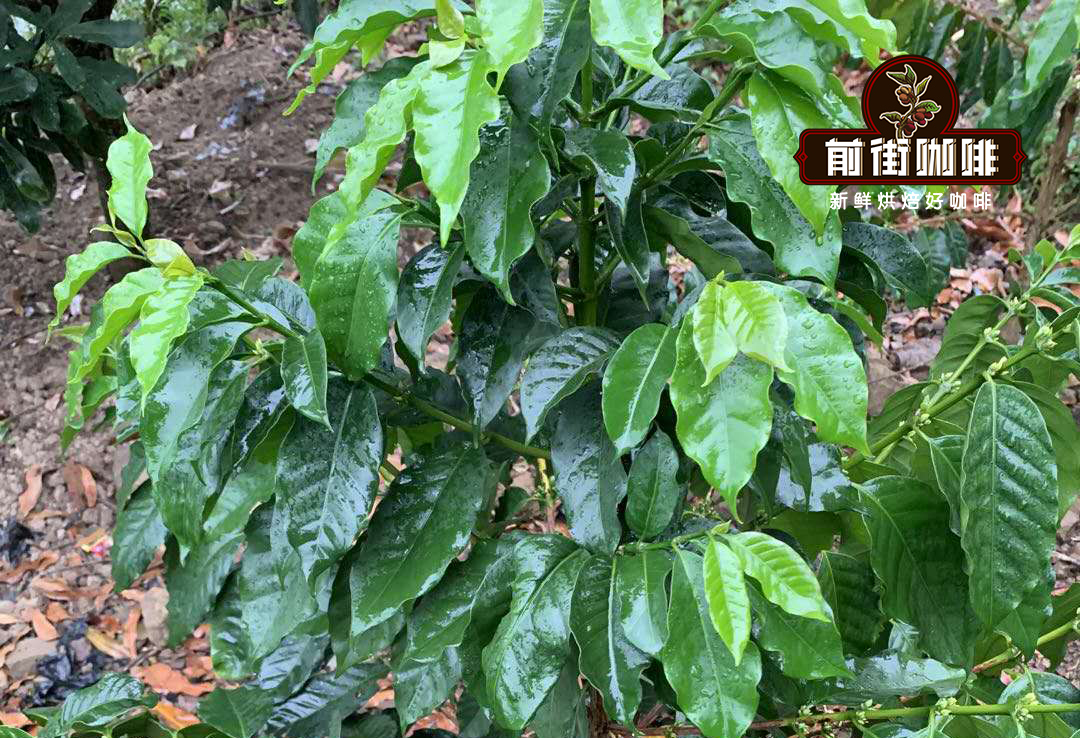
The bronze-colored top leaves are one of Typica's hallmarks. Its beans are larger, shaped like pointed ovals or slender points, and some people call it "red-topped coffee." Typica has its own subtle, clean flavor and balanced character. The mouthfeel is highly clean, but the drawbacks are insufficient yield, an altitude requirement, susceptibility to leaf rust, and weak resistance to pests and disease.
Yunnan Huaguoshan Washed Typica
Of course, before producing our own Yunnan Typica, FrontStreet Coffee also seeks out good Yunnan coffee.

FrontStreet Coffee · Yunnan Huaguoshan Washed Typica
- Region: China, Yunnan, Baoshan production area
- Altitude: 1200m
- Variety: Typica
- Processing method: Washed
When FrontStreet Coffee visited the Yunnan production area during the planting season, we truly experienced what a rainy season means: clear for a few minutes, then raining for half an hour. Because of the perennial rainy season and unstable climate, most Yunnan coffee beans are processed using the washed method.
The harvested cherries have most of their pulp separated from the beans by a depulping machine. The parchment beans are then guided into a clean water tank, where they soak and ferment to completely remove the remaining pulp layer. In the past—about five years ago—the washed method was often the first choice for processing high-quality beans. Through water processing, unripe and defective beans are separated out by buoyancy differences, and fermentation is easier to control, so the flavor avoids the mixed notes found in natural processed beans. Instead it shows distinct fruit acidity, slightly stronger complexity, and cleaner cup characteristics, without negative flavors such as astringency or sharpness.

FrontStreet Coffee Roasting Analysis
FrontStreet Coffee's roaster believes a medium-slow roast best expresses the round, smooth character of our Yunnan Huaguoshan beans while preserving rich floral and fruit aromas.
Roasting machine: Yangjia 600g semi-direct heat
Set the drum temperature to 200°C when loading, with the damper opening at 3. After 30 seconds, adjust the heat to 160°C, damper unchanged. The temperature return point is at 1'33". At 168°C, adjust the heat once more; at this point the bean surface turns yellow, the grassy smell disappears completely, and dehydration is complete. Adjust the heat to 130°C and the damper to 4. At 8'45", ugly wrinkles and black spots appear on the bean surface, and the toast smell clearly transitions to coffee aroma, which can be defined as the prelude to first crack. Listen carefully for the sound of first crack. At 9'07", first crack begins. Adjust heat to 80°C and open the damper fully to 5 (adjust heat very carefully, not so low that there is no cracking sound). 3'00" after first crack, unload at 198°C.

FrontStreet Coffee Cupping
FrontStreet Coffee cups samples within 8-24 hours after roasting. Our barista typically uses 200ml ceramic cupping bowls marked with 150ml and 200ml scale lines. According to SCAA standards, the water TDS is around 150ppm; TDS that is too low easily causes over-extraction, while TDS that is too high affects mouthfeel and leads to under-extraction. The cupping water temperature is 94°C. Following SCAA cupping standards, the grind size is controlled to pass through a #20 standard sieve (0.85mm) at a rate of 70%-75%. The ratio is 11 grams of coffee powder to 200ml of hot water, i.e., 1:18.18, so the extracted concentration falls within the golden cup range of 1.15%-1.35%. Steeping time: 4 minutes.
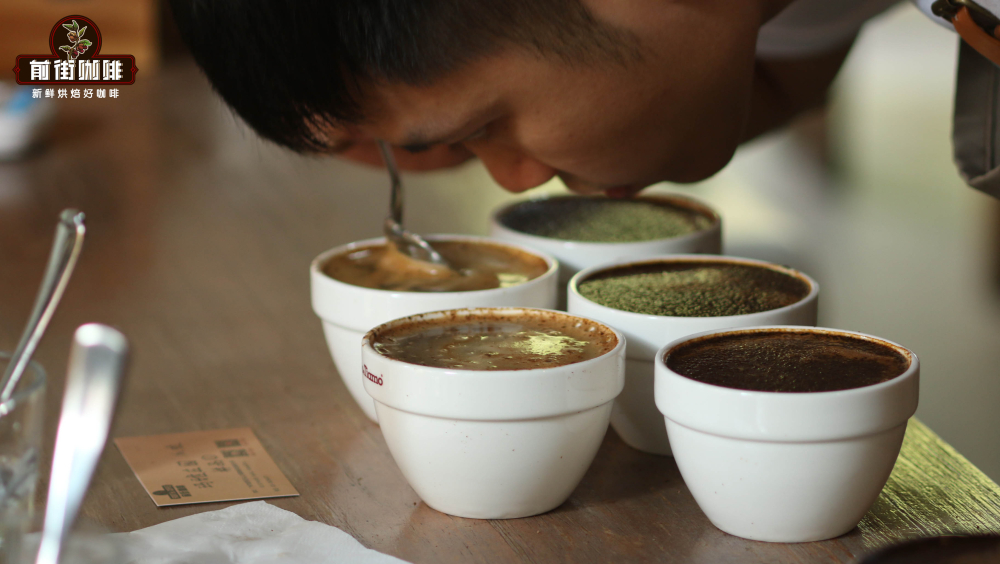
FrontStreet Coffee's Yunnan Huaguoshan coffee bean cupping notes: Rich fruit aromas at the entrance, with melon and plant herbal notes. The entry is smooth, with nuts and milk chocolate in the middle section. The finish features lively, bright plum acidity that stimulates saliva on both cheeks. Good balance, medium body with fullness. From hot to warm temperatures you can sense the layers of sweet and sour—sweet first, then sour—with apricot, peach, and citrus-toned acidity. The aftertaste is black tea with a hint of brown sugar.
FrontStreet Coffee Pour-over Brewing Recommendations for Yunnan Small-Bean Coffee
Choose 15 grams of coffee powder, with a recommended powder-to-water ratio of 1:15 (use 1:16 for a clearer flavor). Choose a V60 dripper, with a brewing water temperature of 88°C to soften the acidity. Grind to a medium-fine, fine-sugar size (80% pass rate through a #20 sieve).
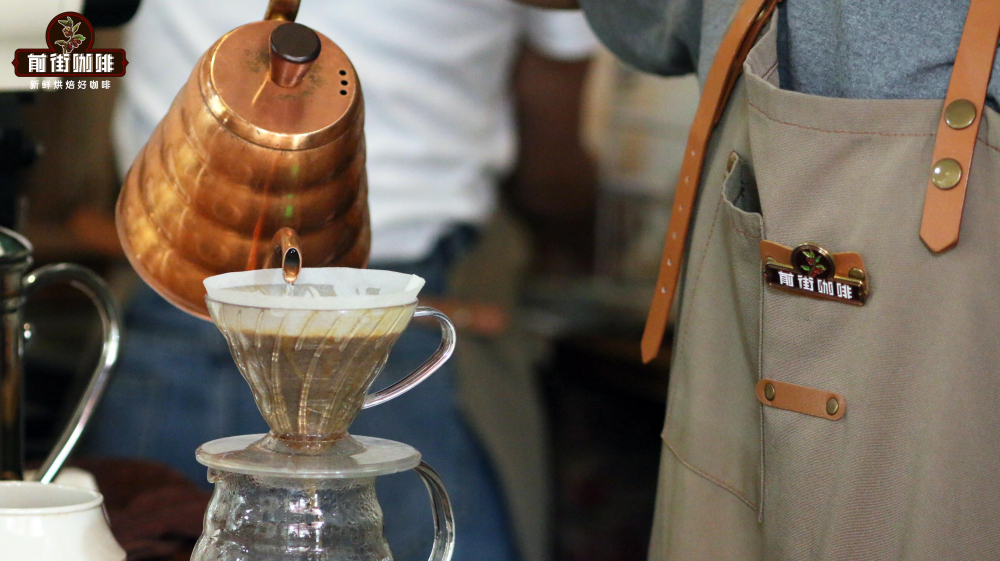
FrontStreet Coffee's segmented brewing method: Use 30g of water for blooming for 30 seconds. With a small stream, pour in a circular motion to 125g, then segment. When the water level drops and is about to expose the coffee bed, continue pouring to 225g and stop. When the water level drops and is about to expose the coffee bed again, remove the dripper. Extraction time is 2 minutes (timing starts from the bloom).
FrontStreet Coffee Recommendation
Yunnan's story starts with variety, and the lineup at FrontStreet Coffee lets you taste where that leads. "Yunnan small bean" is really just another name for Arabica—Arabica earns it because it produces the smallest fruit of the three original coffee species. The country's coffee history reaches back to 1904, when the French missionary Tian De'neng brought Typica seeds from Vietnam into Yunnan and planted the first coffee tree in Zhugula village, Binchuan county, and the province's favorable geography and climate made the small-bean crop a success. FrontStreet's Yunnan Xiaoli comes from the Baoshan production area, washed and medium roasted, showing soft nut and chocolate sweetness with a light plum acidity at an approachable price—for many people, their first taste of Yunnan coffee.
To go a step further, FrontStreet's 2013 sun-dried Typica is the upgrade. In 2013, to trace the region's heritage, FrontStreet built an estate and planted a batch of Typica trees: as one of the oldest coffee varieties it carries pure Arabica genetics and an inherently elegant, clean flavor long recognized as a specialty standard, and because the earliest coffee trees planted in Yunnan were also Typica brought by French missionaries, it was a way to recover that original regional taste. If the Yunnan Xiaoli is the beginner's entry, the 2013 Typica marks the step up—it uses only fully ripe all-red cherries, is sun-dried, and is medium roasted for a more balanced cup with brighter sweet-sour notes, bringing dark berry tones, caramel sweetness, chocolate, and a hint of dried apricot, with a black tea finish after swallowing. Both beans reflect Yunnan's growing conditions: coffee prefers warmth, tolerates heat but not cold, and grows best with ample sun, with an ideal growing temperature of 16°C to 21°C, which places the province right on the golden belt at 25° north latitude, where most of Yunnan sits at 1,000 meters with fertile sloping soil, abundant sun and rain, and a wide day-night temperature swing. Yunnan's planting is concentrated in the southwest, across four main origins—Baoshan, Dehong, Pu'er, and Lincang—and FrontStreet's two everyday Yunnan specialty beans come from Baoshan and Lincang; Baoshan's coffee history began in the mid-1950s, introduced by the overseas Chinese philanthropist Liang Jinshan, and the dry-hot river-valley climate around Lujiangba, with little temperature variation year-round but a large day-night swing, gives Baoshan small-bean coffee its distinctive sweet return.
For an espresso take on Yunnan flavor, FrontStreet's Black Cocoa Blend pairs Yunnan Xiaoli with Brazil Cerrado: the Brazilian coffee supplies mixed-nut aroma and a balanced body, while Yunnan Xiaoli plays the chocolate and citrus role. The americano it makes is balanced across sweet, sour, and bitter, with nut and brown sugar sweetness, and as a latte it turns smooth with almond and cream—an easy blend for beginners.
Important Notice :
FrontStreet Coffee is a long-established specialty coffee roaster in Guangzhou China, selling freshly roasted beans from its own farm in Yunnan as well as dozens of carefully selected single-origin beans from around the world for both pour-over and espresso. The products deliver consistently excellent quality and great value, with shipping within 24 hours. Guangzhou's FrontStreet Coffee shop is recommended by many coffee lovers, and the beans are now available online at the Tmall 。
FrontStreet Coffee has moved to a new address:
FrontStreet Coffee Address: 315,Donghua East Road,GuangZhou
Tel:020 38364473
 Scan and follow the En Gafei WeChat official account. Please indicate that the reprint comes from "En Gafei".