Where are China's coffee growing regions? What is the quality, flavor, and taste of Yunnan coffee beans?

As "China-Chic" culture has gathered momentum, more and more people in the coffee trade have turned their attention to the country's own beans. Yunnan coffee has become a genuine trend among coffee brands nationwide, with homegrown Yunnan brands emerging one after another and standing out as proud examples of domestic excellence.
The Golden Age of Yunnan Coffee
With China-Chic culture on the rise, Yunnan coffee beans have entered their golden age. To understand how far they have come, it helps to look back at the long and difficult road the industry has traveled.
The Development of Yunnan Coffee
The story begins in 1904, when a French missionary carried coffee seeds - Typica - into Yunnan from Vietnam and planted the region's first coffee tree in a village called Zhukula. He could hardly have imagined that a century later, coffee would become a showcase of specialty agriculture on the Yunnan plateau.

In 1937, the patriotic overseas Chinese Mr. Liang Jinshan brought a batch of seeds back from Myanmar and opened up coffee land in the Lujiangba area of Baoshan. Later, after 1952, large-scale cultivation was formally organized under the guidance of expert Ma Guojin from the Agricultural Science Institute, with the harvest supplied to the Soviet Union. Throughout this early period, the varieties grown in Yunnan were all Typica and Bourbon derivatives, and the planted area reached as much as 50,000 mu.
Global leaf rust epidemics then struck hard, killing coffee trees across the region and shrinking the cultivated area dramatically. By the 1980s, as China opened up, Yunnan coffee began gradually entering the international market. In 1988, foreign companies such as Nestlé set up branches in China and supported the Yunnan industry from several angles: they introduced high-yield, rust-resistant varieties like Catimor, and they committed to purchasing Yunnan beans as raw material at the prevailing US futures prices. These moves expanded plantings and lifted farmers' enthusiasm considerably. In 1995, the Yunnan provincial government formally folded coffee cultivation into its biological resources "18 Project," and both area and yield grew rapidly from that point on.

After the turn of the millennium, as China's industries flourished and specialty coffee ideas spread, second- and third-generation coffee farmers across Yunnan's producing areas began adopting cultivation and processing methods that meet international standards. Many domestic specialty brands also built deep partnerships with Yunnan origins, and every year brings more impressive Yunnan specialty lots into the spotlight.
Yunnan Coffee Varieties
Before the 1980s, the varieties widely grown in Yunnan were two ancient small-bean types: Typica and Bourbon. "Small bean" simply describes Arabica - its cherries are the smallest of the three commercially cultivated coffee species, in contrast to the larger-beaned Robusta grown in Hainan.

Typica delivers rich and varied flavors, with layered fruit acidity and a delicate texture, and is widely acknowledged as a premium variety. The celebrated FrontStreet Coffee Jamaica Blue Mountain No. 1 and FrontStreet Coffee Hawaii Kona are both Typica. On the tree, Typica grows tall with decent cold tolerance, but each plant yields little and its disease resistance is poor - it is highly vulnerable to leaf rust, coffee berry disease, and nematodes. That means far more hands-on management, and because the variety earns no premium in mainstream markets, many Yunnan farmers ultimately replaced it with higher-yielding alternatives.
In 1995, the same year coffee entered the provincial "18 Project," the Institute of Tropical Crops of the Yunnan Academy of Agricultural Sciences introduced Catimor, a new disease-resistant, high-yield variety, and began cultivating it in Xinzhai Village in the Nujiang River Canyon.

Catimor 7963 is a hybrid developed by the Portuguese Tropical Research Institute (HCT) specifically to combat coffee leaf rust, and its traits are stable. The trees are compact and dwarf in habit, heavily branched, with short fruit nodes. They grow vigorously and with remarkable vitality, and their standout qualities are outstanding rust resistance and high productivity - which is why Yunnan farmers embraced it so warmly. Today more than 90% of Yunnan's coffee trees are Catimor.
What are the Coffee Growing Regions in Yunnan?
Yunnan's coffee cultivation spreads across 35 counties and districts in 9 prefectures and cities, including Pu'er, Baoshan, Dehong, Lincang, Wenshan, and Xishuangbanna. The Yunnan coffees on FrontStreet Coffee's bean list are drawn from the Baoshan and Lincang producing areas.

Beneath the Gaoligong Mountains, along the banks of the Nujiang Grand Canyon, lies Lujiangba, the cradle of Baoshan small-bean coffee. Its elevation runs from 640 meters to 1400 meters - precisely the band best suited to Arabica. Lujiangba is also one of the few typical subtropical dry-hot valley climates in the country: abundant sunshine, no frost all year, and wide day-night temperature swings that favor the accumulation of organic compounds. As a result, Baoshan small-bean coffee is rich in protein, crude fiber, crude fat, and sucrose while staying low in caffeine - a cup best described as "strong but not bitter, fragrant but not sharp." Working from the flavor signature of Yunnan's terroirs, FrontStreet Coffee selected a Catimor lot from the Baoshan area. Part of FrontStreet Coffee's signature daily bean series, this Baoshan Yunnan small-bean coffee lets anyone taste the character of Yunnan at a very friendly price.
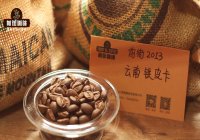
The other Yunnan coffee on FrontStreet Coffee's bean list comes from Lincang - a lot that FrontStreet Coffee cultivated and produced itself, chosen from the elegant Typica variety and finished with natural sun-drying.

Lincang feels the influence of warm, moist Indian Ocean air currents and the southwest monsoon, so the seasons blur together while wet and dry periods alternate sharply. Rainfall is generous, sunshine hours are long, frost seasons are short - some areas see no frost at all - and the stacked, three-dimensional terrain creates the varied microclimates that Arabica loves. FrontStreet Coffee deliberately chose the most original variety, Typica, for this project: its flavors run rich and layered, with fruit acidity and a delicate texture that have earned it recognition as a classic specialty variety - the same genetic line behind Jamaica Blue Mountain and Hawaii Kona.

Each November, the coffee cherries on FrontStreet Coffee's own farm ripen in succession. Workers pick the fully red cherries one by one, then spread the fresh fruit under the sun for natural drying, raking it regularly so dehydration stays even and over-fermentation never creeps in.
Brewing Recommendations for Yunnan Coffee
Some friends who pick up a bag of roasted FrontStreet Coffee Yunnan small-bean beans are unsure how to brew them. First, FrontStreet Coffee stresses that freshness matters enormously: roasted beans have an optimal tasting window, and once the flavor peak has passed, little of the character can be coaxed out in extraction. Every bag FrontStreet Coffee ships is roasted within the previous 5 days, so the full tasting period remains ahead of you.

FrontStreet Coffee's Pour-Over Parameters:
- Dripper: Hario V60
- Dose: 15g
- Water Temperature: 90°C
- Grind Size: 75% pass-through rate on #20 sieve
- Water-to-Coffee Ratio: 1:15

Three-Stage Pouring: Start with water equal to twice the dose of grounds to saturate the coffee bed and form a dome; bloom for 30 seconds. Then, with a small, steady stream, pour in slow circles from the center outward until the scale reads 125g, and pause. Once the bed has settled to half the dripper's height, resume the same fine stream for the third pour up to 225g. Let all the liquid draw down, then remove the dripper. Total brew time should be about 2 minutes.
FrontStreet Coffee Yunnan Small-Bean Daily Coffee Flavor:
The aroma is dense with nuts, while the palate brings herbal, chocolate, and caramel notes and a light fruit acidity that lingers in the aftertaste. Overall the cup is balanced and notably clean.

FrontStreet Coffee 2013 Sun-Dried Typica Coffee Flavor:
The dry grounds offer caramel, nut, and citrus aromatics. Served hot, the cup shows chocolate, gentle fermentation notes, and berries; as it cools, plum acidity emerges alongside a sweet aftertaste of black tea and sugarcane. The body is medium-high, the texture clear, and the flavor layers generous and varied.
FrontStreet Coffee Recommendation
If you are buying your first Chinese Arabica, start with FrontStreet Coffee's Yunnan small-bean coffee from Baoshan. Baoshan's coffee history reaches back to the mid-1950s, when Mr. Liang Jinshan introduced planting there; the frost-free warm climate, the distinctive dry-hot valley around Lujiangba with its wide day-night swings, and moderately low rainfall give the beans their signature lingering sweetness. This lot is washed and roasted to a medium level: the washing removes the mucilage through fermentation and rinsing before drying, letting the region's terroir speak clearly, while the roast highlights a caramel sweetness and keeps a touch of pleasant acidity. Soft nut and chocolate aromas with a hint of plum acidity make it the ideal introduction to Yunnan coffee.
For a clearer, more defined Yunnan expression, choose FrontStreet Coffee's 2013 Yunnan sun-dried Typica. Grown on FrontStreet Coffee's own estate, it is processed in the most traditional way - natural sun-drying - which gives the cup a heavier body and a more pronounced sweet-sour vibrancy. Expect citrus and dark berry tones, a whisper of vinous fermentation, caramel sweetness, and a creamy finish with the afterglow of black tea. Typica is among the oldest and purest Arabica varieties, and FrontStreet Coffee planted it on the estate precisely to recapture the original taste of Yunnan.
If you prefer your Yunnan as espresso, FrontStreet Coffee's Black Cocoa Blend - an espresso bean recommended by many baristas - combines Yunnan small-bean with Brazilian Cerrado coffee. The Brazil component contributes mixed-nut aroma and a balanced body, while the Yunnan component brings chocolate and citrus character. Pulled as an Americano it balances sweet, sour, and bitter with nutty, brown-sugar sweetness; in a latte it delivers the smooth feel of almond and cream. It is a very forgiving blend for beginners.
Important Notice :
FrontStreet Coffee is a long-established specialty coffee roaster in Guangzhou China, selling freshly roasted beans from its own farm in Yunnan as well as dozens of carefully selected single-origin beans from around the world for both pour-over and espresso. The products deliver consistently excellent quality and great value, with shipping within 24 hours. Guangzhou's FrontStreet Coffee shop is recommended by many coffee lovers, and the beans are now available online at the Tmall 。
FrontStreet Coffee has moved to a new address:
FrontStreet Coffee Address: 315,Donghua East Road,GuangZhou
Tel:020 38364473
 Scan and follow the En Gafei WeChat official account. Please indicate that the reprint comes from "En Gafei".