Brazil: The World's Largest Coffee Producing Country - Brazilian Flavor Coffee Beans from Minas Gerais Region
Professional coffee knowledge exchange. For more coffee bean information, please follow Coffee Workshop (WeChat public account: cafe_style).
Modern coffee has passed through three popular stages worldwide. The first ran from the end of the Second World War to the 1960s, when instant coffee stood for inexpensive coffee. The second ran from the 1960s to the early 2000s, when commercial coffee led by Starbucks took over. The third is the specialty coffee movement that began in the 1970s and has taken off in the last decade, especially in Japan and South Korea.
Brazil Coffee Profile
Brazil — Aroma 3 points, Brightness 3.5 points, Body 3.5 points, Flavor 4 points, Aftertaste 4 points
Suitable Roasting Levels
Suitable roasts: City, Full City, Espresso. When used as an espresso base the beans cannot be roasted too dark, because the growing area is low in altitude and the bean density is low; under dark roasting it produces charcoal bitterness. It is best to finish before the second crack. Premium Brazilian beans have a wider range, from City to the middle of the second crack.
Brazil is the world's largest coffee producer, and its history goes back to the early 17th century. Although its output is the largest in the world, most of it consists of lower-quality Arabica and Robusta. Many Brazilian coffees grow at low altitude on non-volcanic soil, sometimes on originally treeless grassland without any shade. No modern technique can fully compensate for those inherent shortcomings, which is why many specialty coffee professionals take a dim view of Brazilian coffee. That does not make it undrinkable, however. In recent years Brazilian farmers have worked hard to align Brazilian coffee with high quality, and the country's coffee associations have supported them fully. The effort has paid off, and auction prices on the coffee market have been impressive.
Brazil's three main coffee-producing regions are the states of Bahia, Minas Gerais and São Paulo, but premium Brazilian beans mostly come from Minas Gerais, and the best-known Cerrado is a small producing region within that state.
Santos, meanwhile, is the largest and oldest coffee export port. Beans marked Santos may come from anywhere in Brazil, so the name is not a useful regional or quality indicator. Ordinary Brazilian beans not only look poor in the raw state with uneven sizes, but more importantly taste mediocre with no distinctive character, and some even carry an unpleasant iodine flavour. Good Brazilian beans come from old Bourbon trees, with a noticeable stone-fruit aroma, a sweet taste with low acidity and a bittersweet chocolate flavour. Some describe top-grade Brazilian coffee as Strictly Soft. Because they are rich in oils, Brazilian beans have always been an indispensable part of espresso blends. A good Brazilian bean has body, flavour and sweetness without overpowering the cup, giving other coffees the stage on which to express themselves.
About Brazilian Coffee
FrontStreet Coffee typically roasts Brazilian coffee to medium-dark. Taking FrontStreet Coffee's pour-over Brazil Queen as an example, FrontStreet Coffee chooses a medium-dark roast, developing for three minutes after the first crack and finishing at 201°C.
Brewing Method Recommended by FrontStreet Coffee
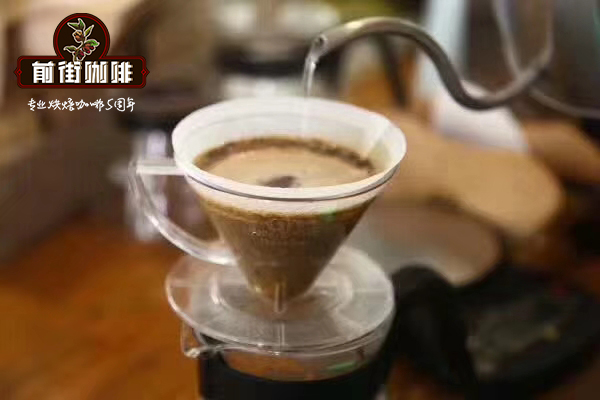
Use a KONO or trapezoidal dripper, both mainly immersion-style, to increase the body of Brazilian coffee and highlight its sweetness and balance; medium grind; water at 88°C; a 1:15 powder-to-water ratio; an extraction time of one minute fifty seconds.
Flavor Profile
Flavour: chocolate, nuts, cane sugar, cream, soft fruit acidity
END
FrontStreet Coffee Recommendation
Minas Gerais supplies much of the coffee that makes Brazil the world's largest producer, and FrontStreet Coffee's Brazil Queen's Farm comes from Mogiana, the region beside South Minas. Fertile red volcanic soil there helps the cherries develop a full, sweet aroma.
The farm grows the rare Yellow Bourbon, a natural mutation of Red Bourbon. Through pour-over, a moka pot or a home espresso machine you get a sugarcane sweetness found in few other origins, along with fruit and chocolate: a clear, affordable taste of Brazil's Minas Gerais heartland.
If you are only beginning to explore the Brazilian profile, FrontStreet Coffee's Cerrado Red Bourbon is a very classic single-origin. Cerrado is a well-known local region prized for high-quality beans, and this lot is the Red Bourbon common in South America. Medium roasted, it shows rich cream, peanut, toast, caramel and hazelnut aromas, with a rounded body, no acidity and a light bitterness. It brews as pour-over, and it also works in a moka pot, as espresso SOE, in a siphon and in a French press.
Brazilian coffee's low acidity, balance and friendly price have made it the first choice for many espresso recipes. FrontStreet Coffee's Classic Blend, Fine Blend, Commercial Blend and Black Cocoa blend all contain Brazilian beans, which add chocolate and cream aroma along with a gentle balance of sweet, sour and bitter that keeps extraction stable.
Important Notice :
FrontStreet Coffee is a long-established specialty coffee roaster in Guangzhou China, selling freshly roasted beans from its own farm in Yunnan as well as dozens of carefully selected single-origin beans from around the world for both pour-over and espresso. The products deliver consistently excellent quality and great value, with shipping within 24 hours. Guangzhou's FrontStreet Coffee shop is recommended by many coffee lovers, and the beans are now available online at the Tmall 。
FrontStreet Coffee has moved to a new address:
FrontStreet Coffee Address: 315,Donghua East Road,GuangZhou
Tel:020 38364473
 Scan and follow the En Gafei WeChat official account. Please indicate that the reprint comes from "En Gafei".