An Introduction to Sumatra: The Primary Growing Region of Indonesian Premium Mandheling Coffee

Introduction to Mandheling Coffee
Mandheling is a premium coffee from Indonesia and has become synonymous with Indonesian coffee. At FrontStreet Coffee, Mandheling appears on the daily selection list as the representative Indonesian coffee, making it an excellent introductory bean for understanding Indonesian coffee. FrontStreet Coffee also offers Indonesia's premium Golden Mandheling coffee.

Indonesian coffee beans are relatively large with a hard texture and offer a rich, mellow mouthfeel. Mandheling, in fact, is neither a place name, a growing region, nor a coffee variety. It comes from a phonetic misunderstanding involving the Mandheling ethnic group who originally inhabited Sumatra. The origin of the name is a lovely legend of mishearing. During the Japanese occupation of Indonesia in World War II, a Japanese soldier tasted exceptionally fragrant, mellow coffee at a cafe. When he asked the owner for the coffee's name, a language barrier led the owner to think he was asking about his ethnicity, so he answered: "Mandailing." After the war, the soldier remembered the "Mandheling" coffee he had drunk in Indonesia and commissioned an Indonesian coffee exporter to ship 15 tons to Japan, where it became surprisingly popular. Since then the name Mandheling has been passed down.
History of Mandheling Coffee Cultivation in Sumatra
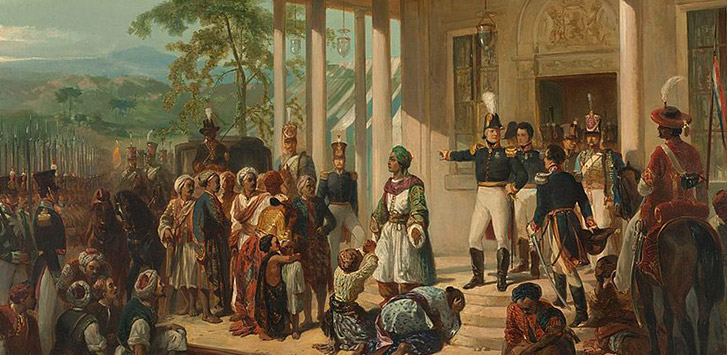
Sumatra is currently Indonesia's second-largest island by area, with a resident population of about 55 million, yet it remains one of the country's largest coffee-producing regions. Coffee from Sumatra accounts for roughly 74.2% of Indonesia's total output, while Indonesia's second-largest producing region accounts for only 12% of national production. Indonesia was not originally a coffee-growing region, though. Coffee was brought to the islands by the Dutch government during the early colonial period after it conquered the Portuguese. Two centuries later, at the height of World War II, large areas of coffee were replaced by rice, corn, cassava, and other crops to address local food security. In 1950 local coffee production was only one-eighth of pre-war levels, but since then coffee has become the economic backbone of the region.
Indonesian Sumatra Coffee Growing Regions
Sumatra is not only Indonesia's largest island but also the world's sixth-largest. It lies in the northwestern part of Indonesia, stretching from northwest to southeast with the equator passing through its center. The terrain is higher in the northwest, where the Barisan Mountains run through, and it mainly grows Arabica varieties as the core production area for Mandheling. The southeast is lower, mostly flat or swampy, and mainly grows Robusta. The island has more than 90 volcanoes and numerous volcanic lakes, which provide fertile soil for coffee. Because of its location, Sumatra has the country's earliest harvest season, from November to March.

Mandheling is produced in Sumatra, in Asian Indonesia, and is also known as "Sumatra coffee." The main producing areas include Java Island, Sulawesi Island, and Sumatra Island, with 90% being Robusta varieties. Among them, the Mandheling from Sumatra Island is the most famous. The finest traditional Arabica coffees from northern Sumatra are marketed under the names Lintong and Mandheling. Strictly speaking, Lintong refers to coffee grown in a small area in the southwest of Lake Toba, in the Lintong administrative region. Coffee smallholders are scattered across a high, undulating clay plateau covered with ferns. Lintong coffee is grown without shade and without chemicals, and is almost entirely owned by small private farmers. Mandheling is a broader term that includes Lintong coffee and planting areas under similar conditions in Diari (capital Sidikalang) and the northern part of Lake Toba.
Lintong Mandheling comes from the Lintong mountainous area of north-central Sumatra, near Lake Toba. It is essentially the regular version of Sumatra Mandheling. The daily bean Mandheling coffee at FrontStreet Coffee is Lintong Mandheling.
Lake Toba lies in the central part of North Sumatra Province. In 1888 Dutch colonists moved "Java Mandheling" north to the Lake Toba region, establishing the modern Mandheling legend.
Lake Tawar lies in the central part of the Aceh Special Administrative Region. It sits at the northern tip of Sumatra Island, with an area less than one-tenth that of Lake Toba.

Currently the highest-quality beans from the entire Sumatra region come from the Gayo mountain area, mostly planted with old varieties. The Gayo mountains lie in the Aceh region of northern Sumatra Province, at elevations between 1500-2500 meters. Most coffee farmers are local indigenous people, the Gayo. The region has ideal conditions for coffee: high altitude, fertile soil, and abundant rainfall. Lake Tawar provides rich water resources, and the region widely uses organic methods without chemical fertilizers, so it is considered a world green coffee production area. Gayo coffee is therefore often called green coffee or Gayo organic coffee.
Golden Mandheling Coffee
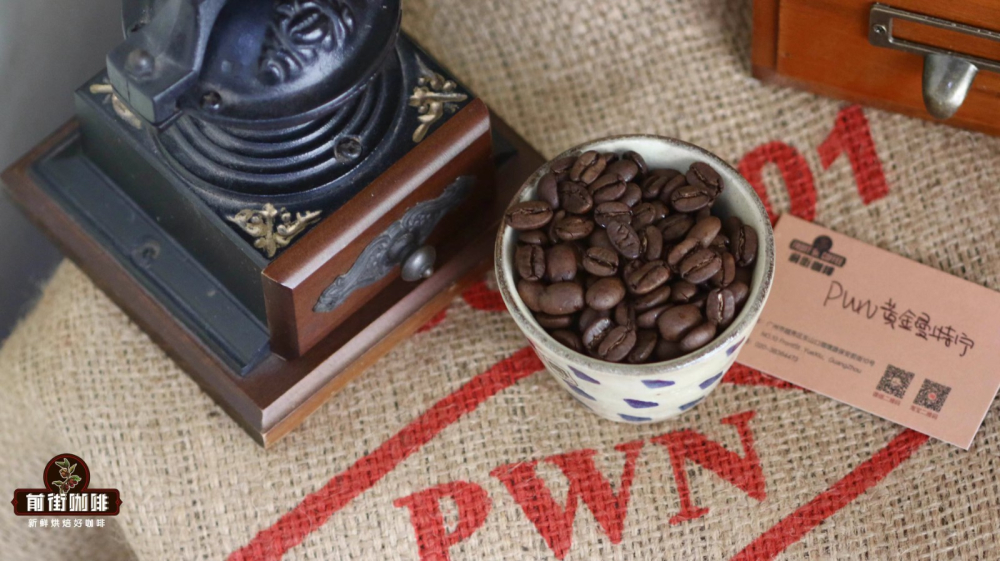
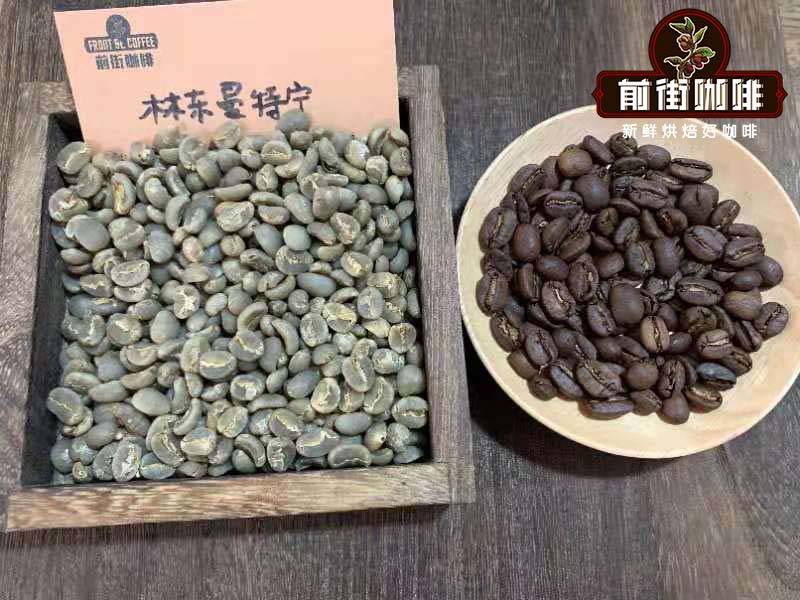
FrontStreet Coffee's new-season Golden Mandheling is produced in the Gayo mountains of Aceh, North Sumatra. It is Golden Mandheling from the PWN company. Golden Mandheling has stricter quality requirements: first, the beans must be size 19, full and uniform, belonging to the highest grade, G1. PWN beans are darker green in color with a regular, flat shape. They then undergo one machine selection and three manual hand selections to ensure that defective beans in the raw coffee number fewer than 3 (in a 300g raw bean sample).

What Variety is Mandheling Coffee?
Mandheling variety: Typica. As early as 1658 the Dutch transplanted descendants of "European Typica parent plants" to Sri Lanka, but the cultivation failed. Later, in 1699, the Dutch transplanted Malabar coffee trees from eastern India to Java, and that trial succeeded. Typica grew steadily in Java. In 1718 the Dutch transplanted the successfully trialed Typica from Java to Sumatra and Sulawesi. After more than a century of cultivation, just as Indonesia's Typica was at its peak, a leaf rust epidemic at the end of the 19th century swept through most of Indonesia's Typica. More disease-resistant Robusta then had to be introduced.
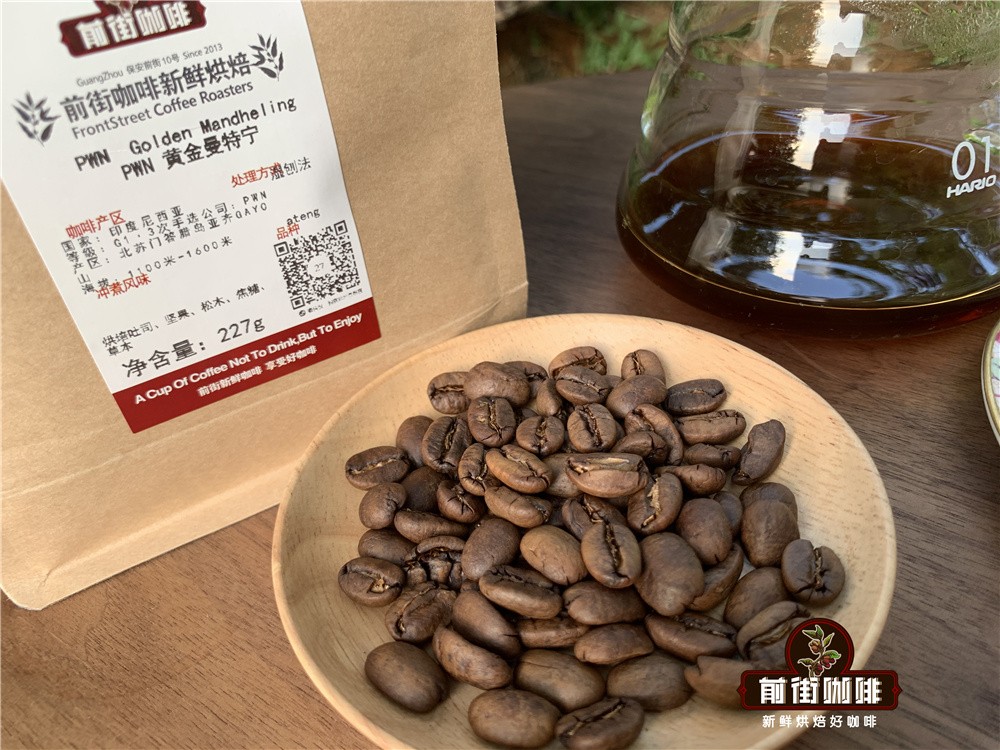
The variety listed for FrontStreet Coffee's Lintong Mandheling is Tim Tim Ateng, while the variety for Golden Mandheling is Ateng. What is this variety? Ateng is a hybrid between Arabica and Robusta, widely planted in Sumatra and other Indonesian islands. It is actually a branch of Catimor, with Ateng being the local name. What Indonesians call Tim Tim is what we refer to as Timor. The Ateng variety is very well suited to cultivation and flavor development in the Aceh region. Because of localized naming by Indonesian growers, we often see unfamiliar varieties for Mandheling, but these are simply different names for the same varieties.
Mandheling Coffee Bean Processing Method

Mandheling's distinctive flavor relates not only to the local climate and environment but also inseparably to its processing method. Indonesia lies in a typical tropical rainforest climate with frequent rainfall and short sunshine hours, which is not suitable for natural processing. On top of that, local economic conditions generally do not allow enough funding for washed processing. Coffee farmers therefore developed this semi-washed method, also known as wet hulling. It is a rare processing method worldwide that accidentally created Mandheling's special low-acidity, thick, aromatic flavor.
How to Brew Mandheling Coffee?
FrontStreet Coffee has shared the relationship between roast level and pour-over brewing. Light and dark roast beans differ in water temperature and dripper choice. Golden Mandheling is a dark roast, so the water temperature should not be too high, and a Kono dripper should be used. The lower temperature avoids extracting excessive unpleasant flavors. When FrontStreet Coffee roasts dark, many aromatic substances have already been released, and extracting further at temperatures suited to a light roast would cause over-extraction. FrontStreet Coffee chooses the Kono dripper because the V60's flow rate is too fast, which can lead to under-extraction at low temperatures. The Kono has fewer ribs at the bottom, and the filter paper fits tightly against it, which restricts airflow, increases contact time between water and grounds, allows full extraction, and enhances the mellow mouthfeel.
FrontStreet Coffee's Golden Mandheling Brewing Parameters:
Water temperature: 88°C, Coffee amount: 15 grams, Coffee-to-water ratio: 1:15, Grind size: Medium-fine grind (75% pass-through rate with #20 sieve).
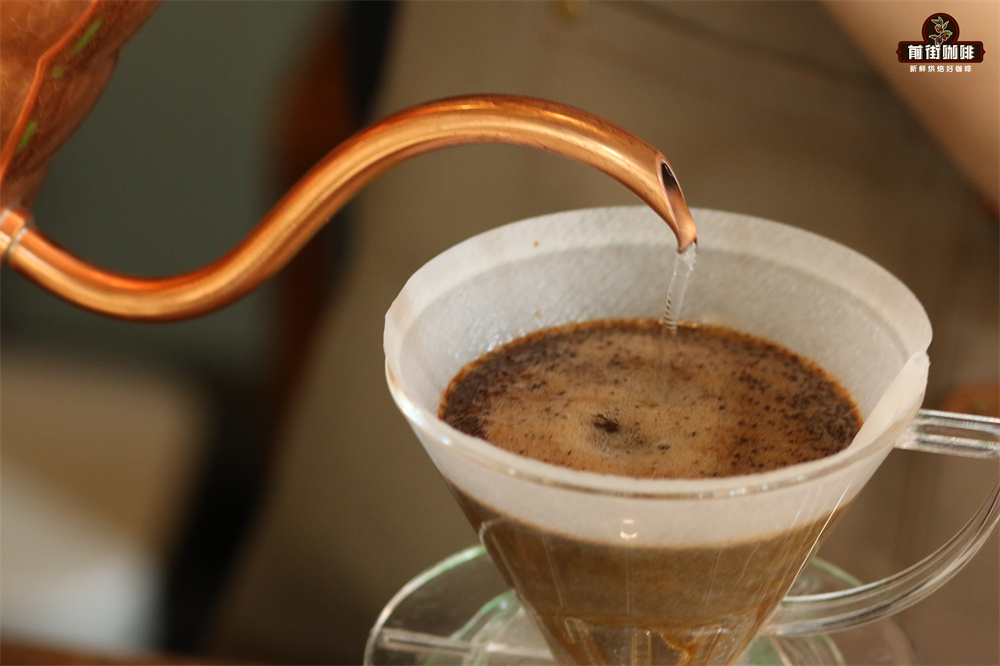
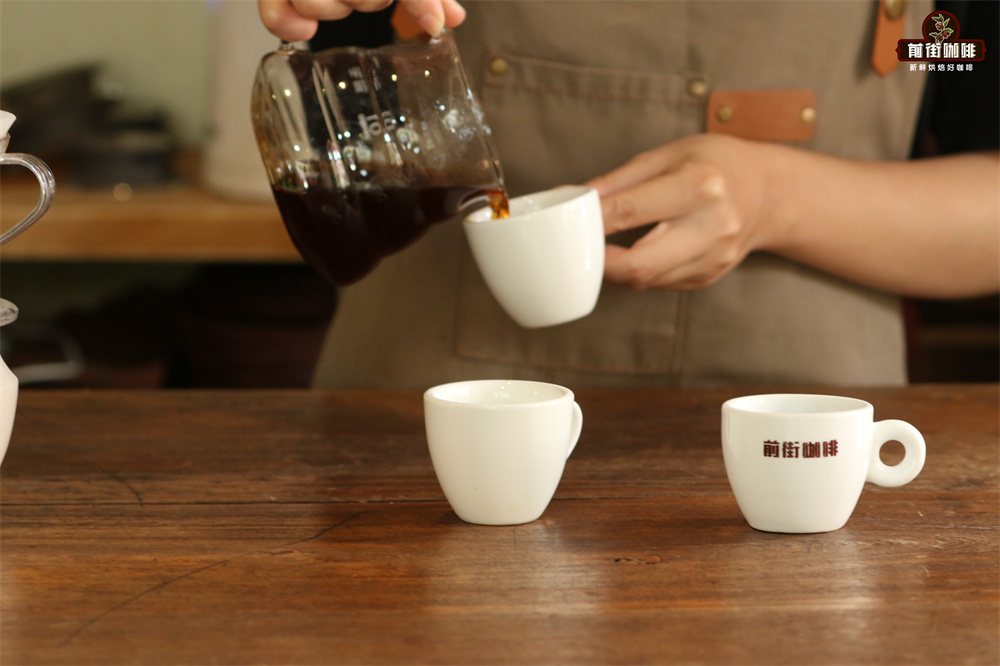
Use segmented extraction, blooming with 2 times the amount of water as the grounds, that is, 30 grams of water for 30 seconds. Blooming is necessary to let the grounds release carbon dioxide from within, making the subsequent extraction more stable. Pour with a small circular flow to 125 grams, then continue pouring to 225 grams and stop. Remove the dripper once the water has finished dripping. Time from the start of pouring: extraction time is 2'00". Then pick up the whole cup and shake it evenly, and pour it into a cup for tasting.
PWN Golden Mandheling Coffee Flavor Profile:
The coffee has overall complex layers, rich and clean, with intense nutty and caramel aromas, chocolate notes, a long-lasting aftertaste, and high balance.
Lintong Mandheling Coffee Flavor Profile:
The entry has intense herbal aromas, dark chocolate, caramel, and a sweet aftertaste.
FrontStreet Coffee Brewing Recommendations
For brewing, FrontStreet Coffee recommends using freshly roasted beans, which lets you experience the coffee's rich flavors to the fullest. The beans FrontStreet Coffee ships are all roasted within 5 days, because FrontStreet Coffee understands how much freshness affects flavor. FrontStreet Coffee's roasting philosophy is "Freshly Roasted Quality Coffee," ensuring every customer who places an order receives the freshest coffee on arrival. The resting period is about 4-7 days, so by the time customers receive it, the coffee is at the peak of its flavor.
Some customers do need FrontStreet Coffee to grind the beans for them, which is fine. But FrontStreet Coffee must point out that when beans are ground in advance, there is no need for a resting period, because during transport the pressure from carbon dioxide in the packaging also helps round out the flavor. You can brew a cup the moment the ground coffee arrives. Ground coffee should be brewed promptly, however, because it oxidizes relatively quickly after contact with air, so the flavor dissipates faster and the coffee tastes less good. FrontStreet Coffee therefore recommends buying whole beans and grinding them fresh before brewing to appreciate the flavor better.
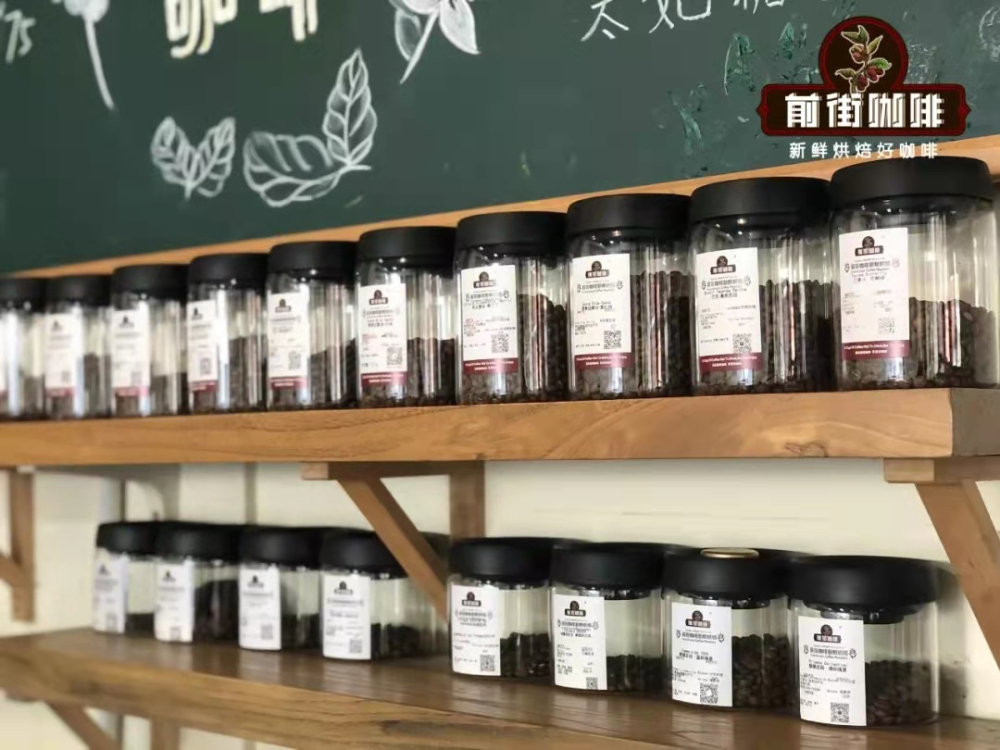
FrontStreet Coffee offers two Indonesian coffees, one being the daily bean series Indonesian Mandheling coffee and the other the single-origin premium Golden Mandheling coffee. Whichever you choose, both have excellent flavors. The daily bean Mandheling can serve as an introductory bean for newcomers to understand Indonesian coffee, while the Golden Mandheling may be the higher-level premium coffee that connoisseurs pursue.
FrontStreet Coffee Recommendation
For a first look at Sumatra Mandheling, FrontStreet Lintong Mandheling is the natural starting point. Coming from the Lintong area near Lake Toba and roasted medium-dark, it enters with intense herbal aromas, dark chocolate, and caramel, and leaves a sweet aftertaste. It is the everyday expression of Mandheling's low-acidity, full-bodied character.
For the highest grade of the region, FrontStreet PWN Indonesian Golden Mandheling comes from the Gayo mountains of Aceh, North Sumatra. The PWN standard requires size 19 beans of the highest G1 grade, with fewer than 3 defective beans per 300g sample after one machine selection and three hand selections. Roasted medium-dark, it brings rich, clean layers, intense nutty and caramel aromas, chocolate notes, and a long, highly balanced aftertaste, making it the connoisseur's choice among Mandheling coffees.
Important Notice :
FrontStreet Coffee is a long-established specialty coffee roaster in Guangzhou China, selling freshly roasted beans from its own farm in Yunnan as well as dozens of carefully selected single-origin beans from around the world for both pour-over and espresso. The products deliver consistently excellent quality and great value, with shipping within 24 hours. Guangzhou's FrontStreet Coffee shop is recommended by many coffee lovers, and the beans are now available online at the Tmall 。
FrontStreet Coffee has moved to a new address:
FrontStreet Coffee Address: 315,Donghua East Road,GuangZhou
Tel:020 38364473
 Scan and follow the En Gafei WeChat official account. Please indicate that the reprint comes from "En Gafei".