Coffee Flavor Wheel and Flavor Spectrum Basic Coffee Knowledge Latest SCAA Specialty Coffee Flavor Wheel
Two coffee flavor wheels hang on the wall at FrontStreet Coffee. One was published in 1995; the other in 2016.
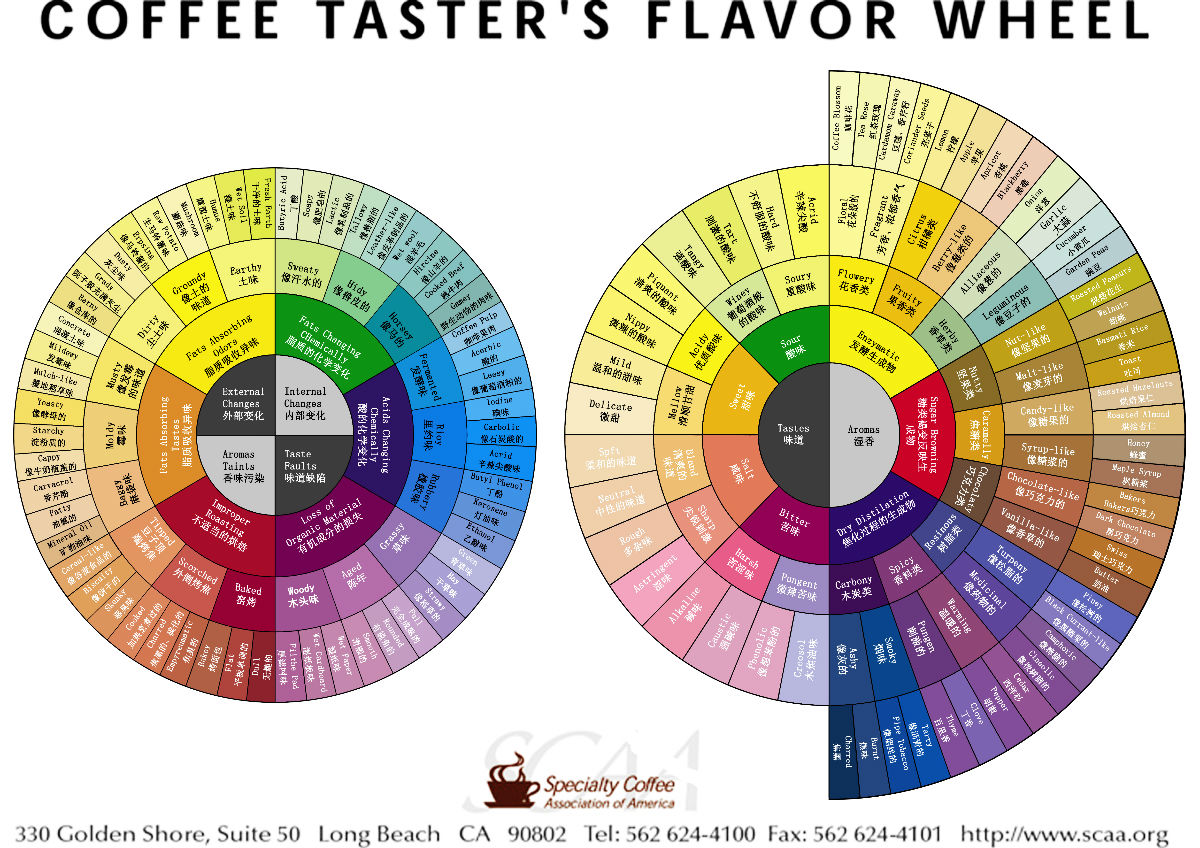
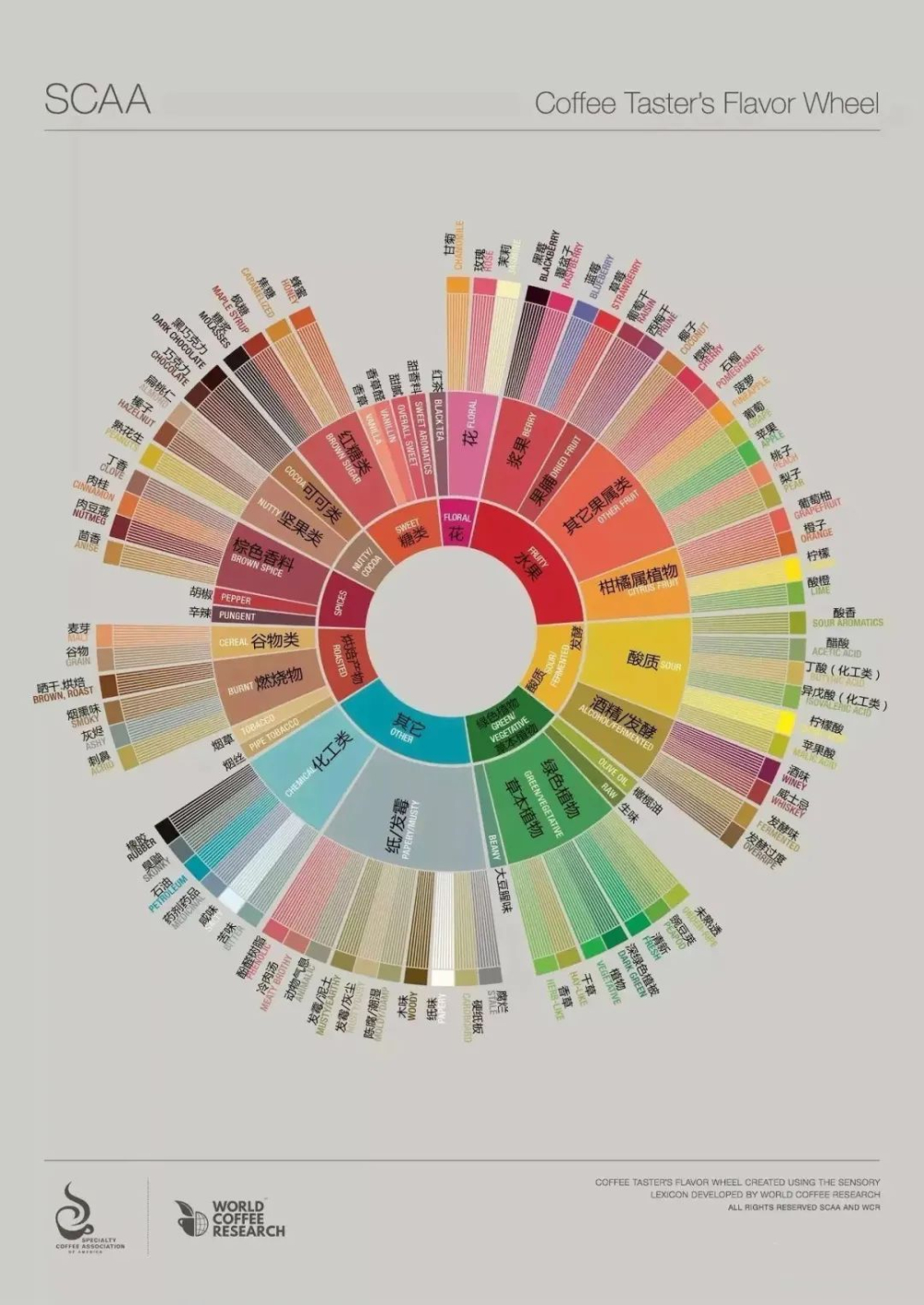
Set the two versions side by side and the difference is immediately visible: the 2016 chart describes flavor in far greater detail. So what actually separates them?
The Birth of the Coffee Flavor Wheel
Flavor is a personal thing, and before 1995 there was no shared language for it. Descriptions contradicted one another, and a taster who suddenly could not name what a particular note reminded them of would fall into a long, puzzled silence.

To solve that problem, Ted Lingle, who served as SCAA Director at the time, published the first version of the coffee flavor wheel in 1995. It gave everyone a common reference for basic coffee flavors and a way to judge whether a given note was a virtue or a flaw.
How to Read the Old Coffee Flavor Wheel
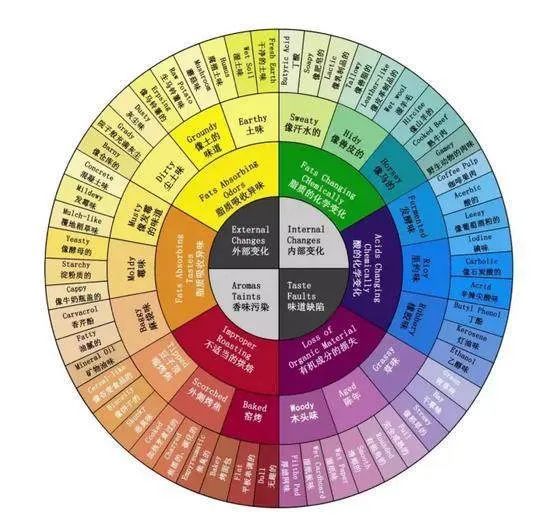
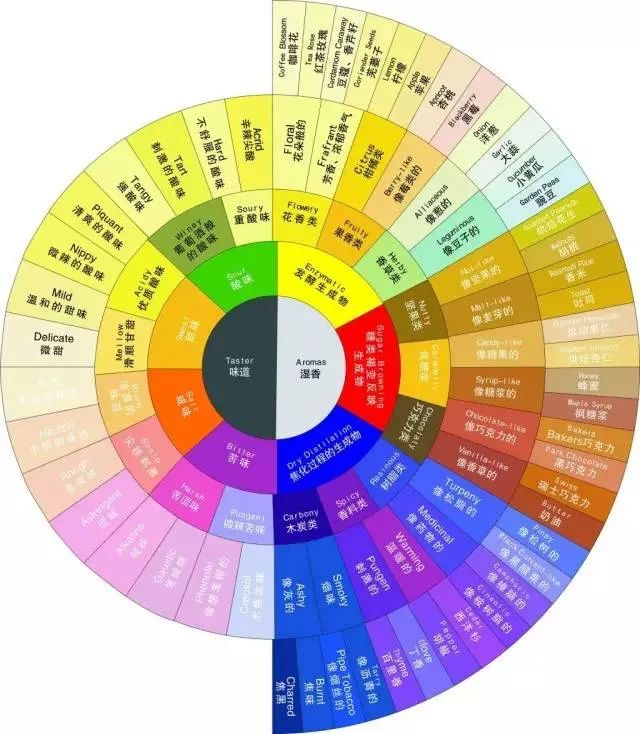
The old wheel is divided into two parts. The left side is the negative flavor wheel, commonly known as the defect wheel, which explains the off-flavors caused by external contamination, internal contamination, aroma contamination and taste defects. It helps you work out which step went wrong once a coffee starts showing defective flavors.
The right side is the positive flavor wheel, split into taste and aroma. Read from top to bottom and the flavors are arranged from light to heavy. Three stages shape coffee flavor: enzymatic reactions during cultivation and green bean processing, caramelization after first crack, and dry distillation after second crack. The old wheel therefore shows directly how flavor behaves as roast degree moves from light to dark and extraction moves from low to high.
Why Study the New Coffee Flavor Wheel?
After looking at the old wheel and then the new one, the newer chart feels denser and more dazzling. Careful readers will also notice that in the new wheel the gaps between flavors vary in size. Why is that?
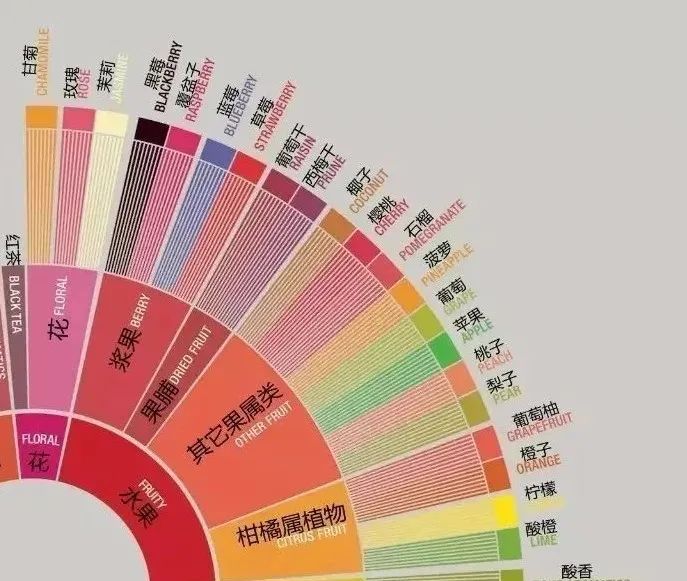
The new wheel resolves something the old one could not express on a single chart: the relationship between aroma and taste, and the link between defect flavors and positive ones. To build it, the SCAA first worked with World Coffee Research (WCR), Kansas State University, German Agricultural University and representatives of the coffee industry to analyze and test the flavors of 105 different samples from 13 coffee-producing countries, compiling the World Coffee Research Sensory Lexicon as the foundation for the new chart.
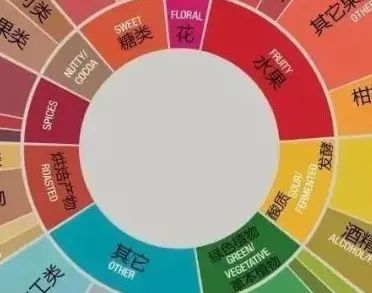
Next, 29 participants with no sensory training but long experience drinking coffee, along with 43 coffee industry experts, were invited to take part in cognitive tests about how flavors relate to one another. In the end, coffee flavors were sorted into 9 major categories: floral, fruity, acid/fermented, green/herbal, other, roasted, spices, nuts/cocoa and sweet. The "other" category and the floral notes sit at opposite poles, while sweet, fruity and floral notes were judged closest by most people.
How to Read the New Coffee Flavor Wheel
The new wheel lets us understand the relationship between aroma and taste, and the connection between defect and positive flavors, far more intuitively, and it points more precisely toward both taste and aroma. When you cup a coffee, work outward: first look at the inner circle to fix the major flavor category, then move out to the flavor classification, and finally reach the outer layer for the specific flavor.

As mentioned above, the gaps between flavors on the new wheel vary in size, and that size indicates how similar two flavors are to the senses. The smaller the gap, the closer the two flavors; the larger the gap, the more obvious the difference between them.
FrontStreet Coffee Recommendation
Reading a flavor wheel is one thing; finding the beans that sit in the corners you enjoy is another. For the floral and citrus sectors of the chart, FrontStreet Coffee's washed Gedeb Cooperative is a classic Yirgacheffe representative, carrying jasmine fragrance, lemon acidity and berry notes. Head toward the tropical and fermented end instead and FrontStreet Coffee's Sun-Dried Huakui, a traditional natural process from Sidamo, delivers berry, floral, jackfruit, melon and honey.
If the nut and cocoa sectors are where you linger, Brazil is the natural stop. FrontStreet Coffee's Cerrado Red Bourbon comes from the country's well-known Cerrado region and shows cream, peanut and cocoa with a soft, gentle fruit acidity and fine sweetness. Toward the sweet and fruity end, FrontStreet Coffee's Costa Rica Blackberry is black-honey processed and lands on grape, berry and ripe blackberry, while FrontStreet Coffee's Mozart brings raisin and blueberry sweetness with osmanthus and rose.
These beans are all easy to work with whatever your setup. The Blackberry and the Mozart hold their sweetness through pour-over, cold brew, americano and latte, and the Cerrado Red Bourbon is a forgiving everyday pour-over. If you want to sit down with the wheel and taste deliberately, brew the Gedeb Cooperative or the Sun-Dried Huakui as a black pour-over and drink it slowly across a range of temperatures: the florals show first, and the fruit sweetness builds as the cup cools.
Important Notice :
FrontStreet Coffee is a long-established specialty coffee roaster in Guangzhou China, selling freshly roasted beans from its own farm in Yunnan as well as dozens of carefully selected single-origin beans from around the world for both pour-over and espresso. The products deliver consistently excellent quality and great value, with shipping within 24 hours. Guangzhou's FrontStreet Coffee shop is recommended by many coffee lovers, and the beans are now available online at the Tmall 。
FrontStreet Coffee has moved to a new address:
FrontStreet Coffee Address: 315,Donghua East Road,GuangZhou
Tel:020 38364473
 Scan and follow the En Gafei WeChat official account. Please indicate that the reprint comes from "En Gafei".