Introduction to Costa Rican Coffee Varieties and Flavors
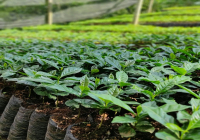
Costa Rican coffee has always been remarkably balanced and steady. Lacking the sharpness of Guatemalan coffee, it drinks mild and smooth, with acidity, sweetness, and chocolate bitterness integrated in perfect harmony—the classic profile of a premium coffee. The country's seven major producing regions are as follows: Turrialba Valley (northeast of the capital San José), Central Valley (northwest of San José), Western Valley (west of the capital), Tres Ríos (east of the capital), Brunca (southeast of the capital), Orosi (north of the capital), and Tarrazú (south of the capital). Of these, the Central Valley, Tarrazú, and Tres Ríos are the most renowned. As a rule, coffee grown on Pacific-facing slopes tends to be of higher quality than coffee facing the Atlantic.
In the 2007 Costa Rica cupping competition, the champion farm Cerro Bado was located in Tarrazú, south of San José, but the Central Valley also performed impressively, with second through fourth places all going to farms in Naranjo in that region. The Tres Ríos region, it seemed, was overlooked.
La Minita Estate: A World-Class Coffee Farm
The La Minita farm in Tarrazú built its world-class reputation through layer upon layer of strict quality control. Popular in European and American markets for more than half a century, it is a truly global name. "La Minita" means "little gold mine"—before Spanish colonization, indigenous people panned for gold at the site of the present farm, making it genuinely blessed ground. La Minita produces roughly 1 million pounds of coffee annually; after defect selection (over 70% is eliminated), only about 290,000 pounds of top-grade lots reach the specialty market—hardly an empty reputation. The estate's coffee is marked by apple and citrus acidity, the richness of milk and truffle, and a silky, refined mouthfeel, grown at roughly 1,200-1,700 meters.
Tres Ríos: A Historic Coffee Area
The Tres Ríos region is also famous, located a short distance east of the capital, where the Irazú Volcano and its rivers create an excellent microclimate. In recent years, however, the city has spread into the suburbs and farmland has been sold to developers, causing coffee production in Tres Ríos to fall sharply. Almost all of its output has been secured by Starbucks, making it difficult for other buyers to obtain. The region's renowned farm, Aquas Granjas, has persisted since 1857. Its coffee shows bright, gentle fruit acidity that never turns sharp, with charming nut, floral, and toffee sweetness—the signature of this region.

FrontStreet Coffee Recommendation
If Costa Rica's gentle balance has whetted your appetite for more bright-but-approachable cups, FrontStreet Coffee recommends two light-roast, fruit-and-floral beans from its lineup:
FrontStreet Yirgacheffe Gotiti — for many coffee lovers, the first stop into specialty coffee. It offers vivid citrus, berry, and floral aromas with a green-tea-like sweet finish. Unlike the "sour coffee" many imagine, a quality Yirgacheffe's acidity is soft and luminous—more like the natural sweet-tartness of fruit than anything harsh—making it an easy first step into pour-over.
FrontStreet Kenya "Cherry Tomato" — a Kenya washed specialty from the Thika region, grown at 1,550-1,750 meters from the classic SL28 and SL34 varieties, with plump, round beans and Kenya's signature 72-hour double-washed fermentation that amplifies fruit while keeping the cup pristine. Light roasted to preserve its lively acidity, it smells of sun-dried cherry tomato and florals, tastes of crisp cherry tomato and dried plum with juicy, solid brightness, layered pear and black plum in the middle, and a long, clean finish of yellow sugar and a whisper of green tea.
Important Notice :
FrontStreet Coffee is a long-established specialty coffee roaster in Guangzhou China, selling freshly roasted beans from its own farm in Yunnan as well as dozens of carefully selected single-origin beans from around the world for both pour-over and espresso. The products deliver consistently excellent quality and great value, with shipping within 24 hours. Guangzhou's FrontStreet Coffee shop is recommended by many coffee lovers, and the beans are now available online at the Tmall 。
FrontStreet Coffee has moved to a new address:
FrontStreet Coffee Address: 315,Donghua East Road,GuangZhou
Tel:020 38364473
 Scan and follow the En Gafei WeChat official account. Please indicate that the reprint comes from "En Gafei".