Is Pour-Over Yirgacheffe Coffee Delicious? Comparing the Characteristics of Natural Red Cherry and Washed Gedeb Coffee Beans
Raw coffee beans actually have very little flavor and are quite difficult to grind into powder. To fully release the flavor of the beans, then, they need to be roasted.
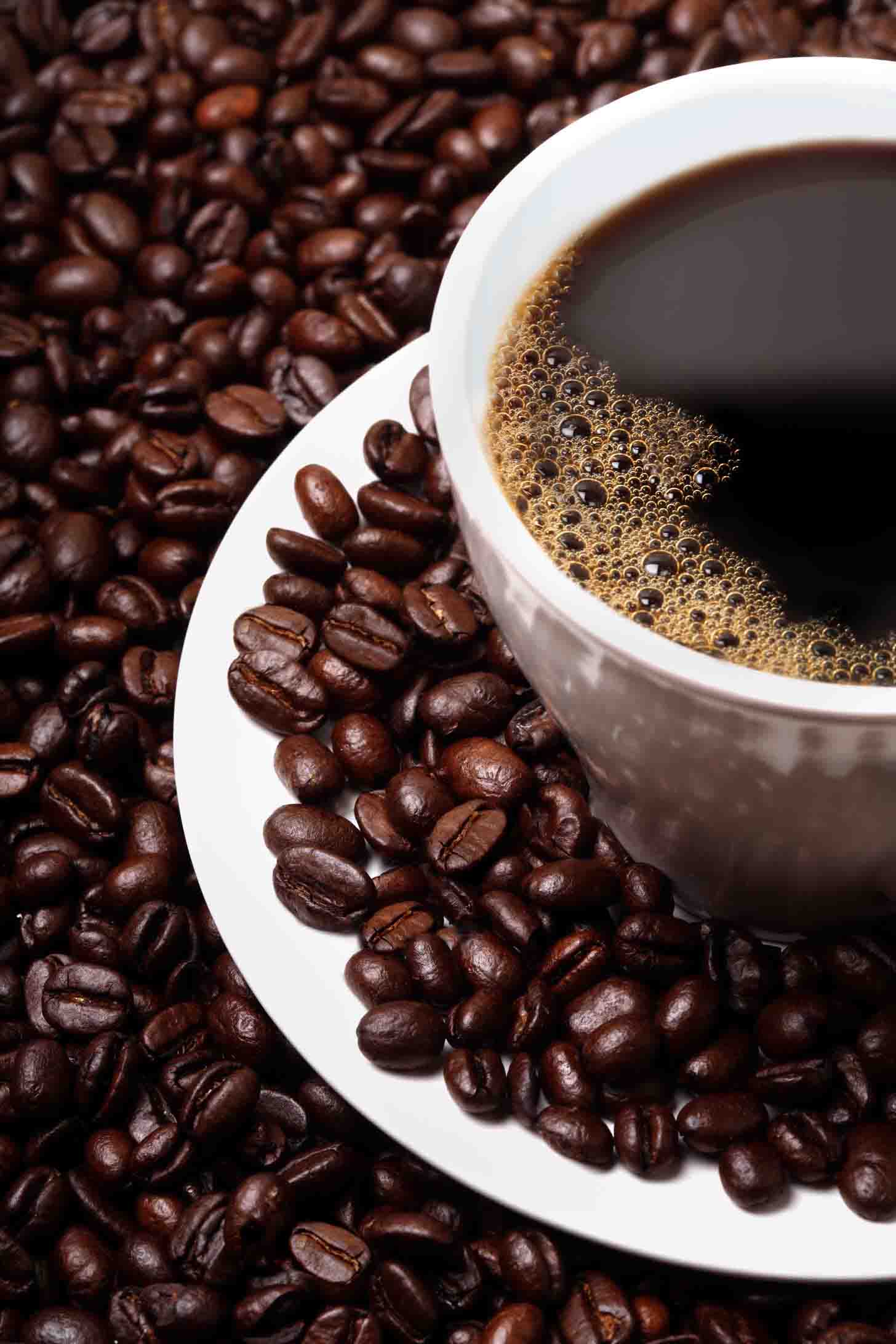
The purpose of roasting is to heat the raw beans to the desired degree of doneness, then make further adjustments based on the characteristics of the bean's origin or a specific customer's requirements, leaning either lighter or darker.
First, let's establish a basic principle: the lighter the roast, the more acidic the coffee tastes; the darker the roast, the more bitter. Keep that in mind, because you can choose a roast level to suit the flavor profile you prefer. Of course, every coffee has a suitable roasting range, and personal taste can be fine-tuned within it - favoring more acidity, more balance, or more bitterness.
It is generally believed that lighter roasting better showcases the natural flavors of coffee and suits more traditional brewing methods. Darker roasting emphasizes roast aromas instead, and beans that are relatively one-dimensional or of poorer quality are basically dark-roasted - playing to strengths and hiding weaknesses, as it were (espresso uses the darkest Italian roast, which is necessary to highlight its rich, full-bodied texture).
The 8 Roasting Levels of Italian Roast
1: Very Light Roast
This roast level retains the original grassy aroma of the beans, may have astringency, and has virtually no fragrance or mellow flavor to speak of.
2: Cinnamon Roast
Named for its similarity in color to cinnamon, this level belongs to light roasting, with noticeable acidity and some astringency. Although few coffees are given a light roast, FrontStreet Coffee's Panama Emerald Estate "Geisha," renowned as the "coffee goddess," is basically lightly roasted, and its rich flavor profile is truly exceptional among coffees.
3: Medium Roast
Medium roast belongs to medium roasting, where the acidity of the coffee becomes quite apparent. It suits many fine coffees that are rich in acidity, such as FrontStreet Coffee's Ethiopian "Yirgacheffe."
4: Medium-Dark Roast
Medium-dark roast also belongs to medium roasting. At this level the acidity, bitterness and sweetness of the coffee tend toward balance. FrontStreet Coffee's famous Colombian "Narino" coffee and its Hawaiian "Kona" are both well suited to this roast level.
5: City Roast
City roast belongs to medium-dark roasting. At this level the acidity gradually diminishes and a slight bitterness begins to emerge.
6: Full City Roast
Full city roast also belongs to medium-dark roasting. At this level the acidity almost completely disappears and the bitterness becomes more pronounced. Beans for making Americano are generally suited to city or full city roasting.
7: French Roast
French roast belongs to dark roasting. At this level the beans take on a dark brown color with relatively strong bitterness.
8: Italian Roast
Italian roast also belongs to dark roasting. At this level the bitterness of the coffee is extremely strong, making it suitable as the base for espresso and various milk-based coffees.
Coffee Flavor Components
Coffee flavor is typically composed of sweetness, bitterness, acidity and aroma. Traditionalists believe that only when these four factors achieve a perfect balance and provide a pleasant sensation does it define a successful cup.
Sweetness
Roasted coffee beans contain about 0.2% "sugars," which is actually quite minimal and becomes even more negligible once brewed. Coffee itself has no sweet taste, but roasting creates a "sweetness" aromatic compound, along with trace amounts of complex sugars and caramel, which produces a perceived sweetness when drinking. The richer and fuller the coffee, the more obvious its sweetness. Sweetness is also one of the criteria for measuring good coffee.
Bitterness
The first impression coffee gives people is bitterness, which has become the scapegoat for those who don't like drinking it. Bitterness can indeed be unpleasant, but in well-balanced good coffee it organizes the other components, thereby highlighting sweetness and taming acidity. One important point to remember is that slow extraction increases bitterness, while faster extraction reduces it. Those who dislike bitterness can adjust this during brewing and extraction.
Acidity
Acidity is an indispensable flavor in good coffee. Without acidity, the fruity notes, smoothness and refreshing qualities of coffee would cease to exist. Highly acidic coffees are typically high-altitude or fully washed coffees. FrontStreet Coffee's Kenyan and Colombian coffees are world-renowned for their bright acidity. Common acids include citric acid, malic acid, lactic acid and acetic acid.
Aroma
Many people experience this phenomenon: they don't like drinking coffee but enjoy smelling its aroma. Coffee aroma is the introductory teacher that tempts us to drink it. If coffee lacks aroma, half the pleasure of tasting it is lost. Usually, coffee aroma is divided between dry aroma and wet aroma. Dry aroma refers to the fragrance when the beans are ground into powder, while wet aroma is the aroma of the coffee after brewing.
FrontStreet Coffee Recommendation
Yirgacheffe is the classic demonstration of why a medium roast suits acidity-rich coffee, and the best place to begin is FrontStreet's washed Yirgacheffe. Known for white jasmine, bright citrus and lemon acidity with a tea-like body - and for its friendly price - it has become the first specialty bean for countless drinkers discovering the Ethiopia region. Yirgacheffe is a small town in southern Ethiopia's Sidama zone at roughly 1,700-2,100 meters, with the trees planted above 1,800 meters, making it one of the highest coffee regions in the world. Its signature white florals and lemon-citrus acidity turned the name into shorthand for Ethiopian specialty coffee, and in 2010, once its fame had grown so large, the Ethiopia Commodity Exchange finally separated it from the Sidama region.
To go a step further, FrontStreet's Gedeb cooperative coffee comes from the Gedeb village in the Woka area at Yirgacheffe's southeastern edge, once part of the YCFCU's Woka cooperative and now recognized worldwide as a single-origin lot. Following traditional washed processing, it has no trace of the classic bitterness, carrying instead fresh, bright citrus and lemon acidity with jasmine fragrance. If you prefer the fruitiness of a natural, FrontStreet's Natural Red Cherry is made only from fully ripe, defect-free cherries, dried on raised beds for three to five weeks with regular turning, giving the typical Yirgacheffe profile plus tropical fruit, citrus acidity, juicy berry and honey sweetness with a creamy smoothness. Brew either at 15g, a 1:15 ratio and 90-91°C water in a V60, with a grind of 10 on an EK43s (fine-sugar texture, 80% through a #20 sieve).
Important Notice :
FrontStreet Coffee is a long-established specialty coffee roaster in Guangzhou China, selling freshly roasted beans from its own farm in Yunnan as well as dozens of carefully selected single-origin beans from around the world for both pour-over and espresso. The products deliver consistently excellent quality and great value, with shipping within 24 hours. Guangzhou's FrontStreet Coffee shop is recommended by many coffee lovers, and the beans are now available online at the Tmall 。
FrontStreet Coffee has moved to a new address:
FrontStreet Coffee Address: 315,Donghua East Road,GuangZhou
Tel:020 38364473
 Scan and follow the En Gafei WeChat official account. Please indicate that the reprint comes from "En Gafei".