How to Use a Siphon Coffee Brewer for Jamaica Blue Mountain Coffee

Let us start with a short history of the siphon pot. It originated in Europe and appeared 70 years earlier than pour-over coffee. Between 1830-1840, Loeff of Berlin, Germany, first invented the glass, dual-chamber siphon extraction method and patented it. After continuous improvement in France, Britain, Germany, and elsewhere, it reached Denmark and Japan in the mid-20th century, began to reach the mass market, and peaked in popularity in the 1950s.
Blue Mountain is the most popular specialty coffee of the new millennium and a name everyone recognizes. So what does it taste like when brewed in a siphon pot, that most theatrical of setups, using FrontStreet Coffee's Blue Mountain No. 1 beans?

What is Blue Mountain Coffee?
Blue Mountain beans are a type of single-origin coffee. They are called Blue Mountain because they are produced in the Blue Mountain region of Jamaica. Jamaica's Blue Mountains are surrounded by the Caribbean Sea, and on clear days, when sunlight strikes the azure ocean and the brilliant blue light reflects onto the range, the name makes perfect sense.
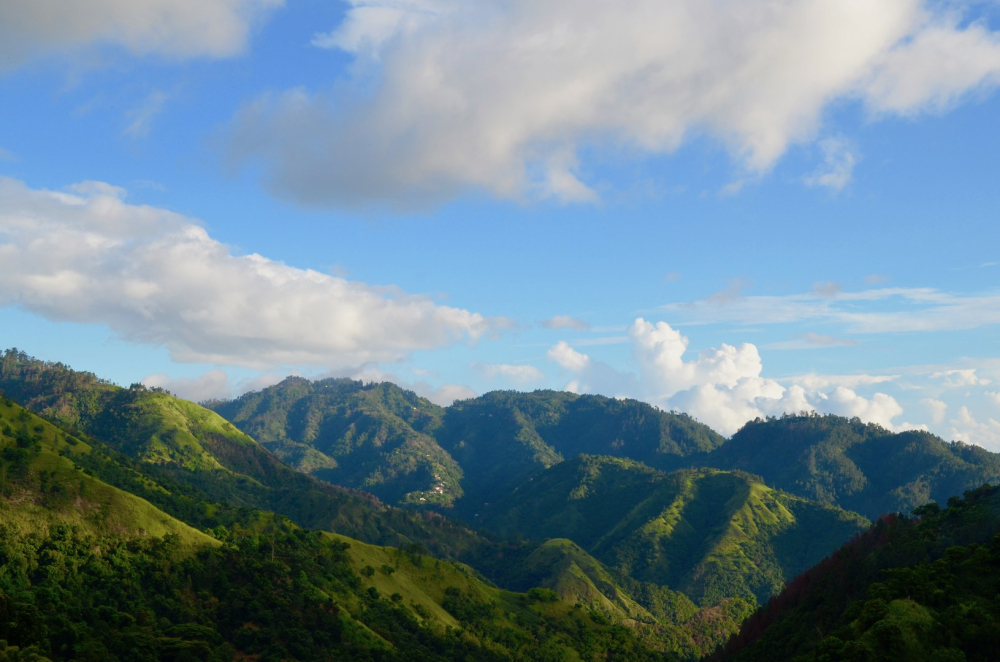
Not all coffee grown in the Blue Mountain region may be called Blue Mountain coffee. The beans are classified by planting altitude into Jamaica Blue Mountain Coffee, Jamaica High Mountain Coffee, and Jamaica Prime Coffee, and further divided into No. 1, No. 2, No. 3, and PB grades by green bean size and quality.
Jamaica Blue Mountain No. 1 refers to beans grown at altitudes between 1,000 to 1,700 meters, with green bean sizes of 17/18 mesh and a defective bean ratio no higher than 2%, which makes it the highest grade. The superior quality of No. 1 is reflected in the price as much as the cup.
Authentic Blue Mountain is expensive. This world-class bean grows in fertile volcanic soil at a suitable ambient temperature and offers rich nutty flavors with a balanced, full body. Blue Mountain is generally brewed as pour-over. Many drinkers worry they cannot produce a cup with balanced acidity, bitterness, and body, and come to FrontStreet Coffee's stores for help from the baristas.
Siphon Principle
The lower chamber of a siphon pot, sometimes called the capacity pot, is spherical, marked with water level measurements for several cups, and holds the coffee liquid. The upper chamber is cylindrical and is where extraction happens. The whole thing relies on the siphon effect in physics.

When the water in the lower chamber is heated, it generates steam and pressure that pushes hot water up through the glass tube into the upper chamber, where it begins brewing the coffee grounds. When extraction is done, you turn off the heat and remove the source. The lower chamber is then in a semi-vacuum state and loses its upward pressure, so it draws the coffee liquid back down from the upper chamber. (To speed up the return, you can wipe the lower chamber with a damp cloth, which reduces the pressure difference between the two chambers.) The grounds are held back by the filter cloth in the upper chamber, and extraction is complete.

Stirring Method
Parameters: 1:10 coffee-to-water ratio, 20g of coffee, fine grind (EK43s grinder setting 9, No. 20 standard sieve pass rate 85%), water temperature 90°C.
Technique: Put 200g of water in the lower chamber. When it reaches 90°C, insert the upper chamber tightly. Once the water rises into the upper chamber, add the coffee grounds and stir to ensure full contact between grounds and water. After 30 seconds, stir once in a cross pattern back and forth to break the crust. At 56 seconds, remove the heat source to let the coffee liquid return (timing starts when the grounds are added). Extraction time is 1 minute 8 seconds.

Immersion Method
Now let us try an immersion method instead.
Parameters: 1:10 coffee-to-water ratio, 20g of coffee, medium-fine grind (EK43s grinder setting 9, No. 20 standard sieve pass rate 85%), water temperature 90°C.
Technique: Put 200g of water in the lower chamber. When it reaches 90°C, insert the upper chamber tightly. Once the water rises into the upper chamber, add the coffee grounds and stir to ensure full contact between grounds and water. After soaking for 1 minute, remove the heat source to let the coffee liquid return (timing starts when the grounds are added). Extraction time is 1 minute 32 seconds.

Siphon Pot Blue Mountain Coffee Flavor Profile
Chocolate, nuts, pine, cream, pu-erh tea, caramel.
The two methods differ in the cup. The stirring method extracts richer dark chocolate flavors with a full-bodied texture, and as the temperature drops there is a slight tea sensation. The immersion method brings out a more prominent caramel aroma, with nutty flavors at lower temperatures, and a slightly thinner but very sweet taste. One is fuller-bodied, the other more refreshing.

Taste is personal, of course, so choose the method that suits your own preference. One word from FrontStreet Coffee on siphon pots, though: a siphon extracts under continuous heating, and the water temperature should be kept as close to 86-94°C as possible. That gives a higher and more consistently stable extraction rate with fewer variables, and the resulting cup is more predictable. Even a beginner can brew a full-bodied, aromatic coffee this way. Remember to clean the filter cloth after each use and replace it after a while, or it will easily affect the taste.
FrontStreet Coffee Recommendation
FrontStreet Coffee keeps one benchmark Blue Mountain on its shelf for readers who want the genuine bean rather than a blend.
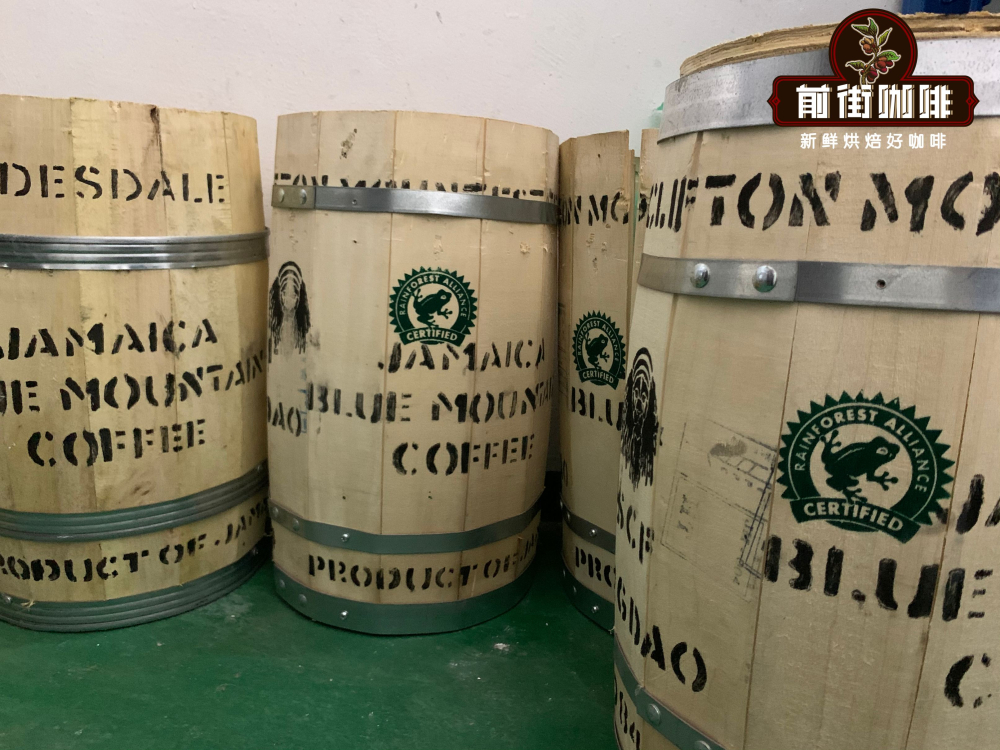
FrontStreet Jamaica Blue Mountain No. 1 - Sourced from certified Blue Mountain growing zones and from Clifton Estate, the range's largest and oldest working estate, at 1,310 meters. FrontStreet holds the full origin certification documents and the original shipping barrels, so the source can be traced clearly. Roasted medium-dark so the classic balance comes forward, it unfolds in layers of nuts, dark chocolate, cream, and caramel with a soft sweetness, and it stays clean and long on the finish. It works well as pour-over, in a moka pot, or pulled as espresso, and it handles the siphon's higher extraction beautifully.
Important Notice :
FrontStreet Coffee is a long-established specialty coffee roaster in Guangzhou China, selling freshly roasted beans from its own farm in Yunnan as well as dozens of carefully selected single-origin beans from around the world for both pour-over and espresso. The products deliver consistently excellent quality and great value, with shipping within 24 hours. Guangzhou's FrontStreet Coffee shop is recommended by many coffee lovers, and the beans are now available online at the Tmall 。
FrontStreet Coffee has moved to a new address:
FrontStreet Coffee Address: 315,Donghua East Road,GuangZhou
Tel:020 38364473
 Scan and follow the En Gafei WeChat official account. Please indicate that the reprint comes from "En Gafei".