Aceh Gold and the Science of Specialty Coffee - Exploring Mandheling Grades from Sumatra Island
Exploring Premium Indonesian Coffee: A Comprehensive Guide

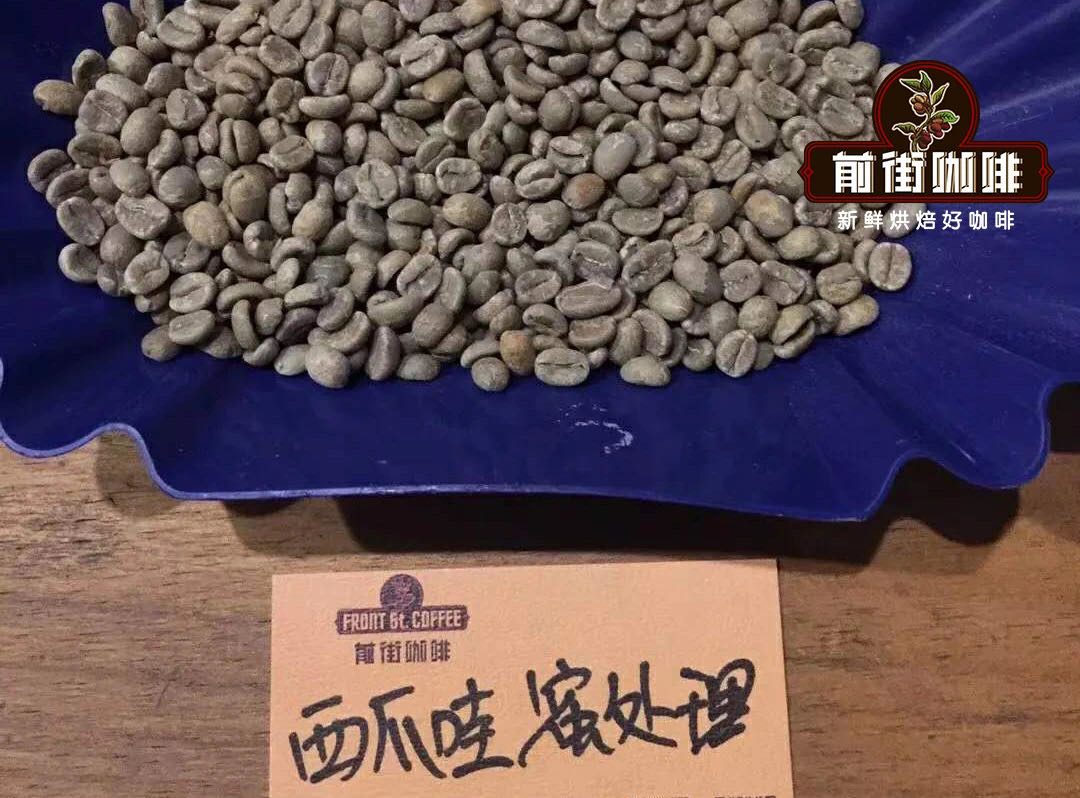
To dig deeper into specialty coffee, FrontStreet Coffee picked up Mr. Han Huaizong's book "Premium Coffee Studies," and the shop kindly sent along a sample bag of beans labeled "Sumatra Aceh Gold."
Some research revealed that Aceh Gold is exactly what it sounds like: high-quality coffee from the Aceh region at the northern tip of Sumatra. Traditional Sumatra coffee makes a first impression of intense, bold, herbal "heavy flavors." With that expectation, FrontStreet Coffee brewed the Aceh Gold - and was surprisingly impressed. There were none of the characteristic herbal and medicinal notes of Mandheling and none of the heavy smokiness. Instead the cup was remarkably clean, with rich creamy chocolate aromas and just a hint of delicate acidity - closer to a refined Latin American coffee than anything we expected from Sumatra.

By now you are probably curious about this mysterious Aceh region, so let FrontStreet Coffee walk you through this world-famous archipelago and what its coffee regions have to offer.
Indonesian Mandheling coffee is famous for its rich, mellow caramel and herbal flavors, a thick, substantial body, and a long sweet aftertaste - a premium coffee well worth tasting. Indonesia is Asia's major coffee-producing country, and Mandheling is its most famous export. The country's three main coffee islands produce noticeably different coffees; here is how they differ.

Indonesian Coffee Geography
Indonesia consists of over 17,000 islands scattered along the equatorial volcanic belt. Straddling the equator with a humid tropical rainforest climate, abundant rainfall, and fertile volcanic soil, the archipelago's best planting areas are Java, Sumatra, and Sulawesi.
Coffee Growing Regions:
Java Island (Jawa)
Java holds a pivotal place in coffee history. Unlike most Indonesian coffee grown on small family farms, Java coffee grows on large farms or plantations - mostly government-operated - using modern washed processing. The variety is S795, locally called Jember, and is cultivated deliberately rather than by smallholders.

Java produces refined, aromatic coffee with relatively low acidity, a delicate mouthfeel, and good balance. Java's aroma and acidity outperform what Sumatra and Sulawesi produce. Its best plantations include Blawan, Jambit, Kayumas, and Pankur, and Java Mocha is a blend of Java coffee with Yemen Mocha.
Sulawesi Island
Sulawesi was formerly called Celebes and is one of the oldest islands in the archipelago, with exposed rock formations millions of years old. Coffee areas sit on yellow-red podzolic soils, often with several layers of iron-rich clay beneath the surface. The most famous region is Toraja, in the highlands of South Sulawesi.

Kalosi, south of Toraja, is the region's main trading town. Two lesser-known areas are worth knowing: Mamasa to the west and Gowa south of Kalosi. Some particularly interesting washed-processed beans come out of these areas - highly recommended if you ever get the chance. Semi-washed processing dominates Sulawesi, and the island also grows plenty of Robusta. The name most often used to represent Sulawesi coffee is known for full viscosity, rich flavors, and acidity that is deep yet lively.
Most Arabica grows at high elevations around Tana Toraja, while Kalosi in the south has become a brand name in itself.
Kalosi: A market name for coffee from southwestern Sulawesi, named after the small central town of Kalosi, the main trading hub for Toraja beans.
Toraja: A growing area in the southeastern highlands of Sulawesi - and also the name of the island's premium beans. Toraja is not a place name, city name, or variety name, but refers to the Toraja people of the island's central mountains, who are skilled coffee growers. Toraja is also one of the world's rarest premium beans: annual production is only about 1,000 metric tons, spread across rugged slopes at roughly 1,200 meters elevation in central and southwestern Sulawesi. Cultivation and harvesting are difficult, with an average yield of just 300 kg per hectare - far below the 1,000+ kg average in Central and South America.

Toraja's three major plantations are "PT Kapal Api" with 2,000 hectares of coffee gardens, "CSR" in second place with 1,100 hectares, and Japan's "Key Coffee" with its "Toarco Jaya" plantation third at 700 hectares. In other words, Toraja is more precious and rarer than Mandheling or Golden Mandheling.
Toraja coffee is washed or semi-washed, giving it brighter acidity than Sumatra's Mandheling or Golden Mandheling and more distinct layering. It has rich caramel sweetness, less earthy/woody flavor and less body thickness than Mandheling, plus slight floral notes.
Sumatra Province
Sumatra's best coffee comes from two places: the Central Aceh region near Lake Tawar in the north, and further south, the mountains around Lake Toba. Thanks to many small tenant farmers, their unique semi-washed processing, and iron-deficient soils, beans from this region display a distinctive blue tint in their fresh green stage.

Mandheling: Semi-dried or sun-dried beans from the Lintong mountain area at 900-1,200 meters on the southwestern shore of Lake Toba in north-central Sumatra. The Batak people form the backbone of coffee farming here, and the beans were once praised as the world's fullest. Mandheling is a trademark for Arabica coffee from North Sumatra, named after the Mandailing people of the Tapanuli region in northwestern Sumatra, and carries unique herbal and woody-incense flavors.
Lintong Region: Lintong Mandheling, grown at 1,200-1,500 meters, is the most famous coffee of the Lake Toba region in North Sumatra. And a correction worth making: Golden Mandheling is not simply Mandheling that happens to look golden.
Golden Mandheling is produced in the Lintong region of northern Sumatra, Indonesia. Harvesting is limited to fully manual, single-berry picking of fully ripe fruit to guarantee initial selection quality. The cherries undergo SEMI-WASHED processing and natural sun drying, and after hulling they pass through another drying refinement, two green bean cleaning operations, and four rounds of Hand-Pick manual selection. It is, in short, a strictly selected top-grade Mandheling. Golden Mandheling marked "PWN" is the abbreviation of Indonesia's Pawani Company, whose Golden Mandheling production is registered in Indonesia.

Lake Toba, in central North Sumatra Province. Dutch colonists moved "Java Mandheling" north to the Lake Toba region in 1888, and Lintong together with the Lake Toba area can properly be called Mandheling country - Lintong is truly the Mandheling producing region. Lake Toba lies north of Medan, the capital of Sumatra, and is a high-altitude freshwater lake, diamond-shaped, 100 kilometers long and 30 kilometers wide, covering 1,130 square kilometers at an average elevation of about 900 meters - and it is the world's largest volcanic lake. The Mandheling most people mean refers to Typica or its variants grown in the mountains surrounding this lake.
Lake Tawar, in central Aceh Special Autonomous Region at the northern tip of Sumatra. Most coffee from this area is Gayo, mainly of the Ateng variety, and can be called Aceh coffee or Lake Tawar coffee. Its area is less than one-tenth of Lake Toba's, yet in recent years both quality and production have surpassed Lake Toba.
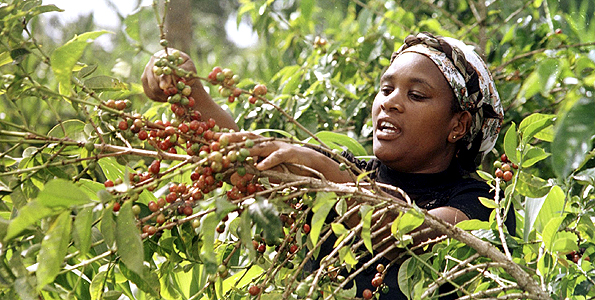
Gayo Mountains, Aceh
Aceh sits at 1,110-1,300 meters in the northernmost corner of Sumatra. Gayo coffee grows on the slopes surrounding the town of Takegon and Lake Tawar, tended by small tenant farmers under shade trees. Wet-processed Gayo is cleaner but usually lacks classic Sumatra character; traditionally processed coffee resembles Mandheling, with unique flavors and a viscosity that is deep yet lively.
Aceh has suffered long-term political instability, so few outsiders visit. The Gayo people are famously determined, hardworking, and resilient, and nearly 20% of the region's coffee processors are women.

FLORES
Flores is a small island about 320 kilometers (200 miles) east of Bali, one of the archipelago's islands, with coffee grown at 1,200-1,700 meters. A relative latecomer to the coffee industry, it has nonetheless built a solid reputation for cultivation.
In the past much of Flores' coffee was consumed domestically or blended into other exports, rarely sold as "Flores coffee" directly. The island has active and dormant volcanoes, and the soils around the Bajawa volcano have significantly enriched the main growing areas. Semi-washed processing is the most common method here, though some fully washed coffee is also produced. The harvest runs May to September.
Timor Island
Timor is divided into East Timor and West Timor. Since the early 20th century - and for the past 25 years especially - East Timor has not used chemical agents or fertilizers, making it possibly the world's largest organic coffee producer. Political instability, however, makes exports difficult, so most beans currently available come from West Timor.

Bali Island
Although Bali's coffee is Indonesian coffee, its farmers felt Indonesian coffee's inconsistent quality did not match their own, so they established "Bali Coffee" as a distinct identity. Bali produces Arabica as well as abundant Robusta. According to available sources, "Bali Golden Coffee" is created by grafting Arabica roots with Robusta branches and leaves - the [Catimor] variety, as it is commonly known.
Coffee arrived on Bali relatively late, initially in the Kintamani highlands at 1,000-1,500 meters. Production was devastated when Mount Agung erupted in 1963, killing over 20,000 people and wrecking eastern Bali. In the late 1970s and early 1980s the government distributed Arabica seedlings to revive coffee, though with limited effect - about 80% of the island's current production is Robusta. Tourism provides the island's largest income, but agriculture employs the most people, and Japan has historically been the largest buyer. Harvest runs May to October.

Civet Coffee (Luwak): Bali's civet coffee is famous not for its origin but for its unusual processing. A mammal called the civet eats ripe coffee cherries, digesting only the fruit flesh while the extremely hard beans pass through and are excreted. After manual selection, cleaning, sun drying, deodorizing, screening, processing, roasting, and several more steps, it becomes "cat poop coffee." Extremely limited production and its rarity make it one of the world's rarest - and most expensive - coffees.
Today some companies simply farm "Kopi Luwak": wild civets are captured and kept in cages for three years, force-fed coffee cherries and made to excrete beans constantly. Many suffer malnutrition, psychological trauma, and zoochosis, unable to adapt back to nature and dying as a result.

Varieties
Indonesia has over 20 Arabica varieties circulating commercially, including Caturra, Catimor, Timor, Typica, Robusta, Liberica, Ekselsa, and Sidikalong. The most famous is Typica, the original cultivated variety introduced by the Dutch. When leaf rust swept Indonesian coffee in the late 1880s, many Typica plantings disappeared - but in Sumatra, Sulawesi, and Flores, especially in high-altitude and remote areas, Typica from Bergandal and Sidikalang can still be found.
Another variety is Long Berry Mandheling, also called TimTim - a bean native to Indonesia. Because of its elongated shape, many call it the "horse face bean" or long-strip Mandheling. Tim Tim is not a pure variety but a natural hybrid of Arabica and Robusta, discovered on Timor Island in the 1940s and cultivated for its natural disease resistance. In the Americas it is called Hybrido de Timor, abbreviated Tim Tim; in Indonesia it is also called Bor Bor.

After size screening, some producers store coffee for one to three years before sale. This mellowing gives the coffee a very mild, warm character with woody and cinnamon notes; the fresh beans gradually shift from deep yellow to brown.
Processing Methods
Three main methods are used: natural dry processing, semi-washed, and fully washed. Because the climate is humid with frequent rain, [Wet Hulling] (giling basah) is widely used to speed up drying:
Most farmers harvest only fully red cherries. Cherries collected in the morning are depulped that afternoon, and Sumatra's pristine environment means most of the water used is mountain spring water.

- Remove the cherry skin, then place the parchment beans into water-filled barrels or tanks and skim off the defective parchment that floats.
- Clean the dense parchment beans that sink, and set them in barrels or plastic bags for a brief dry fermentation - letting the pectin sugars on the seed coat ferment and deepen flavor. Longer fermentation means heavier acidity; the time is up to the producer, generally just a few hours, though some estates skip dry fermentation entirely and sun-dry the parchment directly to cut acidity and boost viscous mouthfeel. Where used, fermentation usually runs 12-36 hours depending on conditions.
- Sun-dry the parchment for one to two days until moisture reaches 30%-50% and the beans are semi-hard, semi-soft, then run them through a hulling machine to strip the parchment and continue drying. About two more days brings moisture to 12%-13%, at which point the beans go into woven bags - usually 40kg or 80kg per bag - and are sent to processing plants. The whole sequence takes about four days.
The risks of wet hulling: beans are prone to splitting open like sheep hooves, and the odds of mold, fungi, and yeast contamination rise sharply.

Green Bean Grading
Defective beans are a major destroyer of final flavor, so the last step in green processing must remove them. Indonesian grading is based primarily on the proportion of defective beans, supplemented by screen size. As specialty coffee has risen, producing countries increasingly judge quality by defect control, and Indonesia has adopted defect-proportion grading across 6 grades, G1 through G6.
Grading by defect count (based on a 300g sample):
- G1 Grade 1: total defects less than 11
- G2 Grade 2: total defects greater than 12, less than 25
- G3 Grade 3: total defects greater than 26, less than 44
- G4a Grade 4a: total defects greater than 45, less than 60
- G4b Grade 4b: total defects greater than 61, less than 80
- G5 Grade 5: total defects greater than 81, less than 150
- G6 Grade 6: total defects greater than 151, less than 225
Common abbreviations on Indonesian green bean exports:
Processing: WP = WetProcessed (Wet Hulling); DP = DryProcessed (Natural/Dry); AP = AfterPolished (polishing to remove silver skin)
Aged Mandheling

Aged Mandheling comes from extended storage, usually 2-3 years. The changes include reduced acidity, color shifts, and thicker beans. Storage must be cool and ventilated, under strictly controlled conditions with regular uniform turning and humidity/ventilation adjustments to prevent insects or mold.
Flavor: Time mellows out some of Mandheling's wildness while adding thickness and delicacy. After aging, acidity is weaker but body and density are higher, giving a mature, steady feeling completely unlike the lively brightness of new-crop beans. The acidity turns gentle, the mouthfeel round and easy to drink - much like aged Pu-erh tea - with a pleasant pine aroma, herbal and cocoa notes, and a persistent caramel-like sweet aftertaste.
Tiger Mandheling
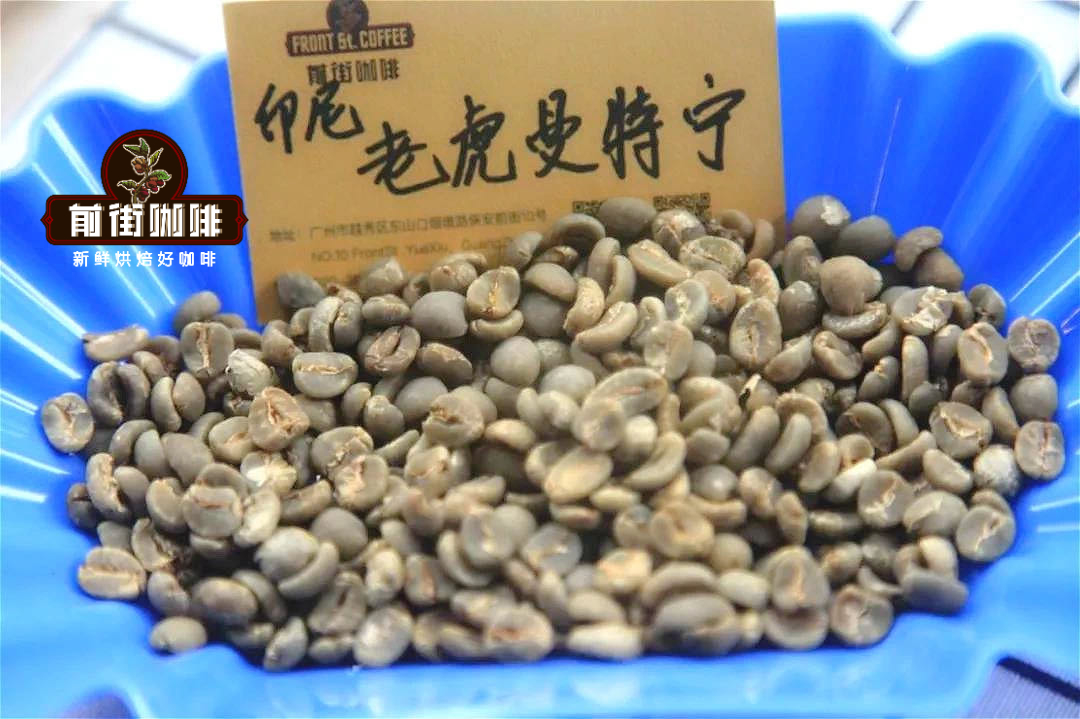
- Region: Aceh
- Varieties: Caturra, Typica, Sidikalong
- Soil: Volcanic soil
- Elevation: 1500m
- Processing: Wet Hulling
- Flavor: Balanced mouthfeel with high cleanliness; distinct cream, dark chocolate, and nut flavors.
West Java Coffee
- Region: Mount Tigulaja, Indonesia
- Elevation: 1400-1600 meters
- Roast Level: Light
- Processing: Honey Process
- Flavor: Strong fruit aroma - tropical fruits, plum, and jackfruit - with a clean, sweet aftertaste.
FrontStreet Coffee Recommendation
Among all of Sumatra's coffees, Golden Mandheling is the one that satisfies detail-obsessed coffee drinkers. FrontStreet's Golden Mandheling comes from Indonesia's PWN company, which holds it to exceptionally strict standards: only beans above screen size 18 are used, and every 300g sample of green coffee must contain fewer than 3 defects to meet the top G1 grade - followed by three rounds of hand sorting to remove every flawed bean. That rigor lifts both cleanliness and sweetness to the top of the Mandheling class, and limits supply: genuine PWN Golden Mandheling goes mainly to the Japanese and American markets, so very little reaches other buyers. FrontStreet's listings show the PWN certificates and the signature PWN-stamped bags, which is how you can tell it apart from impostors.
For the classic wild Mandheling experience, choose FrontStreet's Lintong Mandheling from the traditional region around Lake Toba. Wet-hulled processing plus local microbial fermentation create its mysterious signature: dense aroma, thick body, clove and woody notes, low acidity with spice and mint hints, and a strong, persistent, thick sweetness at medium-dark roast.
Brewing suggestion for PWN Golden Mandheling: 87-88°C water, 15g of coffee at 1:15, grind like coarse granulated sugar, three-pour method. Pour 30ml to wet the grounds and degas; 100ml to lift the bed and wash out the golden crema; then a soft final pour of 95ml at the center to build sweetness - yielding a full, viscous body with caramel sweetness, chocolate, and nuts. For espresso, FrontStreet's Classic Blend adds medium-dark Mandheling to Brazilian cream-and-nut base notes plus a touch of Robusta for crema: butter, roasted chestnut, and caramel, with sandalwood, herbal, and spice undertones - superb for lattes and Dirty drinks alike.
Important Notice :
FrontStreet Coffee is a long-established specialty coffee roaster in Guangzhou China, selling freshly roasted beans from its own farm in Yunnan as well as dozens of carefully selected single-origin beans from around the world for both pour-over and espresso. The products deliver consistently excellent quality and great value, with shipping within 24 hours. Guangzhou's FrontStreet Coffee shop is recommended by many coffee lovers, and the beans are now available online at the Tmall 。
FrontStreet Coffee has moved to a new address:
FrontStreet Coffee Address: 315,Donghua East Road,GuangZhou
Tel:020 38364473
 Scan and follow the En Gafei WeChat official account. Please indicate that the reprint comes from "En Gafei".