How to Make Various Types of Sun-Dried Ethiopian Yirgacheffe Coffee: Pour-Over Brewing Methods
Pour-Over Coffee Brewing Tips
Key point: while some friends suggest buying pre-ground coffee, I personally recommend that people in large and medium-sized cities buy relatively fresh coffee beans and grind them themselves if conditions allow. To make a delicious cup, the most fundamental requirement is fresh, high-quality coffee beans.
A good hand grinder ensures a uniform coffee particle size. If the grounds are uneven, the resulting coffee will not taste "pure." Because of different surface areas, hot water extracts significantly less flavor from coarse particles than from fine ones in the same amount of time. When the extraction time perfectly draws the "good flavors" from the coarse particles, the fine particles will already have been over-extracted, producing some undesirable tastes. Pour-over single-origin coffee is primarily about appreciating the original flavor of coffee and amplifying certain characteristics for detailed savoring. You should therefore aim for even extraction rather than a mixture of various flavors.
Water. These days everyone pays attention to using soft water for drinking, and soft water gives pour-over coffee a better taste. The water temperature should be between 85-95°C. Too high a temperature will give the coffee a burnt taste, while too low a temperature creates an unpleasant sourness (properly brewed coffee will also have a light sourness, but this is pleasant, like a light fruit acidity).
Pay attention to warming the cups. All equipment used during the pour-over process should be kept warm to ensure a smoother taste in the final coffee.
The gooseneck kettle used for pour-over can be bought specially or replaced with a common vessel, as long as the water flow is fine and stable. It should also maintain good heat retention.
Based on my experience, a ratio of 15 grams of coffee grounds to 250 milliliters of coffee is quite suitable.
The remaining steps are simple: place the filter paper in the dripper and add a little water so the paper "fits snugly" with no air bubbles between it and the dripper; distribute the ground coffee evenly (this is called "bed distribution" - some believe a mound in the center makes better-tasting coffee, while others think there should be a depression in the center... this comes down to personal interpretation); slowly pour hot water of about 92°C over the grounds, controlling the amount so that exactly one drop drips from the bottom of the coffee bed; let it rest for about 40 seconds so the grounds fully absorb the hot water (if the coffee is fresh enough, you will notice the grounds expand significantly); empty the vessel collecting coffee below the dripper (including the hot water used for warming cups and the single drop used for soaking the coffee); during these 40 seconds the water temperature drops to around 90°C, perfect for starting the pour-over; slowly pour water in a circular motion from the center of the coffee bed, moving in one direction - circle after circle... and there you have it, enjoy your drink.
FrontStreet Coffee Sun-Dried Aricha Yirgacheffe
Country: Ethiopia
Grade: G1
Region: Yirgacheffe Gediyo
Altitude: 1900-2100 meters
Processing Method: Sun-dried
Variety: Heirloom
Producer: Kebel Aricha
Flavor: Light fermented wine aroma, sweet orange, spices, honey sweetness
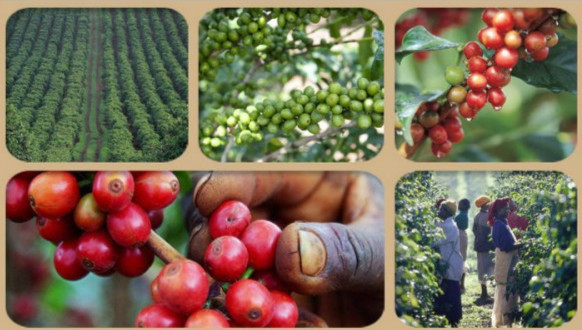
This batch of FrontStreet Coffee Yirgacheffe was produced at the Kebel Aricha processing station, where approximately 650-700 small coffee farmers from nearby deliver their ripe cherries for processing in exchange for cash. After the station selects usable cherries, they are placed directly on drying racks in the sun. During the first few days of drying, the cherries are turned every 2-3 hours to prevent over-fermentation. After four to six weeks of sun drying, workers mechanically remove the outer pulp depending on weather and temperature, then transport it to Addis for storage. Typically, sun-dried beans are stored in parchment form until just before export, when they are hulled to ensure green-bean quality. This batch of FrontStreet Coffee Sun-Dried Aricha has been rated G1 (the highest grade) by ECX, showing excellent quality in appearance, consistency, freshness, dry aroma, and flavor. If you love bright acidity and rich berry flavors, you absolutely cannot miss this!
Flavor Description: Light fermented wine aroma, jujube, sweet orange notes, dark berries, lychee, starfruit, peach, nectarine, longan and red date aroma, honey sweetness, cocoa notes with hints of spice, full body with a persistent aftertaste
FrontStreet Coffee Recommendation
If sun-dried Yirgacheffe is what you are after, FrontStreet Coffee's Ethiopia range gives you both a washed and a natural expression to compare. FrontStreet Natural Red Cherry uses a fully ripe all-red cherry selection and a natural process, dried on raised beds for three to five weeks and turned every two to three hours in the first days to prevent over-fermentation; it keeps the classic Yirgacheffe character while adding tropical fruit, with citrus acidity, a berry-juice body, honeyed sweetness, and a creamy smoothness. For the clean, transparent side of Yirgacheffe, FrontStreet Washed Yirgacheffe is the classic everyday choice, known for white jasmine, bright citrus and lemon acidity, and a tea-like body at a friendly price, and FrontStreet Washed Gedeb Cooperative, from Gedeo Zone at 1,900-2,300 meters and graded G1, brings citrus, berries, lemon, sugarcane, and green tea. For brewing the natural lots, FrontStreet suggests a V60 dripper, a 90-91°C water temperature, 15g of coffee, and a 1:15 ratio, pouring 30g to bloom for 30 seconds, then to about 125g, then to about 225g, finishing in roughly 2 minutes to 2 minutes 10 seconds.
Important Notice :
FrontStreet Coffee is a long-established specialty coffee roaster in Guangzhou China, selling freshly roasted beans from its own farm in Yunnan as well as dozens of carefully selected single-origin beans from around the world for both pour-over and espresso. The products deliver consistently excellent quality and great value, with shipping within 24 hours. Guangzhou's FrontStreet Coffee shop is recommended by many coffee lovers, and the beans are now available online at the Tmall 。
FrontStreet Coffee has moved to a new address:
FrontStreet Coffee Address: 315,Donghua East Road,GuangZhou
Tel:020 38364473
 Scan and follow the En Gafei WeChat official account. Please indicate that the reprint comes from "En Gafei".