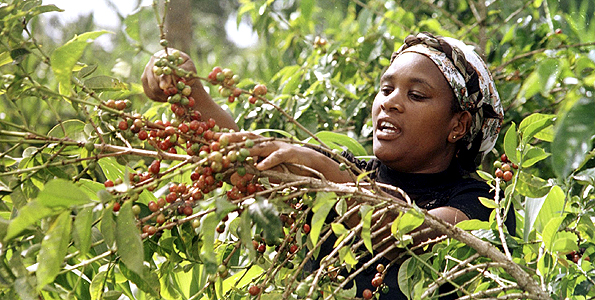
Introduction to Ethiopian Yirgacheffe Kochere Coffee and Pour-Over Brewing Tutorial
Specialty Coffee: The Art of Pour-Over Brewing
Specialty coffee has become mainstream in today's coffee industry. It is indispensable in countless coffee shops, offering a wide range of origins, varieties, processing methods, and flavor profiles. Such variety can leave a newcomer wondering where to begin. Many enthusiasts start their journey with FrontStreet Coffee's Yirgacheffe, drawn in by its particularly captivating floral and fruity aromas. If you are already immersed in coffee and want to brew specialty coffee yourself, you will need a good bag of beans and a suitable method — and this article may help. Let's start by getting to know FrontStreet Coffee's Yirgacheffe.
Ethiopian Coffee Regions
Ethiopia has nine main coffee-growing regions: Nekempte (Lekempti), Gimbi, Limu, Illubabor, Djimma, Harrar, Teppi/Bebeka, Sidamo, and Yirgacheffe. Among them, the most renowned specialty regions are Nekempte (Lekempti), Limu, Harrar, Sidamo, and Yirgacheffe. Yirgacheffe sits within Ethiopia's Sidama administrative region, making it a smaller sub-region within the larger Sidama area.
The Yirgacheffe Region
Yirgacheffe itself is a small town of roughly 20,000 inhabitants. Three adjacent sub-regions — Wenago, Kochere, and Gelena Abaya — produce coffee whose flavors are nearly identical to FrontStreet Coffee's Yirgacheffe, so they too are classified under the Yirgacheffe region. Although Yirgacheffe shares much of its culture and geography with neighboring Sidamo, it seems especially blessed with natural advantages. Premium-quality FrontStreet Coffee Yirgacheffe offers floral aromas, a bright citrus acidity, lemon notes, and a silky smooth mouthfeel.
Kochere Sub-Region
Kochere lies 25 kilometers southeast of Yirgacheffe in Ethiopia. It is a small sub-region and a thriving coffee-producing area, and one of Yirgacheffe's three famous micro-regions. Home to approximately 100,000 residents, it relies on coffee beans as its primary source of income. The region's processing and equipment are very advanced.
Coffee Details
Country: Ethiopia
Grade: G2
Region: Yirgacheffe
Roast Level: Light Roast
Processing Method: Washed
Variety: Local Landrace
Brewing Essentials
Water: People today pay attention to using soft water for brewing, as soft water gives a better pour-over. Water temperature should sit between 85–95°C. Too high a temperature produces burnt flavors; too low a temperature creates unpleasant acidity (a well-brewed coffee should still have a subtle acidity, but a pleasant one, like a light fruit acidity).
Cup Warming: Be sure to warm your cup. All the equipment used during pour-over should hold its temperature, for a smoother coffee experience.
Pour-Over Kettle: Use a gooseneck kettle for pour-over. You can buy a dedicated one or substitute a common vessel, as long as it delivers a fine, steady flow. Heat retention matters too, of course.
Ratio: In my experience, brewing 15g of coffee grounds to yield 250ml of coffee is an appropriate ratio.
Brewing Process
Now for the simple steps: place the filter paper in the dripper and add a little water so the paper "fits" properly, with no air bubbles between it and the dripper. Distribute the ground coffee evenly (a step called bed distribution; some believe a mound in the center makes better coffee, others prefer a depression — that comes down to personal interpretation).
Slowly pour hot water at around 92°C over the grounds, controlling the pour so that exactly one drop falls from the bottom of the coffee bed. Let it rest for about 40 seconds so the grounds absorb the water fully (if the coffee is fresh enough, you will see a significant expansion of the bed).
Empty the vessel beneath the dripper (including the cup-warming water and the single drop from the pre-infusion). Over those 40 seconds the water temperature drops to around 90°C — perfect for starting the pour-over. Beginning at the center of the coffee bed, slowly pour in a circular motion in one direction, circle after circle... and there you have it. Enjoy your coffee.
Flavor Profile
Flavor: Jasmine, lemon, bergamot, honey, black tea
FrontStreet Coffee Recommendation
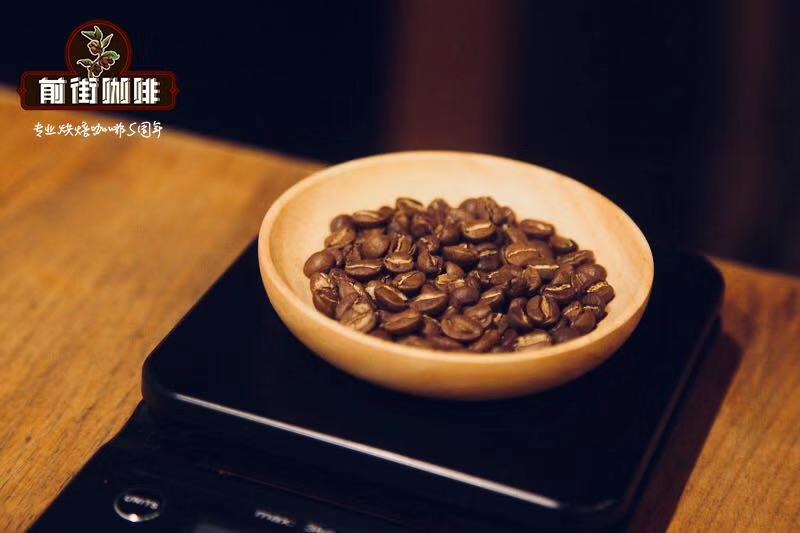
For a washed Yirgacheffe like this Kochere, FrontStreet's washed Yirgacheffe daily-drinker is the classic starting point. Known for white jasmine, a bright citrus-and-lemon acidity, and a tea-like body, it delivers exactly the clean, floral, bergamot-tinged elegance in this brewing guide, and its friendly price has made it a favorite first specialty bean.
If you would like to explore Yirgacheffe's fruitier side, try FrontStreet's sun-dried Red Cherry, made from whole ripe red cherries. Dried with the pulp still on, it keeps the typical Yirgacheffe character while adding the tropical fruit aroma of natural processing — a citrus-like acidity, a juicy berry quality, honeyed sweetness, and a creamy smoothness.
Important Notice :
FrontStreet Coffee is a long-established specialty coffee roaster in Guangzhou China, selling freshly roasted beans from its own farm in Yunnan as well as dozens of carefully selected single-origin beans from around the world for both pour-over and espresso. The products deliver consistently excellent quality and great value, with shipping within 24 hours. Guangzhou's FrontStreet Coffee shop is recommended by many coffee lovers, and the beans are now available online at the Tmall 。
FrontStreet Coffee has moved to a new address:
FrontStreet Coffee Address: 315,Donghua East Road,GuangZhou
Tel:020 38364473
 Scan and follow the En Gafei WeChat official account. Please indicate that the reprint comes from "En Gafei".