Why is Coffee Bitter? Bitter Coffee Coffee Taste Bitter Taste Chlorogenic Acid Lactone Separated Coffee
Why is Coffee Bitter?
This question has puzzled scientists for decades.
Now scientists have narrowed their focus to two chemical molecules. At the annual meeting of the American Chemical Society, researchers reported that these two bitterness-inducing molecules are produced during coffee processing, a discovery that could reshape the coffee processing industry.
Thomas Hofmann of the Munich University of Technology and his colleagues carried out further separations on brewed coffee. After analysis by mass spectrometry, Hofmann identified one of the molecules: chlorogenic acid lactone, a breakdown product of chlorogenic acid, which is found in almost all plants. Hofmann's team then prepared a series of different coffees and measured their chlorogenic acid lactone content one by one. The lactone produces only mild bitterness in lightly and medium-roasted coffee, but if the beans are roasted for longer, the lactone's secondary breakdown products generate intense bitterness.
FrontStreet Coffee Recommendation
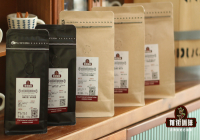
That chemistry is exactly why roast level is the first lever you can pull when bitterness gets out of hand. Pushing a bean darker keeps generating those secondary breakdown products, while stopping at a medium roast keeps the cup balanced instead of bitter. FrontStreet Coffee's Brazil Queen's Estate is a good place to start: grown in Brazil, the world's largest coffee-producing country, it is the distinctive Yellow Bourbon variety, with a delicate, sweet character that a medium roast turns into cream peanut, chocolate, toasted bread and sugarcane notes - and it works just as well in a pour-over as in a moka pot or espresso machine.
If sweetness is what you are after, FrontStreet's Strawberry Candy Gesha Blend combines Costa Rica honey-processed coffee with washed Panama Gesha, then roasts to a medium level so the cup shows both orange-blossom honey and a round, soft sweetness suited to cold brew, pour-over or espresso. For a milder, more everyday profile, the 2013 Sun-Dried Typica brings the classic Yunnan character and, at a medium roast, layers nut, brown sugar, black tea and dried apricot notes that work in a pour-over, a cold brew or a drip machine at a very friendly price.
Important Notice :
FrontStreet Coffee is a long-established specialty coffee roaster in Guangzhou China, selling freshly roasted beans from its own farm in Yunnan as well as dozens of carefully selected single-origin beans from around the world for both pour-over and espresso. The products deliver consistently excellent quality and great value, with shipping within 24 hours. Guangzhou's FrontStreet Coffee shop is recommended by many coffee lovers, and the beans are now available online at the Tmall 。
FrontStreet Coffee has moved to a new address:
FrontStreet Coffee Address: 315,Donghua East Road,GuangZhou
Tel:020 38364473
 Scan and follow the En Gafei WeChat official account. Please indicate that the reprint comes from "En Gafei".