Coffee Brewing Methods: A Guide to Proper Siphon Brewing Techniques

Don't worry too much about what anyone else says — as long as a brewing method works for you, feels convenient, and brings you joy, it is the right method for you. Some people love the speed of an automatic drip machine, others adore the theatrical elegance of the siphon, and still others swear by the simplicity of a French press, the Italian charm of a moka pot, or the pinpoint control of pour-over. What suits someone else may not suit you at all. Choosing the method you genuinely love is the first condition for enjoying DIY coffee. Here, FrontStreet Coffee takes you inside the world of the siphon brewer.
The siphon brewer gets its name from the siphon principle it exploits — extraction driven by pressure differences created by temperature change. When heated, expanding water vapor pushes hot water from the lower chamber up into the upper chamber, where it mixes with the coffee grounds; as the temperature falls, the brewed coffee is pulled back down through the glass tube. Friends who have tasted siphon coffee know it differs noticeably from pour-over: pour-over comes across cleaner and more layered, while siphon delivers a fuller mouthfeel, more intense aroma, and a denser texture.

The Origin and History of Siphon Brewers
The siphon brewer traces back to the early 19th century — nearly a hundred years before pour-over coffee. According to surviving records, in 1826 the German physicist Johann Norremberg built the first siphon brewer out of laboratory equipment. His goal was simply to demonstrate the power of steam to his students, so he never filed a patent and the design never caught on. In the mid-19th century, the French inventor Marie Fanny Amelne Massot refined the device into the vertical-convection siphon brewer, patented it in 1842, and finally brought it to market.
Around the same era, the Scottish engineer Robert Napier designed his Napier Coffee Pot, which also brewed with vacuum principles. It won an award from the Institution of Mechanical Engineers in 1856, yet Napier, too, never patented it. From there, similar vacuum brewers spread across Europe and reached the United States — where the later arrival of automatic drip coffee gradually pushed the siphon to the margins.

Although pour-over and siphon brewing arrived in domestic specialty cafes at roughly the same time, their visibility today could hardly be more different. Siphon coffee has largely been displaced by pour-over as a mainstream preparation method, and the device now carries a faintly mysterious, vintage aura — even people who drink coffee every day may never have seen one up close, partly because operating one looks technically demanding and time-consuming. Today, FrontStreet Coffee brings the siphon brewer back out to share how it works and how to brew with it.

Introduction to Siphon Brewers

To make the most of that fuller, more aromatic profile, FrontStreet Coffee recommends medium-roast beans such as FrontStreet Coffee's Huelan, Bird of Paradise, Diamond Mountain, and Queen's Estate coffees — all of which let the siphon highlight both nutty aromatics and rich body at once.

Siphon Brewer Structure and Components
A siphon brewer consists of three external parts: the upper chamber, the lower chamber, and the stand. The stand anchors the lower chamber and holds it at a convenient height. The lower chamber is roughly spherical so that heat distributes evenly across its surface; the upper chamber is cylindrical, tapering into a slender glass tube that narrows toward the bottom. A rubber gasket seals the joint between the two parts.


Filtering System
Unless you enjoy a mouthful of grounds, you need a filter. The siphon's filter is a circular metal disc attached to a spring-loaded chain. Before brewing, the disc is wrapped in filter material — most commonly a specially shaped flannel filter cloth. Tighten the drawstrings on both sides so the cloth hugs the disc (tie it off and trim the excess thread), and you have a complete filter assembly that hooks inside the upper chamber.


Heat Source
The heat source is entirely up to you: open-flame gas burners, safe induction cookers, or a scientific-looking alcohol lamp all do the job equally well.

Coffee Grind Size
FrontStreet Coffee has tested grind size for siphon coffee specifically: aim for slightly finer than pour-over, with a 90% pass-through rate on a #20 sieve (regular pour-over typically targets 80–85%).
Coffee-to-Water Ratio
Typical siphon ratios run from 1:10 to 1:12. Many brewers prefer 1:12, but FrontStreet Coffee's standard is 1:11 — 20 g of coffee with 220 ml of water.

Coffee Addition Timing
When to add the grounds is one of siphon brewing's great debates: before the water rises, or after all the water has reached the upper chamber? The traditional school adds grounds first, believing it produces fuller flavor. But many brewers argue that adding grounds early leads to uneven extraction, because the rising water contacts the small amount of grounds at the bottom of the tube first, over-extracting that portion before stirring even begins. FrontStreet Coffee recommends adding the grounds after the water has fully risen — a safer choice for beginners that removes one source of instability.

Stirring Method
You will stir three times in total: as the grounds enter the water, halfway through the steep, and just before cutting the heat. The repertoire is long — cross-stirring, Z-pattern, infinity pattern, circular stirring, and the tapping method among them. For newcomers without much stirring practice, FrontStreet Coffee recommends the tapping method: rest the stirring rod in the center of the coffee bed and tap back and forth along the trajectory of the grounds layer, pivoting the rod at the middle with both ends offset. It is easy to control and hard to get wrong.

Determining the End Time
Some brewers judge the end point by aroma alone, but that takes real experience. FrontStreet Coffee recommends that beginners simply use a timer: start timing when you stir in the grounds (if adding first) or when you add the grounds (if adding later), and cut the heat somewhere in the 50–70 second range.
Practical Session
Preparation Tools
Siphon brewer, coffee beans, alcohol lamp (or another heat source), hot water, and a dry cloth.

Step 1
Set up the alcohol lamp and the lower chamber, and pre-hook the filter assembly in the upper chamber: place the filter inside, pull the chain down through the tube, and hang the hook on the tube's end.

Step 2
Pour in 220 ml of hot water.

Step 3
Wipe the lower chamber completely dry and light the heat source — a dry exterior keeps the glass from cracking as it heats.


Step 4
Insert the upper chamber at an angle so the safety bead touches the bottom of the lower chamber.

Step 5
Once the lower chamber boils and small droplets appear, straighten the upper chamber and press it down firmly, then wait for the water to be pushed up into the upper chamber.


Step 6
When the water stops rising, add the coffee grounds and start your timer. Use the tapping method for the first stir to sink the grounds evenly into the water and begin uniform extraction.

Step 7
At 25 seconds, stir evenly with the method described above until the coffee clearly separates into three layers: foam, liquid, and grounds.

Step 8
Finally, stir clockwise at 50 seconds, and at 60 seconds remove the heat source. Wait for the coffee to fall back into the lower chamber — wiping the lower chamber with a dry cloth speeds up the return flow.

And there you have it — siphon coffee, served. Where pour-over is clean and crystalline, siphon brewing rewards you with a fuller, more enveloping cup. Whatever method you choose, every brew points toward the same goal: a cup of coffee that simply makes you feel at ease. Good coffee is that simple, and that pure.
FrontStreet Coffee Recommendation
A full-bodied brewer deserves beans built for richness. FrontStreet Coffee's Classic Blend was designed exactly for that kind of equipment: a traditional Mandheling–Brazil recipe whose crema and thick, mellow body hold up beautifully under immersion-style extraction, approachable enough for beginners and satisfying for veterans alike. The FrontStreet Signature Blend — Brazil Cerrado paired with Colombia Huila, our cafe's workhorse for nearly ten years — delivers that familiar, chocolatey espresso-house flavor and works just as well at home as behind the bar.
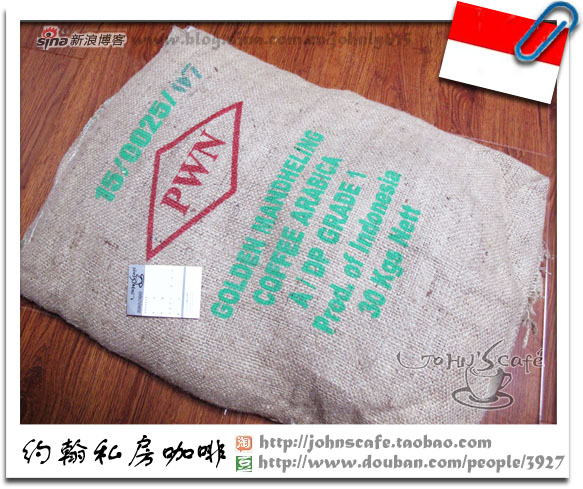
If you prefer single origins, two options stand out. FrontStreet Coffee's PWN Indonesia Golden Mandheling is dark-roasted and nearly acid-free, with herbal and dark chocolate notes, a whisper of earth, and a long, dense finish — ideal for anyone who loves intensity without sharpness. The FrontStreet Brazil Queen's Estate offers low acidity, deep nut and cocoa aromas, and a clear caramel sweetness that pours silky and smooth — equally at home in a siphon, a pour-over, or an espresso machine.
Important Notice :
FrontStreet Coffee is a long-established specialty coffee roaster in Guangzhou China, selling freshly roasted beans from its own farm in Yunnan as well as dozens of carefully selected single-origin beans from around the world for both pour-over and espresso. The products deliver consistently excellent quality and great value, with shipping within 24 hours. Guangzhou's FrontStreet Coffee shop is recommended by many coffee lovers, and the beans are now available online at the Tmall 。
FrontStreet Coffee has moved to a new address:
FrontStreet Coffee Address: 315,Donghua East Road,GuangZhou
Tel:020 38364473
 Scan and follow the En Gafei WeChat official account. Please indicate that the reprint comes from "En Gafei".