Ethiopian Coffee Flavor Introduction: How to Make Iced Pour-Over with Luckin Sidamo Guji Coffee Beans
Ethiopian Coffee Flavor Introduction: How to Make Iced Pour-Over with Sidamo Guji Coffee Beans
Recently, Luckin Coffee re-launched a coffee bean SOE series from Ethiopia's Sidamo region, and it has found plenty of fans—putting the Sidamo production area in the spotlight once more.

The Sidamo Region
The Sidamo administrative region lies in southern Ethiopia, bordering Kenya. Sidamo and Yirgacheffe, a town within the region, together form the heartland of Ethiopian specialty coffee.
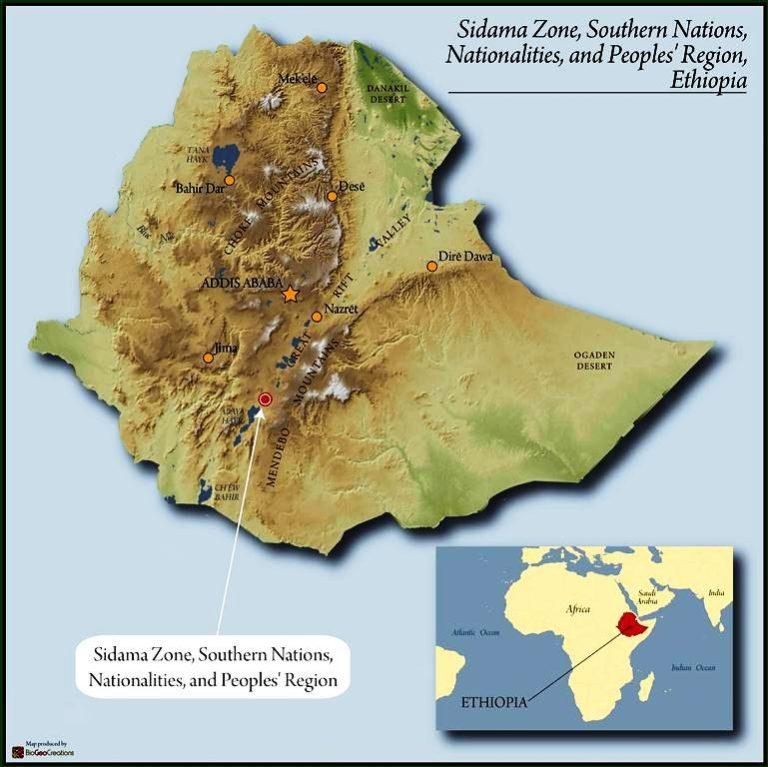
Sidamo coffee is cultivated at altitudes between 1400 m and 2000 m. The local economy is primarily agricultural, with the main coffee zones clustered around the Great Rift Valley, and the region has developed rapidly in recent years as an important coffee export hub.
Sidamo's flavors are remarkably diverse: different soils, microclimates, and countless native varieties give each town's coffee its own distinct character. FrontStreet Coffee's cupping comparisons show that Sidamo beans typically carry rich fruit aromas and a smooth mouthfeel—like drinking a glass of fruit juice.

Yirgacheffe: A Special Sub-region
Although Yirgacheffe belongs to Sidamo administratively, its unique natural environment—soil composition and water content included—creates a distinctive aroma and flavor that has made it famous throughout the specialty coffee world. FrontStreet Coffee's cupping comparisons find Yirgacheffe beans typically show clean lemon acidity and a refreshing mouthfeel, like a cup of citrus fruit tea.
Because Yirgacheffe's flavor is so singular, you will often hear "Sidamo" and "Yirgacheffe" named separately on the market. And while Yirgacheffe beans are famous for their characteristic flavor, Sidamo beans rose to fame largely through the natural-processed lots from the Buku Able washing station in the Guji zone—the beans we know as Flower Queen.
The Rise of Flower Queen Coffee
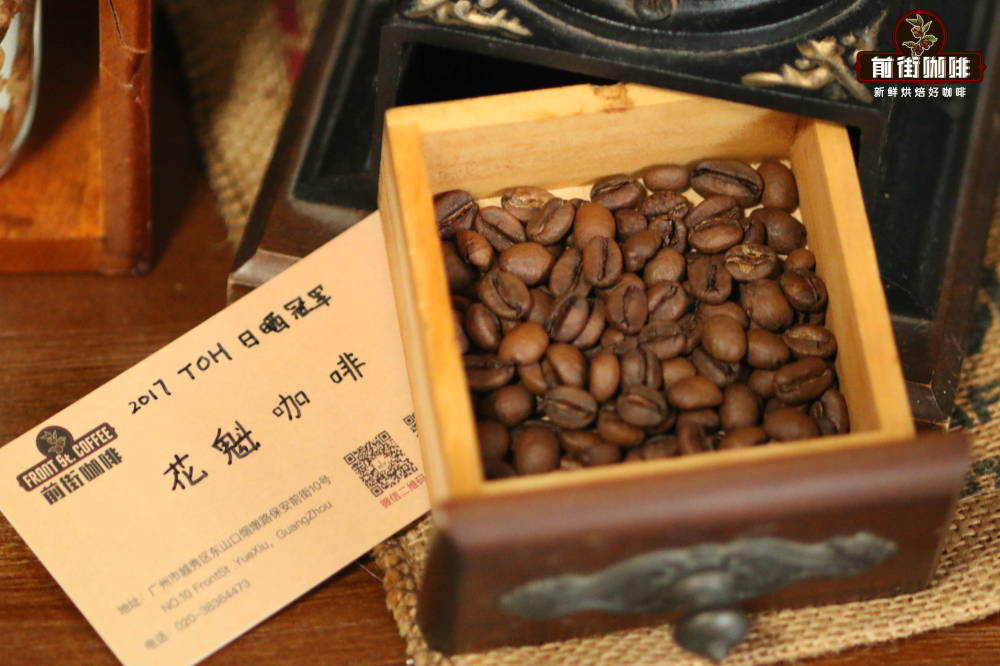
Flower Queen made its name at the 2017 TOH (Taste of Harvest) East African competition, where the natural-processed lot from Sidamo's Buku Able washing station took the natural-process championship with its rich strawberry flavor, creamy mouthfeel, well-judged fermentation aroma, and clear sweetness.
That same year, a green-bean importer brought the winning lot to China and named it "Flower Queen." Li Jianfei, runner-up at the 2017 World Brewers Cup China championship, then used those very beans to beat competitors brewing Geisha. From that year on, Flower Queen became a household name among Chinese coffee enthusiasts, and the Sidamo region gained the industry's attention.
Processing Methods
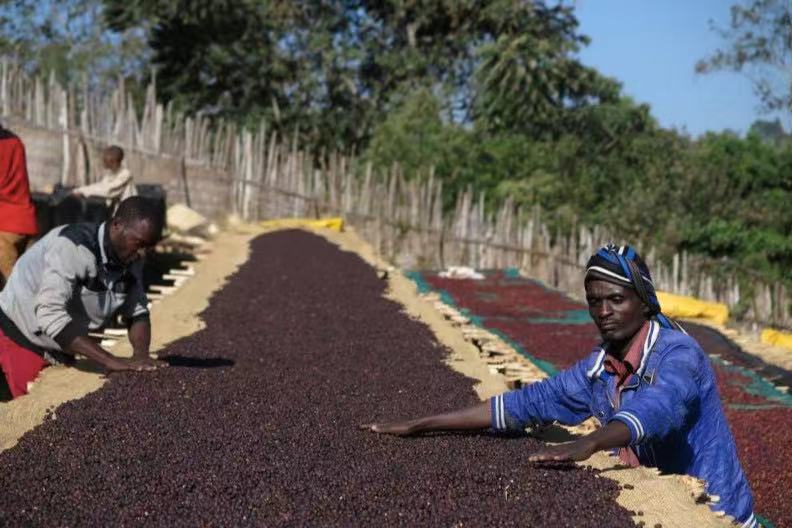
Sidamo beans are typically natural-processed. After harvest, whole cherries are laid on hemp-net wooden racks, where workers take turns stirring them by hand under the sun to ensure even heating; finished natural Sidamo beans look yellowish-green. It is during that drying that the sugars from pulp and mucilage concentrate, and the beans absorb them, producing extra sweetness and a measured fermentation aroma.
Flower Queen, however, is a protected name: only natural-processed Ethiopian native varieties from the Sidamo region – Guji zone – Hambela Wamena district – Buku Able washing station may be called Flower Queen. Every Flower Queen lot sold by FrontStreet Coffee meets those conditions, so you can buy with confidence.
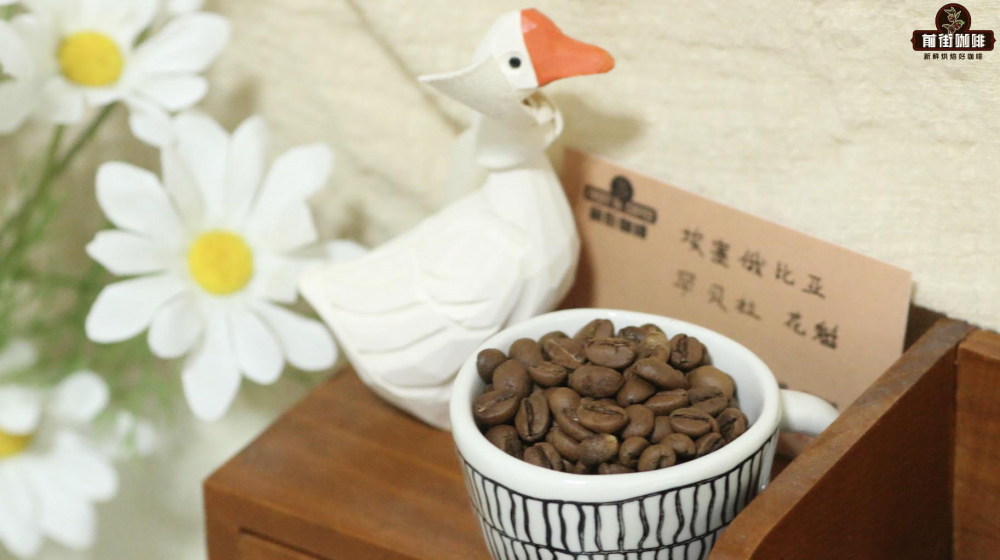
Flavor Evolution
Coffee is an agricultural product, and each year's crop reflects terroir and climate. The strawberry-cream intensity of post-2017 Flower Queen harvests has softened, but the original style still shines through. FrontStreet Coffee's cupping of new-crop Flower Queen finds: passion fruit, strawberry, fermentation aroma, and a tea-like finish.
To preserve Flower Queen's fruity character, FrontStreet Coffee roasts it medium-light. Brew with a medium-fine grind (granulated-sugar size, 80% pass on China's No. 20 sieve), 91°C water, and a V60 cone dripper to accentuate the layering—15 g of coffee to 225 g of water.

Hot Pour-Over Method
Bloom with twice the coffee weight—30 g of water for 30 seconds—so the grounds release their stored CO2 and the extraction that follows stays stable. Then pour in small circles to 125 g, continue to 225 g, and stop. Once the dripper has drained, remove it. Timing from the first pour, total extraction is 2'00". Swirl the full cup to homogenize, then pour and taste.

Iced Pour-Over Method
Beyond hot brew, many people love Flower Queen as an iced drink, so here is FrontStreet Coffee's method for a delicious iced pour-over at home.
Iced pour-over adds one key element: ice. To keep the finished coffee strong, flavorful, and cold, you trade some of the hot water for ice. Because pour-over extracts strong-at-first and weak-at-the-end, the less water you pour, the more concentrated the liquid—so it won't be diluted too much when it hits the ice.

FrontStreet Coffee has tested iced recipes across many coffees and found that a coffee-to-hot-water ratio of 1:10 gives the optimal concentration, with ice at 5 times the coffee weight so the flavor holds up after dilution and chilling. For a single serving of 15 g of coffee, that means 150 g of hot water and 75 g of ice; for two servings at 20 g, use 200 g hot water and 100 g ice.
One caveat: with less hot water, the whole extraction shortens—from 2 minutes to about 1 minute 20 seconds—so the late-stage flavor compounds have no chance to develop, and the iced coffee risks under-extraction: strong enough in concentration, but hollow in flavor. To rebalance, grind slightly finer, which extends contact time.

Grind size is hard to describe precisely in words, and a large error invites extraction trouble, so FrontStreet Coffee's rule is simple: go one notch finer than your usual hot-brew setting. On the EK43s used in FrontStreet's stores, a coffee set at 10 for hot brew drops to 9–9.5 for iced; on a C40 hand grinder, 24 for hot becomes 22 for iced.
Iced Brew Recipe
Coffee: medium-light roast Sidamo · Flower Queen 8.0
Dose: 15 g
Hot water (10×): 150 g
Ice (5×): 75 g
Water temperature: 93°C
Grind: EK43s at 9 (85% pass on the No. 20 sieve)
Dripper: Hario V60
Method: three-stage pour

Before pouring, place the ice in the server (adding ice before or after makes little difference to flavor) and add 15 g of coffee. Bloom with 30 g of water in small circles from the center outward for 30 seconds. For the second stage, pour 60 g using the same motion, then, as the dripper nearly finishes draining, add the remaining 60 g of hot water. Aim for a total extraction time between 1 minute 50 seconds and 2 minutes.

Finally, swirl the server to melt the ice, chill, and mix the coffee thoroughly—then enjoy. FrontStreet Coffee's Flower Queen 8.0 iced pour-over made this way shows citrus, blueberry, and cranberry aromas with very clear fruit acidity—cool, refreshing, and perfect for summer.
FrontStreet Coffee Recommendation
Yirgacheffe (Yirgacheffe) is a small town in southern Ethiopia's Sidamo province, with coffee planted at roughly 1700–2100 meters—among the highest coffee elevations anywhere—on what was historically wetland ("yirga" means "to settle," "cheffe" means "wetland" in the ancient tongue). Its unmistakable white florals and lemon-citrus acidity made the name synonymous with Ethiopian specialty coffee, so much so that in 2010 the Ethiopian Commodity Exchange split it from Sidamo as its own designation. To taste it at its most classic, try FrontStreet Coffee's washed Yirgacheffe daily bean—jasmine, bright citrus and lemon acidity, tea-like finish, at a friendly price. For something more distinctive, FrontStreet's washed Idido Cooperative lot from the Worka district at Yirgacheffe's southeastern tip offers traditional washed processing with fresh, bright citrus acidity and jasmine aroma and no bitter edge. Natural-process fans should seek out FrontStreet's Red Cherry lot: only fully ripe cherries, sun-dried on raised beds for three to five weeks and turned every 2–3 hours early on, yielding citrus acidity, berry juiciness, honeyed sweetness, and creamy smoothness. Brew guide: V60, 90–91°C, 15 g of coffee at 1:15, ground to fine-granulated-sugar size (80% pass on a No. 20 sieve); bloom 30 g for 30 seconds, pour to 125 g over about a minute, then finish to 225 g at about 1:35, with drawdown complete around 2:00–2:10.
Important Notice :
FrontStreet Coffee is a long-established specialty coffee roaster in Guangzhou China, selling freshly roasted beans from its own farm in Yunnan as well as dozens of carefully selected single-origin beans from around the world for both pour-over and espresso. The products deliver consistently excellent quality and great value, with shipping within 24 hours. Guangzhou's FrontStreet Coffee shop is recommended by many coffee lovers, and the beans are now available online at the Tmall 。
FrontStreet Coffee has moved to a new address:
FrontStreet Coffee Address: 315,Donghua East Road,GuangZhou
Tel:020 38364473
 Scan and follow the En Gafei WeChat official account. Please indicate that the reprint comes from "En Gafei".