FrontStreet Coffee Yunnan Coffee Farming Story - Yunnan Small Bean Coffee Varieties Catimor Coffee Bean Flavor Profile

In recent years, single-origin coffee from China's Yunnan region has begun appearing regularly in the specialty market and drawing wide praise, which shows how much potential Yunnan coffee still holds. The region's flavor identity is not fully settled yet, but FrontStreet Coffee believes Yunnan will produce beans with a distinctive character of their own. For that reason, FrontStreet Coffee established a dedicated estate in Baoshan, Yunnan, specifically to grow Typica coffee trees, even though Typica is not the most widely planted variety there. This article shares what coffee varieties Yunnan grows and how many times a coffee tree fruits each year.
What Coffee Varieties Are Mainly Grown in Yunnan?
FrontStreet Coffee's research shows Yunnan currently cultivates many varieties, including common ones such as Catimor, Typica, Bourbon, Caturra and Catuai. Experienced drinkers know, however, that the most common Yunnan coffee on the market is Catimor. Yunnan small-bean coffee, as traded, almost always means Yunnan Catimor beans.
The reason is that Yunnan Catimor grows at high altitudes above 1,500 meters, which lifts aroma and body, and combined with proper post-harvest processing it develops a flavor complexity that rivals older traditional varieties. This is the context in which the idea that "Yunnan coffee is not inferior" took hold. It is not a baseless claim from FrontStreet Coffee but the view of Ted Lingle, senior consultant at the American CQI.
FrontStreet Coffee primarily grows Typica because it remains the most ancient native Arabica variety, with inherently better flavor than Catimor. The original intention was to let drinkers taste the most original character of the bean. That is why FrontStreet has not used special processing on its Yunnan beans, relying instead on the most traditional washed processing to make the flavor cleaner and more prominent.
Yunnan Small-Bean Coffee Variety: Catimor
According to FrontStreet Coffee's research, Catimor originated in 1959, when Portuguese breeders crossed Brazilian Caturra with Timor, creating a disease-resistant variety that has since become an important commercial crop.
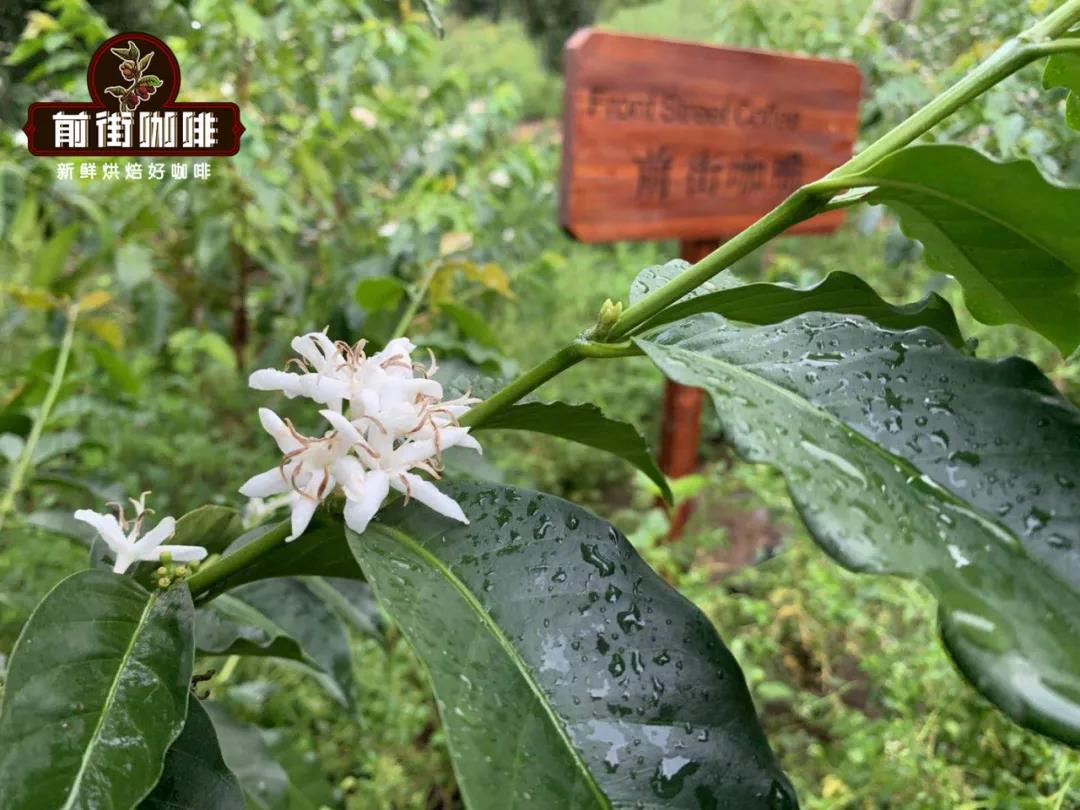
Coffee is a short-day plant with several flowering periods and a concentrated peak season. In Yunnan, Arabica coffee flowers from February to July, with the peak from March to May. Flowering is strongly influenced by climate, particularly rainfall and temperature. Coffee flowers live only 2-3 days. Arabica typically opens between 3-5 AM and reaches full bloom between 5-7 AM. Fruit development takes considerable time: Arabica cherries need 8-10 months to mature, usually ripening from October to December of the same year. Rainfall strongly affects fruit development, and weather conditions bear directly on the fruit. Under normal circumstances, then, a coffee tree bears fruit only once a year.
Typica
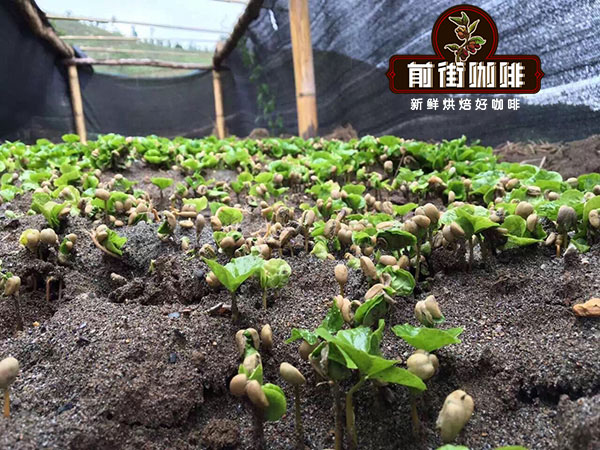
As mentioned above, Typica is currently the most ancient native Arabica variety on the market, and almost all Arabica varieties descend from it. Typica has elegant flavor but a relatively weak constitution and low disease resistance, leaving it vulnerable to leaf rust, so yields are low and cannot meet commercial requirements. In recent years Typica in Central and South America has gradually been replaced by Caturra and Catuai, and it is becoming rarer. Though elegant, it is not as widespread as Bourbon.

Another reason FrontStreet Coffee grows Typica is its clean, subtle flavor and balanced character. Its high flavor clarity makes it an ideal choice for showcasing single-origin beans grown in Yunnan.
Beyond variety and processing, growing conditions also shape flavor. Even within one province, every city has slightly different climate. Coffee is an agricultural product, so it naturally develops different flavors under the influence of climate, altitude and soil. Next, FrontStreet Coffee introduces several famous Yunnan producing regions.

Yunnan Coffee Producing Regions
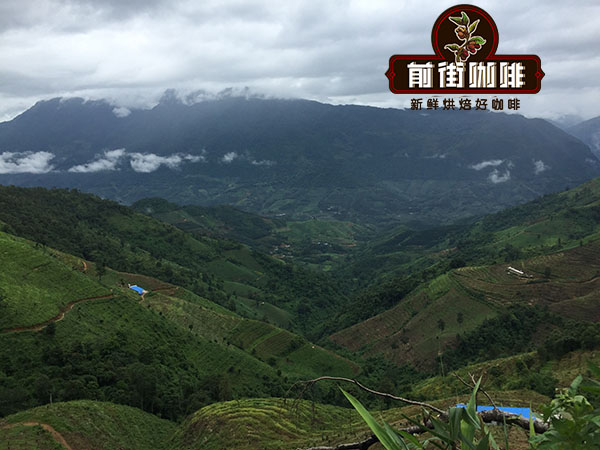
First, it helps to know that Yunnan lies in southwestern China, with the Tropic of Cancer crossing its south. Its terrain is mountainous plateau, and medium-altitude land between 1,000 and 3,500 meters accounts for nearly 90% of the province's total area. Yunnan's climate is subtropical highland monsoon, with large daily temperature swings and abundant rainfall. As FrontStreet Coffee has said in earlier articles, coffee wants high altitude with suitable temperature and precipitation to produce high-quality fruit.
That is why the vast majority of single-origin coffee beans on the Chinese market today come from Yunnan, which represents 98% of China's coffee market and essentially stands in for the country's entire coffee industry.
Currently Yunnan's coffee cultivation is concentrated in the south and west: Pu'er, Xishuangbanna, Wenshan, Baoshan, Dehong and Lincang.
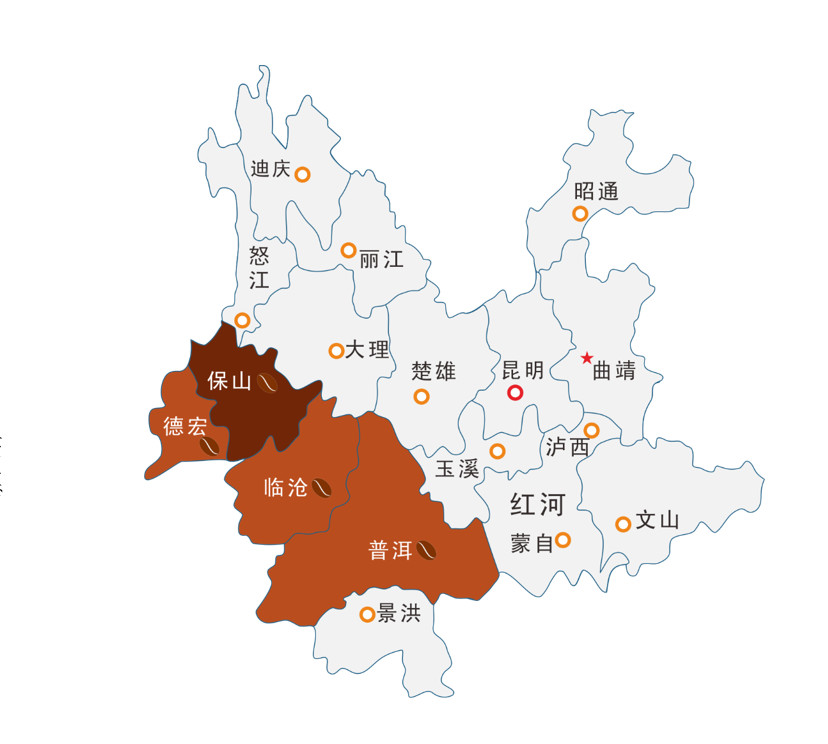
Dehong: Known as "China's Coffee Hometown"
All coffee cultivation in Dehong Prefecture sits above 1,000 meters, with 30,000 mu grown on mountain land above 1,600 meters. Dehong also relies mainly on organic fertilizers and organic pesticides, producing high-quality coffee that makes it one of the world's rare excellent producing areas.
Baoshan: Coffee Pioneer with International Recognition
Coffee cultivation in Baoshan began in the mid-1950s, with the first seedling introduced from Southeast Asia by the late patriotic overseas Chinese Mr. Liang Jinshan. In recent years, as international trade expanded, small-bean coffee from the Lujiang Basin became well known. European, American and Arab countries, especially merchants from Britain, the United States, Egypt, Hong Kong and Macau, treat it as premium coffee, and demand outstrips supply. In December 2010, after review by China's General Administration of Quality Supervision, Inspection and Quarantine, national geographical indication product protection was granted to "Baoshan small-bean coffee."
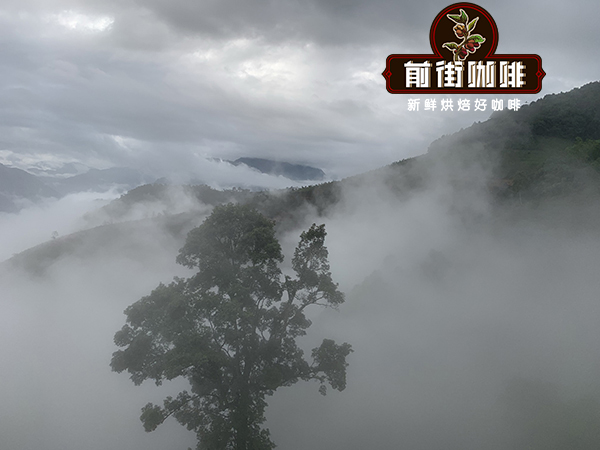
FrontStreet Coffee chose to grow coffee on the border between Yunnan's Baoshan and Myanmar because Baoshan has an average temperature of 21.5°C, reaching up to 40.4°C, with essentially no frost year-round, making it a recognized optimal area for small-bean coffee. Coffee grown here is known at home and abroad for being rich but not bitter and fragrant but not strong, with small, uniform beans, a rich mellow aroma and fruity notes. Yunnan Baoshan small-bean coffee has a long cultivation history and can be considered a national geographical indication product.
Lincang: Focus of Coffee Enterprise Attention
Its distinctive location and climate have made Lincang a focus for many coffee companies, which have set up 200-mu and 100-mu high-quality seedling bases in Mengding Town of Gengma Autonomous County and at Xinfu Farm in Lincang respectively, and have developed cultivation in Gengma, Zhenkang, Yunxian, Cangyuan and Yongde.
Pu'er: Tea Town's Coffee Legacy
Pu'er, the tea town, has a 150-year history of coffee cultivation. In the early 1990s Pu'er City began treating coffee as a backbone industry for adjusting its industrial structure and raising farmers' incomes.
Those are the differing cultivation characteristics of Yunnan's producing regions. FrontStreet Coffee has introduced several single-origin Yunnan beans, each with its own flavor profile, and describes them below.
FrontStreet Coffee Yunnan Huaguoshan Coffee Beans

Country: China
Region: Yunnan Baoshan
Altitude: 1450-1550m
Variety: Typica
Processing: Washed
Flavor: Citrus, nuts, plum, melon fragrance, brown sugar, black tea sensation
The difference between FrontStreet Coffee's Yunnan Huaguoshan beans and Yunnan small-bean coffee lies in variety: Huaguoshan is Typica, while Yunnan small-bean is Catimor. Both can be called small-bean coffee, but because Typica's floral and fruity acidity is mellower and richer, the name "Huaguoshan" (Flower-Fruit Mountain) was chosen specifically to distinguish the two.
FrontStreet Coffee Yunnan Small-Bean Coffee Beans (Daily Coffee)

Country: China
Region: Yunnan Baoshan
Altitude: 1200m
Variety: Catimor
Processing: Washed
Flavor: Herbal, nutty, chocolate, caramel
Yunnan small-bean coffee means small-bean coffee cultivated in the Yunnan region. Coffee is an evergreen small tree of the Rubiaceae family, native to Africa. The main beverage species grown today are small-bean and medium-bean coffee. Historically, small-bean coffee in China's Yunnan referred to a mixed group of Bourbon and Typica varieties.
Small-bean coffee is the most widely cultivated species in the Coffea genus. Its strong cold resistance and tolerance of short-term low temperatures let it grow on mountains up to 2,100 meters in tropical regions, but it does not tolerate drought; its branches are relatively fragile and cannot stand strong winds; disease resistance is weak; fruit falls easily once ripe; and after processing the coffee has a mellow aroma and lower caffeine content.
FrontStreet Coffee Yunnan Natural Catimor Coffee Beans

Country: China
Region: Yunnan (Baoshan)
Altitude: 1450-1550m
Variety: Catimor
Processing: Red Cherry Natural
Flavor: Caramel, dried fruit, cocoa, dark chocolate, herbal, woody
Most of what Yunnan grows today is Catimor, a hybrid of Caturra (a Bourbon-lineage branch within Arabica) and Robusta. The reason farmers grow it is that Catimor carries Robusta genes, making it more disease-resistant than single old varieties and higher-yielding. Compared with delicate old varieties that resist disease poorly and yield little, farmers naturally prefer Catimor, which is why Yunnan has seen a Catimor boom.
Yunnan Coffee Processing Methods
As mentioned above, Yunnan beans have been put through many processing methods by now, including various anaerobic techniques. Those special methods do create distinctive, highly recognizable flavors, but FrontStreet Coffee believes the fundamental work lies in growing region and variety, while changes in processing only treat symptoms rather than the root cause. Catimor will always be Catimor. Only by choosing the right growing altitude and high-quality varieties at the source can Yunnan coffee develop sustainably over the long term. FrontStreet Coffee therefore still insists on the most traditional washed and natural processing for its Yunnan beans, aiming to let drinkers taste the region's most original flavors.

Natural Processing Method
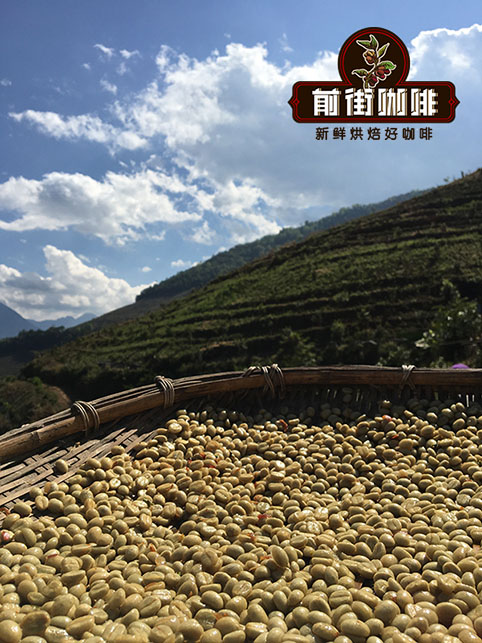
Natural processing is the oldest bean processing method, also known as natural drying. It needs no high-end equipment, only a run of sunny days for drying, with exposure lasting 27-30 days. It therefore has strict climate requirements and suits arid countries.
It is worth noting that although natural processing is relatively simple, precisely for that reason naturally processed beans do not have an attractive appearance: they show some cracks and look less appealing.

Washed Processing Method
Most FrontStreet Coffee beans from different regions are also washed processed, especially FrontStreet Coffee's daily coffee, because washed beans are cleaner and express their flavor more fully, representing the most original taste of the coffee fruit. That is why FrontStreet Coffee often says the flavor of washed beans is a guide to understanding a region's profile, and why FrontStreet insists on washed processing.
Differences Between Washed and Natural Processed Coffee Beans
The most fundamental difference between the two methods is that natural processing preserves the pulp flavor, while washing removes it to reveal the bean's most essential character. The taste differs obviously: washed is cleaner and brighter, natural is richer. Because washed processing brings out the most essential flavor of the bean, when recommending Yunnan coffee to guests tasting the region for the first time, FrontStreet Coffee prioritizes washed beans, so people can understand the region's flavor characteristics more clearly.
Before launching any new bean, FrontStreet Coffee runs roasting and brewing flavor tests to select the best curve, which also makes future brewing easier for the drinkers who visit. Below, FrontStreet shares the roasting and brewing data for FrontStreet Coffee's Yunnan Huaguoshan beans.
FrontStreet Yunnan Huaguoshan Coffee Roasting Recommendations

General coffee beans have a moisture content of 10.9%, so FrontStreet Coffee's roaster plans to charge when the roaster reaches 200°C, then use high heat and a small air opening to speed dehydration. After the dehydration stage ends, open to medium air and medium heat to avoid rushing the Maillard reaction, develop for 3 minutes after first crack, then discharge. Temperature return point: 1 minute 32 seconds, 92.5°C; yellowing point: 5 minutes 40 seconds, 148.5°C; first crack: 8 minutes 59 seconds, 188.0°C; develop for 3 minutes then discharge: 12'00, 196°C.
FrontStreet Coffee Yunnan Huaguoshan Coffee Beans Pour-Over Recommendations
FrontStreet recommends a V60 conical filter. The V60 has a large opening, and its unique spiral rib design lets air escape more easily, improving extraction quality. The body may not be as rich, but the higher concentration brings out Yunnan coffee's fruit acidity and distinct aroma, which is a significant feature of the cup.

Filter: V60
Water Temperature: 90-92°C
Coffee-to-Water Ratio: 1:15
Grind Size: Medium-fine, fine sugar granularity (VARIO 50: China standard #20 sieve 57% pass-through)
Brewing Method: Segmented extraction
Use 30g of water for a 30-second bloom, then continue pouring in small circles to 124g for the second stage. When the water level drops and is about to expose the coffee bed, continue to 227g and stop. When the level drops again and is about to expose the bed, remove the filter cup. Extraction time, starting from the bloom, is 2 minutes.
Huaguoshan Brewing Flavor Description
Rich but not bitter, fragrant but not strong, with floral notes, mid-palate cantaloupe sweetness and a black tea finish.
That covers the single-origin Yunnan coffee knowledge FrontStreet Coffee has compiled, in the hope that it helps drinkers learn more about Yunnan coffee.
For more specialty coffee beans, add FrontStreet Coffee on WeChat: ID: kaixinguoguo0925
FrontStreet Coffee Recommendation
Yunnan's story began in 1904, when the French missionary Tian Deneng brought Typica seedlings from Vietnam and planted the province's first coffee tree at Zhugula village in Binchuan County. FrontStreet's Yunnan Small Bean comes from the Baoshan region, washed and medium roasted, with soft nut and chocolate sweetness, a light plum acidity and a price that makes it the natural first step into Yunnan coffee.
Typica is the more advanced route. FrontStreet built its own estate in 2013 and planted Typica there, partly because it is one of the oldest varieties with pure Arabica genetics and elegant, clean flavor, and partly because Yunnan's earliest coffee trees were also Typica brought by a French missionary; the aim was to recover that original taste of the place. FrontStreet's 2013 Natural Typica uses only fully ripe red cherries, natural processed and medium roasted for balance, with dark berry character, caramel sweetness, chocolate and a touch of dried apricot, finishing on black tea.
For espresso, FrontStreet Coffee's Black Cocoa Blend pairs Yunnan small bean with Brazil Cerrado. Brazil supplies the mixed nut aroma and even body while Yunnan handles the chocolate and citrus, so the Americano comes out balanced across sweet, sour and bitter with nut and brown sugar sweetness, and the latte turns smooth with almond and cream. It is a forgiving place for beginners to start.
Important Notice :
FrontStreet Coffee is a long-established specialty coffee roaster in Guangzhou China, selling freshly roasted beans from its own farm in Yunnan as well as dozens of carefully selected single-origin beans from around the world for both pour-over and espresso. The products deliver consistently excellent quality and great value, with shipping within 24 hours. Guangzhou's FrontStreet Coffee shop is recommended by many coffee lovers, and the beans are now available online at the Tmall 。
FrontStreet Coffee has moved to a new address:
FrontStreet Coffee Address: 315,Donghua East Road,GuangZhou
Tel:020 38364473
 Scan and follow the En Gafei WeChat official account. Please indicate that the reprint comes from "En Gafei".