Understanding the Coffee Flavor Wheel: Essential Guide to Specialty Coffee Culture and 2023 SCAA Coffee Flavor Wheel HD Chart
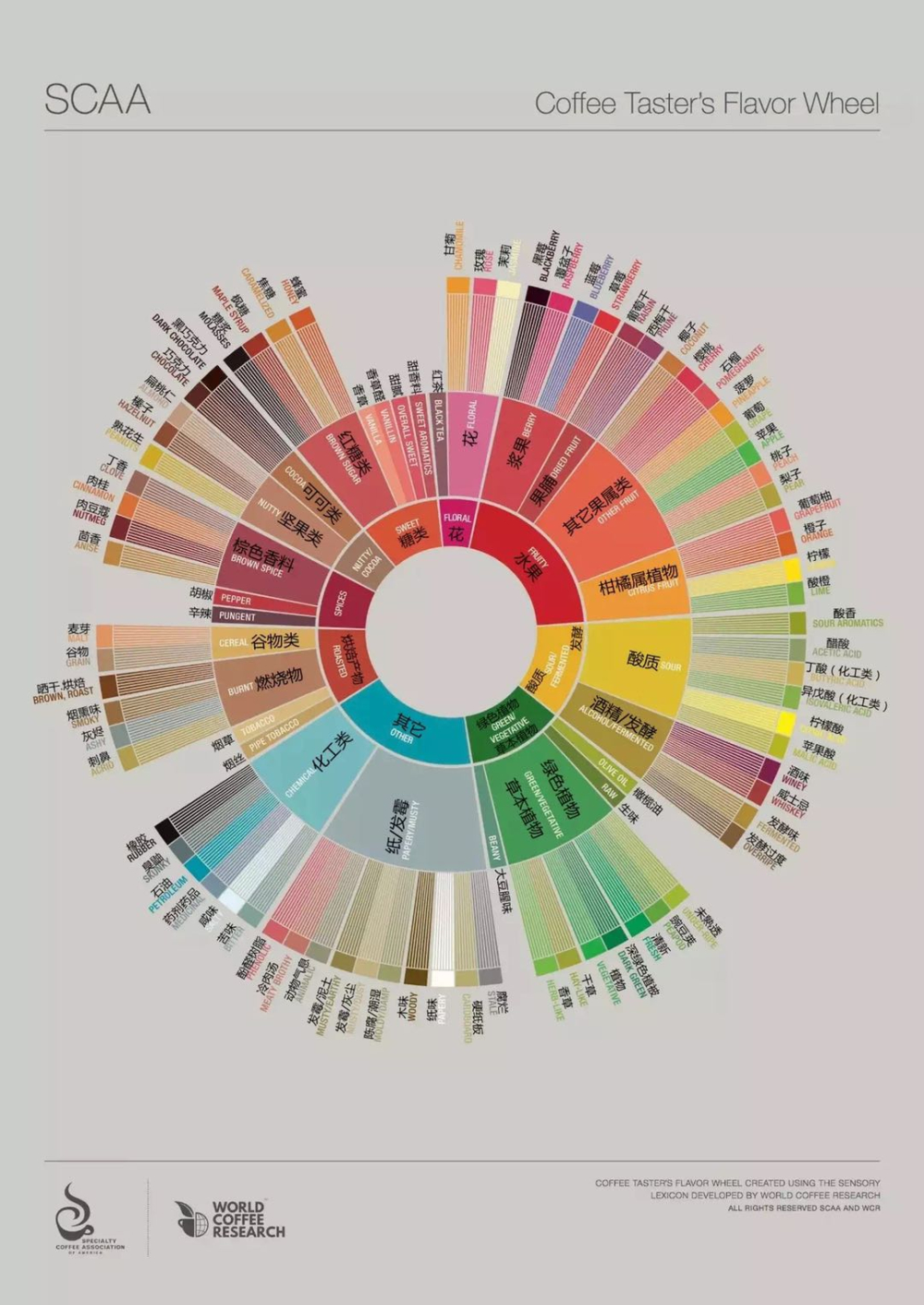
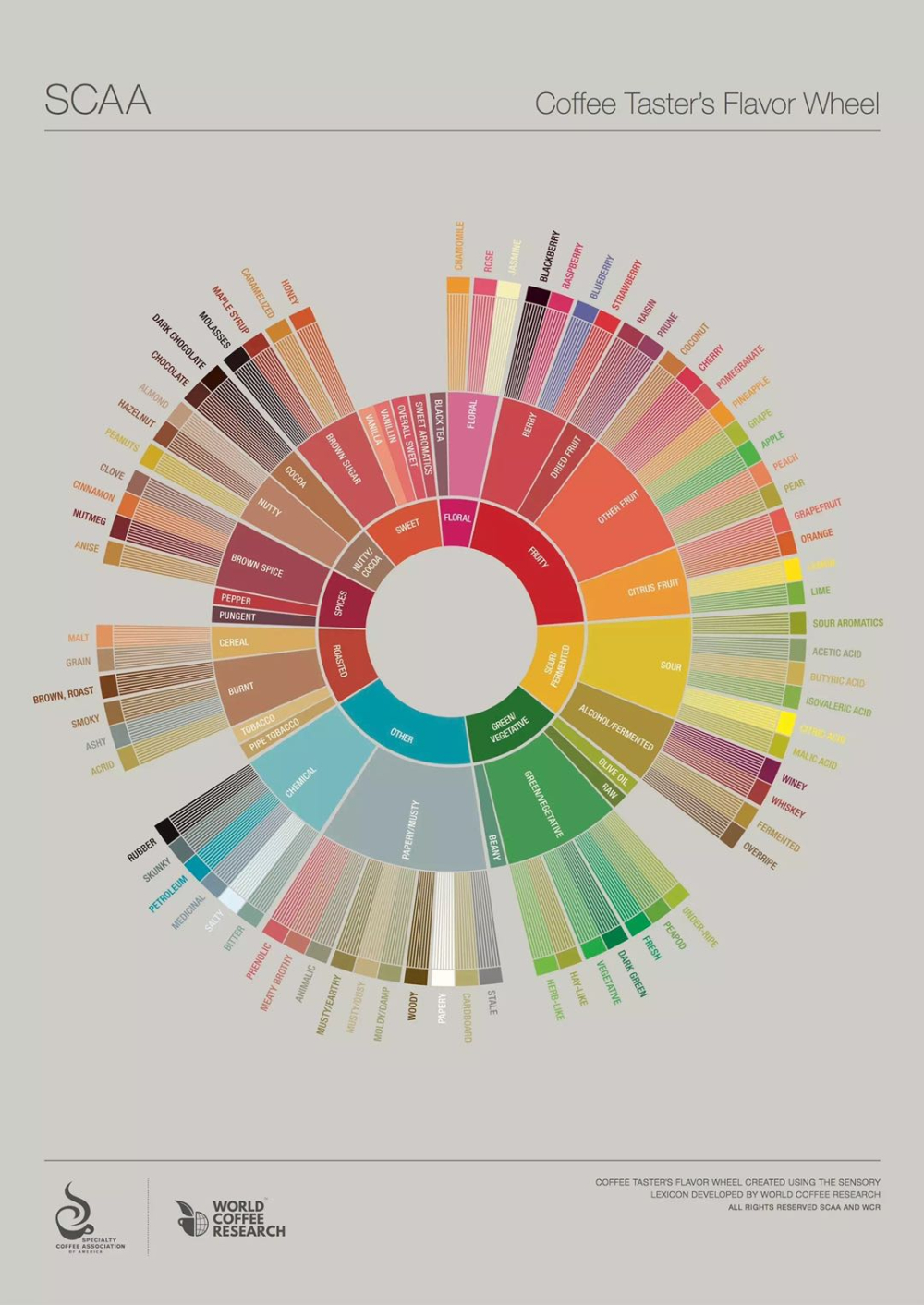
Latest Chinese and English Versions of Coffee Flavor Wheel
Analysis of the Old Version Flavor Wheel
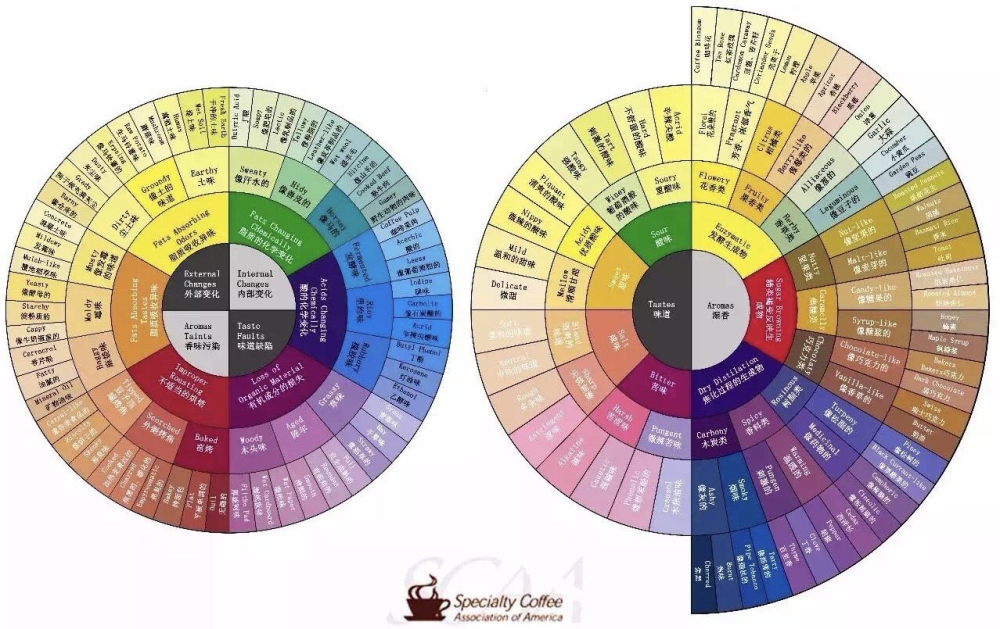
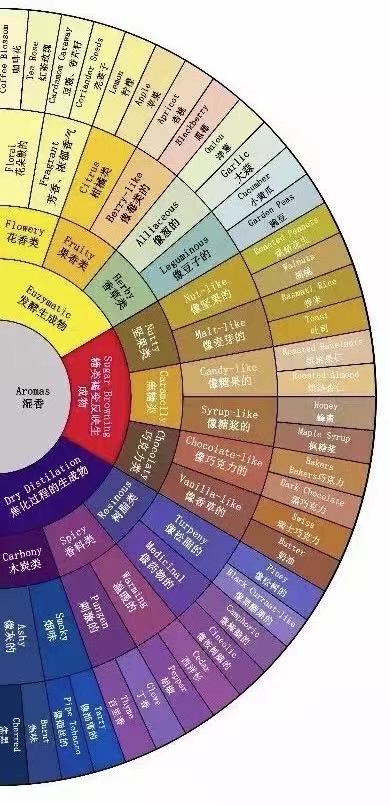
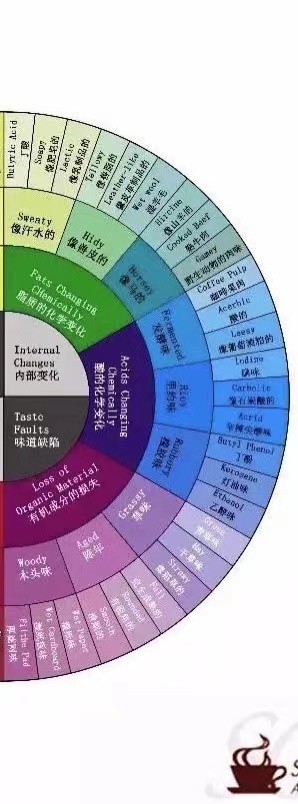
Anyone into specialty coffee has probably seen this SCAA flavor wheel, and plenty of drinkers admit they don't really understand it. So let's take a quick look at how the wheel is structured and what it means. It divides into two halves: the negative flavor spectrum on the left and the normal flavor spectrum on the right.
Right Side of the Flavor Spectrum
The Right Half
This section mainly covers how coffee flavors and aromas are classified and how they form.
Enzymatic fermentation: flavors produced during the processing of raw beans (washed, natural, honey process and so on) as a result of fermentation, such as floral and fruit notes.
Sugar browning: flavors produced by caramelization and Maillard reactions during coffee roasting, such as nuts and chocolate.
Dry distillation: flavors produced by dry distillation reactions during coffee roasting, such as currant and smoky notes.
Some people claim the flavor wheel represents the flavors produced by different roast levels from top to bottom, but dry distillation reactions actually begin as soon as roasting starts, so that statement is not entirely accurate.
The Left Half
This half is easy to grasp: it covers the different sensory classifications of basic tastes - sour, sweet, bitter and salty. Future flavor wheels are expected to add umami.

Left Side of the Flavor Spectrum
Right Half
This section describes the defect flavors that arise from improper handling during the harvesting and drying stages, along with flavors that develop during storage as the beans age.
If cherries are not processed promptly after harvest, or if drying humidity and temperature are unreasonable, fermentation will produce Rio flavors, fermented flavors and the like. During drying, if the temperature is too high and the beans heat up too quickly, fats break down and produce leather-like flavors.
After processing is complete, reactions continue inside the raw beans during storage. Organic substances gradually change and are lost, so new beans carry grassy flavors, and after several years of storage the loss of organic matter brings out straw and woody flavors. At that point the coffee tastes very bland!
Left Half
This section covers changes caused by the external environment (cleanliness, humidity and so on) during the storage of processed raw beans, as well as flavors shaped by whether temperatures are reasonable during roasting.
If the drying environment is not clean during processing - for example, if beans are dried on the ground - the coffee absorbs surrounding odors and picks up earthy flavors. If the location is too humid, the beans dry too slowly and may mold, producing musty flavors.
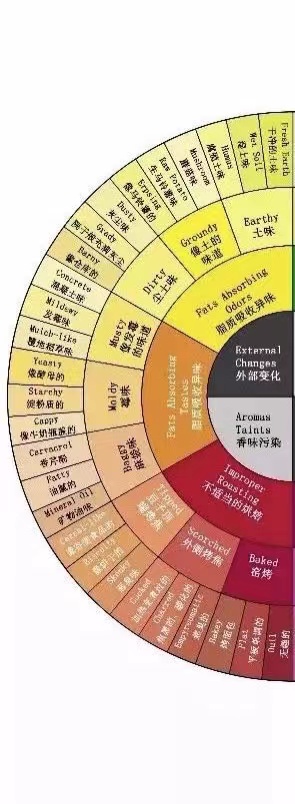
If the temperature rises too quickly during roasting and the beans scorch, smoky, carbon-like flavors appear. If it rises too slowly, the coffee's flavors are diminished and seem dull and uninteresting.
On the right side, "fats changing chemically" and "acids changing chemically" produce defect flavors treated as serious defects. In SCAA cupping, 4 points are deducted if these flavors are detected. The "fats absorbing odors" and "fats absorbing tastes" defects on the left are considered minor, deducting 2 points if detected in cupping. The "improper roasting" and "loss of organic material" categories at the bottom are not raw bean defect flavors, so no defect points are deducted, but they do lower the score in flavor performance.
FrontStreet Coffee Recommendation
Reading the flavor wheel is one thing; tasting the difference honey processing makes is another. Honey process grew out of the semi-washed, or pulped natural, method, which strips the skin before drying to shorten drying time while avoiding the off-flavors of a bad fermentation. FrontStreet's Cerrado is a classic Brazilian pulped natural, carrying clear cream, peanut, nut and chocolate notes, and its success drew the attention of Costa Rica, where producers refined the idea into honey processing by varying how much mucilage is left on the bean and how long it dries. That evolution produced the distinct black, red, yellow and white honey styles you see named on the wheel's enzymatic fermentation branch.
If you want to taste how far that spectrum reaches, FrontStreet's Costa Rica Blackberry uses a black honey process that removes almost no mucilage and dries for at least 2 weeks, with covers used to keep the sun from drying the beans too fast and regular turning to prevent uneven heat and over-fermentation. Roasted light-medium, it gives off an intense floral aroma and drinks with grape, berry and ripe blackberry flavors. FrontStreet's Strawberry Candy is a blend of Panama Gesha, which supplies the classic orange-blossom honey character, and Costa Rica coffee processed with the raisin honey method that keeps 100% of the mucilage and uses no water; cherries are floated to remove underripe and overripe fruit, dried on raised beds for at least three days, then depulped and dried with constant turning. It ends up with Gesha's floral tea lift plus grape and dried blueberry, soft fruit acidity, an almond finish and obvious sweetness.
Important Notice :
FrontStreet Coffee is a long-established specialty coffee roaster in Guangzhou China, selling freshly roasted beans from its own farm in Yunnan as well as dozens of carefully selected single-origin beans from around the world for both pour-over and espresso. The products deliver consistently excellent quality and great value, with shipping within 24 hours. Guangzhou's FrontStreet Coffee shop is recommended by many coffee lovers, and the beans are now available online at the Tmall 。
FrontStreet Coffee has moved to a new address:
FrontStreet Coffee Address: 315,Donghua East Road,GuangZhou
Tel:020 38364473
 Scan and follow the En Gafei WeChat official account. Please indicate that the reprint comes from "En Gafei".