Coffee Variety Introduction: Pacamara Variety - Blueberry Estate Honey Process Flavor
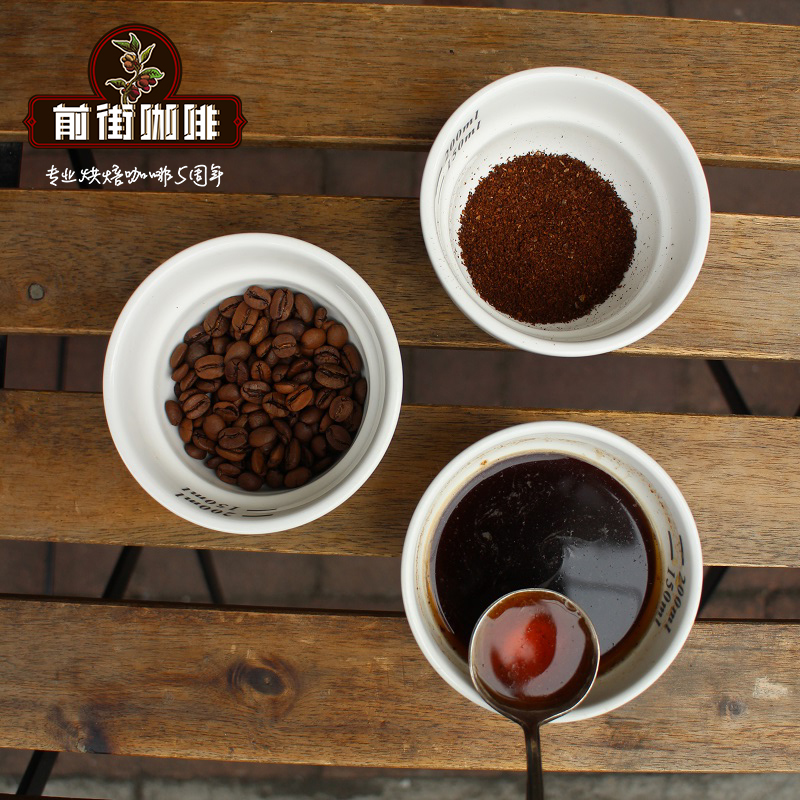
Ask FrontStreet Coffee to name the king of coffee beans and only one answer comes to mind: Pacamara, the "giant" of the coffee world. A man-made hybrid, Pacamara inherits its oversized bean size from its Maragogype parent — size alone would earn it the crown. But its performance in the cup is what wins hearts: lively, bright acidity, complex and layered flavors, and a moderate body that FrontStreet Coffee finds irresistible. Here is an introduction to a Guatemalan Pacamara and the story behind it.
Region Introduction
Guatemala sits in Central America in an exceptionally privileged position, linking North America to the north and bordering South America to the south. Facing the Caribbean Sea and the Gulf of Mexico, its climate is hot and humid, and the country has long been one of the world's important coffee origins. Tropical in location and dotted with volcanoes, Guatemala has a tropical rainforest climate across its northern and eastern coastal plains and a subtropical climate in its southern mountains. The year splits into a wet season from May to October and a dry season from November to April. Annual rainfall ranges from 2,000 to 3,000 millimeters in the northeast, while the south receives 500 to 1,000 millimeters.
Forests cover half the country, and Guatemala sits squarely at the ideal latitude for coffee cultivation. Coffee is a cornerstone of the local economy, and a rich coffee culture has grown around it: people drink coffee daily, and most lunch breaks include a cup.
New Oriente
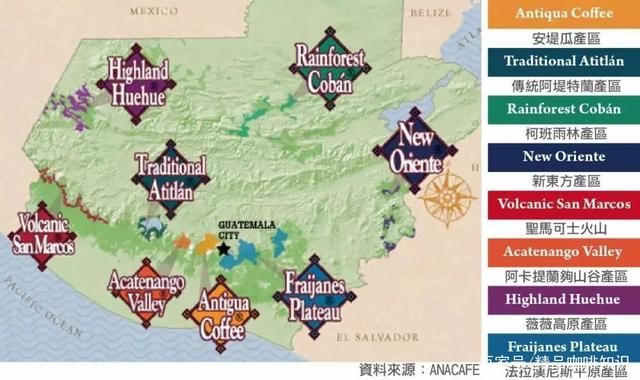
New Oriente is the youngest of Guatemala's eight coffee regions. Rainfall here is abundant and clouds shade the hills year-round. The area was volcanically active in ancient times, and its soil — formed from metamorphic rock — is rich in minerals. Before coffee arrived, New Oriente was the poorest region in Guatemala; since the 1950s, mountain farmers have used this naturally fertile land to build a coffee industry, gradually revitalizing the region. Today it is a rising star of Guatemalan coffee.
El Morito Estate
FrontStreet Coffee's research shows that El Morito is among the highest and most exceptional farms in all of Guatemala. Its owner manages the farm with professional rigor, challenging the limits of high-altitude Arabica cultivation — the widely held belief that the higher the altitude, the better the flavor. In recent years the farm has shown remarkable strength in competition after competition. At such extreme altitude, you pass through two cloud layers to reach it; the cold climate nurtures exceptionally resilient fruit and outstanding cup character. Varieties planted include Pache San Ramon, Catuai, Bourbon, Maragogype, Pacamara, Maracaturra, and Geisha, sectioned off across the farm so each lot develops its own flavor and texture — one of the very reasons FrontStreet Coffee chose this bean.
The farm is also a perennial Cup of Excellence (COE) award winner:
- 2013 Cup of Excellence — 2nd Place
- 2014 Cup of Excellence — 3rd Place
- 2015 Cup of Excellence — 2nd Place
- 2016 Cup of Excellence — 9th Place
- 2017 Cup of Excellence — 4th Place
- 2018 Cup of Excellence — 3rd Place
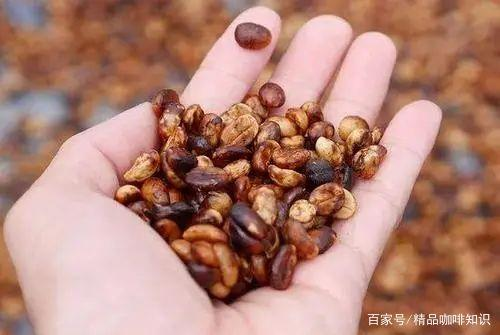
Honey Processing
Honey processing evolved from the pulped natural method. The key difference from fully natural processing is that the skin and pulp are removed before drying, while the mucilage layer is left intact on the parchment and sun-dried directly.
1. Float the Defects
Cherries are poured into a large water tank. Underdeveloped, poor-quality beans float to the surface, while mature, dense cherries sink. The floaters are skimmed off, completing the sorting.
2. Depulp
A pulping machine strips the skin and pulp from the cherries, leaving the mucilage, parchment, and silver skin in place.
3. Sun-Dry
The mucilage-coated beans are spread on drying patios and sun-dried until moisture falls to 10–14%.
4. Hull
Specialized machines then remove the dried mucilage and parchment, completing the process.
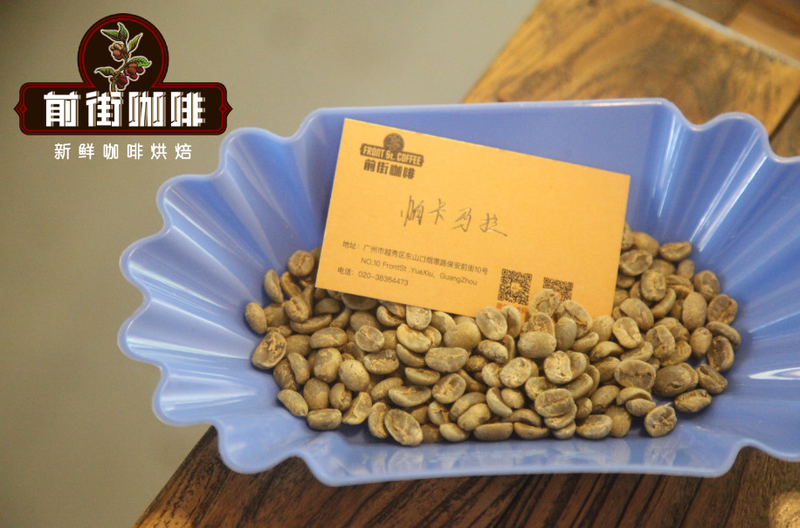
Pacamara
Pacamara is a cross of Pacas and Maragogype first discovered in El Salvador in 1950.
Salvadoran researchers first cultivated it in 1958. It is that rare success of artificial breeding: Pacamara combines the fine flavor of Pacas with the giant size of Maragogype, its beans running at least 70–80% the size of "elephant beans." The variety's signature is its lively, intricate acidity — biscuit-like one moment, fruity the next — backed by excellent body and mouthfeel.
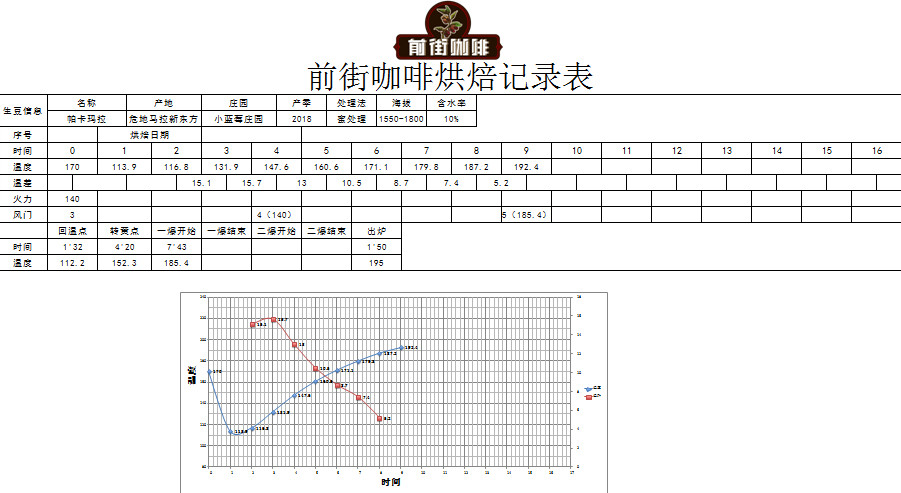
FrontStreet Coffee's Guatemala Pacamara Roasting Analysis
Roaster: Yangjia 800N semi-direct flame (300 g batch size)
Preheat the roaster to 170°C with the air damper at 3, then charge and apply heat to 140°C. The turning point comes at 1'32" at 112.2°C. At 140°C, hold the heat and open the damper to 4. The beans yellow at 5 minutes as the grassy aroma fades, entering the drying stage. Keep the heat and damper unchanged; drying completes at 6'50", when wrinkles and dark spots appear on the bean surface and the toast aroma turns to coffee aroma — the prelude to first crack. Listen carefully now. First crack begins at 7'43"; open the damper fully to 5 and hold the heat. Develop for 1'50" after first crack and drop the beans at 195°C.

The Agtron color value is 66.1 (upper image), the Agtron pink value is 86.1 (lower image), and the Roast Delta is 20.
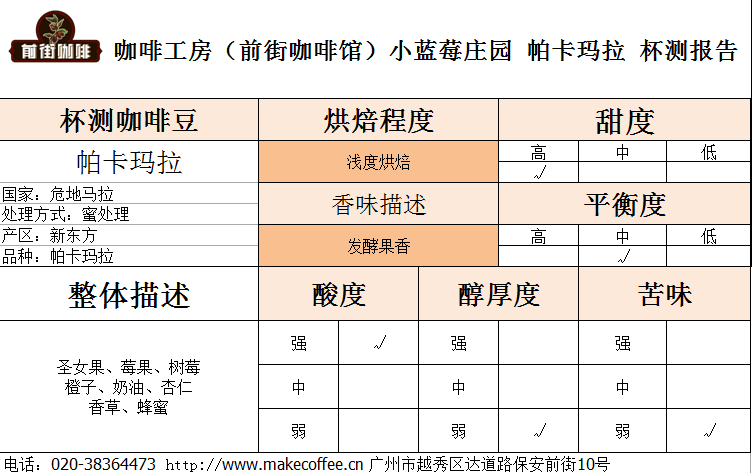
FrontStreet Coffee's cupping notes for this Guatemala Pacamara: cherry tomato, berries, raspberry, orange, cream, almond, vanilla, and honey — a well-balanced sweetness and acidity with rich layers of flavor.
Guatemala El Morito Estate
Country: Guatemala
Region: New Oriente
Altitude: 1,550–1,800 m
Processing: Honey process
Grade: SHB
Variety: Pacamara

FrontStreet Coffee's Guatemala Pacamara Brewing Analysis
Recommended method: Pour-over
Dripper: Hario V60
Water temperature: 90°C
Coffee-to-water ratio: 1:15
Grind size: BG 5E (80% pass-through on a #20 sieve)
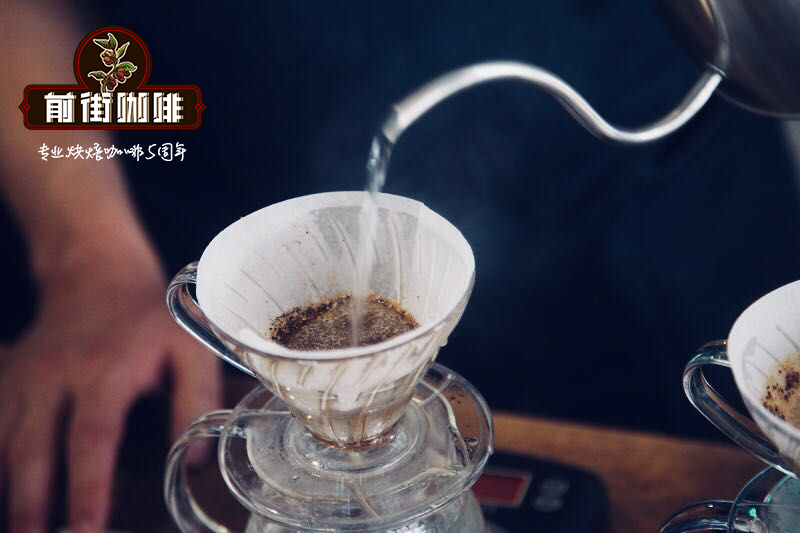
Brewing technique: Bloom with 29 g of water for 32 seconds, pour in stages up to 120 g, and once the water level drops and the coffee bed is about to be exposed, continue pouring to 226 g and stop. When the bed is about to break the surface again, remove the dripper (timing starts from the bloom). Total extraction time: 1 minute 56 seconds.
Flavor: Nutty aromas up front; plum and passion fruit acidity while hot, with light fermented-fruit notes. The mid-palate brings creamy sweetness and nuttiness, and the finish shows a green-tea character with a persistent sucrose aftertaste. As the cup cools, citrus acidity emerges with sweet-tart vibrancy, closing on rose tea fragrance and a hint of brown sugar.

FrontStreet Coffee Recommendation
Honey processing has a fascinating family tree. Its ancestor is Brazil's pulped natural method — removing the skin and drying the beans with some mucilage intact — which shortens drying time and avoids the off-flavors of careless fermentation; FrontStreet's Cerrado lot is a classic pulped natural Brazil with clear cream, peanut, nut, and chocolate notes. Costa Rica borrowed and refined that method, varying how much mucilage is kept and how long the beans dry, giving rise to the black, red, yellow, and white honey grades.
For a deeper honey experience, try FrontStreet Coffee's Blackberry lot, a black honey coffee in which virtually none of the mucilage is removed. Drying stretches over at least two weeks under shade covers to slow the process and let sugars fully develop, with regular turning to prevent uneven-heat over-fermentation — far more labor-intensive than standard honey. Roasted medium-light, it is intensely floral as grounds, with grape, berry, and ripe blackberry flavors in the cup.
And if you want honey process pushed to its limit, FrontStreet Coffee's Mozart (Costa Rica raisin honey) pre-dries whole cherries on raised beds for at least three days before depulping, retaining 100% of the mucilage — a method even more demanding than black honey. Whether brewed as pour-over, cold brew, or moka pot, you'll find osmanthus, pineapple, and raisin aromatics. For a honey-processed Geisha hybrid, the Strawberry Sugar blend pairs Panamanian Geisha's classic orange-blossom sweetness with raisin-honey Costa Rica: grape and dried-blueberry fragrance, soft fruit acidity, an almond finish, and pronounced sweetness.
Important Notice :
FrontStreet Coffee is a long-established specialty coffee roaster in Guangzhou China, selling freshly roasted beans from its own farm in Yunnan as well as dozens of carefully selected single-origin beans from around the world for both pour-over and espresso. The products deliver consistently excellent quality and great value, with shipping within 24 hours. Guangzhou's FrontStreet Coffee shop is recommended by many coffee lovers, and the beans are now available online at the Tmall 。
FrontStreet Coffee has moved to a new address:
FrontStreet Coffee Address: 315,Donghua East Road,GuangZhou
Tel:020 38364473
 Scan and follow the En Gafei WeChat official account. Please indicate that the reprint comes from "En Gafei".