The Story of Geisha Coffee Beans: A Description of the Hand-Dripped Flavor Characteristics and Differences Between Panamanian and Ethiopian Geisha
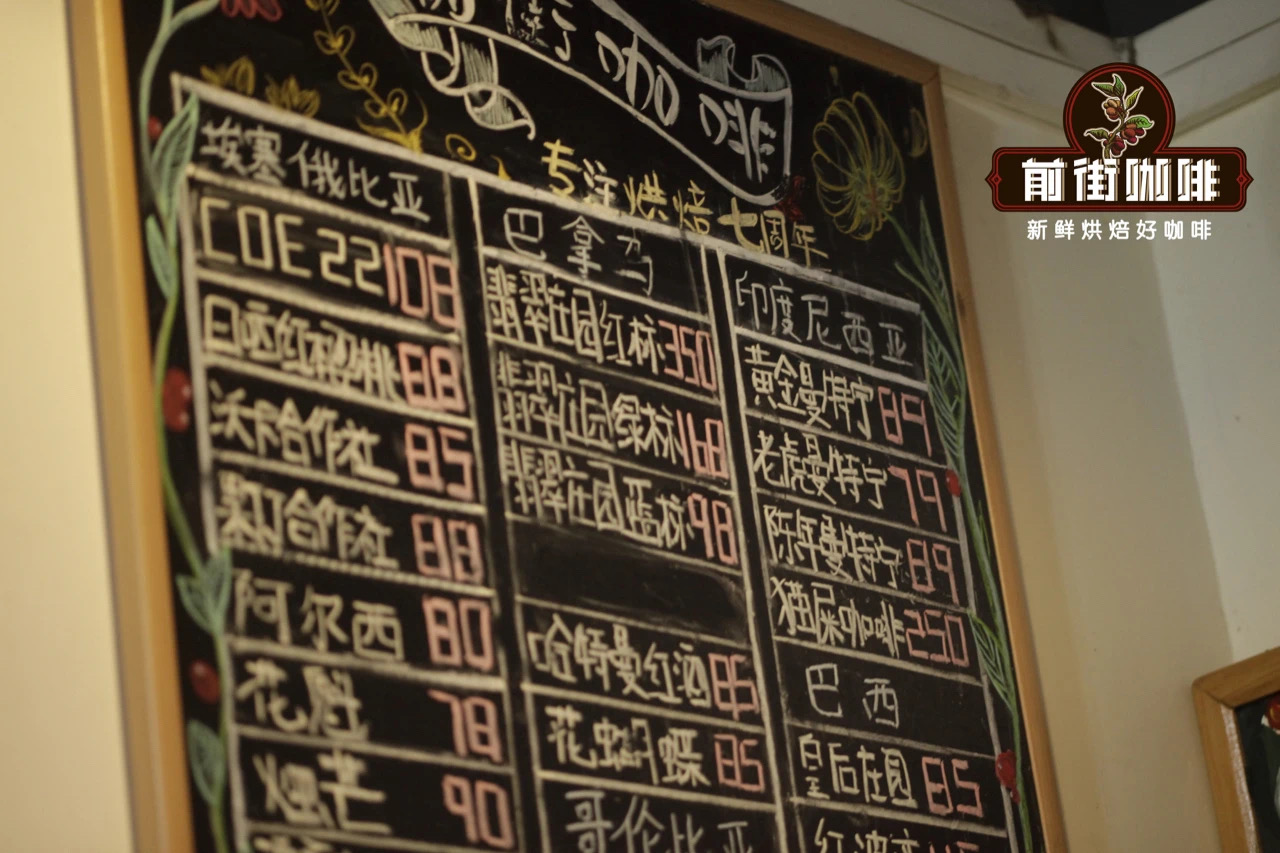
Many customers who walk into FrontStreet Coffee, even those who have never tasted FrontStreet Coffee's Geisha, have already heard the name. Geisha coffee beans carry a truly extraordinary legend, one that has made them famous not only in the Panamanian coffee world but across the specialty coffee industry. In this article, FrontStreet Coffee shares the story of Geisha coffee. By the end, you will clearly understand where Geisha comes from, how it was discovered, and how it rose to fame. FrontStreet Coffee will also compare its Panamanian Geisha with its Ethiopian Geisha, laying out their flavor characteristics, mouthfeel, and differences directly.
The Spread History of Geisha Coffee Beans
Geisha coffee beans originate in southwestern Ethiopia. In 1963, Don Pachi Serracin introduced Geisha trees from Costa Rica to Panama. Because yields were low, which directly limited harvest volume, farmers had little interest in planting them, and the trees were mostly used as windbreaks. That changed when Daniel Peterson, owner of Panama's La Esmeralda estate, happened to notice that the beans from the Geisha trees serving as windbreaks at the highest point of his plantation carried the distinctive citrus and floral aromas of African beans. He entered those beans separately in the 2004 Panama cupping competition, and they became an overnight sensation. From then on Geisha was unstoppable, winning the Panama cupping championship year after year. In the eyes of specialty coffee lovers worldwide today, FrontStreet Coffee's Geisha beans are beyond question the supreme treasure.

The Flavor of Geisha Coffee
Although the Geisha variety's flavor is delicate, that elegance is the product of very specific growing conditions. Geisha is particular about where it grows, requiring high-altitude sites with cloud cover or abundant shade trees, along with fertile soil. High-altitude Geisha shows distinct floral aromas and a delicate, elegant fruit acidity. That elegance is one reason it has become so beloved around the world.
Previously, FrontStreet Coffee wrote many articles about La Esmeralda's Geisha. This article will not describe La Esmeralda's Geisha in detail. Instead, FrontStreet Coffee compares Geisha from its homeland, Ethiopia, with Geisha from Panama's La Esmeralda estate, to see how the two perform.

FrontStreet Coffee's Panama La Esmeralda Geisha
In 2017, Panama La Esmeralda's Geisha beans won the natural processing category championship - their 18th championship trophy. To stand out among so many strong competitors year after year, the delicious genes of Geisha are only part of the story; excellent estate management and careful harvesting and processing are absolutely essential. It is particularly worth noting that La Esmeralda's owner places great importance on environmental protection, which is why the estate's coffee can take part in the Rainforest Alliance cupping competition and has brought home 5 championship trophies.
Using auctions to let valuable lots reach high prices works just as well for selling premium coffee beans. Panama La Esmeralda's Geisha is exceptional, and to make sure its carefully cultivated and managed beans receive fair compensation, the estate holds its own global auction after the annual cupping competition - an event that has become a yearly highlight of the specialty coffee world.

After years of experimentation, La Esmeralda found that only Geisha harvested from trees growing above 1400 meters displays the flavors Geisha should have. As a result, the estate grades mainly by planting altitude, supplemented by actual cupping results, dividing Geisha into three tiers: Esmeralda Special (Red Label), Private Reserve (Green Label), and Geisha 1500 (Blue Label). The auction-grade coffee is Esmeralda Special, commonly known as Red Label.
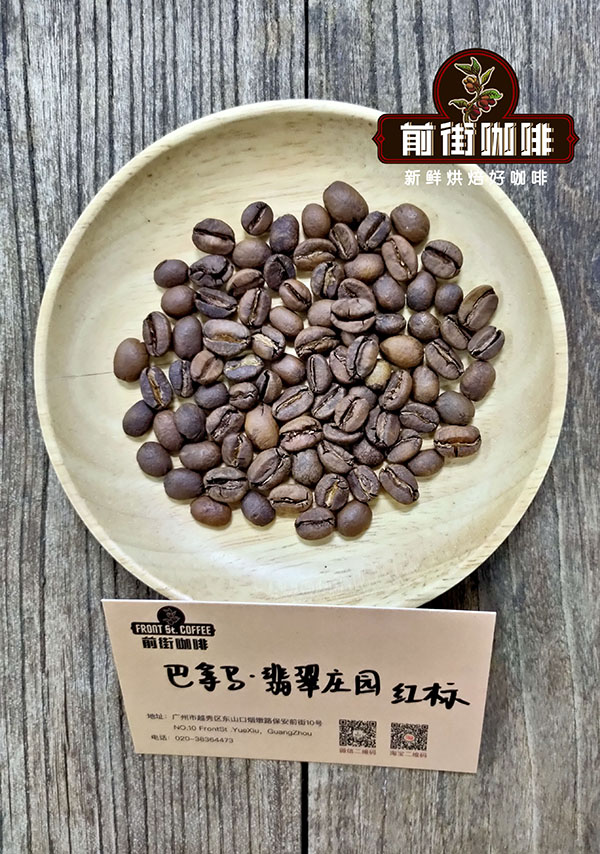
Esmeralda Special is what people usually mean by Red Label. It selects Geisha planted at altitudes of 1600-1800 meters, with cupping scores above 90 points, produced from the Jaramillo and Canas Verdes areas. Red Label lots may be either washed or natural processed. The FrontStreet Coffee Red Label Geisha obtained by FrontStreet Coffee comes from the Mairo plot, La Esmeralda's most recently acquired plot, with an average altitude of 1700-1900m. FrontStreet Coffee's La Esmeralda Red Label Geisha uses natural processing. Brewed, it presents bright rose and citrus aromas, brown rice, berries, apricots, complex fruit, and honey, with a thick, juicy body, rich layers, and noticeable sweetness.
La Esmeralda's Natural Processing
For La Esmeralda's natural processing, harvested cherries go straight to the patios to dry. The cherries dry slowly with the beans still inside, soaking up fruity, aromatic notes, and they dry evenly. Depending on the weather and patio conditions, the coffee dries on concrete patios for 3 to 5 days (8 hours per day). Once it is dry enough, it goes into a Guardiola dryer for 72 hours of rotation to finish the process and prevent fermentation. After drying, machines remove the pulp and remaining material.

The Guardiola is the preferred drying method. As long as the lot size allows, it can handle large volumes of coffee. The Guardiola is a horizontally rotating drum that lets warm air circulate around the beans and draw out moisture. Once dried, the beans go into nylon bags and rest in warehouses for 30 to 45 days. This step, called "reposo," helps stabilize the beans and improve cup quality.
FrontStreet Coffee's Ethiopian Gesha Village Geisha
In 2007, documentary director Adam Overton and his photographer wife Rachel Samuel were filming a documentary about Ethiopian coffee for the Ethiopian government when they came across the Gera coffee forest in the Bench Maji region. During that work, they began to imagine starting their own coffee estate and brand. In 2009, they had the good fortune to meet Willem Boot, owner of the renowned Mule Estate and a BOP judge. Willem Boot's ideas gave the Overtons an opening: go back to Ethiopia and find Geisha's birthplace. Eventually they reached Bench Maji, an area in southwestern Ethiopia near South Sudan, where many places are named Gesha Village and where original Geisha is most likely to be found.

Following Willem Boot, Adam began "exploring" the forests around the estate. In a jungle magically shrouded in dense forest, they found several wild tree varieties. To their greatest surprise, they found wild Geisha. They later learned that this was the Gori Gesha forest, the place where Geisha was first discovered. They collected seeds from the original Geisha trees, screened them, and planted them at Gesha Village. They decided to establish the estate there and named it Gesha Village Coffee Estate, a 475-hectare coffee farm located about 12 miles from the Gori Gesha forest.
Gesha Village grows three varieties, named after the expedition teams that discovered the coffee: Gesha1931, Gori Gesha, and Illubabor, the latter provided by the Ethiopian Coffee Research Center.
Gori Gesha (GG): This variety replicates the genetic diversity found within the Gori Gesha coffee forest.
Gesha 1931 (G31): Combines varieties from different forests and is very similar to Panama Geisha, selected by observing plant morphology, bean appearance, screen size, and cupping flavors.
Illubabor Forest 1974 (IF): Discovered during a 1974 expedition to the Illubabor forest and later developed by the Ethiopian Research Center into a resistant variety.

Ethiopia originally had no estates or estate grading systems. After Willem Boot and Adam discovered the Gesha forest, they decided to apply the Panamanian estate model here, making Gesha Village Coffee Estate the only coffee estate in Ethiopia. Their approach means every batch and every label can be traced back to detailed information about the beans. Gesha Village maintains a strict internal grading system: Auction, Gold Label, Red Label, Green Label, and Chaka. FrontStreet Coffee's most popular Gesha Village Geisha is FrontStreet Coffee's Gesha Village Red Label Geisha.
Red Label Batch
These are batches with complete traceability that show typical Gesha Village flavors, with slightly less intensity and complexity than FrontStreet Coffee's Gesha Village Gold Label, making them very cost-effective single-origin lots.

FrontStreet Coffee: FrontStreet Coffee's Gesha Village Red Label Coffee Beans
Gesha Village Coffee Estate Grower's Reserve
Country: Ethiopia
Region: Bench Maji
Altitude: 1909-2069m
Variety: Gori Gesha
Processing: Natural
Gesha Village Natural Processing
First, floating debris and impurities are removed, then thin layers are dried on African raised beds covered with plastic tarps. During drying on the beds, further screening removes insect-damaged and greenish beans. Total drying time is 18-30 days. FrontStreet Coffee believes naturally processed coffee shows noticeable sweetness, gentle acidity, and complex fruit flavors.

FrontStreet Coffee's Recommendations for Roasting Geisha Coffee Beans
FrontStreet Coffee's La Esmeralda Roasting: Uses a Yangjia 800N with a 380g batch size. Pot temperature 150C when beans enter, heat at 120, damper at 3; return temperature at 1'36", and when pot temperature reaches 140C, open the damper to 4 with heat unchanged; when pot temperature reaches 147.6C, the bean surface turns yellow, the grassy aroma disappears completely, and the coffee enters the dehydration stage. When pot temperature reaches 150C, adjust heat to 100, damper unchanged; at 7'38", the bean surface shows ugly wrinkles and black spots, and the toast aroma clearly turns into coffee aroma, marking the prelude to first crack. At this point, listen carefully for the first crack sound. First crack starts at 8'10", open the damper to 4, develop for 1'28 after first crack, and discharge at 189.5C.

FrontStreet Coffee's Gesha Village Red Label: Uses a Yangjia 800N with a 300g batch size: pot temperature 160C when beans enter, heat at 100, damper at 3; return temperature at 1'40", when pot temperature reaches 142C, open the damper to 4 and increase heat to 150; when pot temperature reaches 148.1C, the bean surface turns yellow, the grassy aroma disappears completely, and the coffee enters the dehydration stage, so reduce heat to 120; at 7'20", the bean surface shows ugly wrinkles and black spots, and the toast aroma clearly turns into coffee aroma, marking the prelude to first crack. At this point, listen carefully for the first crack sound. First crack starts at 8'25", open the damper to 5, develop for 1'45" after first crack, and discharge at 197.5C.
FrontStreet Coffee's Geisha Coffee Bean Cupping Report
FrontStreet Coffee's Panama Red Label Geisha Cupping
Dry Aroma: Jasmine, citrus
Wet Aroma: Citrus, lemon, honey
Flavor: Lemon, honey, berries, orange peel, mango, cream, citrus, tea-like
FrontStreet Coffee's Gesha Village Geisha Cupping
Dry Aroma: Fermented notes
Wet Aroma: Stone fruit
Flavor: Floral, tea-like, cream, tea-like
Through cupping, FrontStreet Coffee found that Gesha Village's Geisha and the Panamanian Geisha we know are not especially similar. Panamanian-grown Geisha beans carry charming floral notes in the dry aroma, wet aroma, and flavor alike, while Gesha Village Geisha is defined by stone fruit in the dry aroma, wet aroma, and flavor. Its floral notes are somewhat weaker than Panamanian Geisha's.
FrontStreet Coffee's Brewing Tips
Dripper: V60
Dose: 15g
Ratio: 1:16
Grind: BG6H (78% passing through a #20 sieve)
Temperature: 91C

FrontStreet Coffee's Brewing Method: First wet the filter paper and preheat the dripper and coffee pot. Use 30g of water for a 30-second bloom. When the water level drops to just before exposing the coffee bed, continue pouring to 125g for the second stage. When the level again drops to just before exposing the bed, continue pouring to 240g and stop. When the level drops once more to just before exposing the bed, remove the dripper (timing starts from the bloom). Extraction time is 1'55"-2'05".
FrontStreet Coffee's La Esmeralda Red Label Brewing Flavor: Bright rose and citrus aromas, brown rice, berries, apricots, complex fruit, and honey, with a thick, juicy body, rich layers, and noticeable sweetness.

FrontStreet Coffee's Gesha Village Brewing Flavor: At high temperature it is citrus acidity without losing body. As it cools slightly, the acidity softens and the flavors shift toward yellow stone fruit, creamy sweetness, faint floral notes, and a light dark-cocoa aftertaste. At low temperature, it becomes maple syrup and berries.
FrontStreet Coffee Recommendation
If the story above has left you wanting to taste Geisha for yourself, FrontStreet Coffee's Panamanian and Ethiopian Geisha lines cover the whole spectrum. On the Panama side, FrontStreet Coffee's Emerald Estate Red Label Geisha - Esmeralda Special - is grown at 1600-1800 meters and cupped above 90 points, and each lot carries its own number so buyers can chase the subtlest flavor differences; FrontStreet Coffee's version comes from the Mairo plot at 1700-1900 meters and is naturally processed, showing bright rose and citrus aromas, berries, apricot, complex fruit, and honey over a thick, juicy body. If you want the estate's signature high-altitude Geisha character in a more accessible form, FrontStreet Coffee's Emerald Green Label Geisha blends several plots into the estate's classic profile at a friendlier price, which makes it excellent value.
On the Ethiopian side, FrontStreet Coffee's Gesha Village Gold Label and Gesha Village Red Label show what the homeland can do. The Gold Label is the Gesha 1931 variety, about 10% of Gesha Village's output and its top coffee outside the auction, often chosen by competition baristas; it is delicately natural processed and cups with remarkable complexity and a lingering finish. The Red Label is the Gori Gesha variety, roughly 15% of production, scoring 88 points or above on the SCA 100-point scale, and every lot is fully traceable with block name, variety, and processing date. For a more affordable introduction to Ethiopian Geisha, FrontStreet Coffee's Gelana Estate Gesha comes from a single-variety estate near the border of Kochere and Gelana Abaya, hand-picked as fully ripe cherries and dried on raised beds for 14-20 days depending on the weather; roasted light-medium, it pours out bright citrus acidity, elegant ginger-flower aroma, ripe-fruit sweetness, and the fine, silky finish that marks the Geisha variety.
Important Notice :
FrontStreet Coffee is a long-established specialty coffee roaster in Guangzhou China, selling freshly roasted beans from its own farm in Yunnan as well as dozens of carefully selected single-origin beans from around the world for both pour-over and espresso. The products deliver consistently excellent quality and great value, with shipping within 24 hours. Guangzhou's FrontStreet Coffee shop is recommended by many coffee lovers, and the beans are now available online at the Tmall 。
FrontStreet Coffee has moved to a new address:
FrontStreet Coffee Address: 315,Donghua East Road,GuangZhou
Tel:020 38364473
 Scan and follow the En Gafei WeChat official account. Please indicate that the reprint comes from "En Gafei".