Gourmet Coffee Fundamentals: What is Drip Coffee?

For more quality coffee knowledge, follow the WeChat public account: FrontStreet Coffee
What is Drip Coffee?
Drip coffee is one of the easiest ways for a beginner to brew something delicious, and it is also one of the best ways to enjoy single-origin coffee. The cup is clean and refreshing, similar to siphon, which is part of why the Japanese favor it. It suits home, office and pared-down setups. Simple to operate, convenient to brew, cheap to equip and easy to get into, drip coffee is defined by those qualities. You can brew a single serving or up to 5 people at once, making it the most relaxed extraction method, unconstrained by space and still delivering high-quality flavor.

Some customers buying beans at FrontStreet Coffee stores ask the barista to grind in advance because they have no grinder at home. Whenever that happens, FrontStreet Coffee's barista asks one question: what equipment do you brew with? The answer is almost always an American drip coffee maker. On hearing that, the barista sets the grinder to the same setting used for pour-over. Many people wonder why grind size should depend on the brew equipment at all.
The Importance of Coffee Grind Size
FrontStreet Coffee believes different brew methods need different grinds because grind size is crucial to extraction. How fine the coffee is ground directly affects extraction time and extraction yield. In plain terms: the finer the grind, the greater the surface area, which speeds up extraction and pulls out more flavor compounds. Coarser grinds have less surface area, so extraction slows and far fewer compounds come out in the same time.
Grind too fine, though, and with everything else equal you extract too much, leaving the cup unpleasantly strong, which is what we usually call over-extraction. Grind too coarse and you risk under-extraction, because not enough flavor compounds come out of the grounds. Coffee like that often tastes watery and thin, or shows a sharp acidity.

Coffee Grind Size Classifications
Internationally, grind size is divided into 7 types: extra coarse, coarse, medium-coarse, medium, medium-fine, fine and extra fine, suited respectively to cold brew, French press, pour-over, drip machines, AeroPress, moka pot, espresso machines and Turkish coffee, among others.
FrontStreet Coffee keeps it simpler, offering three grind sizes, fine, medium and coarse, using the national No. 20 standard sieve with passing rates of 80%, 75% and 70% respectively. Espresso machines and moka pots use fine grinding for a simple reason: under high temperature and high pressure, water moves through the grounds very quickly, so a fine grind slows the flow, extends contact time and extracts as many flavor compounds as possible. For pour-over and American drip machines, we use medium and coarse grinds, which ties back to the roast level of the beans.

Coffee Bean Roast Levels
Customers buying beans at FrontStreet Coffee often ask how roast level changes the coffee. Broadly, we tell everyone that light roast highlights the floral and fruity acidity inside the coffee, medium roast is more balanced with more pronounced nutty notes, and dark roast emphasizes body and chocolate. So what American-style beans would FrontStreet Coffee recommend? In fact, drip machines suit beans of any roast level; it just depends on the flavor you prefer. For light roast, FrontStreet Coffee would first introduce FrontStreet Coffee's Sun-dried Red Cherry. This Ethiopian Yirgacheffe bean has high sweetness and relatively distinct Ethiopian citrus and berry notes.

FrontStreet Coffee's Blue Mountain has always been the pride of the house. With excellent growing conditions and strict export standards, genuine Blue Mountain is exceptionally rare. The FrontStreet Coffee Blue Mountain comes from Jamaica's Rainforest Alliance-certified Clifton Mountain Estate, and its sweet, sour and bitter notes are very balanced. FrontStreet uses a medium roast to make the most of its smooth creamy texture and dark chocolate flavor.

For dark roast, FrontStreet Coffee most recommends FrontStreet Coffee's PWN Golden Mandheling, a classic example of our dark-roasted beans. Golden Mandheling beans are fairly uniform in size, all around 19 mesh. One machine selection plus three hand selections make it especially precious. Here is a friendly reminder: many people try Golden Mandheling and decide it is not that great. Sometimes that is simply because you do not like Mandheling itself, and sometimes because the bag is fake. The FrontStreet Coffee Golden Mandheling on our bean list carries a PWN factory certificate and gunny sacks printed with the PWN logo as proof. If you are unsure about Golden Mandheling sold elsewhere, ask the shop to show the same proof.

How to Use a Drip Coffee Machine
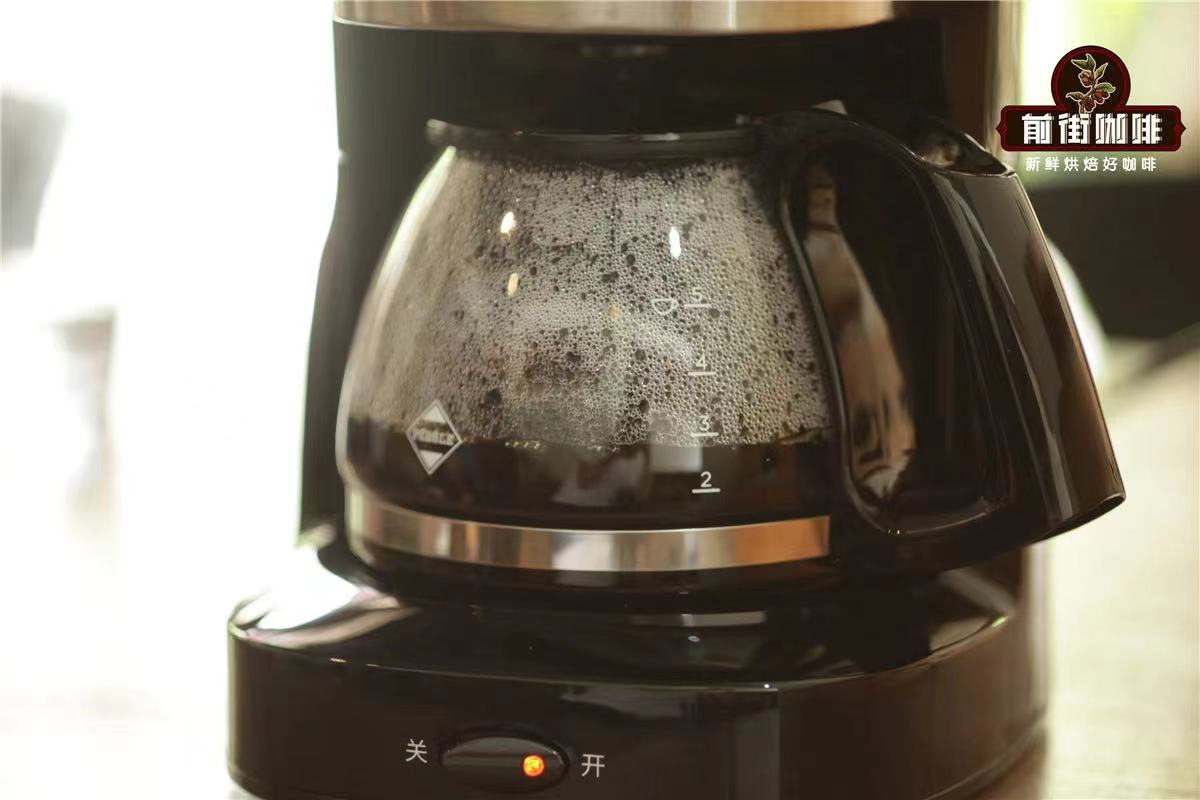
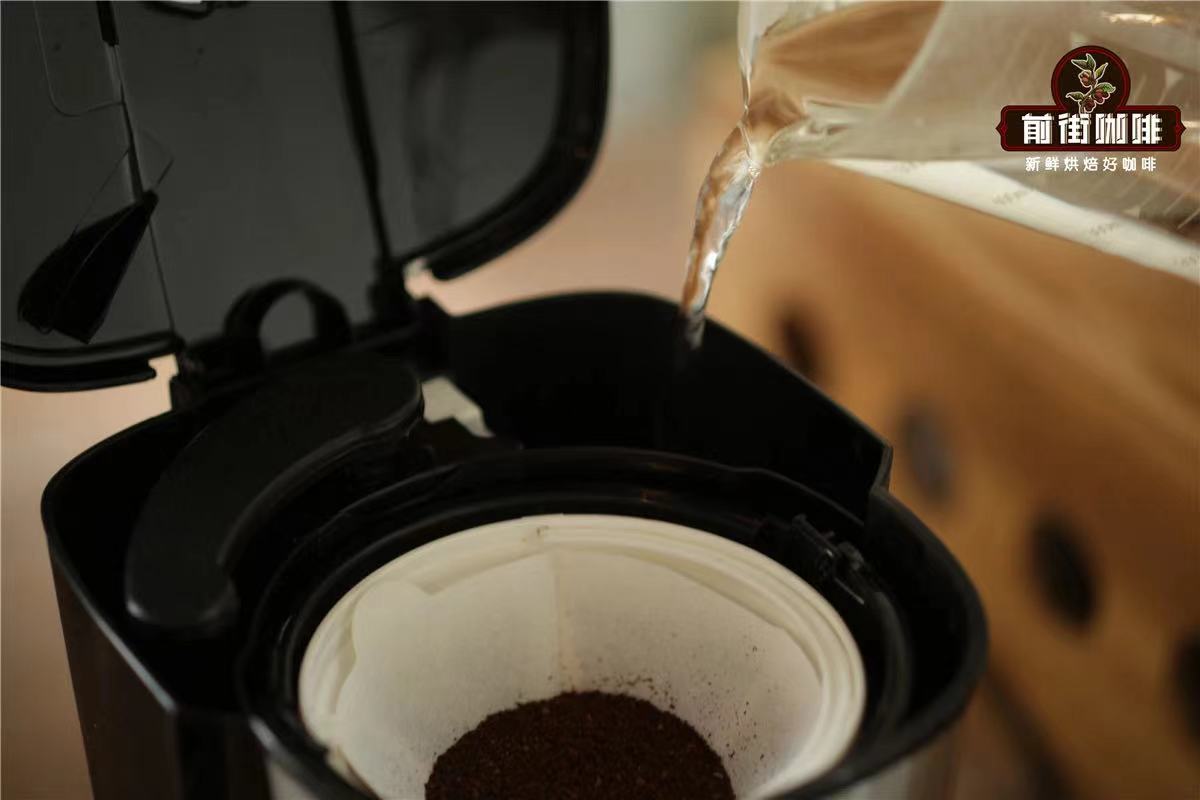
Now that we have covered American-style beans, FrontStreet Coffee will show you how to use an American coffee machine, using a DeLonghi drip machine as the example. After plugging it in, add an appropriate amount of grounds to the filter basket with a scoop, depending on your needs. Generally every 5 grams of grounds uses 100 grams of water, though you can adjust to taste. Add water to the tank, close the lid and press start, and the machine begins extracting. Very simple.
Americano vs. Drip Coffee
Besides the drip method, Americano can also be made simply by adding water to espresso. So which tastes better, the espresso version or drip coffee, and how do the mouthfeels differ? It depends on the person. FrontStreet Coffee believes an Americano made from espresso is fuller-bodied, and the crema layer adds complexity and makes it feel more complete. The drip machine produces something different: relatively cleaner.

The Difference Between Espresso and Americano
At this point many people will ask what the difference is between espresso and Americano. It is simple. FrontStreet Coffee sees espresso as Italian-style, or European-style, coffee, while Americano is American-style coffee. So how do they connect? FrontStreet Coffee has covered this in many articles, and briefly again here: in the past Americans mainly drank drip coffee, but during World War II American troops, unused to the intensity of Italian espresso, diluted it with water. Later, to suit American tastes, the Americano method of espresso plus water gradually emerged. Traditional Italian coffee, beyond espresso, can also take sugar and milk to form drinks such as latte and cappuccino.
FrontStreet Coffee Recommendation
Drip machines and pour-over are forgiving of roast level, so FrontStreet Coffee's list spans the range. On the light end, the Sun-dried Red Cherry from Ethiopia brings high sweetness with clear citrus and berry notes, and the Washed Gutingding from the Worka side of Yirgacheffe leans on white jasmine, bright citrus and lemon acidity with a tea sensation. FrontStreet's Ethiopia Hualv from the Hambela area of Sidama goes further into fruit, with cream strawberry, guava, dried mango, black tea and citrus.
For a medium-to-dark cup, the PWN Golden Mandheling is the classic choice. PWN screens at 18 mesh or above and runs one machine pass plus three hand selections to reach the top G1 grade, and FrontStreet's bags come with PWN certificates and logo-printed sacks. Expect a clean body with nut and chocolate notes and real density. The Lin Dong Mandheling offers the same wet-hulled character in a daily-drinking form, with toasted bread, nuts, caramel, pine and herbs.
Bean selection matters as much as the machine. FrontStreet's Blue Mountain No. 1 from Clifton Estate in Jamaica is certified by the Jamaica Coffee Industry Board and balances sweet, sour and bitter notes with dark chocolate and a creamy texture. For a nutty, chocolatey, budget-friendly daily cup, Brazil's Queen Estate Yellow Bourbon shows cream, peanut, chocolate, toast and sugarcane at medium roast, and works in a drip machine, pour-over or moka pot. If you want something distinctive, the Papua New Guinea Paradise Bird comes from the Sigri area, planted with Typica at 1600-1800 meters in volcanic soil, triple washed and graded AA, with a profile close to Blue Mountain that drinkers often call a "little Blue Mountain."
Important Notice :
FrontStreet Coffee is a long-established specialty coffee roaster in Guangzhou China, selling freshly roasted beans from its own farm in Yunnan as well as dozens of carefully selected single-origin beans from around the world for both pour-over and espresso. The products deliver consistently excellent quality and great value, with shipping within 24 hours. Guangzhou's FrontStreet Coffee shop is recommended by many coffee lovers, and the beans are now available online at the Tmall 。
FrontStreet Coffee has moved to a new address:
FrontStreet Coffee Address: 315,Donghua East Road,GuangZhou
Tel:020 38364473
 Scan and follow the En Gafei WeChat official account. Please indicate that the reprint comes from "En Gafei".