Introduction to Yunnan Premium Coffee Bean Varieties and Basic Knowledge - Characteristics and Pour-Over Flavor Description of Yunnan Small Bean Coffee

China is known as the homeland of tea, yet coffee has been cultivated here for quite some time as well. It is hard to picture that more than a century ago, deep in the mountains of Yunnan, drinking Western coffee was as ordinary as drinking Eastern soy milk. The rich aroma of coffee has drifted around the hearths of every household in that small mountain village for over a hundred years. Coffee came from abroad and counts as an imported product. One might assume that China's coastal cities met coffee first, but the opposite is true. Yunnan, inland in the southwest, was the first place in China to encounter the mellow richness that originated on the distant African continent.
The Rise of Coffee Culture

As people's affection for coffee grows, more enthusiasts chase the pleasure of brewing at home. As one of the world's most popular beverages, coffee fills every moment of life with its rich aroma, always summoning leisurely, romantic scenes. At home, in the office, or at any social occasion, people savor coffee, and it has gradually become tied to fashion, modern life, work, and leisure. Every coffee lover has personal preferences when choosing a coffee.
Yunnan's Coffee History
The history of Yunnan coffee reaches back to 1892, when a French missionary brought coffee seeds into Yunnan and planted them successfully in a valley in Zhukula Village, Binchuan County, Yunnan Province. Among the tens of thousands of coffee trees in the village today, 24 are more than 100 years old and 1,325 are more than 70 years old. Zhukula coffee is known as the "living fossil" of Chinese coffee.

Yunnan's coffee cultivation history, and specifically that of Yunnan small beans, dates to 1904, when the French missionary Tian Deneng brought coffee seeds (Typica) from Vietnam to Yunnan and planted them successfully in Zhugula Village, Binchuan County. That marked the beginning of Yunnan coffee, generally called small-seed coffee and commonly known in China as Yunnan small-bean coffee. Small-bean coffee refers to Arabica; because the beans are relatively small, it is also called small-fruit coffee. Robusta is called medium-fruit coffee, while Liberica counts as large-fruit coffee. Morphological characteristics: small trees or large shrubs, 5-8 meters tall, usually multi-branched at the base with old branches that are grayish-white. Nodes are swollen and young branches are hairless. Leaves are thinly leathery, ovate-lanceolate or lanceolate, with long tapering tips, wedge-shaped or slightly obtuse bases, entire or shallowly wavy margins, and no hairs on either surface. Several cymes cluster in the leaf axils, with white, aromatic corollas. Mature berries are broadly elliptical, red, 1.2-1.6 cm long, with seeds 0.8-1.0 cm long. The flowering period is March to April.
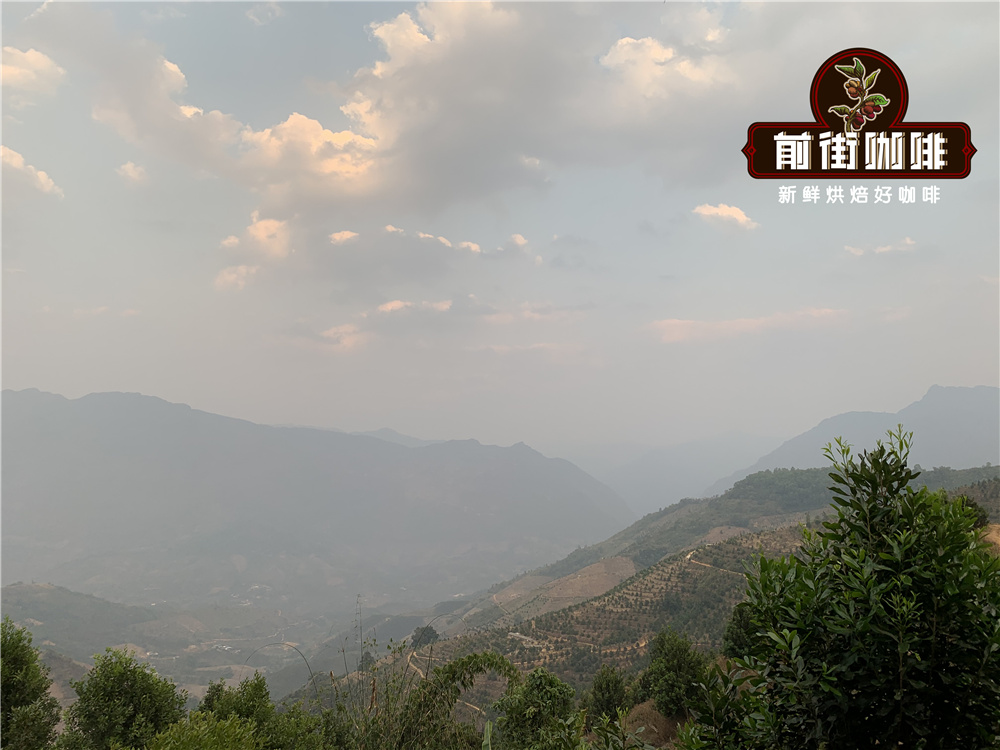
Yunnan has no four distinct seasons, only a dry season and a rainy season. Most coffee-producing regions share similar conditions, which is a fundamental reason some areas use the natural processing method. June marks the start of the rainy season in the producing areas, and the following three to four months bring rainfall, making it the most favorable stretch for growing coffee. Only by planting seedlings at this time can they develop a well-established root system under months of rain and survive the first half-year dry season.
Major Coffee-Producing Regions in Yunnan
Western and southern Yunnan Province lie between 15°N latitude and the Tropic of Cancer. Most areas sit at elevations between 1000-2000 meters, with terrain dominated by mountains and slopes that vary considerably. Fertile soil, abundant sunshine, plentiful rainfall, and large day-night temperature differences together create the distinctive character of Yunnan small-bean coffee: rich without being bitter, fragrant without being overpowering, with a slight fruity note.
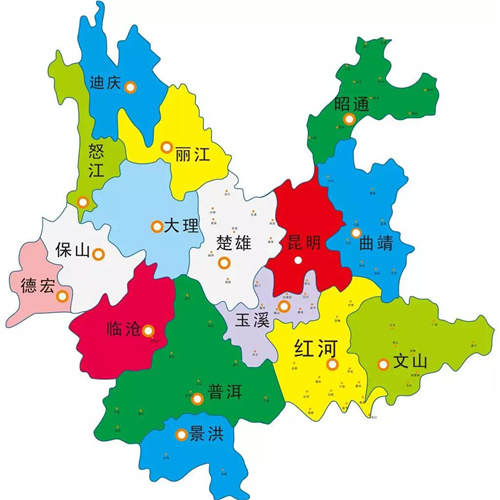
In southern and western Yunnan, places such as Pu'er, Xishuangbanna, Wenshan, Baoshan, Dehong, and Lincang are all distribution areas for Yunnan small-bean coffee cultivation.
Dehong
Known as the "Hometown of Chinese Coffee." Coffee in Dehong Prefecture is cultivated entirely above 1000 meters, with 30,000 mu planted on mountainous areas above 1600 meters elevation. Dehong also relies mainly on organic fertilizers and organic pesticides for coffee cultivation, which yields higher-quality coffee and makes it one of the world's rare premium coffee-producing regions.
Baoshan
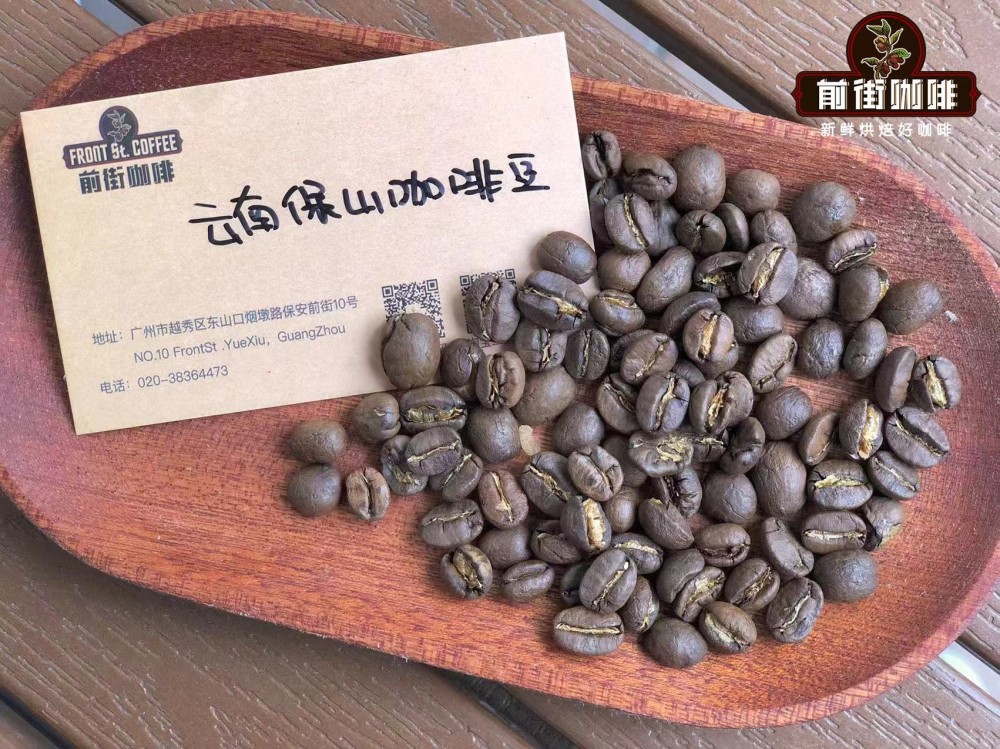
Coffee cultivation in Baoshan began in the mid-1950s, when the first coffee seedling was introduced from Southeast Asia by the late patriotic overseas Chinese Mr. Liang Jinshan. In recent years, with the expansion of international trade, the small-bean coffee of the Lujiang Basin has become renowned. European, American, and Arab countries, especially Britain, the United States, and Egypt, along with merchants from Hong Kong and Macau, all regard it as premium coffee, and demand outstrips supply. In December 2010, after review by China's General Administration of Quality Supervision, Inspection and Quarantine, national geographical indication product protection was granted to "Baoshan Small-Bean Coffee."
Lincang
Its distinctive location and climate have made Lincang a focus of attention for many coffee companies. They have successively established 200-mu and 100-mu high-quality coffee seedling bases in Mengding Town, Gengma Autonomous County, and Lincang Xingfu Farm respectively, and have carried out coffee cultivation in Gengma, Zhenkang, Yun County, Cangyuan, and Yongde.
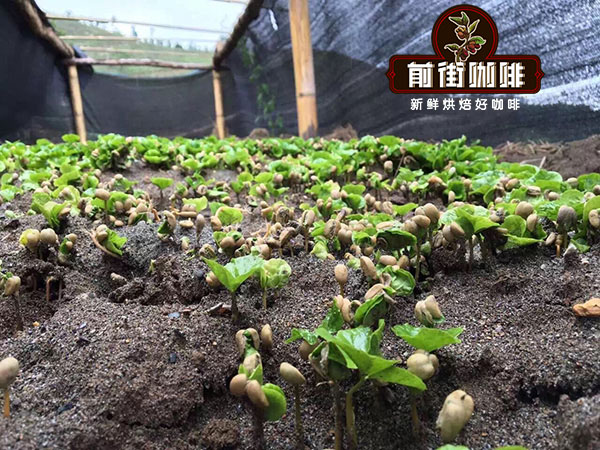
FrontStreet Coffee has established its own estate in Yunnan's Lincang producing region. FrontStreet Coffee selected and bred the Typica variety, a pure Arabica variety with superior flavor compared to the Catimor currently grown across Yunnan. Going from seedling to first fruit-bearing takes at least 4-5 years, which is why Yunnan's coffee farmers, even knowing that Catimor tastes inferior, are reluctant to uproot and replant. FrontStreet Coffee's first batch of self-produced Yunnan coffee beans, in 2020-21, was named "FrontStreet Coffee 2013" and earned unanimous praise.
Pu'er
Pu'er, known as tea country, has a 150-year history of coffee cultivation. In the early 1990s, Pu'er City began to cultivate coffee as a dominant backbone industry for adjusting its industrial structure and helping farmers raise incomes and prosper.
FrontStreet Coffee Yunnan Coffee Bean Varieties
The variety grown most widely in Yunnan today is Catimor, with small amounts of Typica and Bourbon also planted in the Baoshan area. Though all belong broadly to the Arabica species, these varieties differ substantially in character.
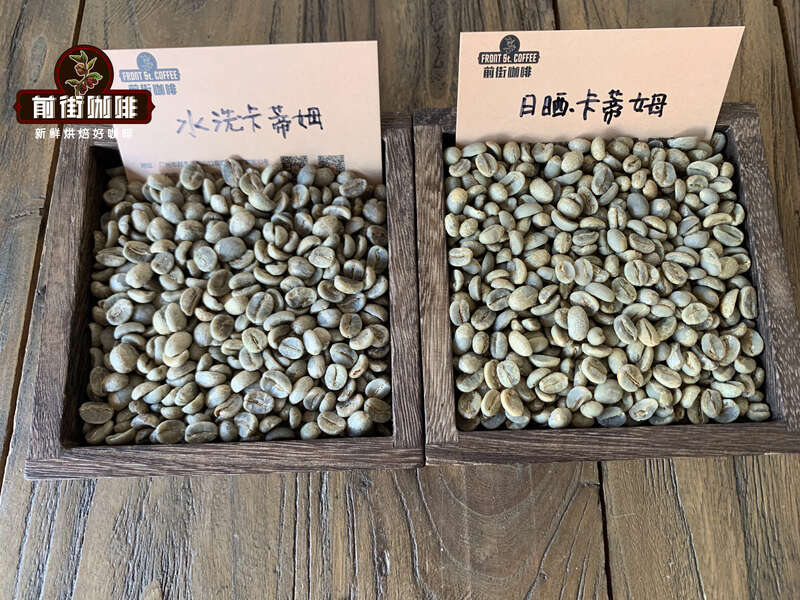
Catimor Coffee Beans
Catimor is a hybrid of the Arabica and Robusta species. Robusta offers good resistance to leaf rust disease, rich oils, high yields, and easy cultivation. After hybridizing with Arabica's Typica, Catimor acquired 25% Robusta genes. It improved resistance to leaf rust, kept the rich oils, and retained some of Typica's rich flavor. That is why most Yunnan estates began large-scale Catimor cultivation.

Why Yunnan does not grow Typica and Bourbon: Catimor is too cheap and can only be sold as a bulk commodity, at about 15-20 yuan per kilogram. That price barely covers harvesting and fertilizer costs, so farmers are unwilling to manage it properly. Typica and Bourbon have low yields and are susceptible to disease, with high management costs and longer exploration times needed to develop unique flavors. On one hand, coffee farmers lack awareness of specialty coffee; on the other, even when they do know, cutting down old trees and spending several years replanting is something farmers would rather avoid.
Typica Coffee Beans
The most classic high-quality Arabica variety, and the source from which many commercial improved varieties descend. Typica beans are known for excellent flavor expression and are recognized as a specialty coffee variety, but they yield extremely poorly and are susceptible to rust disease, requiring more hands-on management. Typica originates from Ethiopia and southeastern Sudan and is the most widely cultivated coffee variety in the Western Hemisphere. The plants are fairly robust but do not tolerate strong light, and they yield better in Hawaii. The top leaves of Typica are bronze-colored, which earned it the name "red-top coffee."

Bourbon Coffee Beans
This variety descends from Typica and was expanded after being planted by the French in 1708 on Bourbon Island, now Réunion Island. Bourbon also has a wonderful aroma and rich flavor, with higher yield and vigor than Typica, and it suits cultivation at 1200-2000 meters. Its resistance to disease and pests is weaker, though, and it is more sensitive to strong winds and heavy rain. Bourbon is the second most important variety in small-bean coffee after Typica. The main branches initially grow upward at a 45-degree angle to the trunk and droop as the fruit load increases. Side branch nodes are denser, with more fruit and higher yields, but the berries are smaller and mature more slowly. Bourbon's terminal buds and young leaves are green, which earned it the name "green-top coffee."
Coffee Bean Processing Methods
Yunnan coffee uses both washed and natural processing. Natural or washed, each has its own flavor characteristics, and if you can, FrontStreet Coffee suggests trying both.

Washed Processing Method
Coffee farmers first pour harvested cherries into large water tanks. Underdeveloped, inferior beans float to the surface while mature, full fruit sinks to the bottom, and the defective fruit on the surface is removed. A pulper then strips the outer skin and pulp. At this point the beans still carry a slippery layer of mucilage, so they go into fermentation tanks for 16-36 hours, during which microorganisms break the mucilage down. Once fermentation is complete, large amounts of clean water wash away the remaining mucilage. Finally the cleaned beans are dried in the sun. The washed method yields coffee with a gentle, bright acidity, appropriate body, and a sweet, spicy fragrance.
FrontStreet Coffee Brewing Recommendations for Yunnan Small-Bean Coffee
FrontStreet Coffee recommends the V60 conical dripper. The V60 has a larger opening, and its distinctive spiral rib design lets air escape more easily, improving extraction quality. The body may not be as rich, but the high concentration that draws out Yunnan coffee's fruit acidity and clear aroma is its hallmark.
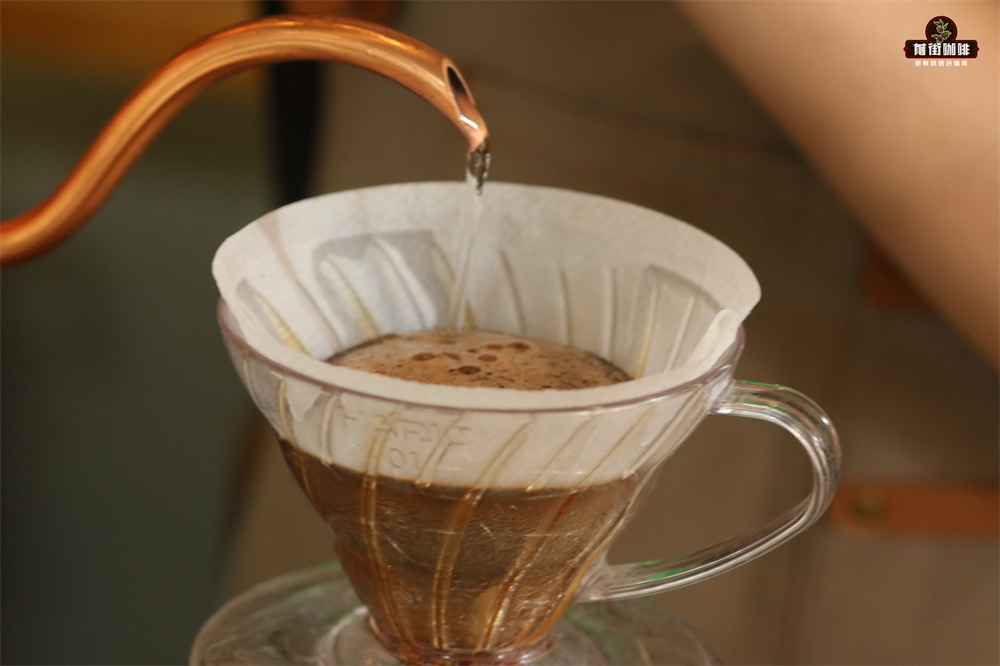
Dripper: Hario V60, Water Temperature: 88°C, Coffee Amount: 15g, Coffee-to-Water Ratio: 1:15, Grind Size: Medium-fine grind (75% pass-through rate on China standard #20 sieve)
FrontStreet Coffee 2013 Natural Typica Coffee Flavor
Rich body, prominent sweet-and-sour notes, with citrus and berry tones, a hint of fermented wine aroma, caramel-like sweetness, a creamy aftertaste, and a black tea-like mouthfeel.
FrontStreet Coffee Washed Yunnan Small-Bean Coffee Flavor
Herbal, nutty aroma, chocolate, caramel.
FrontStreet Coffee Natural Yunnan Catimor Coffee Flavor
Flavor profile: Nuts, chocolate, spices, caramel, plum.
FrontStreet Coffee Brewing Suggestions
Besides the variety, the freshness of the beans is crucial to a good cup. FrontStreet Coffee considers freshness a very important part of brewing, and every bean it ships is roasted within 5 days, because FrontStreet Coffee understands how much freshness affects flavor. FrontStreet Coffee's roasting philosophy is "Freshly Roasted Good Coffee," which ensures every customer who places an order receives the freshest coffee on arrival. The degassing period is about 4-7 days, so by the time customers receive it, the coffee is at peak flavor.
Some customers do need FrontStreet Coffee to grind the beans for them, which is fine. But FrontStreet Coffee must point out that if the beans are ground in advance, there is no need for a degassing period, because during transport the pressure from carbon dioxide building up in the packaging also helps round out the flavor, so you can brew a cup the moment the ground coffee arrives. Ground coffee does need to be brewed promptly, though, because it oxidizes relatively quickly once exposed to air, which means the flavor dissipates faster and the coffee tastes less good. FrontStreet Coffee therefore suggests buying whole beans and grinding fresh for each brew to appreciate the flavor better.
FrontStreet Coffee Recommendation
For an easy introduction to Yunnan coffee, reach for FrontStreet Yunnan Small Bean Coffee. Grown in the Baoshan region and processed washed and roasted medium, it shows soft nut and chocolate sweetness with a light plum acidity, and its friendly price makes it the first taste of Yunnan coffee for many drinkers.
If you want a clearer, more layered expression of the region, FrontStreet 2013 Natural Typica Coffee is the next step. The Typica variety is one of the oldest and purest Arabica types, and FrontStreet's own estate in Lincang uses the traditional natural process. It presents dark berry tones with caramel sweetness, chocolate, and a hint of dried apricot, finishing with a black tea aftertaste.
To taste Yunnan in an espresso, FrontStreet Black Cocoa Blend combines Yunnan small beans with Brazilian Cerrado coffee. The Brazilian portion supplies mixed nut aromas and a balanced body, while the Yunnan small beans take on the chocolate and citrus role, so the Americano balances sweet, sour, and bitter with nut and brown sugar sweetness, and the latte turns smooth and creamy with almond notes.
Important Notice :
FrontStreet Coffee is a long-established specialty coffee roaster in Guangzhou China, selling freshly roasted beans from its own farm in Yunnan as well as dozens of carefully selected single-origin beans from around the world for both pour-over and espresso. The products deliver consistently excellent quality and great value, with shipping within 24 hours. Guangzhou's FrontStreet Coffee shop is recommended by many coffee lovers, and the beans are now available online at the Tmall 。
FrontStreet Coffee has moved to a new address:
FrontStreet Coffee Address: 315,Donghua East Road,GuangZhou
Tel:020 38364473
 Scan and follow the En Gafei WeChat official account. Please indicate that the reprint comes from "En Gafei".