
What Are the Best Coffee Brands from Yunnan Origin - A Guide to Yunnan Small Bean Coffee Grades and Flavor Profiles

Yunnan coffee has become famous, but with so many growing areas and brands, which brand tastes best? At FrontStreet Coffee we carry two kinds of Yunnan coffee: one is the washed Yunnan Arabica (market convention's name for natural-dried Catimor), and the other is FrontStreet Coffee's natural processed Typica.
Coffee Varieties
At FrontStreet Coffee, Yunnan Typica is labeled as Yunnan specialty coffee, while Yunnan Catimor is labeled as Yunnan Arabica, following market convention. Most Yunnan beans on the market today are Catimor, but the earliest Yunnan coffee was not Catimor at all. It was Typica, the oldest and most primitive variety in the Arabica lineage.

Yunnan coffee was originally named for Typica because Typica genuinely is the Arabica "small-seed" variety, and it is Yunnan's oldest coffee variety. Later, when Nestlé entered Yunnan, Typica's poor disease resistance became a problem: to raise yields, farmers were asked to cut down the flavorful Typica trees and replant varieties with plainer flavor but better disease resistance and higher output. The rust-resistant S288 came first, followed later by the higher-yielding Catimor. So the trees now planted across Yunnan are mainly Catimor. Carrying Robusta genes, Catimor resists coffee leaf rust far better than Typica, and yields three times as much.
Compared with Typica, Catimor can fall short on flavor. But with the spread of specialty coffee culture, Yunnan's Catimor now receives far more scientific cultivation, and its quality has improved enormously. Robusta beans are generally bitter, and since Catimor carries some Robusta genes, it too can show that infamous "devil's aftertaste."
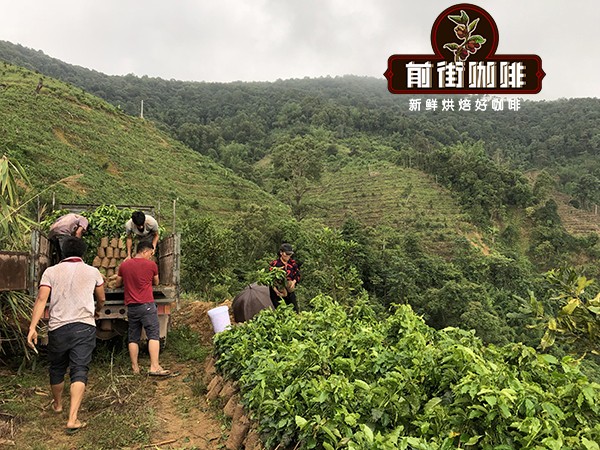
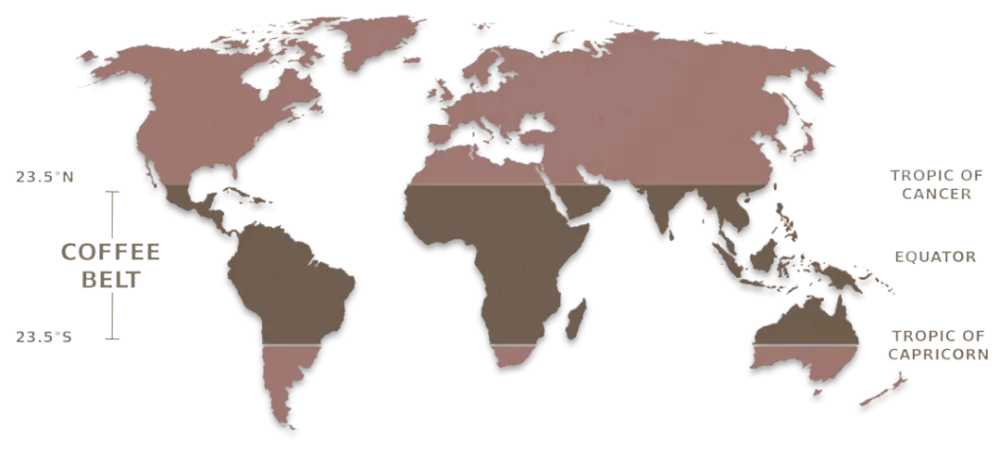
Western and southern Yunnan sit between 15°N and the Tropic of Cancer. Most areas lie at 1000-2000 meters, with rolling mountain and slope terrain, fertile soil, abundant sunshine, rich rainfall, and large day-night temperature differences. These unique natural conditions create the special character of Yunnan Arabica, rich without bitterness, aromatic without intensity, with a light fruitiness.
Yunnan Coffee Bean Grading
Yunnan coffee today is generally graded by particle size plus defect rate. Particle size follows international standard mesh numbers, while international defect-point standards and bean appearance, color, cleanliness, aroma, and moisture content are also referenced.
International Coffee Common Grading Standards:
Beans are graded by size with round-hole screens. The international practice for Arabica sizing covers grades 10-20, where the number is the screen hole diameter expressed as a fraction with that number as numerator over 64, in inches. For example: 14 means green beans that pass through a screen with 14/64-inch holes, and 19 means beans that pass a 19/64-inch screen. (1 inch ≈ 2.54 cm)
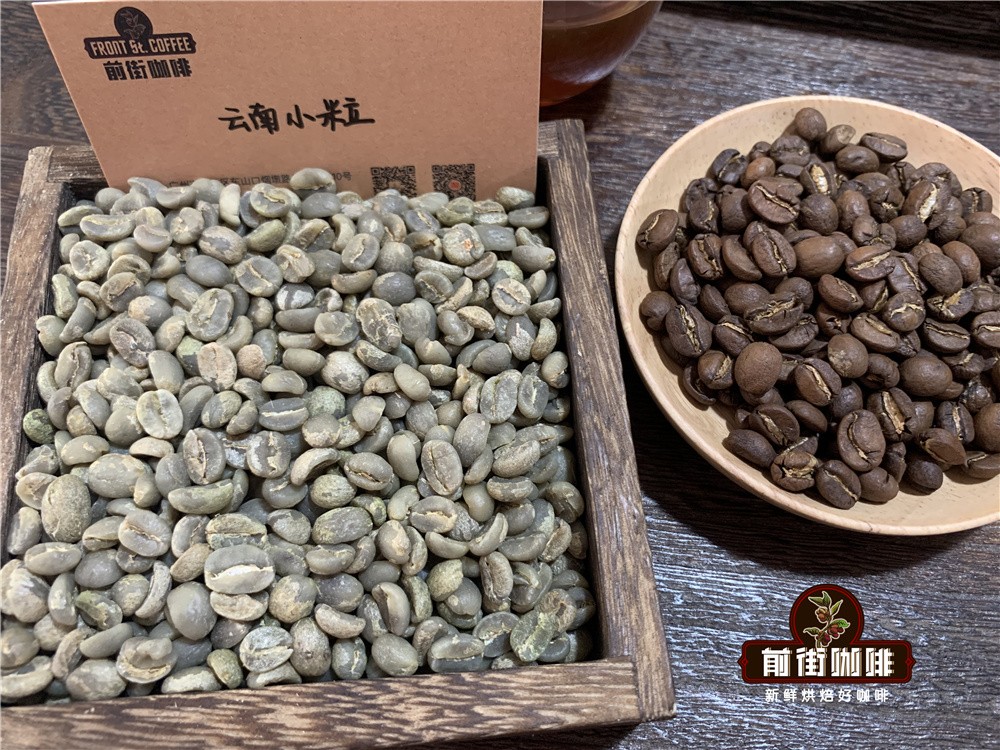
Domestic Coffee Common Grading Standards:
Five grades, based on screens of 6.5, 6.0, 5.5, and 5.0 mm:
Grade 1: Above 6.5 mm, full, complete particles.
Grade 2: 6.0-6.4 mm, full, relatively uniform.
Grade 3: 5.3-5.9 mm, relatively full, slightly less uniform.
Grade 4: 5.0-5.4 mm, incomplete particles present; complete particles account for more than 75%.
Grade 5: Below 5.0 mm, incomplete particles present; complete particles account for more than 30%.
International Standards for Defect Inspection of Arabica Coffee:

Grading by defects is based on how many defects appear in a fixed sample. Under the impurity and defect-bean identification methods of the International Organization for Standardization, 300-gram samples are drawn at random to calculate impurities and defect beans for grading.
Coffee Growing Regions
Yunnan's coffee regions include not only the famous Pu'er and Baoshan but also Dehong, Lincang, and others, and each region's coffee has its own subtle character.

[Pu'er]
Pu'er City comprises Simao, Ning'er, Mojiang, Jinggu, Jingdong, Zhenyuan, Jiangcheng, Lancang, Menglian, Ximeng, and other counties and districts, 9 in all, growing Yunnan Arabica. The annual average temperature is 17-20°C, with planting altitude between 700 and 1600 meters.
[Baoshan]
Baoshan City comprises Longyang, Longling, Shidian, Changning, and Tengchong, five counties and districts growing Baoshan Arabica coffee, a registered geographical indication product. Planting altitude runs from 1000 to 1500 meters with an annual average temperature of 21°C. Baoshan's Lujiang coffee was rated first-class on the London market in the late 1950s.
[Dehong]
Dehong is one of the earliest regions in China to grow coffee. Arabica was introduced from Myanmar in 1914, and large-scale commercial cultivation began in 1953. The annual average temperature in Lincang is 18-20°C, no severe winter cold, no extreme summer heat, with large day-night temperature swings, fertile soil, and abundant rainfall. While the coffee fruit is still ripening, these conditions favor the formation of proteins, sugars, caffeine, and other substances, giving Dehong coffee its full flavor.
[Lincang]
Lincang City includes towns such as Gengma, Zhenkang, Yun County, Cangyuan, and Yongde where coffee cultivation has begun. Lincang's location is distinctive, it borders Myanmar to the west, and its excellent climate, marked day-night temperature differences, abundant rainfall, and mild annual temperatures have made it a focus of attention for many coffee companies.

FrontStreet Coffee saw the potential in Lincang and established its own coffee estate in the region.
FrontStreet Coffee Estate
FrontStreet Coffee has been roasting coffee for 10 years, and our involvement in cultivation actually began half a year before we started roasting. FrontStreet Coffee's predecessor, "Dazhen Coffee," wanted to grow coffee in a place called Dazhen in Guangdong. When the Catimor seedlings reached 20 cm, we finally understood the true relationship and sequence between variety, altitude, and processing for specialty coffee. So FrontStreet Coffee abandoned the Guangdong planting plan, went to Yunnan to study coffee cultivation in depth, and by chance found suitable land to plant.
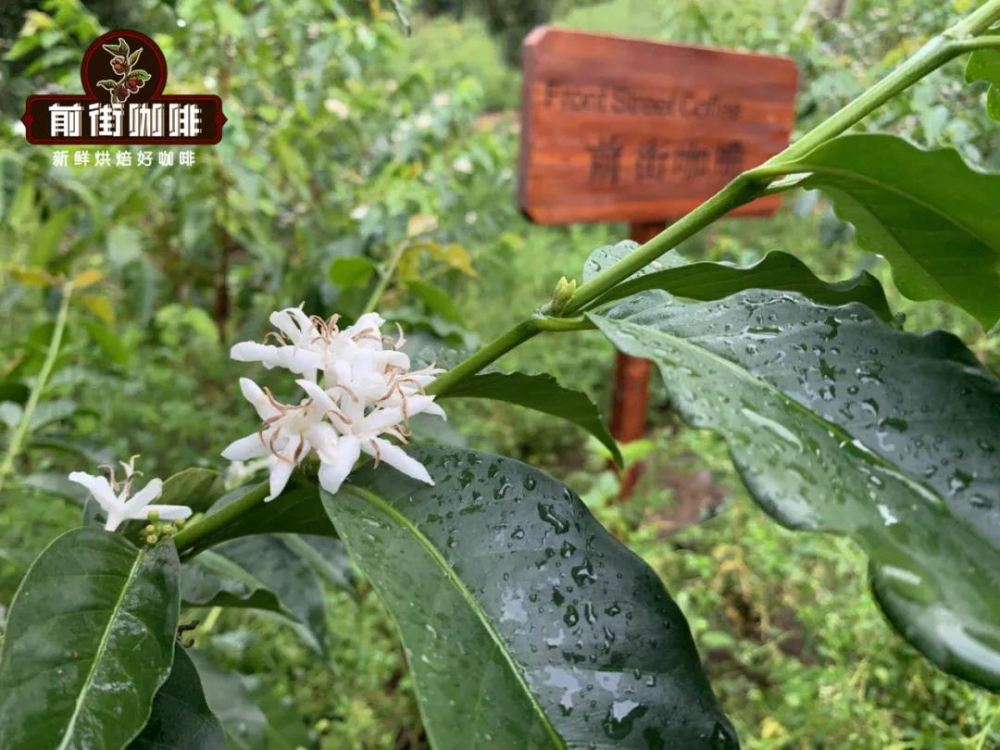
That year, FrontStreet Coffee chose the hardest path: high altitude, Arabica varieties, and disciplined planting.
Yunnan does not have four distinct seasons, only dry and rainy ones. In cultivation, FrontStreet Coffee holds itself to extremely high standards to give the trees a natural, comfortable environment. Since Typica is harder to manage in the field than Catimor and suffers under prolonged sun, the estate preserves a diversity of plant species and a complete ecological environment.

From seedling to first harvest takes at least three to four years. Today, FrontStreet Coffee Estate is welcoming its second coffee production season. Everything we do is so that coffee connoisseurs will say: "This is the taste of Yunnan specialty coffee."
Coffee Bean Processing Methods
FrontStreet Coffee's latest batch uses the most traditional, primitive post-harvest method for green coffee: natural processing. Whole, ripe, intact cherries are spread evenly on drying beds. Because the skin and pulp stay on the bean, drying is more complex and takes longer, and staff must turn the cherries frequently and on schedule to avoid over-fermentation.
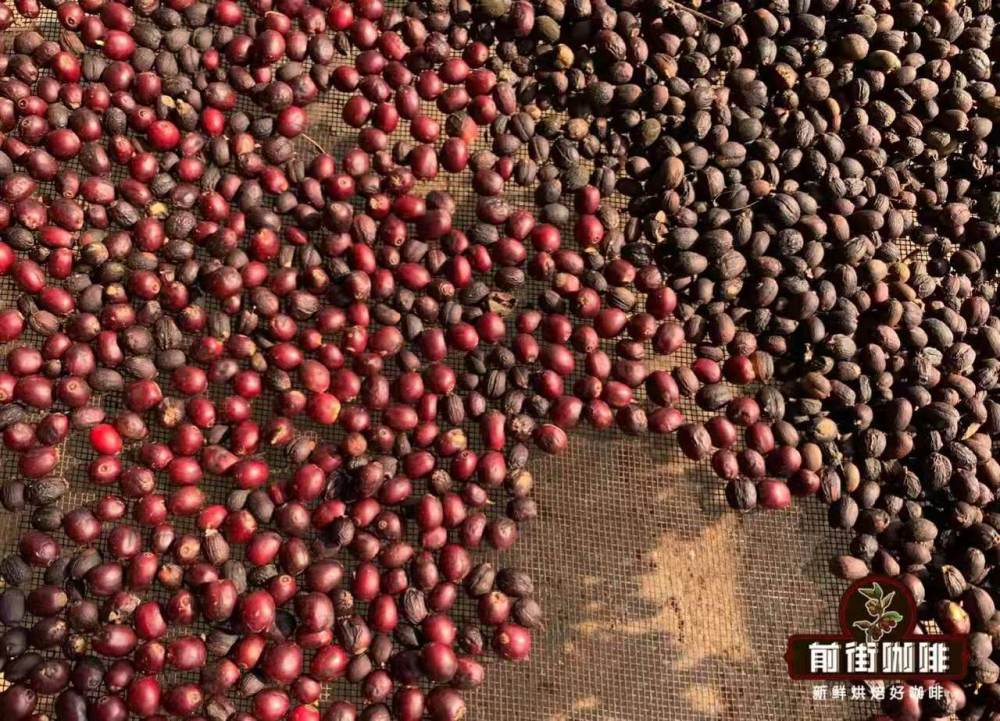
FrontStreet Coffee's natural processed Typica, thanks to this method, has a very strong aroma and outstanding sweetness: fruit-like sweetness preserved in the bean, soft plum acidity, rich nutty notes, and a finish of brown-sugar sweetness with a tea-like sensation. Customers often ask our baristas how to brew it best. The coffee is aromatic without intensity, rich without bitterness, the traditional taste of Yunnan Arabica.
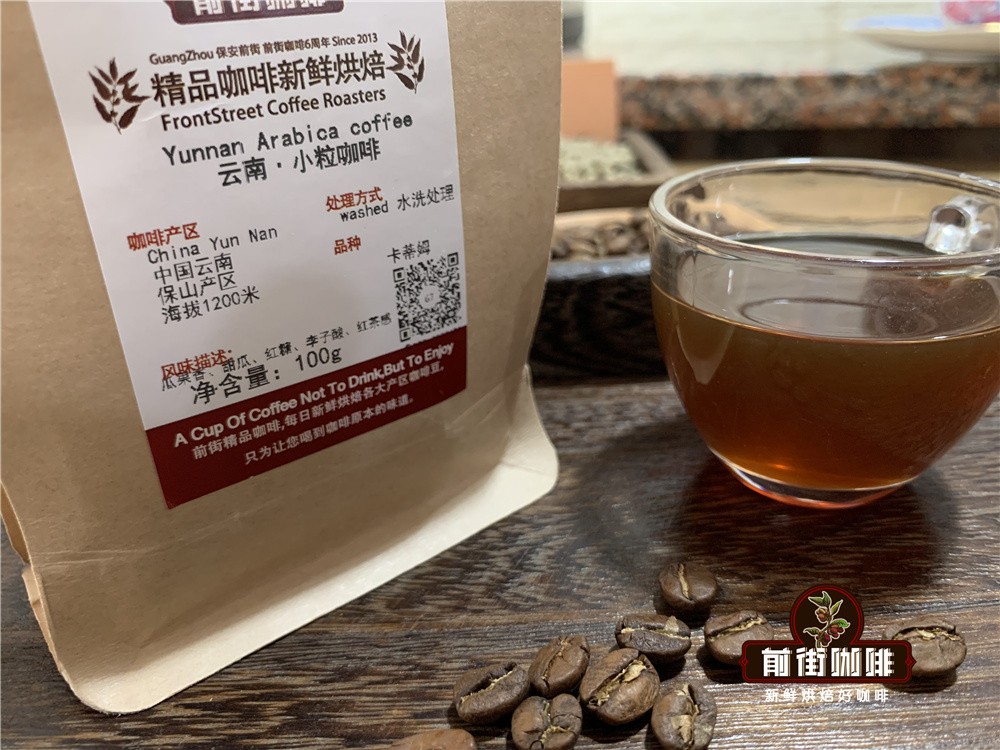
FrontStreet Coffee considers Yunnan Arabica's flavor a neutral, balanced tone, acidity, sweetness, and bitterness all present. So all of our Yunnan coffee is roasted medium, to highlight chocolate and nut roast aromas while keeping some acidity. In cupping, the Yunnan Arabica daily beans show nuts, herbs, brown sugar aroma, melon-and-fruit sweetness, and plum acidity with a balanced mouthfeel; the natural Typica shows chocolate, baked bread, fermented tropical fruits, and a black-tea finish.
FrontStreet Coffee Brewing Parameters for Natural Processed Typica:
To preserve the acidity and tea character of Yunnan coffee, FrontStreet Coffee roasts medium. For brewing: a V60 dripper, a 1:15 coffee-to-water ratio, a medium grind (about raw-sugar size, approximately 80% pass rate on the China No. 20 standard sieve), and 91°C water.
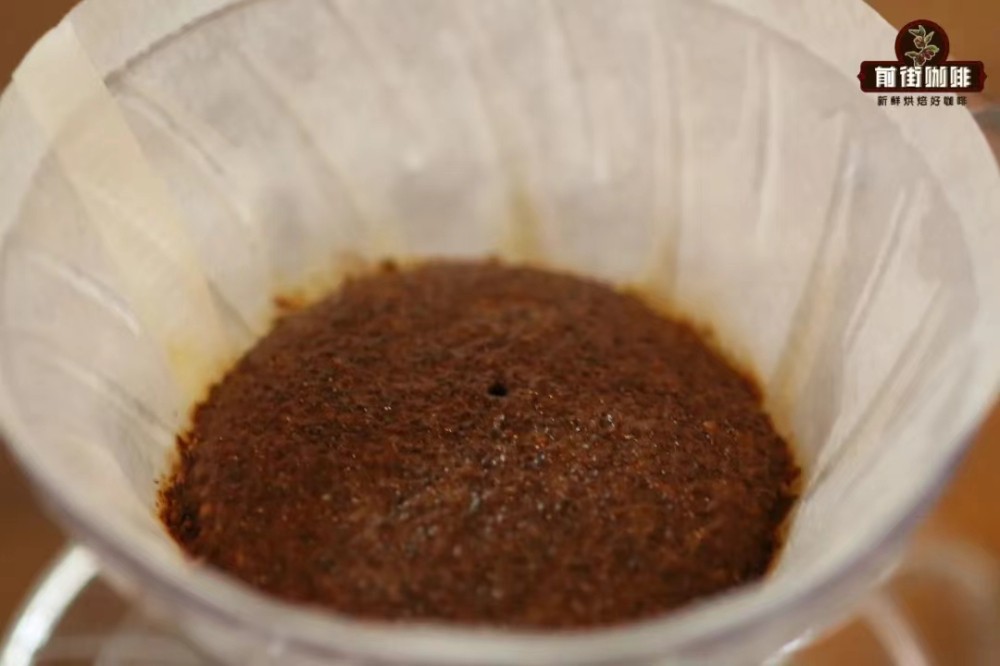
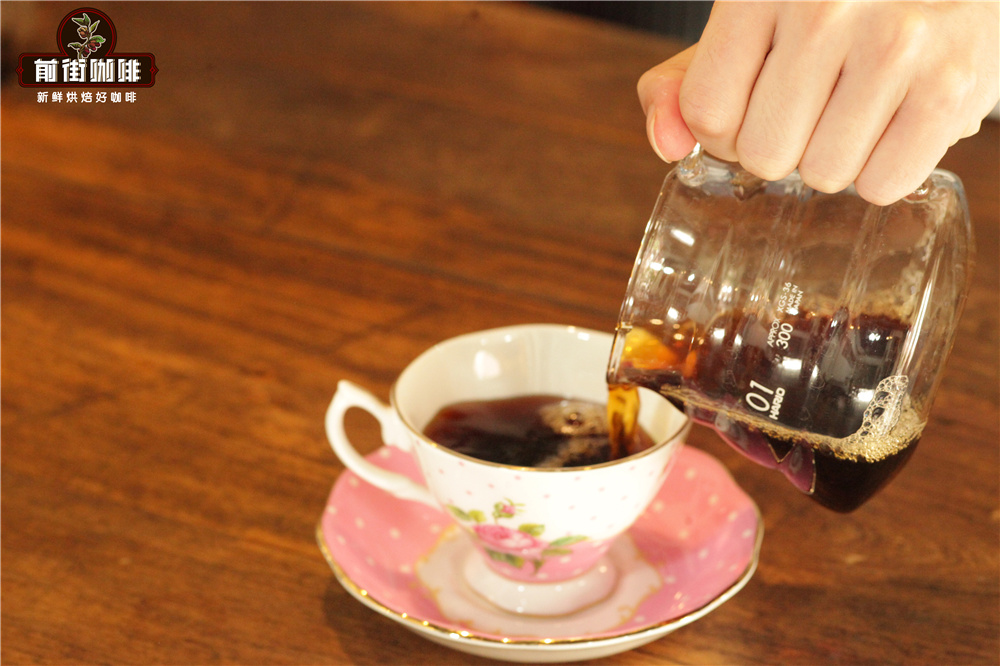
Brew in segments: bloom with 2 times the coffee's weight in water (30g for 30 seconds). Blooming lets the grounds release their internal carbon dioxide so the later extraction runs more evenly. Then pour in small, circular pours up to 125g, continue to 225g, and stop. When the dripper has finished dripping, remove it. Timing from the first pour, extraction takes 2'00". Pick up the server, swirl to even out the brew, then pour and taste.
[FrontStreet Coffee 2013 Natural Processed Typica Coffee Flavor]
Heavy mouthfeel, prominent acidity and sweetness, with citrus and berry notes, a hint of fermented wine aroma, caramel sweetness, a creamy aftertaste, and a black-tea sensation.
FrontStreet Coffee Brewing Suggestions:
Freshness shapes flavor more than almost anything else. The beans FrontStreet Coffee ships are all roasted within 5 days of your order. Our roasting philosophy is "Freshly Roasted Good Coffee." The resting period is about 4-7 days, so by the time a customer receives the beans they are at peak flavor.

A note for those who need ground coffee: pre-ground beans need no resting period, because during shipping the pressure of carbon dioxide in the package rounds out the flavor, so you can brew immediately on arrival. But ground coffee oxidizes quickly once exposed to air, the flavor fades fast and the cup suffers. FrontStreet Coffee therefore recommends buying whole beans and grinding fresh before each brew.
FrontStreet Coffee Recommendation
Which Yunnan brand should you try first? FrontStreet Coffee suggests starting at the beginning: Yunnan "small bean" coffee is simply Arabica, the variety whose cherries are the smallest of the three coffee species, and it traces back to 1904, when the French missionary Tian Deneng carried Typica seeds from Vietnam into Yunnan and planted the first tree in Zhugula village, Binchuan county. FrontStreet Coffee's Yunnan Arabica comes from the Baoshan region, where growing began in the mid-1950s introduced by the patriotic overseas-Chinese businessman Liang Jinshan; the unique dry-hot valley climate around Lujiangba, with mild year-round temperatures but large day-night swings and moderate rainfall, gives Baoshan coffee its distinctive sweet finish. Washed and roasted medium, it shows gentle nut and chocolate aromas with a touch of plum acidity, an affordable first taste of Yunnan's terroir.
For a clearer picture of what Yunnan can do, step up to the FrontStreet Coffee 2013 Yunnan natural Typica, grown on our own estate: only fully ripe red cherries are picked, sun-dried, then roasted medium for balance. The cup carries dark-berry tones, caramel sweetness, chocolate, a whisper of dried apricot, and a black-tea finish after swallowing. And to taste Yunnan in an espresso, try the FrontStreet Black Cocoa Blend, which pairs Yunnan small bean with Brazilian Cerrado: Brazil supplies mixed-nut aromas and balance, Yunnan brings chocolate and citrus, and the blend pulls an Americano with even sweet-sour-bitter structure and nutty, brown-sugar warmth, or a latte with the smooth silkiness of almond and cream, friendly even for beginners. All three are roasted to order, within 5 days of shipping, so every cup arrives at its peak.
Important Notice :
FrontStreet Coffee is a long-established specialty coffee roaster in Guangzhou China, selling freshly roasted beans from its own farm in Yunnan as well as dozens of carefully selected single-origin beans from around the world for both pour-over and espresso. The products deliver consistently excellent quality and great value, with shipping within 24 hours. Guangzhou's FrontStreet Coffee shop is recommended by many coffee lovers, and the beans are now available online at the Tmall 。
FrontStreet Coffee has moved to a new address:
FrontStreet Coffee Address: 315,Donghua East Road,GuangZhou
Tel:020 38364473
 Scan and follow the En Gafei WeChat official account. Please indicate that the reprint comes from "En Gafei".

