Espresso Coffee VS Americano Coffee VS Pour-Over Coffee - Flavor Profile Changes in Different Coffee Forms

Looking at the coffee waves of recent years: after instant coffee came espresso, which rose to prominence. It not only carried the Italian coffee spirit across Europe and then, on the back of chain coffee shops, around the world, but also became a vital foundation for everything that followed. Today, coffee shops of every size - FrontStreet Coffee included - offer all kinds of espresso drinks. Let's take a proper look at this branch of coffee and analyze how it differs from pour-over.
Espresso Coffee
A pure, relatively intense espresso was the star of the second coffee wave. Legend has it that coffee reached Italy from the East along with other goods and was adored by the Italians. After substantial improvements to brewing equipment in the early 20th century, the modern form of espresso was established, and drinking it became a daily ritual for Italians. As espresso machines kept advancing, espresso expanded outward from Italy, filling Europe with coffee aroma and eventually spreading across the globe.

According to FrontStreet Coffee's research, the "es" in "espresso" corresponds to the English "ex," meaning "fast and convenient." In traditional espresso consumption, people would down their coffee within a few minutes so the flavor would not be lost - a habit that even sparked a trend of drinking coffee standing at the bar, with prices more affordable than takeaway coffee.
Authentic espresso is made by forcing near-boiling, high-pressure hot water (approximately 92-94°C at 9 bar) through finely ground, evenly tamped coffee for an extraction time of 20-30 seconds, producing about 30-60ml of liquid. The surface is covered with a thick, dense layer of coffee-oil foam called crema, ranging in color from golden yellow to brown, its shade now varying with the roast level of the beans.

Because the taste is so strong, many people add sugar or milk to soften the bitterness. In 1971, the well-known chain brand "Starbucks" was founded, driving the rise of new espresso-based variations mixed with milk, syrup, cream, spices, and more. Con Panna, Macchiato, Caramel Macchiato, Cappuccino, Latte, Mocha, Americano - all are representative members of the espresso family!

Americano Coffee
Americano was not, in fact, born in America. It evolved from espresso: espresso diluted with hot water becomes an Americano within the espresso system. During World War II, American soldiers in Europe were unaccustomed to the intense bitterness of straight espresso, so they added hot water to dilute it - and the name "Americano" was born. In the espresso world, Americano is one of its variations.
Strictly speaking, Americano can be further divided into Americano, Long Black, and Lungo/Long Shot, but because the first is so famous, few people notice the other two branches:
Americano: espresso added to hot water. The larger cup volume easily dilutes the crema, resulting in a smoother taste.
Long Black: a smaller cup volume, with hot water added to the espresso. Because the crema is added last, it is preserved longer and better maintains the coffee's lingering aftertaste.

Lungo: no extra water is added, but the extraction time is extended and the flow speed increased, with extraction lasting about 30-60 seconds and yielding roughly 60ml of coffee. It is more aromatic than an Americano but at a lower concentration.
Pour-Over Coffee
With the arrival of the third coffee wave, coffee transformed from a necessity into something of a luxury. Enthusiasts began caring about a coffee's origin, harvest year, processing method, bean characteristics, variety, and taste, and paid closer attention to brewing parameters - fueling the vigorous growth of specialty coffee shops worldwide.

Pour-over coffee is what happens when a barista controls parameters such as water temperature, flow rate, water volume, and grind size, using a steady pouring technique to extract flavor from the grounds. Its extraction principle rests on three physical mechanisms between water and coffee: "soaking and blooming, dissolution, and diffusion with ratio adjustment":
Soaking and Blooming: on the first pour, typically only a small amount of water is added to moisten the grounds, allowing easily volatilized aromatic substances to be retained in that small quantity of water.

Dissolution: in the pours after blooming, hot water dissolves the hundreds of soluble compounds in coffee that shape flavor - caffeine, acids (sourness), aromatics, oils, sugars (sweetness), carbohydrates (bitterness), and more.
Diffusion and Ratio Adjustment: the dissolved compounds diffuse into the water and are fine-tuned through subsequent pours to become our fragrant, rich cup of coffee.

A change in any of these factors alters the flavor of the entire cup, which is why pour-over demands real skill.
The reason pour-over is held in such high regard - beyond the fact that freshly ground, freshly brewed coffee is at its most aromatic - is that a skilled barista can perfectly interpret a bean's strengths, delicately adjusting and expressing the compounds in the grounds through technique to highlight its characteristic flavors rather than relying on concentrated, forceful extraction. Tasting the different layers of flavor from top notes through mid-palate to aftertaste lets drinkers immerse themselves fully in the elegant world of black coffee.

Because of this, drinking coffee is no longer just about fast, simple consumption but a process from preparation to the last sip - an interesting lifestyle in itself. Below, FrontStreet Coffee uses its Golden Mandheling beans to show how to brew a rich, sweet black coffee.

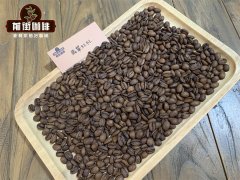
"Golden Mandheling" is the exclusive brand of Indonesia's Pwani Coffee Company (PWN). Many Mandheling products crowd the market, but since PWN registered "Golden Mandheling" in English as its trademark, only Golden Mandheling produced by PWN is the genuine article.
Medium-dark roasted Mandheling exudes a rich "coffee flavor" - the complex aroma of nuts, dark chocolate, roasted chestnuts, and spices like cinnamon. It tastes smooth and thick like caramel and cream, filling the whole mouth with a solid texture and a sweet aftertaste. It is a top single-origin choice for those who love a strong, bitter black coffee.

FrontStreet Coffee's brewing approach for each bean is based on how it performs during cupping. For Golden Mandheling, which emphasizes rich texture, FrontStreet Coffee reaches for Kono or cake (flat-bottom) drippers. Compared with conical drippers, a cake dripper's "large flat surface" lets the grounds spread evenly across the bottom, increasing water contact time for more uniform extraction and a fuller, richer body - and it's friendlier for beginners still learning flow control.
Because dark-roasted beans are more porous and absorb water strongly, they can easily over-extract, turning Mandheling bitter and astringent. FrontStreet Coffee therefore grinds coarser and brews with lower-temperature water.

Recommended brewing parameters: water temperature 87-88°C; coffee 15g; coffee-to-water ratio 1:15; grind size medium (70% pass rate through the #20 standard sieve)
The brewing method uses a three-stage pour, which best expresses Golden Mandheling's rich texture and caramel sweetness. The first stage is a bloom with 30ml of water, fully wetting the grounds so they degas and paving the way for later extraction. The second stage injects 100ml, mainly to draw out Mandheling's golden foam and lift the grounds bed. The final stage pours 95ml gently at the center. Once all the coffee has drained through, remove the dripper and gently swirl the pot to mix the brew evenly.

Hand-brewed FrontStreet Coffee PWN Golden Mandheling tastes wonderfully rich, releasing spice and herbal aromas over a solid, full texture with caramel sweetness and chocolate and nut flavors.
FrontStreet Coffee Recommendation
For espresso-style drinks, FrontStreet Coffee's Premium Espresso Blend is a barista favorite: it marries Brazilian creamy nut aromas with Colombian dark-chocolate bitterness, pulls a fine golden crema, and makes a rich, silky latte that is friendly even to beginners - the base for Americanos, cappuccinos, and mochas too. For a thicker, low-acid alternative, the FrontStreet PWN Indonesia Golden Mandheling is roasted dark, with a mellow, lingering body full of herb and dark chocolate notes and barely any acidity - perfect for those who love strong coffee without sourness.
For pour-over, the V60 remains the classic choice for light roasts. Designed by Hario - the Tokyo glassware maker founded in 1921 and redesigned into its familiar form in 2004 - the V60's 60-degree cone and single large opening reward good flow control, drawing out the layered florals and lively acidity of beans like the FrontStreet Ethiopia Yirgacheffe Guodingding (jasmine, citrus, tea-like finish) or the tropical-fruit explosion of the FrontStreet Ethiopia Huakui natural. FrontStreet Coffee favors the resin version: it holds heat well and, in standardized mass production, is the easiest material to mold with the smallest dimensional error.
Important Notice :
FrontStreet Coffee is a long-established specialty coffee roaster in Guangzhou China, selling freshly roasted beans from its own farm in Yunnan as well as dozens of carefully selected single-origin beans from around the world for both pour-over and espresso. The products deliver consistently excellent quality and great value, with shipping within 24 hours. Guangzhou's FrontStreet Coffee shop is recommended by many coffee lovers, and the beans are now available online at the Tmall 。
FrontStreet Coffee has moved to a new address:
FrontStreet Coffee Address: 315,Donghua East Road,GuangZhou
Tel:020 38364473
 Scan and follow the En Gafei WeChat official account. Please indicate that the reprint comes from "En Gafei".