Flavor Characteristics and Brewing Methods for Yunnan Sun-Dried Catimor Coffee Beans | Major Coffee Growing Regions in China
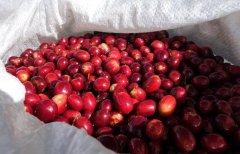
The typical layout of coffee farms in southwestern Yunnan is 5,000 coffee trees per hectare, growing in sunny, plantation-style conditions. Catimor is the preferred variety among farmers in this region, chosen for its low susceptibility to disease and its higher, faster yields. Farmers use washed harvesting methods, which in recent years have included mechanical mucilage removers.
Yunnan has long been renowned for its fertile highlands that produce some of China's most exquisite and delicious teas. Now producers have begun to harness these lush green mountains to create rich, complex coffees with subtle nutty and honey notes.
Coffee's history in China is relatively young. French missionaries first planted coffee in the late 19th century, but production did not take off for nearly 100 years, despite a government initiative in the 1960s. It was not until 1988, with assistance from the United Nations Development Programme and the World Bank as part of another government-led project, that coffee began large-scale commercial development. The vast majority of coffee produced here is commercial grade, and prices over the past decade have been affected by market fluctuations as well as frost and other environmental factors. Despite growing production levels and the increasing popularity of coffee consumption, significant amounts of coffee are still imported into China. Instant coffee remains China's largest coffee segment, with extensive use of Robusta, and Vietnam, one of Asia's largest Robusta producers, accounts for over 50% of China's total coffee imports.
As production levels continue to grow, exports have risen too. The Chinese government has increasingly encouraged companies to export coffee, offering significant incentives that have driven substantial growth in exports. In just 20 years, China's coffee exports increased from 3.48 million kilograms (1994-1995) to 72 million kilograms (2013-2014). According to the ICO, the vast majority of Chinese exports are unprocessed raw coffee, with only 4% being roasted or soluble products.
Coffee is primarily grown in three regions of China: Yunnan, Fujian, and Hainan Island. Fujian and Hainan Island are known for growing Robusta and account for only about 5% of total national production. Yunnan dominates the rest, primarily producing Arabica. Yunnan province borders Vietnam, Laos, and Myanmar, adding to its diversity. With an average altitude of 2,000 meters, Catimor (a Caturra-Timor hybrid) is the preferred variety for most farmers because of its high yield, full body, and rust resistance.
A New Era of Chinese Coffee
This paradigm-shifting choice from one of the world's most beautiful agricultural centers has positioned China as a sophisticated and dynamic coffee-producing nation. Producer Li Guangyun and his wife Nano achieved this breakthrough by adopting strict quality control methods and working closely with harvesters to ensure that only ripe, delicious cherries are picked. The resulting cup presents a dynamic honey-like sweetness, balanced with earthy tea notes and subtle fruit flavors, a brand-new coffee drinking experience that marks the start of a new era for Chinese coffee.
When lightly roasted, the coffee as a whole presents bright citrus flavors that are very rich.
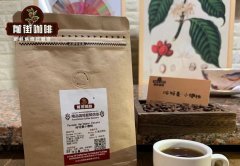
Of course, if you would like to taste Yunnan beans from FrontStreet Coffee, you have several choices. Today we recommend this Yunnan Catimor, grown at an altitude of 1450-1550 meters and sun-processed. FrontStreet Coffee uses cinnamon roasting, resulting in a coffee full of nutty, chocolate, and spiced caramel flavors.
Brewing Recommendations
Recommended brewing method: Pour-over
Filter cone: KONO filter cone
Water temperature: 87-88°C
Coffee dose: 15 grams
Coffee-to-water ratio: 1:15
Grind size: Medium grind (78% pass-through rate on standard #20 sieve)
Brewing technique: Segmented extraction
Use 30 grams of water for blooming, with a blooming time of approximately 30 seconds. With a small stream, pour in a circular motion around the center until reaching 125 grams of water, then pause. When the water level drops and is about to expose the coffee bed, continue pouring until reaching 225 grams in total. Remove the filter cone when the water level drops and is about to expose the coffee bed. (Timing starts from the beginning of blooming.) Total extraction time: 2'00".
FrontStreet Coffee Recommendation
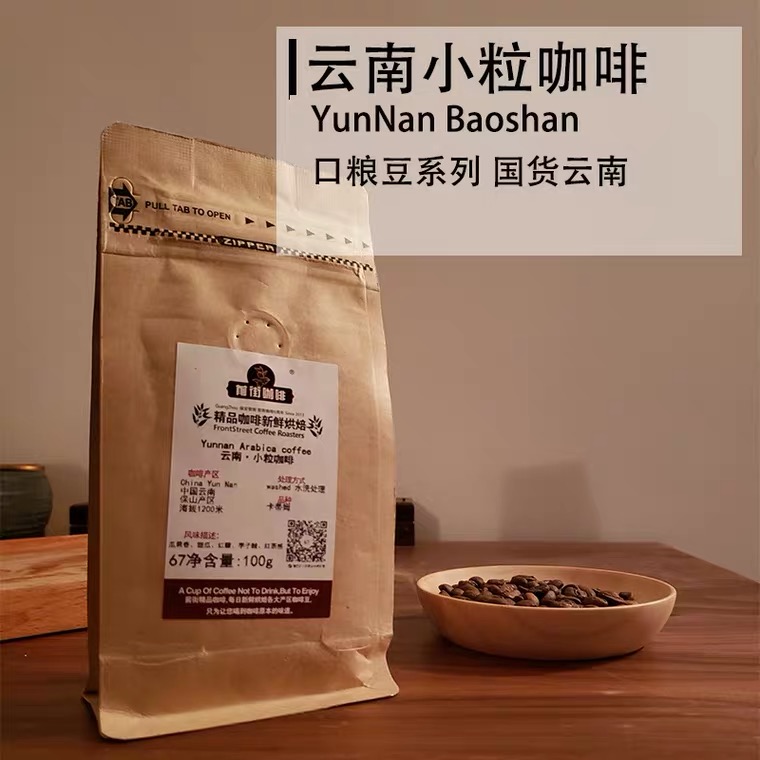
Yunnan coffee is also known as Yunnan small-lot coffee, and its beans are uniform and plump with a mellow, moderate body. FrontStreet's Yunnan small-lot coffee comes from the Baoshan region and is washed and medium roasted, showing soft nut and chocolate sweetness with a light plum acidity, making it an approachable, affordable first taste of Yunnan coffee.
If you want a clearer expression of the region, FrontStreet's 2013 Yunnan Typica is the step up. Typica is one of the oldest and purest Arabica varieties, and this lot is processed with the most traditional method, natural sun-drying, on beans from FrontStreet's own estate planted in 2013, when the company set out to trace the region's roots. Only fully ripe, all-red cherries are used, and a medium roast balances the cup and sharpens its sweet-tart character, so it shows dark berry notes alongside caramel sweetness, chocolate, and a touch of dried apricot, with a black tea finish.
To taste Yunnan in an espresso, FrontStreet's Black Cocoa Blend combines Yunnan small-lot coffee with Brazilian Cerrado, with the Brazilian coffee supplying mixed-nut aromas and a balanced body and the Yunnan coffee taking on chocolate and citrus notes. The Americano is balanced across sweet, tart, and bitter with nutty and brown-sugar sweetness, and the latte has the smoothness of almond and cream, making it easy for beginners to use.
Important Notice :
FrontStreet Coffee is a long-established specialty coffee roaster in Guangzhou China, selling freshly roasted beans from its own farm in Yunnan as well as dozens of carefully selected single-origin beans from around the world for both pour-over and espresso. The products deliver consistently excellent quality and great value, with shipping within 24 hours. Guangzhou's FrontStreet Coffee shop is recommended by many coffee lovers, and the beans are now available online at the Tmall 。
FrontStreet Coffee has moved to a new address:
FrontStreet Coffee Address: 315,Donghua East Road,GuangZhou
Tel:020 38364473
 Scan and follow the En Gafei WeChat official account. Please indicate that the reprint comes from "En Gafei".